

Glute And Ham Workout: Sculpt Stronger Legs Fast
Glute And Ham Workout: Build Strength, Shape, And Power
Strong glutes and hamstrings do much more than help you look good from behind. They support your posture, boost athletic performance, protect your lower back, and can even improve daily movement. Yet, many people focus on squats alone, missing the full benefits of a balanced glute and ham workout.
If you want firm, powerful legs and a healthy, functional lower body, training both muscle groups with intention is key.
This guide will show you why glutes and hamstrings matter, how to activate them properly, and which exercises give the best results. You’ll also discover sample workouts, tips for progress, and common mistakes to avoid. Whether you’re a beginner or an experienced lifter, you’ll find practical advice to help you get stronger, move better, and feel more confident.
Why Strong Glutes And Hamstrings Matter
The glutes (gluteus maximus, medius, and minimus) are the largest muscles in your body. They drive hip extension, rotation, and abduction. The hamstrings (biceps femoris, semitendinosus, and semimembranosus) run along the back of your thigh and help bend the knee and extend the hip.
When these muscles are strong:
- You run faster, jump higher, and lift heavier.
- Your hips and knees get better support, reducing injury risk.
- Lower back pain becomes less likely.
- Everyday activities (standing, climbing stairs, picking up objects) feel easier.
But when glutes and hamstrings are weak or underused:
- Other muscles (like the lower back) work too hard, increasing pain and injury.
- Your athletic power drops.
- Posture suffers, leading to aches and fatigue.
Surprisingly, even people who exercise regularly can have weak glutes or hamstrings. Sitting for long periods “turns off” these muscles, making them harder to activate during workouts. That’s why targeted training matters for everyone—not just athletes.
Anatomy Of Glutes And Hamstrings: What You Need To Know
Understanding where these muscles are and what they do helps you train them more effectively.
Glute Muscles
- Gluteus Maximus: The largest muscle in your buttocks, responsible for hip extension (standing up, climbing stairs).
- Gluteus Medius: Located on the outer hip, it stabilizes your pelvis and moves your leg sideways.
- Gluteus Minimus: Lies under the medius and assists in hip movement and stabilization.
Hamstring Muscles
- Biceps Femoris: The largest hamstring muscle, important for knee flexion and hip extension.
- Semitendinosus and Semimembranosus: Located on the inner part of your thigh; both help in knee bending and hip extension.
These muscles work together during movements like running, jumping, squatting, and deadlifting. Focusing on both glutes and hamstrings creates balance, improves shape, and supports overall function.

Credit: www.strengthlog.com
How To Activate Glutes And Hamstrings Properly
Many people use their quads or lower back too much during leg exercises. This happens because glutes and hamstrings can “sleep” when you sit a lot or use poor form. To get the most from your workout, learn to “wake up” these muscles.
Glute activation tips:
- Do a short warm-up with exercises like glute bridges, clamshells, or donkey kicks.
- Focus on squeezing your glutes at the top of each movement.
- Avoid letting your back arch or your knees cave in.
Hamstring activation tips:
- Use slow, controlled movements during exercises like leg curls or Romanian deadlifts.
- Think about pulling with your hamstrings, not just moving the weight.
- Stretch your hip flexors before training to make it easier to engage your hamstrings.
A simple pre-workout routine:
- 15 glute bridges (pause and squeeze at the top)
- 15 bodyweight good mornings (focus on hip hinge)
- 15 standing leg curls (each leg)
Doing these before your main workout can help you feel the right muscles working.
Best Glute And Hamstring Exercises
Some exercises target both muscle groups at once. Others focus more on either glutes or hamstrings. Mixing both types gives you the best results.
Top Compound Movements
Compound movements work multiple muscles at the same time. These exercises should be the core of your training.
| Exercise | Main Muscles | Why It’s Effective |
|---|---|---|
| Barbell Hip Thrust | Glutes, Hamstrings | Strongest glute activation; supports heavy loads |
| Romanian Deadlift | Hamstrings, Glutes | Emphasizes hip hinge, stretches and strengthens the posterior chain |
| Bulgarian Split Squat | Glutes, Hamstrings, Quads | Unilateral (one-sided) work, balances strength and stability |
| Sumo Deadlift | Glutes, Hamstrings | Wider stance, more glute activation than conventional deadlift |
| Walking Lunge | Glutes, Hamstrings, Quads | Works glutes through a full range of motion |
Top Isolation Movements
Isolation exercises allow you to focus on one muscle group, helping build mind-muscle connection and addressing weak points.
- Glute Bridge: Lying on your back, feet flat, lift your hips by squeezing your glutes.
- Cable Kickback: Attach an ankle strap, kick your leg backward, focusing on the squeeze.
- Seated or Lying Leg Curl: Use a machine to bend your knee against resistance; feel the hamstring work.
- Single-Leg Romanian Deadlift: Balances both sides, challenges stability.
- Stability Ball Hamstring Curl: Use a Swiss ball to curl your legs in while keeping hips raised.
Plyometric And Bodyweight Moves
Adding explosive or bodyweight exercises helps with speed, power, and endurance.
- Jump Squats
- Reverse Lunges
- Step-Ups
- Broad Jumps
- Single-Leg Glute Bridge
Plyometrics are especially useful for athletes or anyone wanting better movement and sports performance.
Sample Glute And Hamstring Workout Routines
Choosing the right routine depends on your experience, equipment, and goals. Here are three sample workouts for different levels.
Beginner Routine (bodyweight Only)
Great for home workouts or if you’re new to training.
- Glute Bridge – 3 sets x 15 reps
- Reverse Lunge – 3 sets x 10 reps per leg
- Stability Ball Hamstring Curl – 3 sets x 12 reps
- Standing Kickback – 3 sets x 15 reps per leg
- Bodyweight Good Morning – 3 sets x 15 reps
Rest 60–90 seconds between sets.
Intermediate Routine (dumbbells Or Barbells)
A step up for those with some experience and access to weights.
- Barbell Hip Thrust – 4 sets x 10 reps
- Romanian Deadlift – 4 sets x 10 reps
- Bulgarian Split Squat – 3 sets x 8 reps per leg
- Seated Leg Curl – 3 sets x 12 reps
- Cable Kickback – 3 sets x 15 reps per leg
Rest 90–120 seconds between sets.
Advanced Routine (high Volume And Intensity)
For experienced lifters aiming for serious strength and muscle growth.
- Barbell Hip Thrust – 5 sets x 8 reps (heavy)
- Sumo Deadlift – 4 sets x 6 reps (heavy)
- Walking Lunge – 4 sets x 12 steps per leg
- Single-Leg Romanian Deadlift – 3 sets x 10 reps per leg
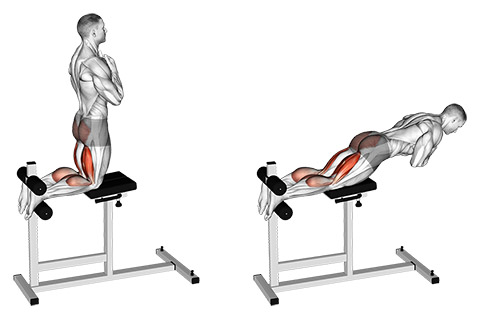
- Glute-Ham Raise – 3 sets x 8–10 reps
- Plyometric Broad Jump – 3 sets x 8 jumps
Rest 2–3 minutes between heavy sets, 60–90 seconds for lighter sets.
How To Progress Your Glute And Hamstring Workouts
To see real results, you must challenge your muscles over time. This is called progressive overload. Here’s how to do it:
- Add weight: Increase dumbbell/barbell weight as you get stronger.
- Add reps or sets: Do more repetitions or extra sets.
- Slow down reps: Use a slower tempo, especially during the lowering phase.
- Shorten rest: Cut down rest time to make muscles work harder.
- Try harder variations: Move from bodyweight to weighted, or from two-legged to single-legged exercises.
A common beginner mistake is doing the same routine for months without any changes. Your body adapts quickly—so keep pushing yourself in small, steady steps.
Choosing The Right Rep Range And Volume
Your goals decide how many reps and sets you should do.
| Goal | Reps per Set | Sets | Rest |
|---|---|---|---|
| Strength | 4–6 | 3–5 | 2–3 min |
| Muscle Growth (Hypertrophy) | 8–12 | 3–5 | 60–90 sec |
| Endurance | 15–20 | 2–4 | 30–60 sec |
Most people see the best glute and ham development from the 8–12 rep range, focusing on muscle growth. Mixing in lower reps (strength) and higher reps (endurance) also helps build complete, functional muscle.
Common Mistakes When Training Glutes And Hamstrings
Even with hard work, some mistakes can slow your progress or cause injury. Here are some of the most common—and how to avoid them.
- Poor Form: Letting your lower back arch, knees collapse inward, or hips twist can reduce muscle activation and risk injury. Focus on proper alignment.
- Neglecting Mind-Muscle Connection: Simply moving weight isn’t enough. Actively squeeze and “feel” the target muscles on each rep.
- Not Using Full Range of Motion: Half-reps cheat your results. Lower yourself fully and control the movement.
- Overtraining or Undertraining: Too many sets can cause fatigue and pain; too few won’t give results. Most people benefit from 2–3 hard sessions per week.
- Ignoring Weak Points: If you only squat or deadlift, some muscles may lag behind. Include isolation work for balanced development.
- Skipping Warm-Up and Activation: Cold muscles don’t fire well. Always warm up and activate before lifting heavy.
Credit: www.hevyapp.com
How Often Should You Train Glutes And Hamstrings?
The best frequency depends on your recovery, training intensity, and goals. Most people see good results with 2 to 3 sessions per week. This allows enough stimulus for growth, but also gives time for recovery.
If you train with very high intensity (heavy weights, many sets), stick to two sessions weekly. If your workouts are shorter or lower intensity, you can train three times. Always listen to your body—soreness and fatigue are signs you may need more rest.
Nutrition And Recovery For Glute And Ham Growth
Training is only half the story. Muscles grow and strengthen when you rest and eat well.
Protein is the most important nutrient for muscle repair and growth. Aim for about 0.7–1 gram of protein per pound of body weight each day. Good sources include chicken, fish, eggs, dairy, tofu, beans, and lentils.
Carbs give you energy for tough workouts. Whole grains, fruits, and vegetables are the best choices.
Sleep is when your body repairs muscle fibers. Most adults need 7–9 hours per night.
Hydration helps performance and recovery. Drink enough water so your urine is pale yellow.
Active recovery (walking, stretching, light cycling) on rest days keeps blood moving and speeds up healing.

Credit: us.humankinetics.com
Equipment: What You Need (and Don’t Need)
You don’t need a fancy gym or expensive machines to build strong glutes and hamstrings. Simple tools can make a big difference.
Useful Equipment
- Dumbbells: Great for home workouts and adding resistance.
- Barbell: Allows for the heaviest lifts and fastest progress.
- Resistance Bands: Help with activation, can add extra challenge to bodyweight moves.
- Bench or Box: Needed for exercises like hip thrusts, step-ups, or Bulgarian split squats.
- Swiss Ball: Adds instability, works stabilizer muscles.
Optional Equipment
- Cable Machine: Useful for kickbacks and pull-throughs.
- Leg Curl Machine: Targets hamstrings directly.
- Smith Machine: For safer hip thrusts or squats if lifting alone.
You can start with just your bodyweight and a resistance band, then add more tools as you progress.
Glute And Hamstring Training For Different Goals
Your approach may shift slightly depending on what you want to achieve.
For Strength
- Focus on compound lifts (hip thrusts, deadlifts, lunges).
- Use heavier weights (4–6 rep range).
- Longer rest between sets.
For Muscle Growth (hypertrophy)
- Mix compound and isolation exercises.
- Use moderate weights (8–12 rep range).
- Shorter rest, higher training volume.
For Athletic Performance
- Include plyometrics (jumps, sprints).
- Focus on explosive movement.
- Combine strength and speed in your routine.
For Fat Loss And Toning
- Use circuits or supersets to keep heart rate high.
- Short rest periods.
- Mix in cardio with your strength training.
Female Vs. Male Glute And Hamstring Training: Is There A Difference?
The main training principles are the same for everyone. However, women often find it easier to recover from high-volume lower-body workouts and may enjoy more frequent sessions. Men, on average, can lift heavier weights but may need more rest between sets.
Both men and women should use a mix of heavy lifts, moderate reps, and isolation work for best results. There is no need for “special” glute workouts for women—what works for one will work for the other, with adjustments for individual preferences and goals.
Comparing Glute And Hamstring Exercises
Some exercises work both glutes and hamstrings, while others focus more on one group. Here’s a quick comparison.
| Exercise | Glute Focus | Hamstring Focus | Stability Required |
|---|---|---|---|
| Hip Thrust | High | Medium | Medium |
| Romanian Deadlift | Medium | High | High |
| Bulgarian Split Squat | High | Medium | High |
| Leg Curl | Low | High | Low |
| Cable Kickback | High | Low | Low |
Use this chart to choose exercises that fit your needs. If you want to focus on glutes, pick hip thrusts and kickbacks. For hamstrings, Romanian deadlifts and leg curls are best.
Practical Tips For Better Results
To get the most out of your glute and ham workouts, keep these practical tips in mind:
- Film yourself: Use your phone to check form and make corrections.
- Stretch your hip flexors: Tight hips can limit glute engagement.
- Switch up your stance: Wider or narrower feet can change which muscles work hardest.
- Pause at the top: In bridges or thrusts, hold and squeeze for 2 seconds.
- Train unilaterally: Single-leg exercises fix imbalances and build stability.
- Don’t neglect your core: Strong abs and lower back help you lift safely.
A non-obvious insight: If you feel your quads working more than your glutes in squats or lunges, try leaning forward slightly from the hips (not the back). This simple shift can boost glute activation without extra weight.
Another tip: If you struggle with hamstring cramps during curls, reduce the weight and focus on slow, controlled reps. Sometimes, poor hydration or low potassium can also cause cramps.
Injury Prevention And Safe Training
Glute and hamstring injuries can take weeks or months to heal. Here’s how to stay safe:
- Always warm up with light cardio and mobility work.
- Don’t increase weight too quickly—aim for 5–10% at a time.
- Stop if you feel sharp pain (not just muscle fatigue).
- Use proper shoes for grip and support.
- Rest when needed; overtraining increases injury risk.
If you ever feel pain in your lower back or knees during glute and ham work, check your form and lighten your load. Sometimes, small changes (like bracing your core or adjusting your foot position) fix the problem.
Frequently Asked Questions
How Long Does It Take To See Results From Glute And Ham Workouts?
Most people notice changes in strength and muscle tone within 4–8 weeks of consistent training. Visible changes depend on your starting point, workout intensity, and nutrition. With steady effort, you’ll feel stronger and see firmer glutes and hamstrings over time.
Should I Do Glute And Ham Exercises Before Or After Cardio?
For best results, train glutes and hamstrings before cardio. This way, you have more energy for heavy or technical lifts. If you do long cardio first, your muscles may be too tired to work hard or safely.
Can I Train Glutes And Hamstrings On The Same Day As Other Muscles?
Yes, many people combine glute and ham work with quads, back, or even full-body routines. Just make sure you don’t over-fatigue your legs if you plan to train them again soon. Balance your weekly routine for recovery.
What If I Don’t Feel My Glutes Or Hamstrings Working During Exercises?
This is common, especially for beginners. Try activation drills before your main workout (like glute bridges or good mornings). Focus on form, slow down your reps, and think about squeezing the target muscles. If needed, reduce the weight and build up with better technique.
Are Machines Or Free Weights Better For Glute And Ham Development?
Both have benefits. Free weights (like dumbbells and barbells) engage more stabilizer muscles and help with real-world strength. Machines can isolate muscles and help you push harder safely. A mix of both is often best for balanced results. For more on exercise options, see the Healthline guide to glute exercises.
Strong, shapely glutes and hamstrings are within reach for anyone willing to train with purpose. Focus on good form, challenge yourself regularly, and support your training with smart nutrition and rest. Over time, you’ll build not just a better-looking backside, but a healthier, more powerful body overall.
