

Best Glute Workout at Home: Build Stronger Glutes Fast
Best Glute Workout At Home
Strong glutes are more than just an aesthetic goal. They power your daily movements, support your lower back, and can improve your athletic performance. But what if you don’t have access to a gym or fancy machines? The good news is, you can build impressive glutes at home with minimal equipment—or even just your body weight.
Whether you want rounder, firmer glutes, stronger hips, or better posture, the right at-home glute workout can make a real difference. This guide will show you exactly how to target your glutes, why these muscles matter, and how to structure the best glute workout at home for real results.
Why Strong Glutes Matter
Your gluteal muscles are among the largest and most important muscle groups in your body. They include the gluteus maximus, gluteus medius, and gluteus minimus. These muscles help you walk, run, jump, climb stairs, and even stand up from a chair. Weak glutes can lead to hip pain, back pain, poor balance, and increased risk of injury, especially if you spend a lot of time sitting.
A strong set of glutes can:
- Improve posture and reduce lower back pain
- Enhance athletic performance in sports and daily life
- Boost metabolism by increasing muscle mass
- Give a more toned, lifted appearance to the hips and buttocks
Many people overlook glute training, focusing instead on abs or arms. But neglecting your glutes can limit your progress and even create muscle imbalances. Training your glutes at home is not just possible—it can be highly effective with the right plan.
What You Need For Home Glute Workouts
You don’t need expensive equipment to work your glutes at home. Most effective exercises use just your body weight, but adding resistance bands or dumbbells can increase intensity as you get stronger.
Recommended equipment:
- Resistance bands (loop or mini bands)
- Dumbbells (optional, for extra resistance)
- Yoga mat or soft surface
- Sturdy chair, bench, or step (for hip thrusts or step-ups)
If you don’t have bands or weights, you can still get a great workout. For added challenge, use a backpack with books or water bottles as makeshift weights.

Credit: samarthyaclasses.com
Anatomy Of The Glutes: Understanding The Muscles
Knowing how your glutes work helps you target them better. Each glute muscle has a unique role:
- Gluteus maximus: The largest muscle, responsible for hip extension (moving your leg backward), outward rotation, and helping you stand up.
- Gluteus medius: Located on the outer side of your hip, it stabilizes your pelvis and helps lift your leg to the side.
- Gluteus minimus: The smallest, under the medius, also helps with side movement and stability.
Most effective glute workouts include exercises that hit each muscle from different angles. This helps with both size and function, not just looks.
How To Structure The Best Glute Workout At Home
An effective glute workout at home balances compound movements (using several muscle groups) and isolation exercises (focusing on the glutes). You want to:
- Warm up your muscles and activate your glutes
- Perform main exercises that challenge your glutes from different angles
- Finish with burnout or isolation moves for a strong muscle “pump”
Sample Weekly Training Plan
How often should you train your glutes at home? For most people, 2–3 times per week is ideal, with at least one day of rest between sessions. This allows your muscles to recover and grow.
| Day | Workout Focus |
|---|---|
| Monday | Full Glute Workout |
| Wednesday | Glute Activation + Isolation |
| Friday | Full Glute Workout |
Beginners can start with two sessions per week, while more advanced lifters may add a third.
The Best Glute Exercises You Can Do At Home
The right exercises make all the difference. Here are highly effective glute exercises you can do at home, with or without equipment.
1. Hip Thrusts (bodyweight Or Weighted)
Hip thrusts are one of the most powerful glute builders. You can do them on the floor or with your shoulders supported on a bench or couch.
How to do it:
- Sit on the floor with your upper back against a couch or bench.
- Roll your feet toward your glutes, knees bent, feet flat.
- Drive through your heels, lifting your hips up until your body forms a straight line from shoulders to knees.
- Squeeze your glutes at the top, then lower down with control.
Tip: Place a resistance band above your knees for extra activation.
2. Glute Bridges
Similar to hip thrusts, but done flat on the ground. This is great for beginners or as a warm-up.
How to do it:
- Lie on your back, knees bent, feet flat on the floor.
- Press your heels into the ground and lift your hips as high as possible.
- Pause and squeeze at the top, then lower down slowly.
Variation: Try single-leg glute bridges for more challenge.
3. Bulgarian Split Squats
This single-leg exercise targets glutes, quads, and balance. All you need is a chair or step.
How to do it:
- Stand facing away from a chair, place one foot behind you on the seat.
- Lower your back knee toward the ground, keeping your front knee over your ankle.
- Push through your front heel to return to standing.
Pro insight: Leaning slightly forward increases glute activation.
4. Step-ups
Step-ups are simple but effective, especially for the gluteus maximus and medius.
How to do it:
- Stand in front of a chair or sturdy step.
- Step up with one foot, driving through your heel.
- Bring the other foot up, then step down and repeat.
Increase difficulty by holding dumbbells or adding a knee lift at the top.
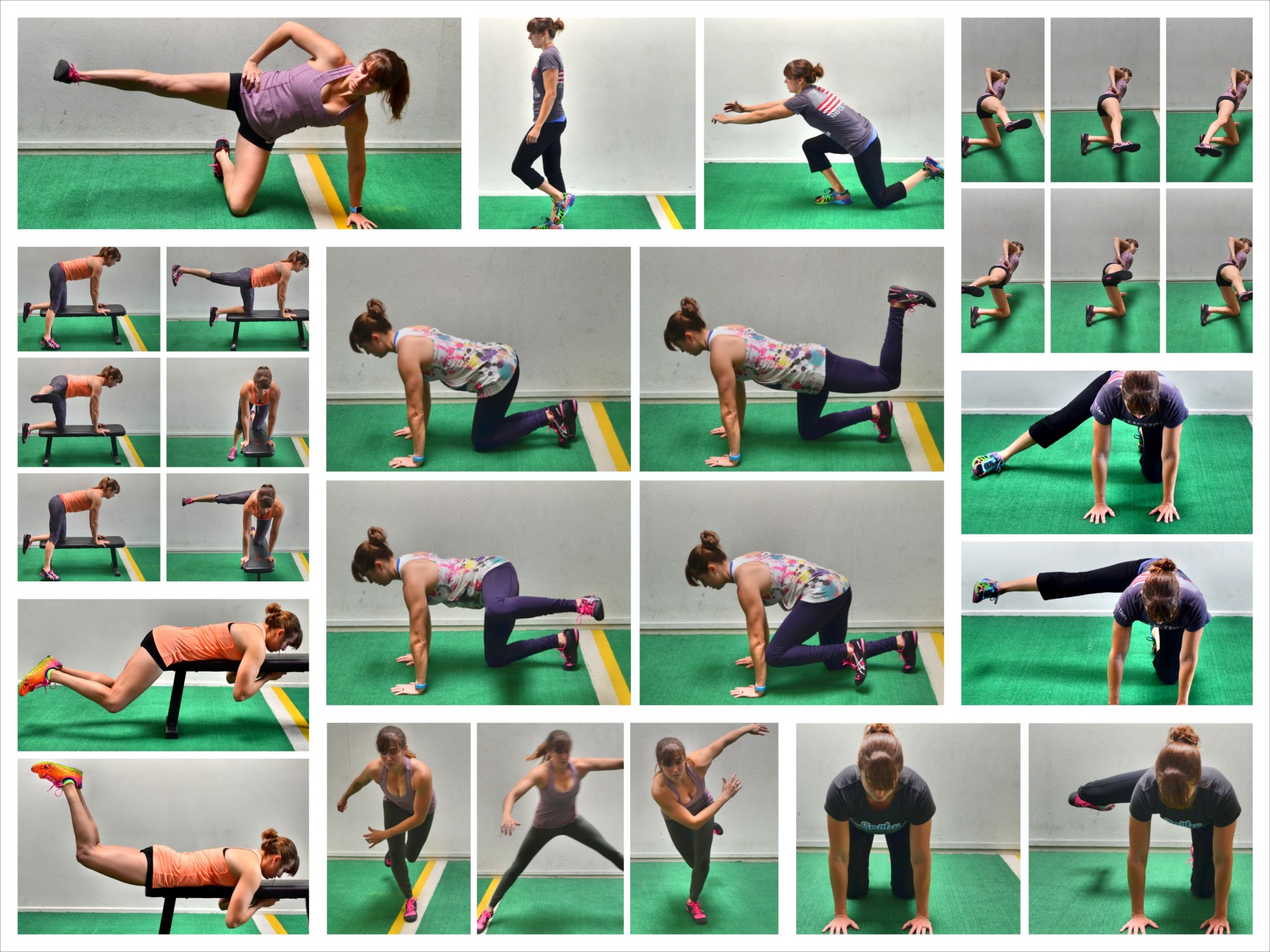
5. Donkey Kicks
A classic move for isolating the glutes, especially gluteus maximus.
How to do it:
- Start on all fours, hands under shoulders, knees under hips.
- Keeping your knee bent, kick one leg up and back, squeezing your glutes.
- Lower and repeat on the other side.
Add a mini band for extra resistance.
6. Fire Hydrants
This movement targets the gluteus medius and minimus, key for hip stability.
How to do it:
- From all fours, lift one knee out to the side, keeping your hip bent.
- Pause at the top, then lower down.
- Keep your core tight and avoid twisting.
Fire hydrants help shape the outer glutes.
7. Clamshells
Clamshells are great for the side glutes and hip stabilizers.
How to do it:
- Lie on your side, knees bent, feet together.
- Keeping your feet touching, open your top knee as far as you can.
- Squeeze at the top, then lower.
Use a resistance band above your knees for more intensity.
8. Single-leg Romanian Deadlifts
Challenging for balance and glute strength, this move is best with a dumbbell but works with body weight.
How to do it:
- Stand on one leg, soft bend in the knee.
- Hinge forward at the hips, reaching your opposite hand toward the floor.
- Keep your back straight, return to standing by squeezing your glutes.
Slow, controlled reps are key.
9. Curtsy Lunges
Curtsy lunges target the gluteus medius and minimus, giving a rounder hip shape.
How to do it:
- Stand tall, step one foot behind and across your body, lowering into a lunge.
- Keep your chest up and front knee in line with your toes.
- Return to standing, switch sides.
Add a dumbbell or band for more resistance.
10. Glute Bridge March
This dynamic exercise combines stability and activation.
How to do it:
- Start in a glute bridge position.
- Lift one knee toward your chest, then switch legs.
- Keep your hips up and core engaged.
Great as a warm-up or finisher.
At-home Glute Workout Routines
Putting the exercises together in a routine is where real results happen. Here are two sample routines: one for beginners and one for advanced levels.
Beginner Glute Workout (no Equipment Needed)
Repeat the circuit 2–3 times, resting 1 minute between rounds.
- Glute Bridges – 15 reps
- Donkey Kicks – 12 reps per leg
- Fire Hydrants – 12 reps per leg
- Step-Ups – 10 reps per leg (use stairs or a sturdy chair)
- Clamshells – 15 reps per side
Tip: Focus on slow, controlled reps and squeezing your glutes at the top of each movement.
Advanced Glute Workout (with Bands Or Weights)
Repeat the circuit 3–4 times, resting 1 minute between rounds.
- Hip Thrusts (with band or weight) – 15 reps
- Bulgarian Split Squats – 12 reps per leg
- Single-Leg Romanian Deadlifts (with dumbbell) – 10 reps per leg
- Curtsy Lunges – 12 reps per leg
- Glute Bridge March (with band) – 20 reps total
Pro tip: Don’t rush your sets. Quality beats quantity, especially for muscle growth.
Sample Glute Activation Warm-up
Before your main workout, it’s smart to “wake up” your glutes. Many people have inactive glutes from sitting too much, which can make other muscles take over during exercise.
Try this short warm-up before each session:
- Bodyweight Glute Bridges – 10 reps
- Fire Hydrants – 10 reps per side
- Clamshells (with band if possible) – 10 reps per side
This warm-up increases muscle activation and helps prevent injury.
How To Progress Your Glute Workouts At Home
Muscles grow and strengthen when you challenge them. If your workout becomes too easy, your progress will stall. Here’s how you can keep making gains at home:
Add Resistance
Use resistance bands or dumbbells to make exercises harder. If you don’t have equipment, use household items (like a backpack filled with books).
Increase Reps Or Sets
Gradually add more repetitions or another set to your routine. For example, move from 2 rounds to 3, or from 12 reps to 15.
Slow Down The Tempo
Perform each rep more slowly, especially on the lowering phase (eccentric). This increases the time your muscles are under tension, which helps growth.
Use More Challenging Variations
Switch to single-leg versions or add pauses at the top of each rep. For example, try single-leg glute bridges or pause hip thrusts.
Track Your Progress
Keep a workout log. Write down your reps, sets, and any resistance used. This helps you see progress and stay motivated.
Common Mistakes In At-home Glute Training
Many people make simple mistakes that limit their results. Watch out for these issues:
- Not activating glutes: Skipping a warm-up can mean your quads or back take over.
- Poor form: Letting your back arch or knees cave in reduces glute activation and can cause injury.
- Using only bodyweight forever: Your muscles need new challenges. Add resistance or change exercises as you get stronger.
- Not squeezing at the top: A strong muscle contraction at the top of each rep makes a big difference.
- Neglecting other muscles: Strong glutes support your whole body, but balanced training matters. Don’t ignore your core, hamstrings, or upper body.
How To Maximize Glute Growth At Home
Getting the best results isn’t just about exercise. Small details can boost your progress:
- Mind-muscle connection: Focus on feeling your glutes do the work. This mental connection increases muscle activation.
- Nutrition: You need enough protein and overall calories to build muscle. Beans, eggs, lean meats, and dairy are all good sources.
- Rest and recovery: Muscles grow during rest, not just during workouts. Aim for at least 7 hours of sleep and take rest days between intense sessions.
- Consistency: Glutes don’t grow overnight. Stick with your routine, and track small wins over time.
Credit: redefiningstrength.com
Glute Workout Myths Vs. Facts
There’s a lot of confusion around glute training, especially online. Let’s clear up a few common myths:
| Myth | Fact |
|---|---|
| Squats are enough for glutes | Squats help, but hip thrusts and bridges activate glutes much more |
| You need heavy weights to build glutes | Bodyweight and bands can be very effective, especially for beginners |
| More is always better | Quality and proper recovery matter more than endless reps |
| Women will get bulky from glute training | Building muscle takes time and effort; most will see a firmer, rounder shape, not bulk |
A less obvious tip: Many people don’t realize that daily posture and sitting habits affect glute growth. Standing up regularly, stretching your hip flexors, and avoiding long hours in a chair can actually help your glute training work better.
Example: Glute Progression At Home
Let’s look at a sample progression to see how you might advance over a few months.
| Weeks | Key Focus | Sample Exercises | Tips |
|---|---|---|---|
| 1–4 | Activation & Form | Bridges, Fire Hydrants, Clamshells | Focus on slow reps and good technique |
| 5–8 | Strength | Hip Thrusts, Bulgarian Split Squats | Add bands or light weights |
| 9–12 | Intensity & Volume | Single-leg moves, supersets | Shorter rest, higher reps |
This kind of progression helps avoid plateaus. Beginners often miss the importance of changing routines every few weeks, but it’s key for long-term growth.
Glute-focused Home Workout Tips
Here are a few extra tips that can make a surprising difference:
- Use mirrors or record yourself: Checking your form helps you spot mistakes you might not feel.
- Train with intention: Don’t just go through the motions. Focus on the working muscle.
- Try glute finishers: Add a short burnout set at the end (like 30 seconds of banded glute bridges) to fully fatigue the muscle.
- Stretch your hip flexors: Tight hips can make glute exercises less effective. A few minutes of stretching before and after workouts can help.
A little-known insight: For some people, doing glute exercises barefoot (especially on a mat) can improve muscle activation. This is because you can press through your heels more naturally, which engages the glutes better.
Nutrition For Glute Growth
Exercise is only half the story. If you want to see visible muscle gains, your diet must support your training.
- Get enough protein: Aim for about 0.7–1 gram of protein per pound of body weight daily if you’re trying to build muscle. Good sources include eggs, yogurt, lentils, chicken, and tofu.
- Don’t skip carbs: Carbs fuel your workouts. Whole grains, fruit, and potatoes are good options.
- Stay hydrated: Dehydration can reduce workout performance and recovery.
- Include healthy fats: Nuts, avocados, and olive oil help hormone health, which supports muscle growth.
Missing calories or protein is a common reason people don’t see progress, even with a good glute routine.
Tracking Progress And Staying Motivated
Seeing progress keeps you motivated. Here’s how to track your at-home glute workouts:
- Take measurements: Use a tape measure around your hips/glutes every few weeks.
- Take progress photos: Visual changes may show up before numbers change.
- Log your workouts: Write down sets, reps, and resistance used.
- Note how you feel: Improved posture, less back pain, or better stability are all signs of progress.
Celebrate small wins, like doing more reps or holding a bridge longer than before.
Recovery And Injury Prevention
Your glutes, like any muscle, need time to recover. Overtraining can lead to pain or injury, especially in the lower back or knees.
Tips for safe glute training:
- Warm up before workouts to prepare your muscles
- Use proper form, especially on single-leg moves
- Rest at least 48 hours between intense glute sessions
- Stretch after workouts to reduce tightness
If you feel sharp pain (not just muscle soreness), stop and check your form or rest longer. Sometimes, a small adjustment—like foot position or range of motion—can prevent discomfort.
Frequently Asked Questions
How Long Does It Take To See Results From Glute Workouts At Home?
Most people see and feel changes within 4–8 weeks if they train consistently, eat well, and use proper technique. Visible growth may take longer, but you’ll likely notice better strength and shape within a month or two.
Can I Build Glutes At Home Without Any Equipment?
Yes, you can. Bodyweight exercises like glute bridges, donkey kicks, and step-ups are very effective, especially for beginners. Adding resistance bands or household weights increases challenge and results as you get stronger.
How Many Times A Week Should I Train My Glutes?
Two to three sessions per week is enough for most people. Make sure you allow at least one full rest day between sessions for recovery. Training too often without rest can slow progress.
What Is The Best Exercise For Targeting The Glutes?
Hip thrusts and glute bridges are among the best because they isolate and activate the gluteus maximus strongly. But combining several exercises (like lunges, single-leg moves, and band work) gives the best overall results.
What If I Have Back Pain During Glute Exercises?
Back pain often means your form needs correction or your glutes aren’t fully activating. Focus on driving through your heels, not arching your back, and start with bodyweight moves. If pain continues, pause your workouts and consult a medical professional. For more on exercise safety and form, check resources like ACE Fitness.
Final Thoughts
Building strong, shapely glutes at home is not only possible—it’s practical and rewarding. You don’t need fancy equipment or a gym membership. The right exercises, consistency, and a focus on good form can create serious results. Remember, progress may start slow, but it builds over time.
Pay attention to your body, challenge yourself with new variations and resistance, and don’t forget the importance of nutrition and recovery. With patience and effort, your best glutes are well within reach—right in your own living room.

Credit: nilds.gov.ng
