

What Does Business Casual Look Like for Women: Style Guide 2024
What Does Business Casual Look Like For Women
Business casual for women is often confusing. Many workplaces give only a vague dress code, leaving you to guess what’s acceptable. If you feel unsure, you’re not alone. Women face a wider range of choices than men, and the rules can change depending on your job, company, or even the day of the week.
But business casual doesn’t have to be stressful. With the right approach, you can look professional, feel comfortable, and express your style—all at the same time.
This guide breaks down exactly what business casual means for women. You’ll discover what items are safe, which ones to avoid, and how to build outfits that fit in anywhere. We’ll cover common mistakes, practical examples, and data to help you make confident decisions.
Whether you’re starting a new job, refreshing your wardrobe, or just want to understand the basics, everything you need is here.
Understanding Business Casual For Women
Business casual is a mix of professional and relaxed clothing. It’s not as formal as a suit, but it’s not as casual as jeans and a t-shirt. For women, business casual is more flexible than for men. You have choices, but also more chances to make mistakes.
Most companies want you to look neat, polished, and ready for work. But they also want you to be comfortable and show your personality. The challenge is finding that balance.
Key Elements Of Business Casual
- Tailored pants or skirts
- Blouses, shirts, or knit tops
- Cardigans or blazers
- Closed-toe shoes
- Minimal accessories
Each of these items can be styled in many ways. The goal is to look put-together without being overdressed.
What Business Casual Is Not
- Shorts, ripped jeans, or leggings
- Graphic t-shirts or sweatshirts
- Flip-flops or sneakers
- Overly revealing clothing
- Heavy makeup or flashy jewelry
If an item looks too casual for an interview, it’s usually not business casual.
Essential Clothing Pieces For Business Casual
Let’s break down the main clothing items that form the foundation of business casual for women. Knowing what’s safe helps you build outfits quickly.
Tops
Your top sets the tone for your outfit. Choose pieces that are comfortable, modest, and clean.
- Blouses: Soft fabrics like cotton or silk, simple patterns, neutral or pastel colors.
- Button-down shirts: Crisp, fitted, not oversized. White, light blue, or subtle stripes work well.
- Knit tops: Fine-gauge sweaters, turtlenecks, or shells. Avoid chunky knits and bold graphics.
Example: Blouse Vs. T-shirt
A plain white blouse with a collar is business casual. A cotton t-shirt with a logo is not.
Bottoms
Your pants or skirt should be tailored, comfortable, and professional.
- Dress pants: Straight, bootcut, or slightly tapered. Choose black, navy, gray, or khaki.
- Skirts: Knee-length or midi. Pencil, A-line, or pleated styles are safe.
- Culottes: Wide-leg cropped pants are acceptable if they look neat and are not too short.
Example: Dress Pants Vs. Jeans
Black dress pants fit every business casual environment. Dark-wash jeans might be allowed in some offices, but always check your company’s policy.
Dresses
Dresses are simple and elegant for business casual. But not every dress is appropriate.
- Sheath dress: Fitted but not tight, knee-length or longer.
- Wrap dress: Modest neckline, longer hem.
- Shirt dress: Buttoned, with a collar.
Avoid spaghetti straps, deep V-necks, or very short hemlines.
Layers
Layering adds polish and lets you adjust to changing temperatures.
- Cardigans: Slim, fine-knit, hip-length.
- Blazers: Fitted, single-breasted, neutral colors.
- Light jackets: Tweed or cotton, avoid denim or leather.
Example: Blazer Vs. Sweater
A navy blazer over a white blouse is classic business casual. A thick, hooded sweater is not.
Footwear
Shoes are often overlooked, but they matter.
- Flats: Simple, closed-toe, leather or suede.
- Low heels: Pumps, block heels, or kitten heels (under 2.5 inches).
- Loafers: Professional and comfortable.
Avoid sandals, athletic shoes, or anything with glitter.
Shoe Comparison
| Shoe Type | Business Casual? | Notes |
|---|---|---|
| Ballet flats | Yes | Classic, safe choice |
| Kitten heels | Yes | Low, comfortable heel |
| Sneakers | No | Too casual |
| Sandals | No | Open-toe not recommended |
| Loafers | Yes | Professional look |
Accessories
Keep accessories simple and elegant.
- Jewelry: Stud earrings, thin necklaces, simple bracelets.
- Belts: Thin, neutral color, matches your shoes.
- Scarves: Light fabric, subtle pattern.
Avoid large statement pieces or anything noisy.

Credit: www.sumissura.com
Building Business Casual Outfits
Putting together a business casual outfit is easier when you know the core pieces. Here’s how to create looks for different situations.
Everyday Office Outfit
Choose pieces that are comfortable, easy to move in, and look polished.
Example:
- Navy dress pants
- White cotton blouse
- Gray cardigan
- Black flats
- Small silver earrings
This outfit works in almost any office. It’s simple, tidy, and easy to adapt.
Meeting Or Presentation
When you need to look a bit sharper, add structure.
Example:
- Knee-length pencil skirt
- Light blue button-down shirt
- Navy blazer
- Black pumps
- Minimalist watch
The blazer adds authority, while the skirt and pumps keep it feminine.
Casual Friday
Some workplaces allow jeans or more relaxed styles once a week.
Example:
- Dark-wash jeans (if allowed)
- Soft knit top
- Slim cardigan
- Loafers
- Thin belt
Always check the policy before wearing jeans. If unsure, stick to dress pants.
Seasonal Adjustments
Business casual changes with the weather. In summer, lighter fabrics and brighter colors are common. In winter, layering and darker tones are popular.
Summer Outfit:
- Sleeveless (but not strapless) blouse
- Midi skirt
- Light cardigan
- Closed-toe flats
Winter Outfit:
- Long-sleeve knit top
- Wool dress pants
- Tweed blazer
- Ankle boots
Business Casual Vs. Other Dress Codes
Sometimes it helps to compare business casual with other common dress codes. This helps you avoid confusion and choose the right outfit for every situation.
Comparison Table: Dress Codes
| Dress Code | Core Pieces | Formality Level | Allowed Shoes |
|---|---|---|---|
| Formal | Suits, dress shirts, tailored skirts | Very high | Heels, dress flats |
| Business Casual | Dress pants, blouses, cardigans | Medium | Flats, low heels, loafers |
| Smart Casual | Dark jeans, nice tops, blazers | Low-medium | Some sneakers, loafers |
| Casual | Jeans, t-shirts, sandals | Low | Sneakers, sandals |
Business casual sits between formal and smart casual. If in doubt, aim for the middle ground.
Common Business Casual Mistakes
Even experienced professionals make mistakes with business casual. Here are the most frequent errors—and how to avoid them.
- Wearing casual shoes: Sneakers, flip-flops, and sandals are rarely allowed.
- Choosing revealing clothing: Short skirts, low necklines, or sheer tops are not professional.
- Ignoring fit: Baggy or tight clothing looks sloppy or uncomfortable.
- Over-accessorizing: Too much jewelry distracts from your professionalism.
- Wearing bold patterns: Loud prints can feel unprofessional.
- Forgetting to check the dress code: Policies change—always ask if you’re not sure.
If you’re new to a company, observe what others wear. It’s a non-obvious insight that helps you understand the culture quickly.
How To Choose Business Casual Clothes
Choosing business casual clothes can feel overwhelming, especially if you’re starting from scratch. Here’s how to make smart choices.
Focus On Fit
Clothes should be tailored, not tight. Good fit makes you look professional and feel comfortable. If you’re between sizes, choose the larger size and have it altered.
Invest In Basics
Spend more on items you’ll wear often:
- Black dress pants
- Neutral blouses
- Classic blazers
- Comfortable flats
These pieces last longer and pair easily with other items.
Add Personality With Accessories
Subtle accessories let you express your style. A patterned scarf, a unique belt, or a small pendant can make your outfit feel like you.
Shop Smart
Try clothes on before buying. Walk, sit, and move to check comfort. Choose wrinkle-resistant fabrics if you travel or commute.
Avoid Common Buyer Mistakes
- Don’t buy trendy items for business casual—they go out of style fast.
- Avoid buying only black and white; add color for variety.
- Don’t buy shoes that hurt your feet. Comfort is key.
Business Casual For Different Workplaces
Business casual is not the same everywhere. Here’s how it changes in different industries.
Corporate Offices
Most corporate environments want conservative business casual:
- Dark pants or skirts
- Simple blouses
- Blazers
- Minimal jewelry
Bright colors or bold patterns are rare.
Creative Agencies
Creative workplaces allow more personality:
- Patterned skirts or pants
- Unique tops
- Statement jewelry
- Trendy shoes
Still, avoid jeans with holes or overly casual items.
Tech Companies
Many tech firms are flexible:
- Smart jeans (if allowed)
- Casual blouses
- Cardigans
- Comfortable shoes
But always check the policy. Some roles require a more formal look.
Healthcare And Education
These jobs usually need practical clothing:
- Dress pants or knee-length skirts
- Comfortable shoes
- Easy-care fabrics
Avoid anything too delicate or hard to wash.
Non-obvious Insights For Business Casual Success
- Layer for flexibility: Offices change temperature often. Layers let you stay comfortable and look professional all day.
- Check local culture: Business casual in New York is more formal than in San Francisco. Regional differences matter.
- Keep a spare outfit: Accidents happen. Having a backup blouse or shoes at work saves you in emergencies.
These tips help you stand out while fitting in.
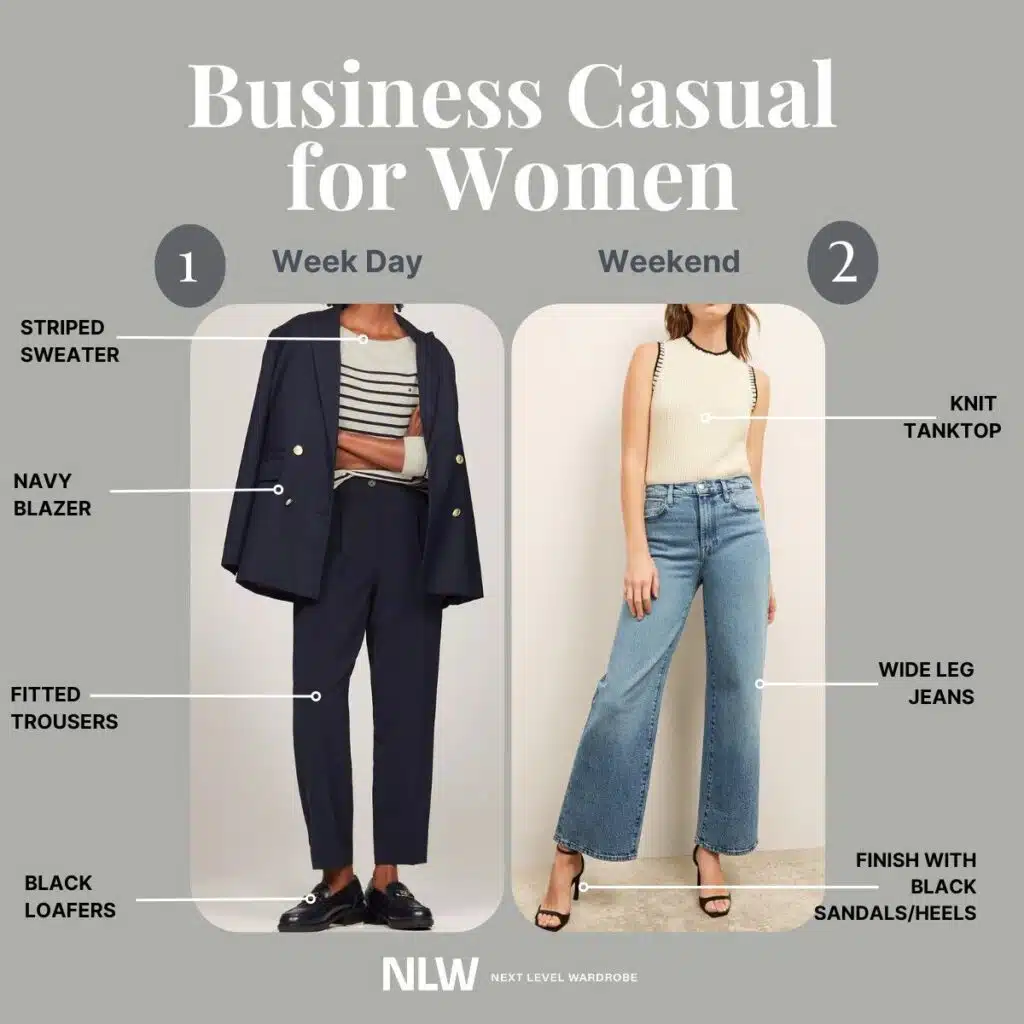
Credit: nextlevelwardrobe.com
Business Casual Outfit Inspiration
If you’re stuck, here are five business casual outfit ideas. Use them for inspiration, or mix and match pieces.
- Classic Neutral: Black dress pants, cream blouse, gray blazer, black loafers.
- Soft Pastel: Light blue skirt, white knit top, pale pink cardigan, nude flats.
- Bold Accent: Navy pencil skirt, white button-down, red belt, black pumps.
- Pattern Play: Gray trousers, patterned blouse (small print), navy cardigan, gray flats.
- Warm Layers: Taupe dress pants, burgundy knit top, beige blazer, brown loafers.
These outfits work across seasons and industries. Adjust accessories and shoes as needed.
How To Maintain A Business Casual Wardrobe
Keeping your business casual wardrobe in good shape saves time and money. Here’s how to do it.
- Wash and iron clothes regularly: Wrinkled clothes look unprofessional.
- Rotate shoes and outfits: Avoid wearing the same thing every day.
- Store clothes properly: Hang blazers and pants, fold knits.
- Fix damage quickly: Repair small tears or stains right away.
A well-maintained wardrobe lasts longer and always looks sharp.

Credit: wonder-wardrobe.com
Business Casual For Plus-size Women
Business casual is for every body type. Here’s how plus-size women can find outfits that fit and flatter.
- Choose tailored pieces: Avoid oversized or baggy clothing.
- Pick stretchy fabrics: Comfort and fit matter.
- Try midi skirts and wide-leg pants: These styles balance proportions.
- Use vertical lines: Pinstripes or long necklaces create a slimming effect.
- Focus on shoes: Good shoes improve posture and confidence.
Don’t feel pressured to hide your shape. The right fit makes all the difference.
Business Casual For Women Over 50
Older women often worry about looking dated or overdressed. Business casual is perfect for timeless style.
- Choose classic cuts: Straight pants, A-line skirts, simple dresses.
- Stick to neutral colors: Navy, beige, gray, and white are always safe.
- Layer for elegance: Light cardigans or blazers add polish.
- Wear comfortable shoes: Low heels or supportive flats.
Avoid trends that feel too young. Focus on quality and fit.
Data: What Do Women Wear For Business Casual?
Surveys show that women prefer certain items for business casual. Here’s a quick data overview.
| Item | Popularity (%) |
|---|---|
| Dress pants | 75 |
| Blouses | 68 |
| Pencil skirts | 52 |
| Cardigans | 49 |
| Blazers | 41 |
| Flats | 63 |
| Low heels | 39 |
| Loafers | 24 |
Dress pants and blouses are the most popular. Loafers and blazers are less common but rising in popularity.
Business Casual For Special Occasions
Sometimes you need to dress business casual for special events—like conferences, after-work gatherings, or client meetings.
- Conference: Choose classic, comfortable outfits—blazer, dress pants, low heels.
- After-work event: Add a statement necklace or colorful scarf to your regular outfit.
- Client meeting: Dress one step more formal than usual—blazer, tailored skirt, pumps.
Always check the event’s dress code. It’s better to be a little overdressed than underdressed.
Navigating Company Dress Codes
Company dress codes can be confusing. Here’s how to handle them:
- Ask HR: Get the written policy.
- Observe: Watch what your coworkers wear.
- Adjust as needed: If your outfit feels too formal or too casual, change it next time.
If you need more guidance, consider reading official resources like SHRM Dress Code Policy for clear examples.
Frequently Asked Questions
What Colors Are Best For Business Casual?
Stick to neutral colors like black, navy, gray, beige, and white. Soft pastels and subtle patterns are also safe. Avoid neon or very bright shades unless your workplace allows them.
Are Jeans Allowed In Business Casual?
Usually, jeans are not allowed. Some companies permit dark-wash jeans with no rips or fading on casual Fridays. Always check your company’s policy before wearing jeans.
Can I Wear Open-toe Shoes?
Most business casual dress codes require closed-toe shoes. Open-toe shoes, like sandals, are usually not accepted. If you’re unsure, choose flats or low heels.
Is It Okay To Wear Sleeveless Tops?
Sleeveless tops are fine if they have wide straps and are not too revealing. Avoid spaghetti straps or low-cut sleeveless tops. Pair sleeveless blouses with a cardigan or blazer for a more polished look.
How Can I Add Personality To Business Casual Outfits?
Use accessories like scarves, belts, or small jewelry to express your style. Choose tops with subtle patterns or colors. Keep the overall look professional, but let your personality shine through details.
Business casual is both an art and a science. When you know the rules, you can bend them with confidence. The right outfit helps you feel strong, comfortable, and ready for anything. With these tips and examples, you’ll never have to guess what business casual looks like for women again.
