

Is Business Casual Okay for an Interview? Expert Style Tips
Is Business Casual Okay For An Interview
First impressions matter, especially in job interviews. One of the first things interviewers notice is your outfit. Many job seekers wonder: Is business casual okay for an interview? The answer isn’t simple. The right choice depends on the industry, company culture, and the position you’re applying for. Wearing the wrong attire can hurt your chances, even if your skills are strong. On the other hand, dressing well can boost your confidence and help you stand out. This article explores what business casual means, when it’s appropriate for interviews, and how to decide what to wear. You’ll find practical advice, data, and expert insights to help you make the best choice.
Understanding Business Casual
The term business casual is used often, but its meaning can vary. Generally, business casual is less formal than traditional business wear but still polished and professional. It’s a middle ground between suits and casual clothes.
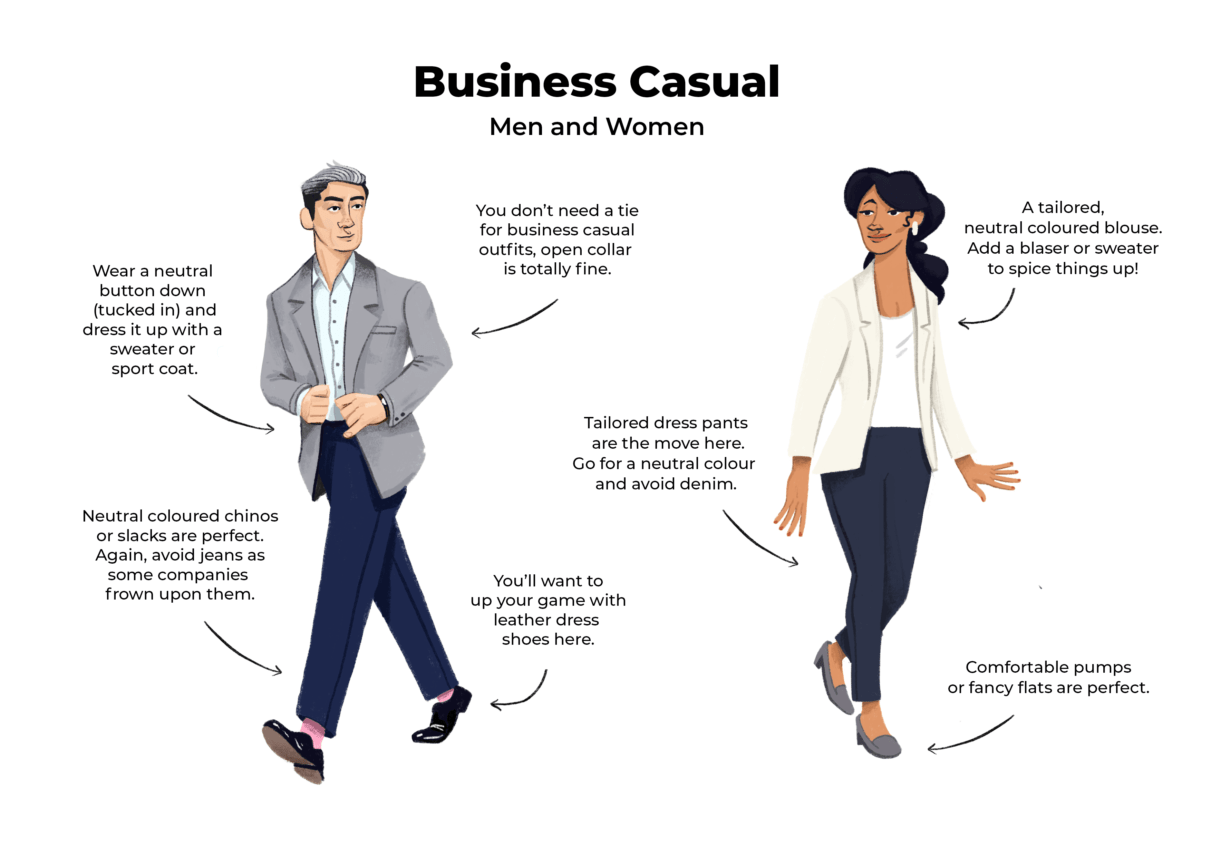
Business casual for men usually includes:
- Dress slacks or chinos
- Collared shirts (like button-downs or polos)
- Dress shoes or loafers
- Optional blazer
For women, business casual might mean:
- Dress pants or skirts
- Blouses or sweaters
- Closed-toe shoes
- Optional blazer or cardigan
Items to avoid in business casual:
- Jeans (unless company says it’s okay)
- T-shirts
- Sneakers
- Shorts
- Flip-flops
Business casual aims to look neat, put-together, and respectful. It’s not about being flashy. The idea is to strike a balance—comfortable, but still showing you care.
Why Interview Attire Matters
Your clothing sends a message before you even speak. Studies show that people form opinions within the first few seconds of meeting someone. According to a survey by CareerBuilder, 49% of employers say how a candidate dresses affects their chances of getting hired.
Wearing the right outfit shows:
- Professionalism
- Respect for the company
- Attention to detail
- Awareness of workplace norms
On the flip side, wearing the wrong attire can signal you didn’t prepare or don’t understand the company. This is especially important for jobs where client interaction or leadership is expected.
When Is Business Casual Appropriate For Interviews?
Not all interviews require the same dress code. Sometimes, business casual is perfect. Other times, more formal attire is needed. Let’s break down the main factors:
Industry Standards
Some industries expect traditional business attire. Others are more relaxed.
| Industry | Typical Interview Attire | Business Casual Accepted? |
|---|---|---|
| Finance | Formal (suit & tie) | Rarely |
| Law | Formal (suit) | Rarely |
| Tech | Business casual | Often |
| Creative (media, design) | Business casual or smart casual | Usually |
| Retail/Hospitality | Business casual | Often |
| Education | Business casual | Usually |
In finance and law, formal attire is the norm. Suits are expected. In tech, creative, and retail fields, business casual is common. Even so, some startups or companies may prefer “smart casual,” which is even more relaxed.
Company Culture
Company culture plays a big role. Some companies have strict dress codes. Others are flexible.
Ways to find out about company dress code:
- Check the company’s website or social media.
- Look for photos of employees.
- Ask the recruiter directly.
- Read employee reviews on sites like Glassdoor.
If you see employees wearing business casual or even jeans, you can often follow suit. If you’re unsure, it’s safer to dress slightly more formal.
Position Level
Higher-level positions often require more formal attire. If you’re interviewing for a management or executive role, wear a suit. For entry-level or junior roles, business casual is usually fine, unless the industry is formal.
Virtual Interviews
Remote interviews are common now. Should you dress business casual for a video call? Yes, your outfit still matters. Dress as you would for an in-person interview. This shows respect and professionalism.
Pros And Cons Of Business Casual For Interviews
Choosing business casual has advantages and drawbacks. Let’s look at both sides:
Advantages
- Comfort: Business casual is less restrictive than suits.
- Approachability: You may seem more relatable to interviewers.
- Alignment: If the company is casual, business casual fits in.
- Cost: Business casual clothes are often less expensive.
Drawbacks
- Risk of underdressing: If the company expects formal attire, you may look careless.
- Ambiguity: The term “business casual” means different things to different people.
- Missed opportunities: For client-facing roles, formal attire may impress more.
A non-obvious insight: Many companies use the interview as a test. They want to see if you can judge what’s appropriate. If you dress business casual and everyone else is in suits, it may signal you didn’t do your research.
Business Casual Vs. Formal Attire: What’s The Difference?
It’s easy to confuse business casual with formal business attire. Here’s a clear comparison:
| Feature | Business Casual | Formal Attire |
|---|---|---|
| Men's Clothing | Slacks, collared shirt, optional blazer | Suit, tie, dress shirt |
| Women's Clothing | Slacks/skirt, blouse, optional blazer | Pant suit, skirt suit, conservative dress |
| Shoes | Dress shoes, loafers | Dress shoes (shined), heels |
| Accessories | Minimal, subtle | Minimal, often more conservative |
| Colors | More variety, muted tones | Dark, neutral (black, navy, gray) |
| Formality | Medium | High |
Business casual is more relaxed. Formal attire is strict, structured, and conservative.
How To Choose The Right Outfit For Your Interview
Making the right choice is easier if you follow a process. Here’s a simple step-by-step guide:
- Research the company: Look for clues about dress code.
- Know the industry: Understand what’s standard in your field.
- Check the job level: Higher positions require more formality.
- Ask if unsure: Contact HR or your recruiter.
- Plan your outfit: Choose clothes that are clean, pressed, and fit well.
- Err on the side of caution: If in doubt, dress more formally.
A practical tip: If you’re applying to a tech company, business casual is usually safe. If it’s a bank or law firm, wear a suit.
Common Mistakes In Interview Dressing
Many job seekers make errors that hurt their chances. Here are some mistakes to avoid:
- Wearing wrinkled or dirty clothes
- Overdoing accessories or perfume
- Choosing flashy colors or prints
- Showing too much skin
- Wearing casual shoes or sneakers
- Ignoring company dress code hints
Another insight: Fit matters. Even the best outfit can look sloppy if it doesn’t fit properly. Tailor your clothes if needed.
Examples Of Business Casual Outfits
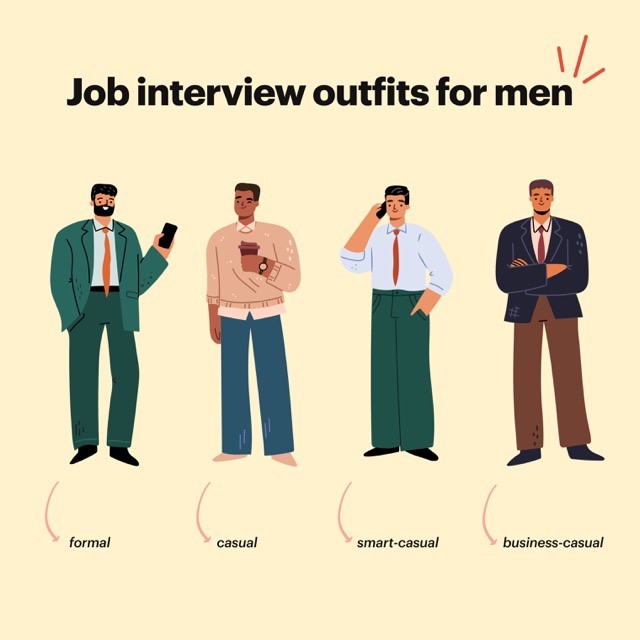
Let’s look at some real-world examples. These combinations work well for most interviews where business casual is appropriate.
Business Casual For Men
- Navy slacks, light blue button-down, brown loafers
- Gray chinos, white polo, black belt, black dress shoes
- Khaki pants, light sweater, optional blazer
Business Casual For Women
- Black dress pants, cream blouse, black flats
- Navy skirt, white sweater, closed-toe heels
- Charcoal slacks, patterned top, navy cardigan
Avoid jeans, t-shirts, and sneakers unless the company specifically allows them.
Credit: www.cvmaker.com
Dressing For Different Types Of Interviews
Interviews come in many forms. Here’s how to dress for each:
In-person Interviews
Dress as you would for the office. Business casual is fine for most companies, but check first. Always aim for neatness and modesty.
Video Interviews
Wear business casual on camera. Avoid distracting patterns or bright colors. Make sure your background is tidy.
Group Interviews
Stand out with a crisp, well-fitting business casual outfit. Avoid blending in with overly casual or overly formal attire.
Panel Interviews
Since you’re meeting several people, err slightly formal. A blazer or jacket adds polish.
A non-obvious tip: Shoes matter even in video calls. Interviewers notice your attention to detail.
Gender Considerations In Business Casual
Business casual can look different depending on gender. Here’s what to keep in mind:
Men
- Avoid shorts or short-sleeve shirts (unless company is very casual)
- Wear a belt and socks that match
- Keep facial hair tidy
Women
- Avoid overly short skirts or low-cut tops
- Keep jewelry minimal
- Choose comfortable, closed-toe shoes
Confidence comes from feeling comfortable. Choose clothes that fit well and match your style.
Cultural And Regional Differences
Business casual varies by country and region. In some places, formal attire is the norm. In others, casual is accepted.
For example:
- In big cities, business casual is common in tech and creative fields.
- In small towns, people may expect more traditional business wear.
- In some countries, modesty is important; avoid revealing clothes.
When interviewing in a different region, research local norms. If unsure, ask someone who works there.
The Impact Of Business Casual On Interview Performance
How you dress can affect how you perform. Wearing business casual can make you feel more relaxed. This may help you communicate better.
A study published in the Journal of Applied Social Psychology found that people who dress professionally feel more confident and are seen as more competent.
However, dressing too casually can make you feel out of place. If you worry about your outfit, you may be distracted. Choose business casual only if you’re sure it’s right for the company.
Preparing Your Business Casual Outfit
Preparation is key. Here’s how to get your business casual outfit ready:
- Try it on: Check fit and comfort.
- Clean and press: Make sure clothes are spotless and wrinkle-free.
- Check details: Look for missing buttons or loose threads.
- Choose accessories: Keep them simple.
- Plan ahead: Lay out your outfit the night before.
A helpful tip: Take a photo of yourself in your chosen outfit. You’ll see how it looks and can spot any issues.
Business Casual For Different Age Groups
Business casual works for all ages. However, the way you style it may differ.
- Young professionals: Avoid trendy styles that look too casual.
- Mid-career: Choose classic, well-tailored pieces.
- Older professionals: Focus on fit and timeless colors.
Age doesn’t change the basic rules, but it may affect how you express your style.
Credit: apsugis.org
Business Casual For Different Body Types
Business casual can be flattering for any body type. The key is fit and proportion.
- If you’re tall: Avoid pants that are too short.
- If you’re petite: Choose clothes that don’t overwhelm.
- If you’re curvy: Structured jackets and tailored pants work well.
- If you’re slim: Layer with sweaters or blazers for shape.
Everyone can look sharp in business casual. Tailoring makes a big difference.
Accessories And Grooming
Accessories add polish to your outfit. Keep them minimal.
For Men
- Simple watch
- Belt matching shoes
- Small cufflinks (if wearing a blazer)
For Women
- Small earrings or necklace
- Classic handbag
- Subtle scarf
Grooming is just as important:
- Clean hair
- Trimmed nails
- Minimal makeup
Interviewers notice details. Good grooming shows you care.
Business Casual In Different Seasons
Your outfit may change with the weather.
Summer
- Lightweight fabrics (cotton, linen)
- Avoid shorts or sandals unless allowed
Winter
- Layers (sweaters, blazers)
- Darker colors
Spring/fall
- Medium-weight fabrics
- Closed-toe shoes
Always stay comfortable, but keep the look professional.
How Business Casual Evolved
Business casual started as a way to relax dress codes. Tech companies popularized it, making offices less formal. Now, business casual is common in many fields.
But some companies have gone even further—allowing jeans or sneakers. Others stick to suits. The key is flexibility. Adapt to the company, not just the trend.
Real-life Examples: Success And Mistakes
Let’s look at two real stories:
- Success: Maria interviewed for a marketing job at a tech startup. She wore black slacks, a blue blouse, and loafers—business casual. The interviewers dressed similarly. She felt comfortable and got the job.
- Mistake: John applied at a law firm. He wore khaki pants and a polo—business casual. Everyone else wore suits. The interviewer mentioned his attire, and he didn’t get the job.
Lesson: Research is crucial. Matching the company’s style helps you fit in.
Business Casual: Myths And Facts
Some myths make people hesitate to wear business casual.
- Myth: Business casual is sloppy.
- Fact: Business casual can be sharp and professional if done right.
- Myth: You must wear a suit for every interview.
- Fact: Many companies prefer business casual.
- Myth: Business casual is only for young people.
- Fact: It works for all ages.
Business Casual Checklist For Interviews
Before your interview, check these points:
- Clothes fit well and are clean
- Shoes are professional
- Accessories are minimal
- Grooming is tidy
- You researched the company
- You feel confident in your outfit
A final tip: If you’re unsure, lean slightly more formal.
Business Casual And Diversity
Business casual allows for more personal expression. People from different backgrounds can adapt the style to fit their culture.
For example:
- You can wear cultural jewelry if it’s subtle.
- Hijabs or turbans can be part of business casual if styled simply.
Respect company norms, but express your identity.

Credit: www.youtube.com
How Employers View Business Casual
Employers want to see if you fit their culture. If employees wear business casual, interviewers expect you to do the same.
A survey by Indeed found that 34% of hiring managers prefer business casual for interviews. Only 21% require formal suits. This shows business casual is becoming more accepted.
But remember: Some jobs still require formal attire. Always check before you decide.
Business Casual: The Safe Choice?
Is business casual always safe? Not necessarily. If you’re unsure, dressing one step up is safer. For example, add a blazer or wear darker colors.
A non-obvious insight: The right attitude matters as much as the outfit. Stand tall, smile, and show confidence. Your outfit supports your image, but your behavior seals the deal.
Sample Business Casual Interview Outfits
Here are some sample combinations for inspiration:
| Outfit | Why It Works |
|---|---|
| Men: Navy slacks, white shirt, gray sweater, brown loafers | Classic colors, layers for depth, comfortable shoes |
| Women: Charcoal pants, teal blouse, black flats, silver necklace | Professional with a touch of color, minimal accessories |
| Men: Gray chinos, blue button-down, black belt, black dress shoes | Simple, polished, matches most company styles |
| Women: Navy skirt, cream sweater, navy cardigan, nude heels | Elegant, layered look, comfortable and modest |
Use these as a starting point. Adjust based on company and your style.
Business Casual And Sustainability
Choosing business casual can be eco-friendly. You can wear pieces multiple times, mix and match, and avoid buying expensive suits.
Look for quality fabrics that last:
- Cotton
- Wool
- Linen
Wash and care for clothes to extend their life. This saves money and reduces waste.
Business Casual And Remote Work
Remote work has changed dress codes. Many companies allow business casual (or even casual) for virtual meetings. But for interviews, dress up. Show respect, even on camera.
A practical tip: Your outfit affects your mindset. Dressing up helps you focus and feel professional.
Final Thoughts
Business casual is often okay for interviews, but not always. The right choice depends on the industry, company culture, and job level. Research is key. When in doubt, dress slightly more formal. Your outfit supports your confidence and shows respect.
Prepare your clothes, keep grooming sharp, and focus on fit. Employers notice details. With the right approach, you can make a strong first impression.
For more insights on interview attire, visit Indeed Career Advice.
Frequently Asked Questions
What Is Business Casual For An Interview?
Business casual means neat, professional clothes that are less formal than a suit. For men, it’s slacks and a collared shirt. For women, it’s dress pants or a skirt and a blouse. Avoid jeans, sneakers, and t-shirts.
Should I Wear Business Casual To A Finance Or Law Interview?
No, it’s safer to wear formal attire like a suit and tie. These industries expect traditional business wear. Business casual may seem too relaxed.
Can I Wear Business Casual For A Virtual Interview?
Yes, business casual is appropriate for video interviews. Dress as you would for an office interview. Avoid overly casual clothes.
What If I Don’t Know The Company Dress Code?
Research online, check photos, or ask the recruiter. If you’re still unsure, dress slightly more formal than business casual. Adding a blazer helps.
Are Jeans Ever Okay In Business Casual For Interviews?
Usually, jeans are not considered business casual for interviews. Some creative or tech companies allow jeans, but only if they are clean and dark. Always check company norms before deciding.
