

Is Business Casual: Decoding Modern Workplace Dress Codes
Is Business Casual
What exactly is business casual? For many, this question is confusing. Business casual is a popular dress code in offices, but it’s not always clear what it really means. Some people think it’s just wearing a shirt and pants instead of a suit. Others believe it’s more flexible, allowing jeans or sneakers. If you’re unsure, you’re not alone. Business casual is different in every company and country. In this article, you’ll learn what business casual is, how it started, and what you should wear to look professional but comfortable. We’ll also explore mistakes people make, how business casual is changing, and give you practical examples. If you want to understand business casual and feel confident in your outfit choices, keep reading.
What Is Business Casual?
Business casual is a dress code for work. It’s not as formal as a suit and tie, but it’s more polished than jeans and a T-shirt. The goal is to look professional but also feel comfortable. Business casual is popular because it helps employees feel relaxed without losing professionalism. It is common in offices, meetings, and some interviews.
Business casual started when companies wanted to make work less strict. They wanted employees to focus on results, not just appearance. However, the meaning of business casual changes by company, city, and country. In some places, business casual is still quite formal.
In others, it’s very relaxed.
The most important thing is to know what your company expects. If you’re not sure, ask your manager or check the company policy. It’s better to be a little more formal than too casual.
Key Elements Of Business Casual
Business casual is not a fixed uniform. It’s a mix of professional and comfortable clothes. Here are the most common items for men and women:
Business Casual For Men
- Shirts: Collared shirts such as button-downs or polos. T-shirts are usually not accepted.
- Pants: Chinos, dress pants, or khakis. Jeans may be allowed in some offices if they are clean and dark.
- Jackets: Blazers or sport coats are optional, not required.
- Shoes: Loafers, dress shoes, or clean sneakers (if allowed). Avoid sandals and flip-flops.
- Accessories: Simple belts and watches are fine. Avoid flashy jewelry.
Business Casual For Women
- Tops: Blouses, sweaters, or nice shirts. Tank tops or low-cut tops are not suitable.
- Bottoms: Dress pants, skirts, or khakis. Dark jeans may be allowed, but avoid ripped or faded ones.
- Dresses: Simple dresses without bold prints or too short length.
- Shoes: Flats, loafers, or small heels. Sandals may be allowed, but not flip-flops.
- Accessories: Simple jewelry and bags. Avoid large or shiny items.
Items To Avoid
Business casual does not mean anything goes. Here are items you should not wear:
- Shorts
- Graphic T-shirts
- Sportswear
- Flip-flops
- Ripped jeans
- Tank tops
- Large logos
- Bright colors
- Hats
- Athletic shoes
Some companies are more relaxed, but these items are usually not business casual.
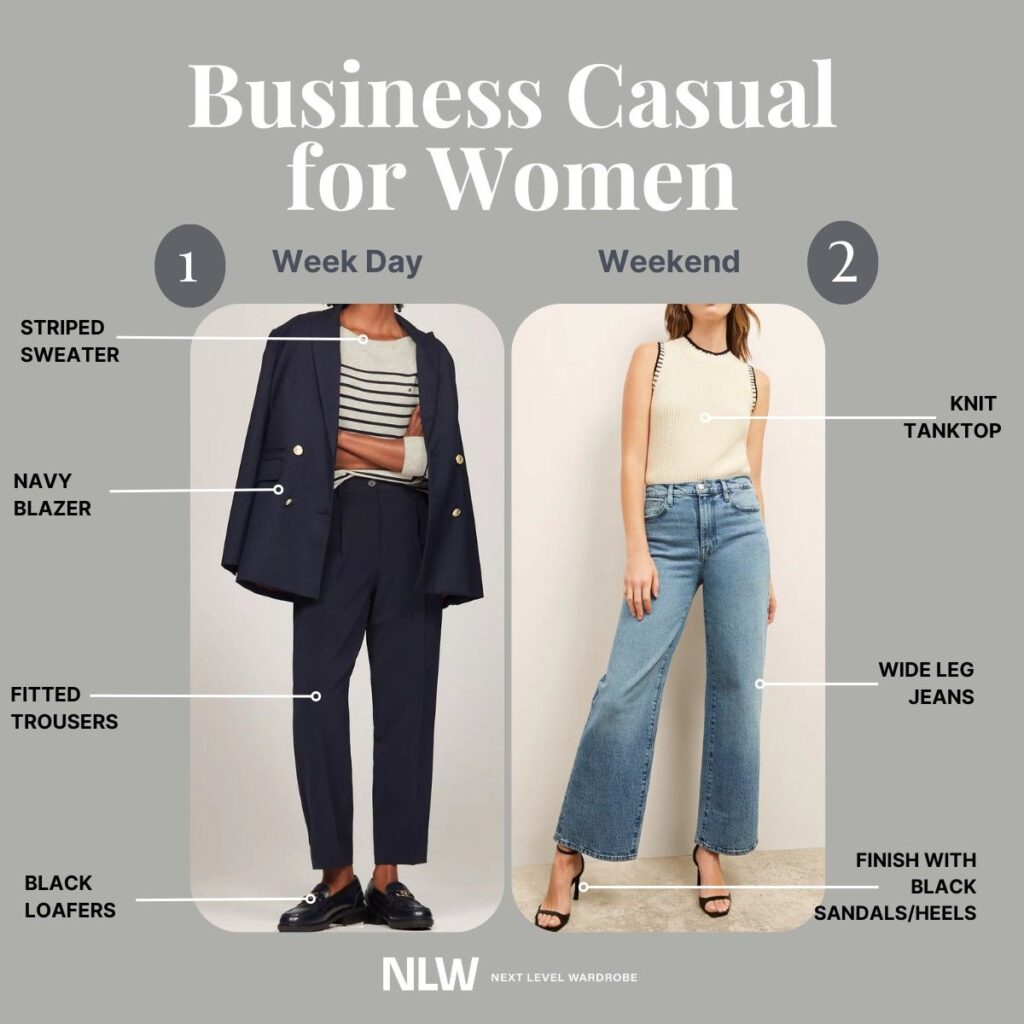
Credit: nextlevelwardrobe.com
Business Casual Vs. Other Dress Codes
Business casual is often confused with other dress codes. Here’s a simple comparison.
| Dress Code | Formality | Typical Items |
|---|---|---|
| Formal | High | Suit, tie, dress shoes |
| Business Casual | Medium | Collared shirt, dress pants, loafers |
| Casual | Low | T-shirt, jeans, sneakers |
Business casual is between formal and casual. It keeps the professional look but skips the suit and tie.
How Business Casual Is Changing
Business casual is not static. It changes with time, culture, and technology. Today, many companies are moving toward a more relaxed style. Some offices allow dark jeans and clean sneakers. Others let employees wear T-shirts with a blazer. This is more common in tech companies and creative fields.
Remote work is also changing business casual. Many people work from home, so they mix comfortable clothes with smart tops for video calls. Still, most companies expect employees to look neat and tidy, even from home.
Another change is gender-neutral styles. Some companies allow employees to choose what fits their identity. This means more choices and less pressure to follow old rules.
If you’re not sure about your office, look at what others wear or ask your manager. It’s better to be safe than too relaxed.
Regional Differences In Business Casual
Business casual is not the same everywhere. It depends on the country, city, and even the company.
United States
Most US offices prefer business casual. Men wear collared shirts and chinos. Women wear blouses and dress pants. Dark jeans are sometimes allowed, especially in tech companies.
Europe
European offices can be more formal. In the UK and Germany, business casual still means no jeans or sneakers. In France and Italy, style matters more. Employees wear smart clothes with a fashionable touch.
Asia
In Japan and South Korea, business casual is close to formal. Employees wear dress shirts and skirts or pants. In India, bright colors and traditional clothes may be part of business casual.
Latin America
Business casual is relaxed in many Latin American countries. People wear shirts and pants, but bright colors and patterns are common.
Middle East
Business casual depends on local culture. In some places, modesty is important. Employees wear long sleeves and avoid tight clothes.
These differences show that business casual is not universal. Always check local customs before choosing your outfit.
Why Companies Choose Business Casual
Business casual is popular for many reasons. It helps employees feel comfortable and productive. Here are the main benefits:
- Comfort: Employees can focus on work, not just appearance.
- Flexibility: Business casual fits many activities, from meetings to daily tasks.
- Morale: Relaxed dress codes make workers happier.
- Recruitment: Young workers prefer business casual. It attracts talent.
- Creativity: Flexible dress codes boost innovation.
Some studies show that companies with business casual have higher employee satisfaction. People feel trusted and respected.
However, there are risks. Too relaxed dress codes can cause confusion or lower standards. That’s why clear guidelines are important.
Business Casual In Different Industries
Business casual is common, but not in every industry. Some fields need formal dress. Here’s a comparison.
| Industry | Business Casual Allowed? | Common Practice |
|---|---|---|
| Finance | No/Partly | Suits, ties, dress shoes |
| Tech | Yes | Shirts, jeans, sneakers |
| Healthcare | Yes | Scrubs, lab coats, business casual |
| Education | Yes | Dress pants, blouses, sweaters |
| Law | No/Partly | Suits, formal dress |
| Creative | Yes | Smart casual, trendy styles |
Some industries need a formal look for trust and authority. Others focus on comfort and creativity.
Business Casual For Special Events
Business casual is not only for daily work. It’s often used for special events like:
- Interviews: Business casual is safe for most interviews, unless the company is formal.
- Meetings: When meeting clients, business casual is good unless told otherwise.
- Conferences: Most conferences prefer business casual.
- Company parties: Business casual is common unless it’s a formal event.
If you’re unsure, dress a little more formally. It’s better to be overdressed than underdressed.

Credit: www.wikihow.com
How To Build A Business Casual Wardrobe
Building a business casual wardrobe takes time. Here’s how to start:
- Start with basics: Buy two or three collared shirts, dress pants, and shoes.
- Choose neutral colors: Gray, blue, black, and white are safe choices.
- Add layers: Sweaters and blazers help you adjust to weather and style.
- Buy quality: Good materials last longer and look better.
- Mix and match: Choose items that work together.
- Check fit: Clothes should fit well, not too tight or loose.
Avoid buying too many trendy items. Trends change, but classic business casual stays the same.
Sample Business Casual Wardrobe For Men
- 3 collared shirts (white, blue, gray)
- 2 pairs of dress pants (black, navy)
- 1 pair of chinos
- 1 blazer
- 2 pairs of loafers
- 1 sweater
Sample Business Casual Wardrobe For Women
- 3 blouses (white, blue, patterned)
- 2 pairs of dress pants
- 1 skirt (knee-length)
- 1 blazer
- 2 pairs of flats
- 1 sweater
- 1 simple dress
This wardrobe covers most situations. You can add more items if needed.
Mistakes People Make With Business Casual
Business casual seems easy, but there are common mistakes. Here are some to avoid:
- Too casual: Wearing jeans, sneakers, or T-shirts when not allowed.
- Ignoring company culture: Not checking what others wear.
- Poor fit: Clothes that are too loose or tight.
- Bright colors: Wearing neon or flashy patterns.
- Dirty or wrinkled clothes: Not caring for your clothes.
- Visible logos: Large brands are distracting.
- Over-accessorizing: Too much jewelry or accessories.
- Not updating wardrobe: Wearing old or faded items.
- Ignoring personal grooming: Hair and nails matter too.
A non-obvious mistake is thinking business casual means no effort. You still need to look tidy and professional. Another mistake is not understanding local culture or company rules.
Practical Tips For Dressing Business Casual
Here are useful tips to help you look your best:
- Plan ahead: Pick your outfit the night before.
- Check the weather: Choose layers for cold or rainy days.
- Keep spare items: Have an extra shirt or blazer at work.
- Ask for feedback: If unsure, ask a coworker or manager.
- Use a lint roller: Clean your clothes before leaving home.
- Update regularly: Replace old clothes every few months.
- Watch your shoes: Clean and polish them often.
- Adapt to events: Dress up for important meetings.
A smart tip is to notice how managers dress. If they wear blazers, you should too. If they relax their style, you can follow.
How Business Casual Impacts Work Culture
Business casual affects how people feel at work. Studies show that relaxed dress codes can:
- Increase productivity: People work better when comfortable.
- Boost creativity: Flexible dress codes help innovation.
- Improve morale: Employees feel happier and more trusted.
- Reduce stress: No pressure to look perfect every day.
However, some companies worry about losing professionalism. That’s why clear rules are needed. Business casual works best with a company culture that values trust and respect.
Business Casual For Remote Work
Remote work is changing business casual. Employees often work from home, where comfort is key. However, video calls still require a smart look.
Tips for remote business casual:
- Smart tops: Wear a collared shirt or blouse for video meetings.
- Comfortable bottoms: Choose pants or skirts that feel good.
- Neat appearance: Brush your hair and look tidy.
- Good lighting: Make sure your workspace looks professional.
Remote work allows more flexibility, but appearance still matters. Some companies even have guidelines for video calls.
How To Handle Unclear Dress Codes
Sometimes, dress codes are vague. If you’re not sure, here’s what to do:
- Ask HR or your manager: It’s better to ask than guess.
- Observe others: Look at what coworkers wear.
- Dress slightly more formal: If unsure, add a blazer or wear dress pants.
- Check the handbook: Many companies have written rules.
- Read emails: Sometimes, special events have dress codes in the invitation.
A common mistake is assuming all offices allow jeans or T-shirts. Always check before dressing down.
Business Casual And Diversity
Business casual is becoming more inclusive. Companies now accept different styles, cultures, and identities. Employees can wear traditional clothes, hijabs, or gender-neutral outfits.
This helps people feel respected and comfortable. It also improves diversity and teamwork. Some companies even support “casual Fridays,” where employees wear cultural or personal styles.
If you want to wear something different, ask your manager. Most companies are open to new ideas.
Business Casual And Sustainability
Business casual also links to sustainable fashion. Many people now buy fewer, better-quality clothes. They avoid fast fashion and choose items that last.
Tips for sustainable business casual:
- Buy quality: Good clothes last longer.
- Care for your clothes: Wash and store them properly.
- Choose eco-friendly brands: Some companies use recycled materials.
- Donate old clothes: Help others and avoid waste.
Sustainable business casual is better for the planet and your wallet.

Credit: www.hockerty.com
How To Combine Business Casual With Personal Style
Business casual does not mean boring. You can show your personality with smart choices.
- Use patterns: Small checks or stripes add interest.
- Add color: Soft blues, greens, or pinks are professional.
- Wear accessories: Simple watches, belts, or scarves.
- Choose shoes: Smart loafers or flats show style.
- Try layers: Sweaters, vests, and blazers change your look.
A non-obvious tip is to use texture. Soft fabrics like wool or cotton look good and feel comfortable.
Business Casual In The Future
Business casual will keep changing. Technology, remote work, and diversity will shape new styles. Companies want employees to feel comfortable, creative, and respected.
Some experts say business casual will become more relaxed. Others believe formal dress will return for special events. The key is flexibility. Employees should adapt to their company and personal needs.
If you want to stay up to date, follow fashion blogs or company news. For more research, visit Wikipedia.
Frequently Asked Questions
What Should I Wear For A Business Casual Interview?
For most interviews, wear a collared shirt or blouse, dress pants or a skirt, and closed shoes. Avoid jeans, sneakers, and bright colors. If the company is more formal, add a blazer. Always check the company dress code before your interview.
Are Jeans Allowed In Business Casual?
Some companies allow dark, clean jeans as part of business casual. Avoid ripped, faded, or light-colored jeans. If unsure, wear dress pants or chinos. Always check your office policy or ask your manager.
Can I Wear Sneakers With Business Casual?
Sneakers are sometimes allowed if they are clean and simple. Avoid athletic or flashy sneakers. Loafers, flats, or dress shoes are safer choices. In creative or tech companies, sneakers may be more common.
Is Business Casual Different For Men And Women?
Yes, there are differences. Men usually wear collared shirts and dress pants. Women can wear blouses, skirts, dresses, or pants. Both should avoid shorts, graphic T-shirts, and flip-flops. Some companies now accept gender-neutral styles.
How Can I Know If My Outfit Is Business Casual?
Ask yourself if the outfit looks professional and comfortable. Avoid items like shorts, sportswear, and big logos. If you’re unsure, dress a bit more formally or ask your manager. It’s better to be a little overdressed than too casual.
Business casual is about finding the right balance. It helps you look professional while feeling comfortable. By understanding your company’s culture, planning your wardrobe, and avoiding common mistakes, you can dress with confidence every day. Business casual will keep changing, but the goal is the same: to help you do your best at work.
