

How to Dress Business Casual Men: Style Tips for Modern Professionals
How To Dress Business Casual Men
Dressing business casual can feel confusing, especially for men who want to look sharp but not too formal. The idea is to strike a balance between professional and relaxed. You want to show that you respect the office culture, but you also want to feel comfortable.
Many men worry they will look either too stiff or too sloppy. With the right approach, business casual can be simple, stylish, and effective.
This guide will walk you through everything you need to know about dressing business casual. You’ll get real examples, practical advice, and clear answers to common questions. By the end, you’ll feel confident about building a wardrobe that makes you look good and feel comfortable in any business casual setting.
What Is Business Casual For Men?
Business casual is a dress code that sits between formal business attire and casual wear. It’s less strict than a suit and tie but more polished than jeans and a T-shirt. The goal is to look neat, professional, and approachable.
Business casual is common in offices, meetings, and networking events. It’s also popular for company dinners, presentations, and interviews where a full suit isn’t required. The rules can change depending on the company, industry, and country. Some offices are more relaxed, while others expect a higher standard.
Key Elements Of Business Casual
- Dress shirts: Usually long-sleeved, button-down, and made from cotton or similar materials.
- Pants: Chinos, dress slacks, or tailored trousers.
- Shoes: Leather or suede loafers, brogues, or dress sneakers.
- Jackets: Optional; blazers or sport coats add polish.
- Accessories: Belts, watches, and sometimes ties.
What’s Not Business Casual
- T-shirts
- Athletic shoes
- Shorts
- Ripped or distressed clothing
- Flip-flops
One insight many beginners miss: Business casual is not the same as “casual Friday.” While casual Fridays might allow jeans or polos, true business casual requires more polish.
Essential Items For A Business Casual Wardrobe
Building your business casual wardrobe starts with core pieces. These are items you’ll use often, and they can mix and match easily.
Dress Shirts
A staple of any business casual wardrobe, dress shirts are versatile and professional. Choose solid colors like white, light blue, or gray. Subtle patterns such as stripes or small checks work well, too. Avoid bright colors and bold prints.
- Fabric: Cotton, cotton blends, or oxford cloth.
- Fit: Slim or regular fit; avoid shirts that are too tight or too loose.
- Collar: Standard or button-down.
Chinos And Dress Pants
Chinos offer comfort and style. They come in many colors, but stick to neutral shades like navy, beige, or charcoal. Dress pants (slacks or trousers) are slightly more formal and perfect for meetings or presentations.
- Material: Cotton for chinos; wool or blends for dress pants.
- Fit: Straight or slim fit; avoid baggy or overly tight pants.
- Length: Hem should touch your shoes but not bunch up.
Blazers And Sport Coats
A blazer can lift your outfit, making it more polished. Choose unstructured blazers for comfort, or classic structured blazers for a sharper look. Sport coats are similar but often made from textured fabrics.
- Color: Navy, gray, or brown.
- Material: Wool, tweed, or cotton blends.
- Fit: Shoulders fit well, sleeves end at your wrist.
Shoes
Shoes can make or break your business casual look. Avoid sneakers unless they’re dressy and clean. The best choices are:
- Loafers (leather or suede)
- Derby shoes
- Oxfords
- Brogues
Stick to brown, black, or burgundy. Match your belt color to your shoes for a coordinated look.
Accessories
Small touches can improve your outfit:
- Leather belt
- Classic watch
- Pocket square (optional, adds flair)
- Tie (optional; use slim, simple ties)
Many men overlook socks. Choose plain or subtly patterned socks that match your pants or shoes.
How To Combine Business Casual Pieces
Putting your wardrobe together is about mixing and matching. You don’t need a large collection—just smart combinations.
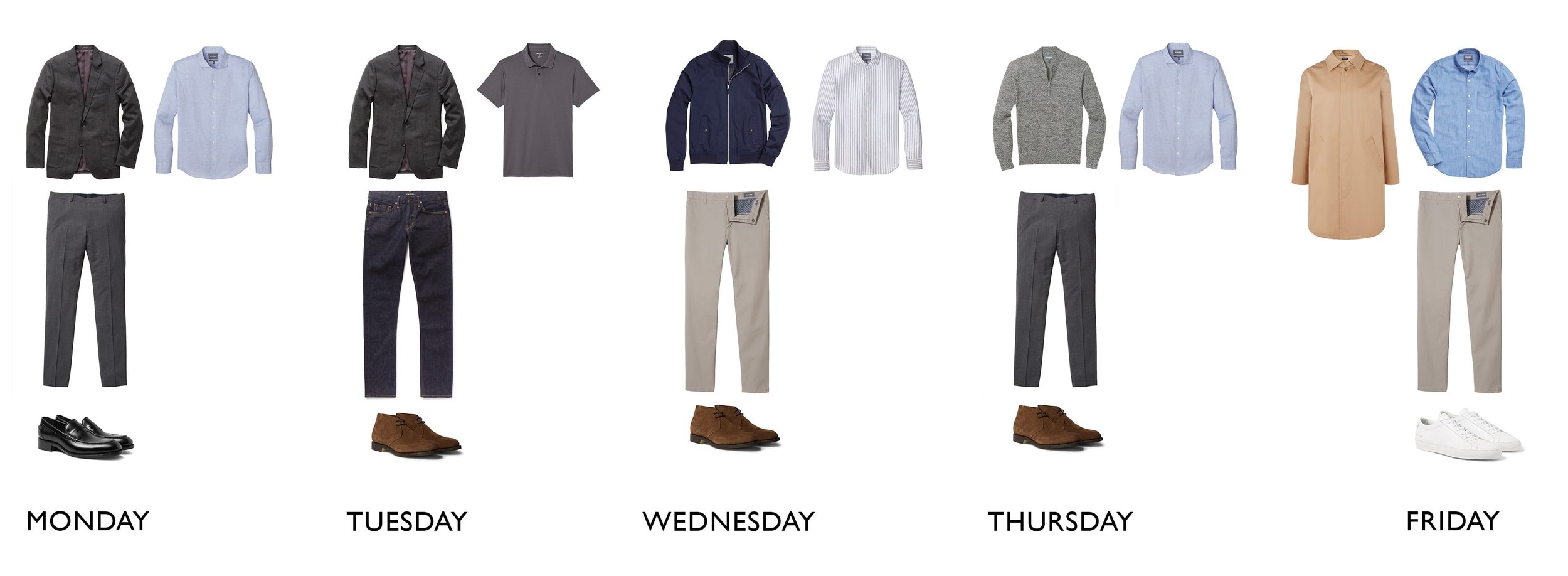
Sample Business Casual Outfits
- White dress shirt + navy chinos + brown loafers
- Light blue shirt + gray dress pants + black belt + black derbies
- Patterned shirt + beige chinos + navy blazer + brown brogues
- Pale pink shirt + charcoal trousers + unstructured sport coat
- Light gray shirt + olive chinos + suede loafers
Each outfit is professional but not too formal. You can swap shirts, pants, or shoes to create new combinations.
Smart Layering
Layering can add style and comfort. Pair a shirt with a blazer or sweater. In colder months, add a lightweight cardigan. Avoid bulky jackets or hoodies.
Color Coordination
Stick to neutral or muted colors. Navy, gray, white, beige, and olive are safe choices. Add interest with subtle patterns or textures.
One common mistake: Mixing too many bold colors or prints. Keep your palette simple for a polished look.
Business Casual Vs. Other Dress Codes
To understand business casual, compare it with other dress codes. Here’s a table showing the main differences:
| Dress Code | Shirt | Pants | Shoes | Jacket |
|---|---|---|---|---|
| Formal/Business | Dress shirt (with tie) | Dress pants | Leather Oxfords | Suit jacket |
| Business Casual | Dress shirt (no tie) | Chinos or dress pants | Loafers, brogues | Optional blazer |
| Smart Casual | Polo or casual shirt | Chinos or dark jeans | Dress sneakers, loafers | Optional sport coat |
| Casual | T-shirt, polo | Jeans, shorts | Sneakers | No jacket |
This comparison shows business casual is more relaxed than formal but still maintains a professional look. It’s also more polished than smart casual or casual.
Credit: www.theessentialman.com
Choosing The Right Business Casual Clothes For Your Body Type
Fit is key to looking good. Many men make the mistake of wearing clothes that are too big or too small. A good fit makes you look sharp and confident.
For Slim Men
- Choose slim fit shirts and pants.
- Avoid oversized jackets.
- Add layers to build shape (blazers, sweaters).
For Athletic Men
- Look for shirts with room in the shoulders and chest.
- Choose trousers that taper at the ankle.
- Stretch fabrics can offer comfort.
For Larger Men
- Stick to regular fit shirts; avoid tight or baggy styles.
- Vertical stripes can slim your look.
- Choose structured blazers to define your shape.
One non-obvious insight: Many brands offer “tailored fit” or “modern fit” options that work for most men. Try different brands to find what fits you best.
Business Casual For Different Workplaces
Business casual varies depending on your job and company. For example, tech companies may be more relaxed, while law firms expect a sharper look.
Corporate Offices
- Stick to classic colors and styles.
- Blazers and dress pants are common.
- Avoid loud patterns.
Creative Agencies
- You can add color or texture (e.g., patterned shirts, colorful socks).
- Dress sneakers may be acceptable.
Tech Startups
- Chinos and polos are often allowed.
- Avoid shorts or sandals.
Retail Or Customer-facing Roles
- Look neat and approachable.
- Clean shoes and pressed shirts are essential.
If you’re unsure, observe what your coworkers wear or ask HR for guidelines. It’s better to dress slightly more formal than too casual.
Seasonal Business Casual Outfits
Weather affects your business casual choices. Here’s how to adapt your wardrobe:
Spring/summer
- Lightweight fabrics (cotton, linen).
- Light colors (white, beige, pastel blue).
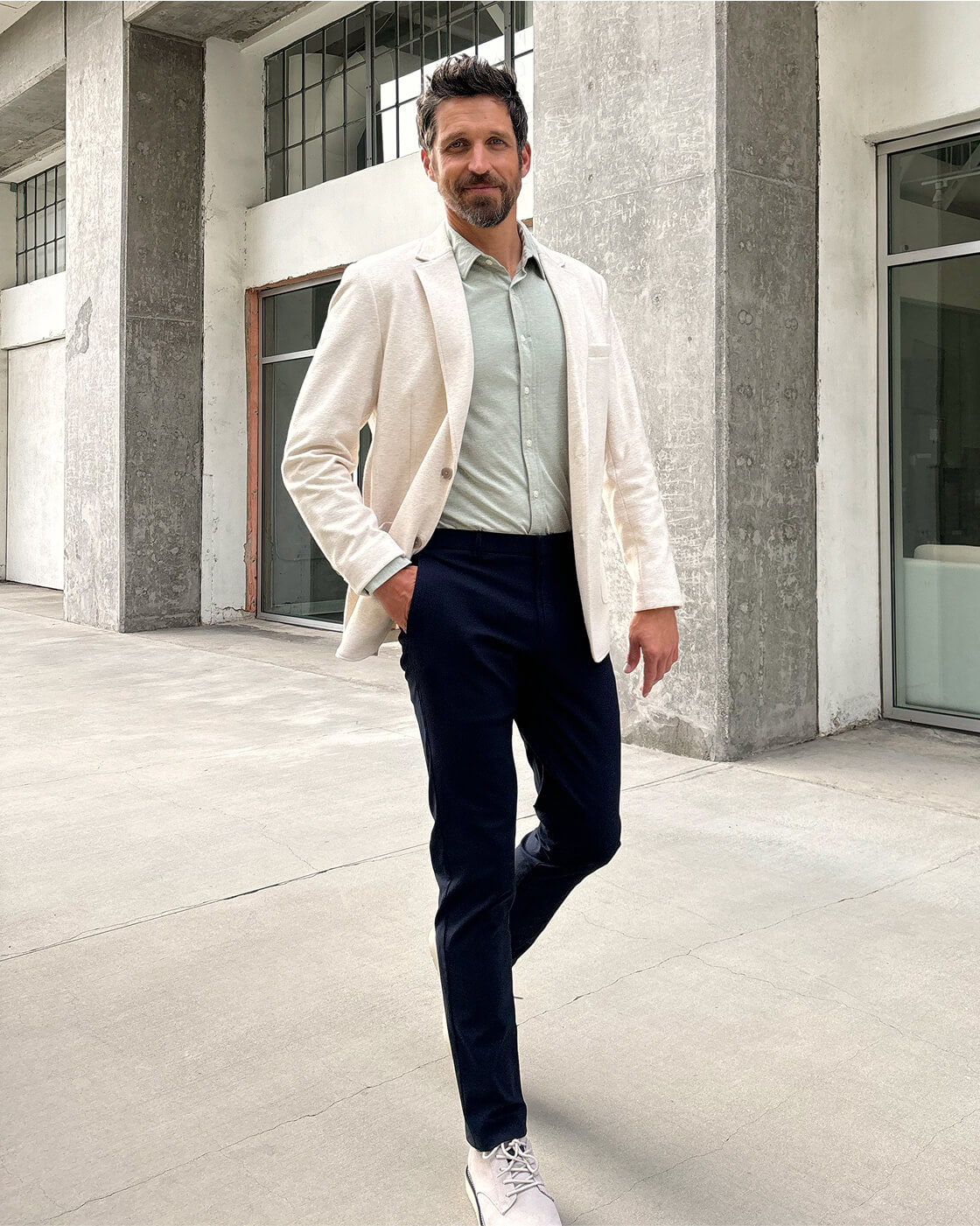
- No heavy jackets; try unstructured blazers.
- Loafers or dress sneakers.
Fall/winter
- Thicker fabrics (wool, tweed).
- Darker colors (navy, charcoal, brown).
- Layer with sweaters or cardigans.
- Leather shoes and boots.
Here’s a seasonal comparison table:
| Season | Shirt | Pants | Outerwear | Shoes |
|---|---|---|---|---|
| Spring/Summer | Light cotton shirt | Beige chinos | Unstructured blazer | Suede loafers |
| Fall/Winter | Wool blend shirt | Dark dress pants | Cardigan or tweed blazer | Leather boots |
Many men forget to adjust their wardrobe for the season. Wearing heavy fabrics in summer or light fabrics in winter can look and feel uncomfortable.
Common Business Casual Mistakes And How To Avoid Them
Even with good intentions, it’s easy to make mistakes. Here are frequent errors and how to fix them:
- Wearing wrinkled clothes: Business casual still requires neatness. Use an iron or steamer.
- Ignoring fit: Baggy or tight clothes look unprofessional. Try different brands and sizes.
- Over-accessorizing: Too many accessories distract. Stick to simple watches and belts.
- Wearing athletic shoes: Choose loafers or dress sneakers instead.
- Mixing casual and formal items badly: Avoid pairing formal jackets with jeans or sneakers.
- Neglecting grooming: Clean hair, trimmed nails, and fresh breath are part of your look.
- Choosing bold prints: Loud patterns can be distracting. Stick to subtle designs.
One overlooked tip: Always check your outfit in natural light before leaving home. Colors can look different under office lighting.
How To Shop For Business Casual Clothing
Shopping for business casual items doesn’t have to be expensive. Focus on quality and fit. Buy fewer items but make sure they work together.
Where To Buy
- Department stores (Macy’s, Nordstrom)
- Specialty stores (Banana Republic, Brooks Brothers)
- Online retailers (Amazon, ASOS)
Look for sales or outlet stores to save money.
What To Look For
- Durable fabrics (cotton, wool blends)
- Good stitching (no loose threads)
- Easy care (machine washable, wrinkle-resistant)
Try on clothes before buying. Check how they move and feel. If shopping online, read reviews and size charts.
Budgeting
A smart wardrobe doesn’t have to be expensive. Here’s a simple budget table:
| Item | Average Price | Recommended Quantity | Total Cost |
|---|---|---|---|
| Dress Shirts | $40 | 4 | $160 |
| Chinos/Pants | $50 | 3 | $150 |
| Blazer | $120 | 2 | $240 |
| Shoes | $80 | 2 | $160 |
| Accessories | $30 | 3 | $90 |
Total estimated cost for a basic business casual wardrobe: $800. You can spend less by shopping sales or buying second-hand.
One practical insight: Invest in high-quality shoes and blazers. These last longer and make the biggest impact.
How To Maintain Your Business Casual Wardrobe
Keeping your clothes in good condition is important. Well-maintained items look better and last longer.
Washing And Ironing
- Read care labels carefully.
- Wash shirts in cold water to prevent shrinking.
- Hang shirts and pants to air dry.
- Iron shirts and pants before wearing.
Storing
- Use wooden hangers for blazers and shirts.
- Fold sweaters and pants to prevent stretching.
- Store shoes in dry, clean places.
Repairs
- Fix loose buttons or small tears quickly.
- Use shoe polish to keep leather shoes looking fresh.
Many men forget regular maintenance. It saves money and keeps your wardrobe looking professional.

Credit: www.youtube.com
Business Casual For Special Occasions
Sometimes, business casual is needed for events outside the office—like conferences, dinners, or after-work gatherings.
Networking Events
- Wear a blazer for extra polish.
- Choose simple, professional accessories.
- Avoid loud colors.
Company Dinners
- Dress slightly more formal (dress pants, structured blazer).
- Stick to neutral colors.
Presentations
- Wear the best-fitting clothes you own.
- Consider a tie if the audience is more formal.
If in doubt, ask someone who attended before or check event photos online. It’s better to be slightly overdressed than underdressed.
Business Casual For Remote Work
Remote work has changed the business casual landscape. Video calls require a neat appearance from the waist up.
Tips For Remote Business Casual
- Wear a clean, pressed shirt.
- Avoid bright colors or busy patterns.
- Keep hair and grooming tidy.
- Use good lighting for calls.
Many people forget that video calls highlight your upper body. A shirt with a collar looks more professional than a T-shirt.
Sustainable And Ethical Business Casual Choices
More men are considering sustainable fashion. Choosing eco-friendly materials and ethical brands can be part of your business casual strategy.
Sustainable Fabrics
- Organic cotton
- Recycled wool
- Linen
Ethical Brands
- Brands that use fair labor practices
- Companies with transparent supply chains
One overlooked insight: Sustainable clothes often last longer and feel better. They might cost more upfront but save money over time.
For more on ethical choices, check resources like Good On You.
Frequently Asked Questions
What Colors Are Best For Business Casual?
Stick to neutral colors like navy, gray, beige, and white. You can add subtle patterns or muted colors like olive or light blue. Avoid bright or neon colors.
Can I Wear Jeans In Business Casual?
Usually, jeans are not part of business casual. Some companies allow dark, tailored jeans, but it’s safer to choose chinos or dress pants. Always check your company’s policy.
Are Ties Required For Business Casual?
Ties are optional in business casual. You can wear a slim, simple tie for extra polish, but most business casual outfits don’t need one. Only use a tie if the office or event is more formal.
What Shoes Are Best For Business Casual?
Choose loafers, brogues, or dress sneakers. Avoid athletic shoes, sandals, or flip-flops. Match your shoe color to your belt for a coordinated look.
How Can I Make My Business Casual Wardrobe Last Longer?
Take care of your clothes by washing, ironing, and storing them properly. Repair small damages quickly. Invest in quality items that last longer and avoid fast fashion.
Business casual doesn’t have to be hard. With the right knowledge, you can look professional and feel comfortable every day. Start with simple, high-quality pieces, pay attention to fit, and don’t be afraid to add your own style. This guide gives you everything you need to build a business casual wardrobe that works for you—no matter your job or office.
If you want to dive deeper into the history and evolution of business casual, visit Wikipedia. With these insights, you can make business casual your own.
Credit: www.stitchfix.com
