

Casual vs Business Casual vs Professional: Dress Code Decoded
Casual Vs Business Casual Vs Professional
Choosing the right dress code can feel confusing. Maybe you’re starting a new job, preparing for an interview, or just want to look your best at work. The line between casual, business casual, and professional attire is not always clear. Yet, how you dress can shape how others see you and even affect your confidence. Getting this right is more than just picking clothes—it’s about fitting in and showing respect for your workplace.
This guide will walk you through what each style means, when to wear it, and how to make smart clothing choices without stress. You’ll see real examples, learn key differences, and pick up details that many people miss. Whether you’re new to work culture or want to polish your wardrobe, you’ll find practical advice here to help you make the best impression.
What Is Casual Attire?
Casual attire is all about comfort and personal style. It’s what you wear when you don’t have to think about a dress code. At work, casual dress codes are more common in creative industries, tech companies, or startups. But even casual offices have some unwritten rules.
Key Features Of Casual Attire
- Comfort is most important
- Clothes are often loose-fitting and made from soft fabrics
- You can show personal taste through colors and patterns
- There’s flexibility to wear accessories, sneakers, or sandals
Examples Of Casual Clothing
- Jeans, khakis, or casual trousers
- T-shirts (plain or with simple prints)
- Polo shirts
- Button-up shirts with rolled sleeves
- Casual dresses or skirts
- Sweaters or cardigans
- Sneakers, loafers, flat sandals
What To Avoid
While casual attire is relaxed, it doesn’t mean you can wear anything. Many workplaces expect some basic standards:
- No gym wear (athletic shorts, workout leggings, tank tops)
- Avoid flip-flops
- Clothes should be clean and in good condition (no holes or stains)
- Avoid offensive logos or slogans
When Is Casual Attire Appropriate?
Casual clothing fits best in relaxed offices, creative fields, or during after-hours events. It’s also common for casual Fridays in more formal workplaces.
Example Scenario
If you work at a small tech startup, you might see coworkers wearing jeans and t-shirts daily. In a traditional law firm, though, even on casual Fridays, you’d be expected to look a bit more polished.
What Is Business Casual Attire?
Business casual is a balance between comfort and professionalism. It’s less formal than a suit, but more polished than jeans and sneakers. Many companies now use business casual as their default dress code because it allows for personal style without sacrificing a neat appearance.
Key Features Of Business Casual
- Clothes are fitted and neat, but not formal
- Neutral and muted colors are common, but some color is fine
- Shoes are closed-toe and more formal than sneakers
- Accessories are simple and understated
Common Business Casual Items
- Dress pants or chinos
- Collared shirts, blouses, or polo shirts
- Sweaters and cardigans over shirts
- Dresses and skirts (knee-length or longer)
- Blazers (optional)
- Loafers, oxfords, flats, low heels
What To Avoid In Business Casual
- Ripped jeans or shorts
- T-shirts with logos or graphics
- Hoodies or sweatshirts
- Athletic shoes or sandals
When Is Business Casual Appropriate?
Most corporate offices, banks, and educational institutions use business casual. It’s also a safe bet for networking events, presentations, or conferences where the dress code isn’t specified.
Example Scenario
Imagine you’re invited to a tech conference. You’re unsure about the dress code, so you choose dark dress pants, a clean polo, and loafers. You look professional, but not overdressed.
Common Mistakes In Business Casual
Many people overdo either the “business” or the “casual” part. For example, wearing a full suit is too formal. On the other hand, wearing sneakers with dress pants can look sloppy. Finding the right balance is key.
What Is Professional Attire?
Professional attire (sometimes called business formal) is the most polished and traditional dress code. It’s expected in fields like law, finance, and some government jobs. This style sends a message of authority, respect, and attention to detail.
Key Features Of Professional Attire
- Matching suits (blazer and pants/skirt)
- Neutral colors: Black, navy, gray, or beige
- Crisp shirts or blouses
- Ties (for men)
- Dress shoes (polished)
- Minimal, classic accessories
Typical Professional Attire
- Suit with jacket and trousers or skirt
- Long-sleeve collared shirt or blouse
- Conservative tie
- Leather belt and shoes
- Closed-toe heels or flats
- Simple jewelry (watch, small earrings)
What To Avoid In Professional Attire
- Bright or flashy colors
- Loud patterns
- Casual fabrics (denim, corduroy)
- Open-toed shoes or sandals
- Heavy or flashy jewelry
When Is Professional Attire Appropriate?
This dress code is often required for job interviews, courtrooms, board meetings, and formal business presentations. If you’re ever in doubt, it’s better to be slightly overdressed in professional attire.
Example Scenario
If you’re interviewing for an accountant position at a major firm, a navy suit, white shirt, and black dress shoes are safest. Even if the company allows business casual, your first impression should be professional.
Key Differences: Side-by-side Comparison
Seeing the differences visually can help clarify what makes each style unique. The table below shows the main points for casual, business casual, and professional attire.
| Dress Code | Typical Clothing | Shoes | Colors & Patterns | Accessories |
|---|---|---|---|---|
| Casual | Jeans, t-shirts, polos, casual dresses | Sneakers, sandals | Any color, fun patterns | Personal style, bold allowed |
| Business Casual | Dress pants, blouses, collared shirts | Loafers, flats, low heels | Mostly neutral, some color | Simple, understated |
| Professional | Suit, dress shirt, conservative dress | Dress shoes, closed-toe heels | Neutral, solid or subtle patterns | Minimal, classic |
Situational Guide: When To Wear Each Dress Code
Picking the right style depends on the situation. Here’s how to decide:
- Casual: Team outings, creative agencies, casual Fridays, remote work (with video calls)
- Business Casual: Regular office days, conferences, client meetings in many industries, job fairs
- Professional: Interviews, courtrooms, board meetings, formal business events
If you’re ever unsure, you can ask HR or check the company handbook. Otherwise, look at what your managers or leaders wear.
How Dress Codes Affect Perception
Your clothing sends a message before you even speak. Here’s why it matters:
- First impressions: People form opinions in seconds. Dressing appropriately helps you appear confident and capable.
- Trust and authority: Professional attire signals reliability. Business casual shows you respect the environment. Even casual wear should look intentional.
- Team culture: Matching the dress code helps you fit in and shows you respect workplace norms.
One non-obvious insight: in some companies, being too formal can make you seem out of touch. In others, being too casual can make you seem unprepared. Observing your workplace is just as important as reading the handbook.
Deep Dive: Common Misunderstandings About Dress Codes
Many people think dress codes are only about clothes, but that’s not true. Grooming, posture, and even how you carry yourself are part of your “dress code. ”
Example: The Power Of Grooming
Wearing a suit with wrinkled pants or dirty shoes weakens your professional image, no matter how expensive the clothing. Clean, neat hair and nails matter as much as the right outfit.
Example: Posture And Presence
Even in casual clothes, standing tall, making eye contact, and smiling can boost your perceived confidence. These small details are often missed by beginners.
How To Build A Versatile Wardrobe
You don’t need a closet full of clothes. With a few smart choices, you can cover all three dress codes.
Smart Wardrobe Staples
- A pair of dark jeans (for casual and some business casual)
- Two or three dress shirts (white, blue, or soft patterns)
- One good blazer (can dress up casual looks)
- A pair of chinos or dress pants
- One classic suit in navy or gray (for professional moments)
- Simple black or brown dress shoes
Mixing And Matching
Many items work in more than one situation. For example, a blazer can turn jeans into a business casual outfit. A dress shirt can look professional with a suit or relaxed with casual pants.
Saving Money
You don’t need to buy everything at once. Build your wardrobe over time. Choose quality over quantity. Neutral colors allow more mixing and matching.

Credit: purduecco.wordpress.com
Gender Differences And Expectations
Dress codes can look different depending on gender, but many rules are becoming more flexible.
For Men
- Casual: T-shirts, jeans, polos, sneakers
- Business casual: Collared shirts, chinos, loafers
- Professional: Suit, tie, dress shoes
For Women
- Casual: Jeans, blouses, casual dresses, flats
- Business casual: Blouses, cardigans, skirts or dress pants, closed-toe flats
- Professional: Suit (pants or skirt), blouse, low heels
One detail many overlook: jewelry and makeup. In professional settings, simple pieces and natural makeup are best. In casual settings, there’s more freedom for bold choices.
Cultural And Industry Variations
Dress codes can mean different things around the world and in different industries.
- Tech companies: Often lean casual, even for leaders
- Finance and law: Professional attire is the norm
- Creative fields: More room for personal style, even in business casual settings
In some countries, showing too much skin or wearing bright colors can be seen as disrespectful. Always consider local customs if you work in a global company.
The Rise Of Remote Work And Hybrid Dress Codes
With more people working from home, dress codes are changing. Some companies now use “video call casual,” where you look business casual on top (for the camera) and casual below.
Still, dressing up a bit for video meetings can boost your confidence. It also shows respect for your team.
Real-world Examples: What People Actually Wear
Below is a look at three people’s wardrobes for each dress code.
| Person | Casual | Business Casual | Professional |
|---|---|---|---|
| Alice (Marketing) | Jeans, bright top, sneakers | Chinos, blouse, cardigan, flats | Navy suit, white blouse, low heels |
| Ben (Finance) | Khakis, polo, loafers | Dress pants, button-down, sweater, oxfords | Gray suit, blue shirt, tie, black shoes |
| Sam (Developer) | T-shirt, jeans, slip-on shoes | Polo, dark jeans, blazer, loafers | Charcoal suit, light shirt, no tie, dress shoes |
How To Adjust Dress Codes For Special Events
Sometimes, a workplace will have theme days, parties, or charity events. These can bend the usual rules.
- For a “sports jersey day,” you might wear your team’s shirt with jeans.
- For a charity gala, even a business casual office might expect cocktail dresses or suits.
If you’re unsure, ask your manager or look at photos from past events.
The Role Of Accessories And Details
Accessories can upgrade or downgrade your look.
- Casual: Fun, bold watches, colorful scarves, playful jewelry
- Business Casual: Leather belts, simple ties, understated bags
- Professional: Classic watches, pearl or stud earrings, quality leather bags
A common mistake: over-accessorizing in professional settings. Less is more.

Credit: www.boltstaffing.com
Dress Code Changes: How Companies Evolve
Many organizations are now relaxing their dress codes. After surveys showed that employees feel happier and more productive in comfortable clothes, some banks and law firms now allow business casual every day. However, special events and client meetings may still require professional attire.
For more about workplace dress codes and their evolution, see the Wikipedia Dress Code page.
Non-obvious Insights For Success
- Fit matters more than price: Well-fitted clothes, even if affordable, look better than expensive clothes that are too loose or tight.
- Preparation reduces stress: Keep one professional outfit ready and clean at all times. You won’t panic before an interview or big meeting.
Most beginners focus only on what to wear. But how you wear it, and how you care for your clothes, makes a bigger impact.
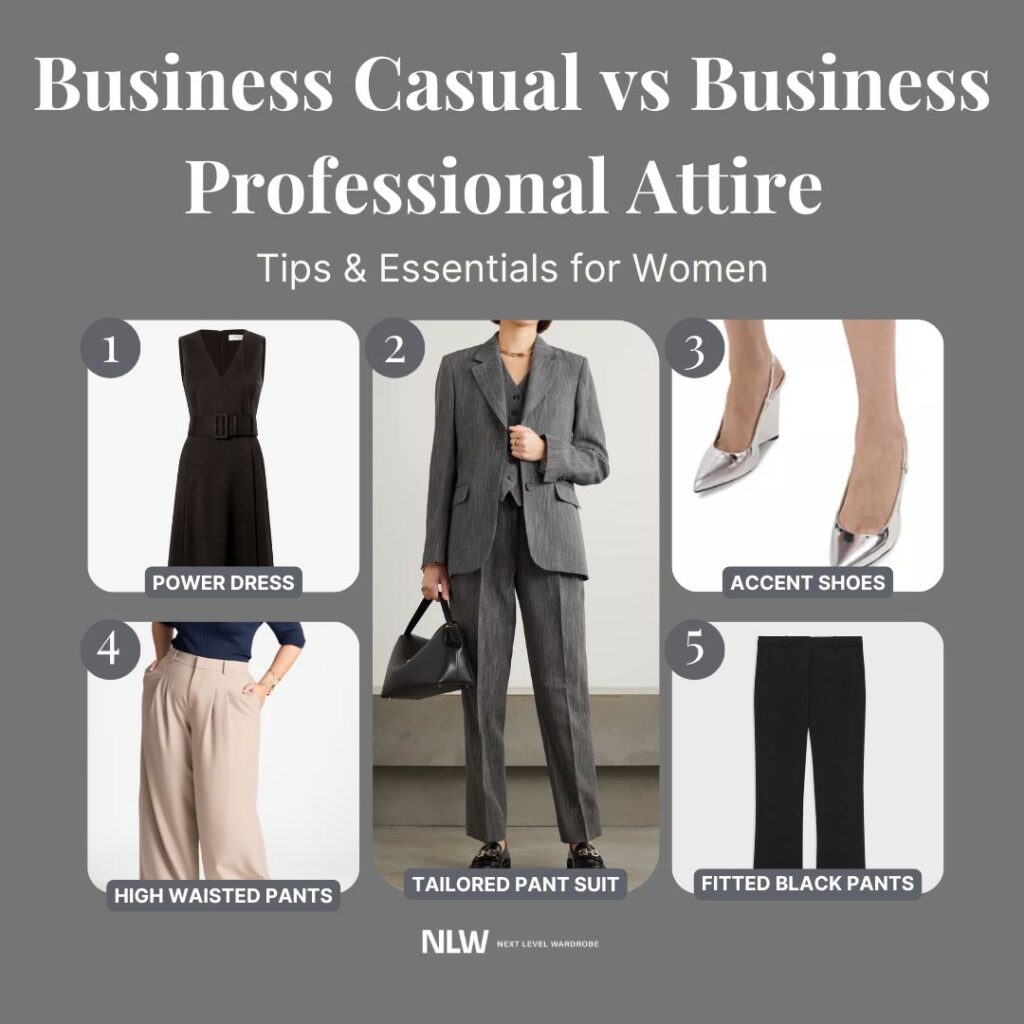
Credit: nextlevelwardrobe.com
Frequently Asked Questions
What Is The Biggest Difference Between Business Casual And Professional Attire?
The main difference is the level of formality. Business casual is less strict: you don’t need a matching suit or tie, and you can wear lighter colors and patterns. Professional attire requires a suit (for men or women), conservative colors, and formal shoes. Business casual lets you show a bit of personality, while professional attire is more about tradition and authority.
Can I Wear Jeans In A Business Casual Office?
Some business casual offices allow dark, plain jeans with no rips or fading, especially in creative industries. However, many still prefer dress pants or chinos. If you’re unsure, choose dress pants for your first week and observe what others wear.
It’s better to be slightly overdressed at first.
How Do I Know If My Outfit Is Too Casual For Work?
Ask yourself: Would I feel comfortable meeting a client or my manager in this outfit? If not, it’s probably too casual. Avoid athletic wear, flip-flops, or clothes with slogans. Clothes should be clean, fit well, and look intentional, not like you just rolled out of bed.
Are Dress Codes Different For Men And Women?
There are some differences in clothing options, but most rules are similar: neatness, fit, and appropriateness matter most. Women have more choices (pants, skirts, dresses), but in professional settings, the expectation is still for conservative colors and minimal accessories. Both men and women should keep grooming and hygiene in mind.
What Should I Do If I’m Still Unsure About The Dress Code?
If you’re new or visiting a company, it’s okay to ask HR or your manager about expectations. You can also look for clues in the company’s website, social media, or employee photos. When in doubt, choose business casual—it’s rarely too formal or too casual.
Making the right choice between casual, business casual, and professional attire doesn’t have to be stressful. With the tips and examples above, you’ll be ready for any work situation. Remember: your confidence and preparation matter as much as your clothes. Dress to fit the moment, and you’ll always make a strong impression.
