

Business Casual Guide for Men And Women: Dress for Success
Business Casual Guide For Men And Women
Dressing for work can feel confusing. Many offices now ask for “business casual” attire, but what does that really mean? If you wear a full suit, you might look too formal. If you choose jeans and sneakers, you may look underdressed.
Finding the right balance can be tricky, but the good news is that business casual gives you some flexibility to show your style—without breaking professional rules.
Whether you’re starting a new job, meeting clients, or just want to upgrade your wardrobe, understanding business casual helps you feel confident and comfortable. This guide breaks down what works for men and women, how to avoid common mistakes, and how to adjust for different workplaces and climates.
You’ll find clear examples, practical tips, and style choices that fit real offices today.
What Is Business Casual?
Business casual is a dress code that sits between formal business wear and everyday casual clothing. The goal is to look neat, professional, and approachable, without the stiffness of a suit and tie. This style is common in many industries, especially tech, marketing, education, and creative fields.
Key Elements
- Professional but relaxed: Clothes should be clean, pressed, and fit well, but not as formal as a full suit.
- Comfort matters: You can choose softer fabrics and comfortable shoes.
- Personal style: There’s room for color, patterns, and accessories, as long as they’re not too bold or distracting.
What Business Casual Is Not
- It’s not jeans and T-shirts (unless your office allows it).
- It’s not shorts, flip-flops, or athletic wear.
- It’s not the same everywhere—always check your company’s policy.
Business Casual For Men
Business casual for men offers many options, but some basics always work well. Let’s break down the main pieces and how to combine them.
Shirts
The most common choice is a collared shirt. You can wear:
- Button-down shirts: Solid colors, stripes, or subtle checks are safe.
- Polo shirts: Good for warmer weather or casual Fridays.
- Knitwear: Lightweight sweaters or pullovers work well over shirts in cooler months.
Avoid shirts with big logos or loud prints. T-shirts are usually too casual unless your company says they’re okay.
Pants
Choose pants that look neat and professional. Good options:
- Chinos or khakis: These come in many colors and feel more relaxed than dress pants.
- Dress slacks: Always a safe choice.
- Corduroys: Good for fall and winter, as long as they’re in neutral shades.
Jeans are sometimes allowed, but only if they’re dark, clean, and without rips.
Jackets And Blazers
You don’t need a suit, but a blazer or sport coat adds polish. Choose unstructured jackets for a relaxed look. Patterns like herringbone or tweed can add style, but keep colors muted.
Shoes
Pick shoes that look smart but not overly formal:
- Loafers: A classic choice.
- Derby or Oxford shoes: Work well with dress pants or chinos.
- Chukka boots: Good for colder weather.
Sneakers are usually too casual, but some offices allow simple, leather sneakers in neutral colors.
Accessories
Keep it simple:
- Belts should match your shoes.
- Watches add a touch of style.
- Avoid flashy jewelry or loud ties.
Table: Business Casual Clothing For Men
| Item | Recommended Choices | What to Avoid |
|---|---|---|
| Shirts | Button-down, polos, sweaters | T-shirts, loud prints |
| Pants | Chinos, dress slacks, corduroys | Shorts, ripped jeans |
| Jackets | Blazers, sport coats | Suits (unless required) |
| Shoes | Loafers, Oxfords, boots | Flip-flops, athletic sneakers |
Practical Examples
- Navy chinos, light blue button-down, brown loafers.
- Gray dress slacks, white polo, unstructured navy blazer.
- Olive corduroys, beige sweater, chukka boots.
Non-obvious Insights
- Fit is more important than price. A $40 shirt that fits well looks better than a $200 shirt that’s too loose or tight.
- Layering adds polish. Wearing a sweater over a shirt or a blazer over a polo makes your outfit look thoughtful—even if the pieces are simple.
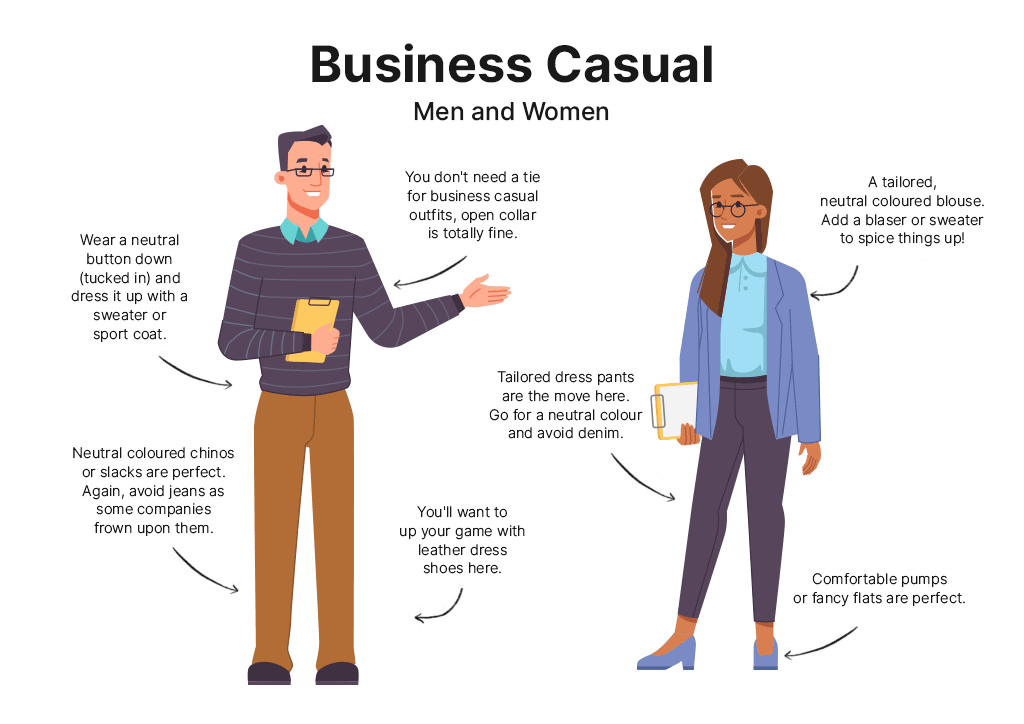
Credit: www.larraurimadrid.com
Business Casual For Women
For women, business casual is both flexible and challenging. There are more choices, but also more chances to miss the mark. Here’s what works best.
Tops
- Blouses: Solid colors, gentle patterns, or subtle details like ruffles are safe.
- Knit tops: Fine-gauge sweaters, fitted cardigans, or shell tops.
- Button-down shirts: Classic and always appropriate.
Avoid tops that are too low-cut, sheer, or have bold graphics.
Bottoms
- Dress pants or slacks: Straight or slightly tapered styles work for most.
- Skirts: Knee-length pencil or A-line skirts are perfect.
- Chinos or ankle pants: Good for a modern touch.
Jeans are sometimes allowed but stick to dark colors and classic fits.
Dresses
- Sheath dresses: Simple, knee-length styles are ideal.
- Wrap dresses: Flattering and comfortable.
Too-short, tight, or party-style dresses are not business casual.
Jackets And Layers
- Blazers: Instantly upgrade any outfit.
- Cardigans: Great for layering and comfort.
- Light jackets: Moto jackets in soft fabrics can work if the rest of your outfit is classic.
Shoes
- Flats: Loafers, ballet flats, or pointed-toe flats.
- Low to mid heels: Pumps or block heels are comfortable and stylish.
- Ankle boots: Pair well with pants or skirts in cooler seasons.
Avoid flip-flops, high stilettos, or heavy athletic shoes.
Accessories
- Simple jewelry: Stud earrings, delicate necklaces, or a classic watch.
- Scarves: Add color without being distracting.
- Structured bags: Keep things organized and professional.
Table: Business Casual Clothing For Women
| Item | Best Choices | What to Avoid |
|---|---|---|
| Tops | Blouses, knit tops, cardigans | Sheer, low-cut, graphic tees |
| Bottoms | Dress pants, skirts, chinos | Shorts, leggings (as pants) |
| Shoes | Flats, low heels, ankle boots | Flip-flops, platform heels |
| Accessories | Simple jewelry, scarves | Oversized or flashy pieces |
Practical Examples
- Black ankle pants, cream blouse, gray cardigan, ballet flats.
- Navy sheath dress, beige blazer, pointed flats.
- Gray slacks, teal sweater, silk scarf, low block heels.
Non-obvious Insights
- Structured pieces create authority. A blazer or tailored pant instantly makes you look more professional, even if you wear soft fabrics elsewhere.
- Color matters. Soft neutrals (gray, navy, beige) mix well and look modern. Too much black can seem formal or severe in some offices.
Adjusting For Your Workplace
Every office has its own take on business casual. Some are more relaxed, while others lean traditional. Here’s how to find the sweet spot.
Observe Colleagues
Look at what managers and well-dressed coworkers wear. This gives you a real sense of what’s expected—sometimes more than the dress code itself.
Ask Hr Or Your Boss
If you’re new or unsure, it’s fine to ask, “What do people usually wear here? ” or “Is this outfit okay for the office? ”
Consider Industry Standards
- Tech companies: Usually more relaxed. Polos, dark jeans, and casual shoes may be fine.
- Finance or law: Often more formal. Stick to slacks, button-downs, and blazers.
- Creative fields: More room for color and unique accessories, but keep the overall look neat.
When In Doubt
Aim for the “middle ground. ” Slightly overdressed is better than underdressed, especially when you’re new.
Credit: cultivatedculture.com
Seasonal Business Casual
Your wardrobe will change with the seasons, but the basic rules stay the same. Here’s how to adjust without losing style or comfort.
Spring And Summer
- Choose lightweight fabrics like cotton, linen blends, or thin wool.
- Lighter colors (pale blue, beige, white) feel fresher.
- Women can try skirts or dresses with sleeves.
- Men can skip the blazer and roll up sleeves.
Fall And Winter
- Go for layers: Sweaters, cardigans, or vests.
- Wool, tweed, or flannel pants add warmth.
- Darker colors like navy, burgundy, or forest green look good.
- Boots and thicker socks keep you comfortable.
Weather Challenges
- Keep a spare umbrella or raincoat at work.
- Switch to waterproof shoes in rain or snow, then change into office shoes.
Table: Seasonal Fabrics And Colors
| Season | Fabrics | Colors |
|---|---|---|
| Spring/Summer | Cotton, linen blends, light wool | Pale blue, beige, white, light gray |
| Fall/Winter | Wool, tweed, flannel, corduroy | Navy, burgundy, forest green, charcoal |
Business Casual Do’s And Don’ts
Even small details can change how your outfit looks. Here are important tips to avoid common mistakes:
Do’s
- Iron your clothes. Wrinkles make any outfit look sloppy.
- Check for stains or holes. Even small marks stand out at work.
- Polish your shoes. Clean shoes show you care about your appearance.
- Invest in quality basics. A few well-made items can be mixed and matched.
- Tailor for fit. Hem pants, adjust sleeves, or take in shirts for a custom look.
Don’ts
- Don’t wear gym clothes. Even on casual days, athletic wear is too relaxed.
- Don’t overdo perfume or cologne. Keep scents light.
- Don’t wear revealing outfits. Modesty is key, even if it’s hot outside.
- Don’t rely only on black. Add color to avoid looking too formal or somber.
- Don’t skip grooming. Clean hair, nails, and minimal makeup (if you wear it) always look professional.
Non-obvious Mistakes
- Ignoring socks: White athletic socks with dress shoes can ruin your look. Choose dark socks that match your pants.
- Visible undershirts: Wear undershirts that don’t show at the collar or sleeves.

Credit: www.thecoolist.com
How To Build A Business Casual Wardrobe
You don’t need to buy everything at once. Start with basics and build over time.
Step 1: Assess Your Needs
List the days you need business casual outfits and any special events (like meetings or conferences).
Step 2: Start With Core Pieces
For men:
- 2-3 button-down shirts
- 2 pairs of chinos or slacks
- 1 blazer
- 1 pair of loafers or Oxfords
For women:
- 2-3 blouses or tops
- 2 pairs of pants or 1 skirt and 1 pair of pants
- 1 blazer or cardigan
- 1 pair of flats and 1 pair of low heels
Step 3: Add Versatile Layers
Buy sweaters, vests, or an extra jacket for more options.
Step 4: Expand With Color And Patterns
Once you have basics, add pieces in colors or subtle prints.
Step 5: Upgrade Accessories
Get a quality belt, watch, or bag to finish your look.
Smart Shopping Tip
Choose neutral colors for your first pieces (navy, gray, beige) so they mix easily. Later, add color with shirts, scarves, or jewelry.
Business Casual For Remote Work
Many people now work from home, but video calls still require a professional look. Here’s how to adjust:
On Camera
- Wear solid colors or simple patterns—they look better on video than busy prints.
- Good lighting makes your outfit look sharper.
Comfort
- Choose soft, stretchy fabrics for comfort.
- You can wear more casual pants or shoes if they won’t be seen.
Quick Changes
- Keep a blazer or cardigan nearby to throw on for meetings.
Non-obvious Insight
Background matters: A tidy space behind you (or a virtual background) helps your outfit look even more polished.
International Differences
Business casual looks different around the world. Here are examples:
- Europe: Often more formal. Men may wear jackets more often, and women might choose tailored pieces.
- Asia: In some countries, business casual still means a suit. Lighter colors and fabrics are common in hot climates.
- Australia: More relaxed, with short sleeves or lighter fabrics in summer.
If you travel for work, check local customs or ask your host what’s expected.
Sustainable And Ethical Choices
Many people now want to dress well without harming the planet. Here’s how to make better choices:
Choose Quality Over Quantity
Buy fewer, better-made pieces that last longer. This saves money and reduces waste.
Look For Ethical Brands
Some brands use fair labor and eco-friendly materials. Check labels or company websites.
Care For Your Clothes
Wash in cold water, air dry, and repair small rips to extend your clothing’s life.
Non-obvious Insight
Neutral, classic pieces stay in style for years, so you won’t need to update your wardrobe every season.
For more on sustainable fashion, the Fashion Revolution movement offers resources and brand lists.
Frequently Asked Questions
What Exactly Counts As Business Casual?
Business casual means neat, professional clothing that is less formal than a suit but more dressed-up than jeans and T-shirts. For men, it usually means chinos or dress pants with a button-down or polo. For women, it can be dress pants or a skirt with a blouse or sweater.
Always avoid athletic wear, flip-flops, or anything too revealing.
Can I Wear Jeans For Business Casual?
Sometimes. Dark, clean, and classic-fit jeans are allowed in some offices, especially on Fridays. Avoid ripped, faded, or overly tight jeans. Always check your company’s rules—some places never allow jeans.
What Shoes Are Best For Business Casual?
Choose shoes that look smart but feel comfortable. For men: loafers, Oxfords, or chukka boots. For women: flats, low heels, or ankle boots. Avoid athletic sneakers, flip-flops, or shoes with very high heels.
How Do I Add Personality To A Business Casual Outfit?
Use color, subtle patterns, or accessories to show your style. Men can try patterned shirts, colorful socks, or a unique watch. Women can use scarves, jewelry, or a bold bag. Just keep the overall look balanced and professional.
How Can I Save Money While Building A Business Casual Wardrobe?
Start with versatile basics in neutral colors—they mix well and suit many situations. Shop sales, outlet stores, or second-hand shops for quality items. Focus on fit, and tailor cheaper clothes if needed. Over time, add pieces as you find good deals or need something special.
Dressing business casual doesn’t have to be confusing. With the right basics, a little planning, and attention to detail, you can look sharp and feel comfortable at work every day. The goal is to express your best self—confident, capable, and ready for anything your job brings.
