

What is the Difference Between Business Casual and Formal Dress?
What Is The Difference Between Business Casual And Formal
The way you dress at work or during professional events sends a strong message, whether you realize it or not. Sometimes, you walk into an office and see people in suits, ties, and polished shoes. Other times, you notice people wearing smart but more relaxed clothing—maybe slacks, a button-down shirt, and loafers. These differences reflect the dress codes known as business casual and formal. Understanding the gap between these two styles is not just about looking good—it’s about fitting in, showing respect, and sometimes, even advancing your career.
For many, dress codes can be confusing, especially when words like “business casual” and “formal” mean different things in different companies or countries. You might ask, “Can I wear jeans? ” or “Is a blazer enough for a formal event?
” Making a mistake with your outfit can make you feel awkward, affect first impressions, and in some cultures, even impact trust and professional relationships.
This article will break down what business casual and formal actually mean. You’ll learn how they compare, what pieces are essential for each style, and how to avoid common mistakes. Real examples, data, and practical advice will help you feel confident, whether you’re dressing for a regular workday or a black-tie gala.
Understanding Dress Codes: Why They Matter
Dress codes are not just rules for style—they help set the mood and expectations for a workplace or event. They can show respect, help people feel comfortable, and even build a sense of team spirit. For example, formal attire is often used in situations where tradition, hierarchy, and seriousness are important, such as board meetings, high-level negotiations, or weddings. In contrast, business casual is chosen for flexibility, comfort, and encouraging a more relaxed working atmosphere.
A global survey by Randstad found that almost 65% of employees feel more productive and confident when they dress appropriately for their workplace. Another study by OfficeTeam revealed that 80% of managers believe clothing choices can affect an employee’s chances of promotion. In short, dressing right is not just about fashion—it can shape your professional future.
What Is Business Casual?
Business casual is a dress code that mixes some elements of traditional business wear with more comfortable, relaxed clothing. It’s popular in modern offices, especially in tech, creative, and startup environments. But it’s also common in many traditional companies on “casual Fridays” or during less formal meetings.
Key Features Of Business Casual
- Relaxed but neat: Clothes should fit well and be free of wrinkles or stains.
- Flexible: Allows for more personal style, but should always look professional.
- Comfortable fabrics: Materials like cotton, wool blends, and knits are common.
Typical Business Casual Outfits
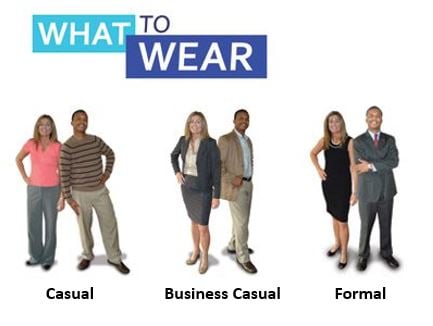
For Men
- Collared shirts (button-down or polo)
- Slacks or chinos (not jeans)
- Sweaters or cardigans
- Optional blazer (no tie needed)
- Leather shoes or loafers
For Women
- Blouses or smart tops
- Dress pants, skirts (knee-length or longer)
- Cardigans or casual blazers
- Closed-toe flats or low heels
What’s Usually Not Business Casual
- T-shirts with logos or graphics
- Ripped jeans or shorts
- Sneakers, sandals, or flip-flops
- Athletic wear or hoodies
Regional And Industry Differences
Business casual can look different around the world. In the US, chinos and collared shirts are standard, while in Japan, even “casual” workwear can lean more formal. Tech companies tend to allow more flexibility, while law firms or banks usually expect a sharper look.
What Is Formal Attire?
Formal attire is the most traditional and sophisticated dress code. It is required for important business events, ceremonies, and high-profile meetings. The main goal is to present a polished, elegant image and show respect for the occasion and others present.
Key Features Of Formal Attire
- Structured and classic: Outfits are tailored and well-fitted.
- Neutral colors: Black, navy, gray, or dark tones are preferred.
- High-quality fabrics: Wool, silk, and fine blends.
- Accessories: Ties, cufflinks, and formal shoes are expected.
Typical Formal Outfits
For Men
- Dark suit (matching jacket and pants)
- Dress shirt (usually white or light color)
- Tie (often required)
- Leather dress shoes (polished)
- Optional: Cufflinks, pocket square
For Women
- Pantsuit or skirt suit (matching pieces)
- Conservative dress (knee-length or longer)
- Closed-toe heels
- Minimal, elegant jewelry
Formal Attire For Special Events
For events such as galas or award ceremonies, the dress code may be “black tie” or “white tie,” which are even more formal. Black tie means tuxedos for men and long evening gowns for women. White tie is the highest level, with tailcoats and floor-length dresses.
Business Casual Vs. Formal: Side-by-side Comparison
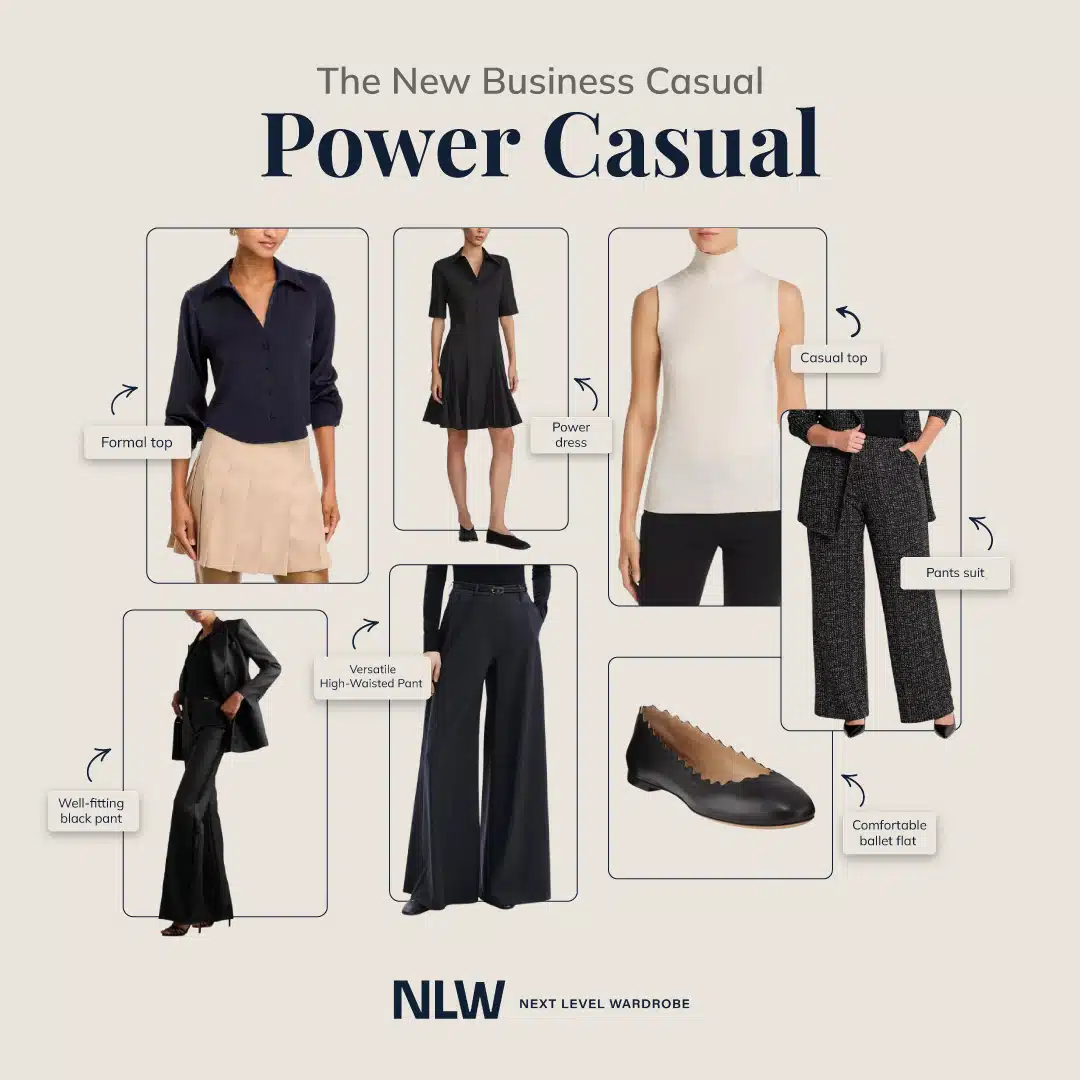
Sometimes, it’s easier to see the differences through a direct comparison. The table below highlights how business casual and formal differ in key areas.
| Aspect | Business Casual | Formal |
|---|---|---|
| Shirts/Tops | Collared, polos, blouses | Dress shirt, conservative blouse |
| Pants/Skirts | Chinos, dress pants, skirts | Suit trousers, matching skirt |
| Jackets | Optional blazer/cardigan | Suit jacket required |
| Shoes | Loafers, flats, low heels | Leather dress shoes, closed-toe heels |
| Ties/Accessories | Optional, minimal | Usually required |
Credit: nextlevelwardrobe.com
Main Differences Explained
Understanding the main differences helps you choose the right clothes for the right moment. Here are the key areas where business casual and formal stand apart:
1. Level Of Structure
Formal attire is about structure—sharp lines, matching sets, and a polished look. Suits for men and pantsuits or skirt suits for women are the foundation. Business casual, in contrast, allows for softer shapes, separate pieces, and more relaxed clothing.
2. Color And Pattern Choices
Formal dress codes usually stick to classic colors like black, navy, or gray. Patterns, if any, are subtle—thin stripes or tiny checks. Business casual gives more freedom: lighter colors, tasteful patterns, and even some creative fabrics are acceptable.
3. Accessories And Shoes
A tie is almost always required in formal dress, and shoes should be leather, polished, and dark. For business casual, a tie is optional or even discouraged, and shoes can be lighter, with more variety (like loafers or simple flats).
4. Fabrics And Comfort
Formal wear uses heavier, finer fabrics—think wool or silk blends. These hold their shape and look crisp all day. Business casual leans toward lighter, more comfortable materials. For example, you might wear a knit top under a cardigan instead of a stiff shirt and jacket.
5. Room For Personal Style
Business casual lets you add more personality. You can choose brighter colors, fun accessories, or a favorite sweater. Formal wear is about fitting a standard, so there’s less room to experiment.
When To Wear Business Casual Vs. Formal
Wearing the right style at the right time can boost your confidence and help you fit in. Below are common situations for each dress code.
Typical Occasions For Business Casual
- Regular office days (many modern companies)
- Client meetings in creative or tech industries
- Networking events (less formal)
- “Casual Fridays” in traditional offices
- Business lunches or after-work gatherings
Typical Occasions For Formal Attire
- Job interviews (especially in banking, law, or consulting)
- Board meetings, presentations to senior executives
- Conferences with top-level industry leaders
- Award ceremonies, galas, or formal dinners
- Weddings, funerals, and other major life events
How To Know What’s Expected
If you’re unsure, check the invitation, company handbook, or ask a coworker. When in doubt, it’s safer to be slightly overdressed than underdressed. Many professionals keep a blazer or tie at work for last-minute changes.
Essential Pieces: Building Your Wardrobe
Having the right pieces makes it easy to dress for any occasion. Here’s a breakdown of essential items for both business casual and formal wardrobes.
Business Casual Essentials
For Men
- 2–3 collared shirts (mix of colors)
- 2 pairs of chinos or dress pants
- 1–2 sweaters or cardigans
- 1 blazer (optional)
- 1–2 pairs of loafers or smart shoes
For Women
- 2–3 blouses or tops
- 2 pairs of dress pants or knee-length skirts
- 1–2 cardigans or casual blazers
- 1 pair of flats, 1 pair of low heels
Formal Wardrobe Essentials
For Men
- 2 dark suits (navy, charcoal, or black)
- 3–4 dress shirts (white, light blue)
- 2 ties (classic patterns)
- 1 pair of leather dress shoes
For Women
- 1 pantsuit and 1 skirt suit (matching jackets/pants/skirts)
- 2–3 conservative dresses
- 1 pair of closed-toe heels
- Minimal jewelry (stud earrings, simple necklace)
Accessories That Elevate Your Look
Belts, watches, and bags can complete your outfit. For formal events, choose a slim leather belt and a classic watch. For business casual, you can be a bit more creative, but avoid anything too flashy or distracting.
Common Mistakes And How To Avoid Them
Even professionals make mistakes with dress codes. Knowing what to avoid can save you from embarrassment.
Business Casual Pitfalls
- Too casual: Wearing jeans, T-shirts, or sneakers.
- Untidy clothing: Wrinkles, stains, or poor fit.
- Over-accessorizing: Loud jewelry or bright patterns.
Formal Attire Mistakes
- Mixing suits: Wearing a jacket and pants that don’t match in color or fabric.
- Missing accessories: Forgetting a tie, cufflinks, or formal shoes.
- Too much perfume or makeup: Keep it subtle.
Non-obvious Insights
- Many people forget that socks matter—white athletic socks can ruin a formal look.
- Wearing a formal suit without the right undergarments (like a proper undershirt or slip) can make even an expensive suit look sloppy.
Gender And Cultural Differences
Dress codes are not the same for everyone. Gender and culture both play a role in what’s considered appropriate.
Gender Differences
Traditionally, men’s formal wear is more standardized—dark suit, tie, and dress shoes. Women have more choices but also more complexity: skirt suits, pantsuits, or dresses. The risk is either being seen as too casual (if the dress is too colorful or short) or too formal (if overdressing for a relaxed event).
Cultural Differences
In some countries, “business casual” may still mean a suit and tie, while in others, even jeans with a blazer is acceptable. For instance, in Scandinavia, business casual often includes sneakers and smart jeans. In the Middle East or Asia, modesty and covering arms or legs can be important, even in relaxed offices.
Adapting To Local Norms
If you work internationally or with teams from other cultures, take time to learn what’s expected. Observing local colleagues or seeking advice can help you avoid mistakes.
Real-world Examples
Let’s look at a few workplace situations to see how dress codes play out.
Example 1: The Law Firm
You join a traditional law firm. The expectation is formal attire every day. Men wear dark suits, women wear skirt suits or pantsuits. On Friday, the office allows “business casual,” which means you can remove your tie or wear a cardigan, but jeans and sneakers are still not allowed.
Example 2: The Tech Startup
You start at a tech company. Most people wear business casual daily—chinos, button-downs, and even neat sneakers. On special days (like meetings with investors), everyone puts on a blazer or a more formal shirt, but full suits are rare.
Example 3: The Conference
You attend an industry conference. The first day is formal: suits and ties, or pantsuits and closed-toe heels. The second day is more relaxed, with business casual allowed.
A Data Snapshot
A LinkedIn poll found that 38% of employees prefer business casual, 24% prefer formal, and the rest want even more relaxed rules. This shows that preferences are changing, but formal attire still has a strong place in certain situations.
How To Transition Between Dress Codes
Sometimes, you need to switch from business casual to formal in the same day—maybe from the office to an important dinner. Here’s how to do it smoothly:
- Keep a formal jacket or tie at work. Adding these instantly makes most outfits more formal.
- Choose neutral colors. Clothes in navy, black, or gray can work for both styles with minor changes.
- Wear versatile shoes. Simple leather shoes can fit both codes.
- Use accessories. A watch, belt, or simple necklace can dress up or down an outfit quickly.
The Impact Of Dress Codes On Professional Success
Dressing appropriately can help you get noticed, build trust, and even win promotions. A Harvard study found that people seen as “well-dressed” are more likely to be viewed as competent and confident by managers. But, being overdressed in a casual office can sometimes make colleagues see you as less approachable.
The key is to match your look to your company’s culture. If you’re new, start a little more formal, then adjust as you observe others.
Credit: www.charlotteparent.com
Data Table: Dress Codes In Different Industries
Industries can have very different expectations. Here’s how dress codes often break down:
| Industry | Common Dress Code | Notes |
|---|---|---|
| Banking/Finance | Formal | Suit and tie, conservative colors |
| Technology | Business Casual | Chinos, shirts, smart sneakers allowed |
| Creative/Media | Business Casual | More color, personal style |
| Law | Formal | Suit required for most roles |
| Education | Business Casual | Varies by institution |
Practical Tips For Dressing Right
1. Check The Dress Code Policy
Always check your company’s handbook or event invitation. If it’s unclear, ask HR or a trusted colleague.
2. Invest In Quality Basics
A few good-quality pieces last longer and look better. A well-fitted blazer, a pair of classic shoes, and crisp shirts can serve you in both business casual and formal settings.
3. Fit Over Fashion
Even the most expensive suit looks bad if it doesn’t fit. Tailor your clothes if needed. For business casual, choose shapes that flatter your body but aren’t too tight.
4. Keep Clothes Clean And Pressed
Wrinkles or stains spoil even the best outfit. Keep your clothes in good condition, and if possible, store an emergency kit (lint roller, stain remover) at work.
5. Prepare For Weather And Travel
Lightweight suits for summer, layers for winter, and comfortable shoes for walking can help you stay sharp all day.
6. Observe And Adapt
If you’re new to a job or event, look around. Notice what managers and respected colleagues wear, then match your style.
Non-obvious Insights
- Seasonal variation: In many places, business casual allows for more color and lighter fabrics in summer, but expects darker, heavier clothes in winter—even in relaxed offices.
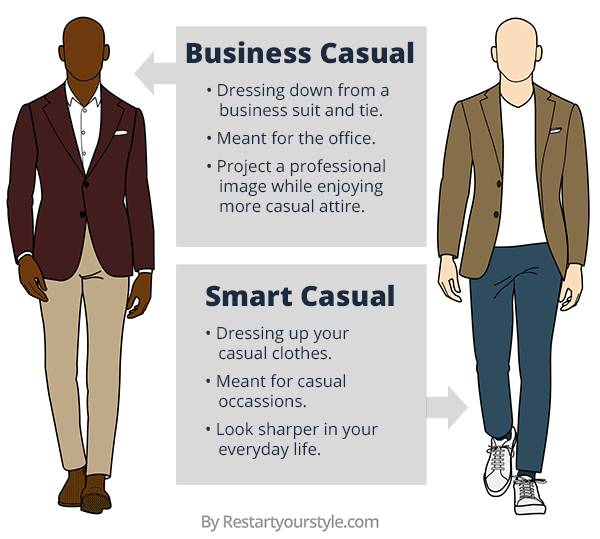
- Hybrid dress codes: Some companies now use a “smart casual” dress code, which sits between business casual and formal. It allows even more personal style but still expects neatness and professionalism.
Data Table: Key Do’s And Don’ts
Here’s a quick reference for what’s usually allowed—and not allowed—in each style.
| Item | Business Casual | Formal |
|---|---|---|
| Jeans | Rarely, only if very neat | Never |
| Sneakers | Sometimes (clean, plain) | Never |
| T-shirts | No | No |
| Shorts | No | No |
| Ties | Optional | Usually required |
| Bold jewelry | Avoid | No |
Credit: restartyourstyle.com
Frequently Asked Questions
What Should I Do If I’m Unsure About The Dress Code?
When in doubt, dress slightly more formal than you think is needed. You can always remove a tie or blazer to look more relaxed, but it’s harder to make a casual outfit look formal. Observing others or asking HR is also helpful.
Can Women Wear Pants In Formal Settings?
Yes, pantsuits are widely accepted as formal wear for women in most industries. The key is that the pants and jacket should match and be made from quality fabrics.
Is It Okay To Wear Business Casual To A Job Interview?
It depends on the company. For traditional sectors like banking or law, formal attire is expected. In creative or tech companies, business casual may be fine, but it’s safer to dress more formally unless told otherwise.
Are Jeans Ever Acceptable As Business Casual?
Some very relaxed offices allow dark, neat jeans as business casual, but many do not. Unless your company clearly allows jeans, choose slacks or dress pants.
Where Can I Find More Guidance On Dress Codes?
You can find helpful resources and official guidelines on websites like Wikipedia’s Dress Code page, which explains various dress codes in detail.
Dressing right is not about following strict rules—it’s about showing respect for yourself and those around you. As workplaces change, dress codes are becoming more flexible, but understanding the key differences between business casual and formal will help you look and feel your best in any situation. Whether you’re starting a new job, attending a big event, or simply updating your wardrobe, the right clothes can open doors and leave a lasting impression.
