

How to Wear Business Casual Men: Style Tips for Modern Professionals
How To Wear Business Casual Men
Business casual is a dress code that many men hear about, but few truly understand. It’s not as formal as a suit and tie, but it’s not as relaxed as jeans and a T-shirt. Finding the right balance can help you look professional, feel comfortable, and make a great impression at work or business events.
In this guide, you’ll learn how to wear business casual as a man—what works, what doesn’t, and how to adapt this style to different situations. Whether you’re starting a new job, updating your wardrobe, or just want to look sharp without being overdressed, you’ll find clear advice here.
What Is Business Casual For Men?
Business casual for men is a style that sits between formal business attire and everyday casual wear. It means you look neat and professional, but not stiff or overly dressed up. This dress code is common in many offices, especially in creative, tech, or modern business environments. Still, the meaning of business casual can change depending on where you work, the country, or even the season.
The main goal is to look tidy, approachable, and ready for work, without wearing a full suit. For most men, this means a collared shirt, dress pants, and smart shoes. Jackets, sweaters, and accessories can add style and help you adjust for weather or personal taste.
Essential Pieces Of A Business Casual Wardrobe
Building a strong business casual wardrobe starts with a few key items. Here’s what you need and why each piece matters:
1. Shirts
- Button-down shirts (long-sleeve or short-sleeve) are the foundation. Choose plain colors like white, light blue, or pale pink, or go with small patterns like checks or stripes.
- Polo shirts are sometimes acceptable, especially in warmer climates or casual offices. Stick to solid colors or simple patterns.
- Avoid T-shirts, tank tops, or shirts with large logos.
2. Pants
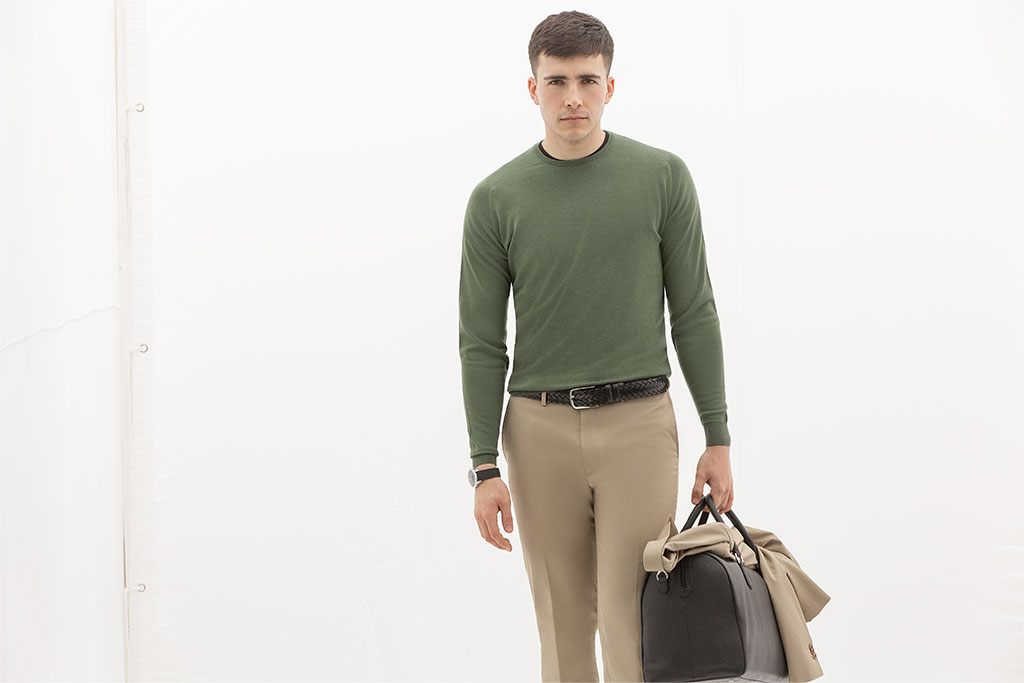
- Chinos and dress pants are best. They’re comfortable and look clean. Popular colors include navy, gray, beige, or olive.
- Dark jeans can work in some offices, but they must be free of rips and should fit well.
- Avoid shorts, cargo pants, athletic pants, or anything too tight or baggy.
3. Shoes
- Leather or suede shoes are ideal. Loafers, brogues, derbies, or oxfords are all good choices.
- Dress boots can be a smart option in cold weather.
- Clean sneakers are sometimes okay in creative offices, but always check your company’s rules.
- Avoid sandals, flip-flops, running shoes, or anything too casual.
4. Jackets And Sweaters
- Blazers and sports jackets add polish and can help you stand out in meetings.
- V-neck sweaters or cardigans work well over shirts, especially in cooler months.
- Avoid hoodies, track jackets, or anything too sporty.
5. Accessories
- Belts should match your shoes (usually black or brown).
- Watches can add style but keep them simple.
- Ties are optional; if you wear one, choose something subtle.
- Socks should be plain or have a small pattern—no cartoon characters or bright, distracting colors.
Business Casual Vs. Other Dress Codes
Understanding how business casual compares to other dress codes can help you avoid mistakes. Here’s a comparison to make things clear:
| Dress Code | Typical Outfit | When to Wear |
|---|---|---|
| Formal Business | Suit, dress shirt, tie, dress shoes | Job interviews, big meetings, presentations |
| Business Casual | Collared shirt, chinos/dress pants, smart shoes | Daily office wear, casual meetings, after-work events |
| Casual | Jeans, polo/T-shirt, sneakers | Casual Fridays, creative workplaces, informal events |
This table shows that business casual is a step down from formal business, but more polished than everyday casual wear.
How To Build A Business Casual Wardrobe
Starting your business casual wardrobe doesn’t mean you need to buy everything at once. Focus on versatile pieces that you can mix and match. Here’s a simple plan:
- Start with basics: Buy 3–4 shirts, 2–3 pairs of pants, and 2 pairs of shoes.
- Choose neutral colors: Navy, gray, white, and black go well together and are easy to style.
- Add one jacket or sweater: This gives you options for colder days or more formal events.
- Pick a simple belt and watch: These small touches make your outfits look complete.
- Buy quality over quantity: Two well-made shirts are better than five cheap ones.
Non-obvious tip: Focus on fit. Even an expensive shirt can look sloppy if it’s too big or too small. Tailor your clothes if needed. Another insight: buy wrinkle-resistant fabrics if you’re busy or travel often—they save time and keep you looking sharp.
Business Casual Outfits For Different Situations
Business casual changes depending on the event, the company culture, and the season. Here’s how to adapt:
At The Office
For most offices, stick to a button-down shirt, chinos or dress pants, and leather shoes. If you’re new or unsure about the dress code, dress up a little—add a blazer or wear a long-sleeve shirt. You can always remove a jacket if you feel overdressed.
For Meetings
Meeting with clients or your boss? Wear a blazer or sports jacket over your shirt. Choose darker pants and polished shoes. If ties are common in your office, wear one; if not, keep it simple.
For Casual Fridays
Many companies relax the rules on Fridays. You can swap dress pants for dark jeans, or wear a polo instead of a button-down. But don’t go too casual—no ripped jeans, sneakers, or T-shirts unless you see your boss wearing them.
For After-work Events
If you’re going from the office to a bar or dinner, add a sweater or change shoes to something more relaxed. A casual jacket or unbuttoned shirt can help you blend in.
For Job Interviews
Even if the company is business casual, dress a bit more formal for your interview. This shows respect and helps you stand out. Try a blazer, collared shirt, and dress pants.
Business Casual Outfits By Season
Weather changes the way you dress, even at work. Here’s how to stay comfortable and stylish all year:
Spring
Lightweight shirts and chinos work well. Try pastel colors or light gray. Add a cotton blazer for cool mornings.
Summer
Short-sleeve shirts or polos, and light chinos or dress pants. Choose breathable fabrics like cotton or linen. Avoid shorts unless your office allows them.
Fall
Layer with sweaters or cardigans. Earth tones—brown, olive, burgundy—look great in autumn. A wool blazer adds warmth without being too formal.
Winter
Wear thicker shirts, wool pants, and leather boots. Add a smart overcoat or peacoat. Scarves and gloves can be stylish, but keep them simple.
Non-obvious tip: In hot weather, undershirts can actually keep sweat off your shirt, helping you stay fresh. In winter, layering thin clothes traps heat better than one thick sweater.

Credit: www.youtube.com
Colors And Patterns In Business Casual
Choosing the right colors and patterns is important in business casual. Here’s what works best:
- Neutral colors: Navy, gray, white, black, and beige are safe and easy to match.
- Accent colors: Add color with a shirt or sweater, but avoid anything too bright or flashy.
- Patterns: Small checks, stripes, or subtle prints are fine. Avoid loud patterns or large logos.
Example: A navy blazer, light blue shirt, gray chinos, and brown shoes is a classic business casual look.
If you want to add personality, try a colorful pocket square or patterned socks. But remember, less is more—one bold piece per outfit.
Common Mistakes In Business Casual
It’s easy to make mistakes when you’re new to business casual. Here are the most common errors—and how to avoid them:
- Wearing clothes that don’t fit: Baggy or tight clothes look unprofessional. Tailor your shirts and pants for a clean look.
- Choosing the wrong shoes: Sneakers, sandals, or athletic shoes are rarely business casual. Stick to leather or suede.
- Mixing formal and casual pieces badly: A suit jacket with jeans can look odd. Make sure your clothes match in style.
- Ignoring grooming: Clean, ironed clothes and neat hair matter as much as your outfit.
- Over-accessorizing: Too many bracelets, rings, or flashy ties distract from your look.
- Wearing wrinkled clothes: Even a great outfit looks bad if it’s not ironed.
- Forgetting socks: Never wear dress shoes without socks. It’s uncomfortable and looks unfinished.
Practical tip: Take a photo of your outfit before you leave home. Sometimes, things look different in a mirror than in a picture.
Credit: www.andrew-brookes.com
How To Shop For Business Casual Clothes
Buying the right clothes doesn’t have to be expensive or confusing. Here’s how to make smart choices:
Where To Shop
- Department stores (like Nordstrom or Macy’s) have a good selection.
- Specialty stores (like Banana Republic, J.Crew) focus on business casual.
- Online shops often offer good prices, but try clothes on in person if possible.
What To Look For
- Quality fabrics (cotton, wool, linen) last longer and look better.
- Neutral colors and simple patterns are easiest to mix.
- Check for strong stitching, smooth buttons, and wrinkle-resistant labels.
Shopping Tips
- Try everything on. Move your arms, sit down, check pockets.
- Buy one or two pieces at a time, not a whole wardrobe at once.
- Watch for sales, but don’t buy something just because it’s cheap.
- Ask for help. Store staff can suggest styles or fits.
Non-obvious insight: Some stores offer free tailoring with a purchase. Take advantage of this—it can make even basic clothes look custom-made.
Outfit Examples For Inspiration
Here are a few sample business casual outfits for men. Use these ideas to build your own style:
Classic Look
- Light blue button-down shirt
- Gray chinos
- Brown leather shoes
- Black belt
- Silver watch
Modern Office
- White oxford shirt
- Navy dress pants
- Dark brown loafers
- Navy blazer
- Patterned socks
Casual Friday
- Pale pink polo shirt
- Dark jeans (no rips)
- Tan suede shoes
- Brown belt
Winter Style
- Light gray sweater over a white shirt
- Black dress pants
- Black dress boots
- Charcoal overcoat
After-work Dinner
- Checked shirt (small pattern)
- Olive chinos
- Brown brogues
- Navy cardigan
Mix and match these pieces to fit your office, the season, and your own taste.
Caring For Your Business Casual Clothes
Taking care of your clothes keeps them looking good and saves money. Here’s how to do it:
Washing
- Follow the care labels—most shirts and pants need gentle washing.
- Use cold water to keep colors bright.
- Hang shirts and pants to dry if possible to avoid shrinkage.
Ironing
- Iron shirts and pants for a crisp look.
- Use steam for tough wrinkles.
- Invest in a good iron—it makes a big difference.
Storage
- Hang shirts, jackets, and pants to keep their shape.
- Use shoe trees in your leather shoes—they hold the shape and prevent creases.
- Store sweaters folded to avoid stretching.
Shoe Care
- Clean leather shoes with a damp cloth, then polish with shoe cream.
- Let shoes rest for a day between wears.
- Use cedar shoe trees to absorb moisture and keep shoes fresh.
Practical tip: Make a habit of checking your clothes for stains or damage each week. Fixing small problems early prevents bigger issues.
Adapting Business Casual For Different Body Types
Not every style works for every body. Here’s how to find the best fit for you:
Tall Men
- Choose shirts with longer sleeves and pants with extra length.
- Avoid vertical stripes—they make you look taller.
- Layering (sweaters, jackets) can help balance your look.
Shorter Men
- Wear pants with no cuffs and shirts that fit close to the body.
- Avoid oversized jackets—they make you look smaller.
- Choose shoes with a slight heel for a subtle boost.
Broad Or Athletic Build
- Look for “athletic fit” shirts and jackets with wider shoulders.
- Avoid very slim or skinny pants.
- Soft fabrics (like knit or stretch cotton) are comfortable and flattering.
Slim Build
- Try fitted shirts and pants—baggy clothes make you look thinner.
- Layering (cardigans, blazers) adds bulk in a stylish way.
- Choose small patterns or lighter colors to add shape.
Expert tip: Most men can benefit from tailoring. Even small changes—like shortening sleeves or tapering pants—make a big difference in how you look.
Business Casual For Different Professions
While business casual is popular in many workplaces, each profession can have its own style expectations. Here’s how to adjust:
Tech Companies
Tech offices are usually relaxed. Polo shirts, dark jeans, and sneakers may be allowed. Still, keep clothes clean and avoid anything too sporty. A casual blazer or smart sweater can help you look professional for meetings.
Finance Or Law
These fields are more traditional. Stick to dress pants, button-down shirts, and leather shoes. Jackets are common, even if ties are not required. Avoid jeans or anything too bold in color or pattern.
Creative Fields
Design, marketing, and media jobs allow more personal style. Try patterned shirts, colorful sweaters, or unique shoes. Just keep the overall look neat—no ripped or faded clothes.
Education
Teachers or academic staff usually wear comfortable, practical business casual. Chinos, sweaters, and loafers work well. Layering is key for classrooms with changing temperatures.
Healthcare Administration
If you work in an office (not a lab or hospital floor), business casual means dress shirts, chinos, and clean shoes. Avoid medical scrubs or white coats unless required.
Non-obvious insight: Always check your company’s handbook or ask HR if you’re unsure. Dress codes can change quickly, and it’s better to ask than guess.
Business Casual Do’s And Don’ts
Do:
- Choose clothes that fit and flatter your shape.
- Keep shoes clean and polished.
- Stick to neutral colors for main pieces.
- Layer for weather or style.
- Use accessories (watch, belt, pocket square) to add polish.
Don’t:
- Wear sportswear, gym clothes, or flip-flops.
- Forget to iron or steam your clothes.
- Overdo cologne or aftershave.
- Wear clothes with visible stains or holes.
- Ignore the company culture or rules.
Practical tip: If you’re not sure if something is business casual, imagine meeting your boss’s boss—would you feel comfortable? If not, choose something safer.
Business Casual In Different Countries
Business casual means different things around the world. For example, in the US, chinos and open-collar shirts are common. In Japan, business casual might still mean a suit without a tie. In the UK, darker colors are more popular. If you travel for work, look up local customs or ask colleagues before your trip.
For more information about international dress codes, visit the Wikipedia business casual page.
Cost Comparison: Business Casual Vs. Formal Wardrobe
Wondering about the cost of dressing business casual compared to buying a full suit-based wardrobe? Here’s a rough comparison:
| Item | Business Casual | Formal Wardrobe |
|---|---|---|
| Shirt | $40–$70 | $60–$100 |
| Pants | $50–$90 | $80–$150 |
| Jacket/Blazer | $100–$200 | $200–$400 |
| Shoes | $80–$150 | $120–$250 |
| Total (3 outfits) | $800–$1,200 | $1,500–$2,400 |
As you can see, a business casual wardrobe is usually less expensive and more flexible than buying several suits.
Business Casual For Special Events
Sometimes, you’ll need to adjust business casual for events like conferences, company parties, or business trips. Here’s how:
- Conferences: Dress one level up. A blazer or sports jacket shows you’re serious, even if no tie is required.
- Company parties: Ask about the dress code. You can often wear bright colors or more relaxed styles, but avoid anything too casual or revealing.
- Business travel: Pack wrinkle-resistant clothes and comfortable shoes. Choose pieces you can mix and match to save space.
Non-obvious tip: Bring an extra shirt in your bag for long events—spills happen, and a clean shirt helps you feel confident.
Frequently Asked Questions
What Is Not Considered Business Casual For Men?
Anything too casual or sporty is not business casual. This includes T-shirts, shorts, sandals, athletic shoes, hoodies, ripped jeans, or clothing with large logos. Stick to neat, professional items like collared shirts, dress pants, and leather shoes.
Can I Wear Jeans As Business Casual?
Dark, clean jeans may be allowed in some offices, especially on casual Fridays. Avoid jeans with rips, fading, or a very tight fit. Always check your company’s rules before wearing jeans to work.
Are Sneakers Business Casual For Men?
Classic leather or minimal sneakers may be acceptable in some creative or tech workplaces. However, avoid running shoes, bright colors, or athletic styles. When in doubt, choose leather shoes or loafers.
Do I Need To Wear A Tie With Business Casual?
Ties are optional in business casual. If you choose to wear one, pick a subtle design and color. In most offices, an open-collar shirt is fine. Only wear a tie if it’s common in your workplace or for special meetings.
How Can I Make My Business Casual Look More Formal?
Add a blazer or sports jacket, choose darker colors, and wear leather shoes. Make sure your clothes are well-fitted and ironed. You can also wear a tie if you want to look more formal for an important meeting or event.
Looking good in business casual is about confidence, comfort, and understanding the rules of your workplace. With these tips, you can dress well every day and be ready for any professional situation.

Credit: www.youtube.com
