

Can Business Casual Be a Dress? Style Tips for Modern Offices
Can Business Casual Be A Dress?
Business casual is everywhere today, from offices to conferences and networking events. But one question comes up again and again: Can business casual be a dress? Many people—especially women—wonder if a dress fits the business casual code or if it’s too formal, too casual, or simply not right for the workplace. The answer is not as simple as “yes” or “no.” It depends on the dress, the workplace, and how you style it. This article explores the possibilities, rules, mistakes, and smart solutions around dresses in business casual settings. If you’ve ever been unsure about wearing a dress to work, you’ll find clear, practical guidance right here.
Understanding Business Casual
Business casual is a dress code that sits between formal business wear and everyday casual clothes. It’s not about wearing jeans and T-shirts, but it’s also not about suits and ties every day. Most companies choose business casual because it offers comfort and flexibility, yet still keeps a professional look.
What Does Business Casual Mean?
The key to business casual is balance. You should look neat and professional, but not overdressed. For men, this usually means slacks or khakis, a collared shirt, and maybe a blazer. For women, options include tailored pants, skirts, blouses, and yes—dresses.
But not all dresses are business casual. The right dress must be modest, clean, and appropriate for a workplace. Avoid party dresses, very short skirts, and anything too revealing.
Why Is There Confusion About Dresses?
Many workplaces have vague rules or offer only general guidelines. Some say “no jeans,” others say “no sneakers,” but few say exactly what counts as business casual for women’s dresses. This leads to confusion.
Another reason is that dresses come in many styles. Some are formal, some are casual, some are playful. Understanding which ones fit the business casual code is essential.
Can A Dress Be Business Casual?
Absolutely, a dress can be business casual. But not every dress is right. The style, length, fabric, and how you accessorize all matter. Let’s look deeper.
What Makes A Dress Business Casual?
- Length: Knee-length or just above the knee is usually safe. Avoid mini dresses or skirts that are very short.
- Fit: Choose a dress that is not too tight, but not baggy. A tailored look is best.
- Neckline: High or moderate necklines are best. Avoid low-cut or plunging styles.
- Sleeves: Sleeves are not a must, but sleeveless dresses should be modest. Cap sleeves, short sleeves, or three-quarter sleeves are all good choices.
- Fabric: Look for quality materials—cotton blends, wool, or polyester. Avoid shiny fabrics or those used for party dresses.
- Patterns and Colors: Solid colors, simple patterns, and muted tones are best. Loud prints or neon colors are usually too casual.
- Accessories: Keep it simple. A belt, a watch, or a subtle necklace works well.
If a dress fits these rules, it can easily be part of a business casual outfit.
Example: The Shift Dress
A shift dress is a classic business casual choice. It is simple, straight, and usually knee-length. You can pair it with a blazer or cardigan and simple shoes. This dress is comfortable, modest, and professional.
Example: The Wrap Dress
A wrap dress works well if it’s not too low-cut and fits properly. Choose one in a solid color or a simple pattern. Avoid styles that are too tight or have dramatic slits.

Credit: www.wikihow.com
Types Of Dresses That Work For Business Casual
Different workplaces have different cultures, but these types of dresses usually fit well in most business casual environments:
- Sheath Dress: A fitted dress, usually knee-length, with a high neckline and no frills.
- A-Line Dress: Fitted at the top, flares gently at the bottom. Comfortable and easy to style.
- Wrap Dress: Adjustable fit, works for many body types. Choose modest designs.
- Shirt Dress: Looks like a longer button-up shirt. Can be belted and is easy to wear with flats or heels.
- Shift Dress: Simple, straight, knee-length. Works well with a blazer.
- Midi Dress: Longer than knee-length, but not full-length. Avoid anything too flowy or casual.
- Sweater Dress: Great for cooler days. Pick one that is not too chunky and fits well.
These dresses can all be styled to fit the business casual dress code.
What Dresses Are Not Business Casual?
Not every dress is right for the workplace. Here are styles to avoid:
- Mini dresses: Too short, not professional.
- Maxi dresses: Often too casual unless styled very carefully.
- Spaghetti strap dresses: Too revealing for most offices.
- Party dresses: Shiny fabrics, sequins, or dramatic cuts are not suitable.
- Bodycon dresses: Very tight and not appropriate for business settings.
- Backless or off-the-shoulder dresses: Too casual or revealing.
- Boho or festival-style dresses: Too relaxed and informal.
If you’re unsure, ask yourself: “Would I wear this to a meeting with my boss?” If the answer is “no,” it’s probably not business casual.
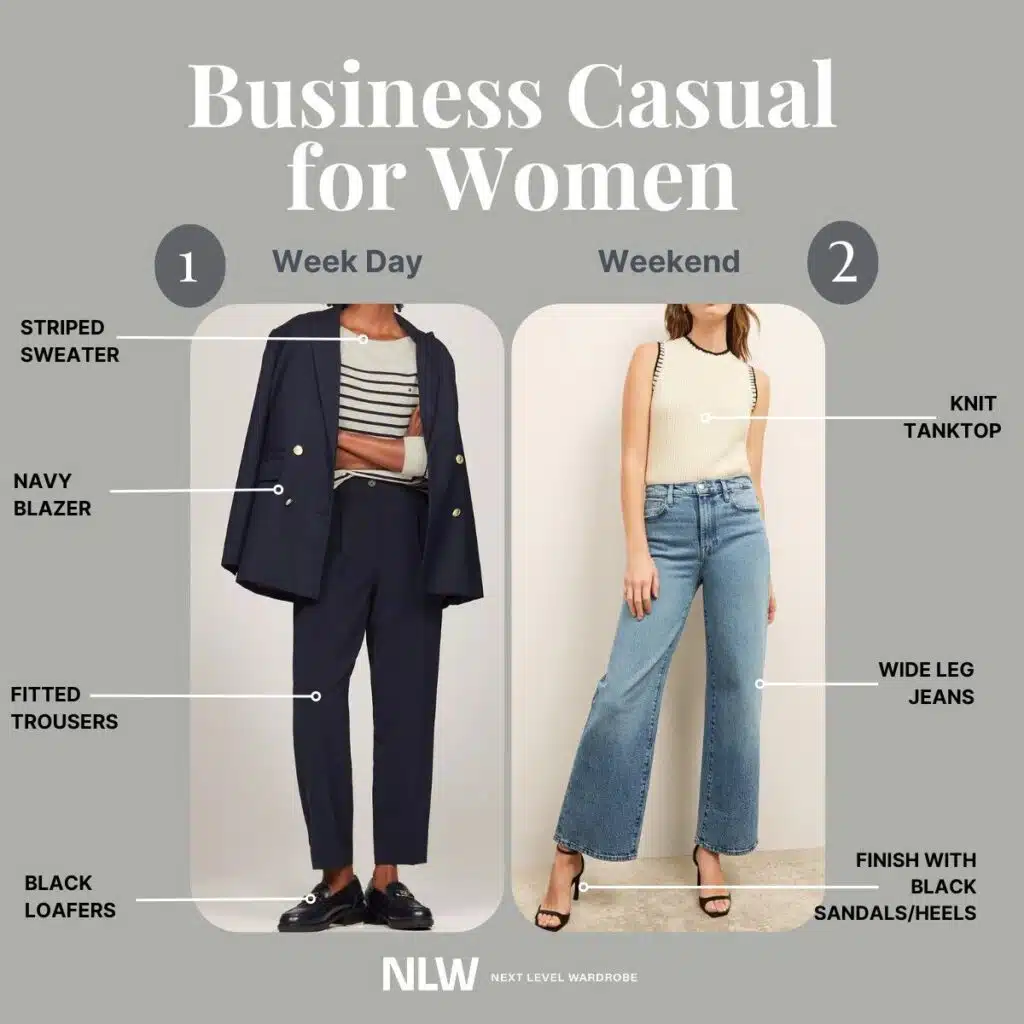
Credit: nextlevelwardrobe.com
Styling A Dress For Business Casual
The way you style a dress can make it fit the business casual code—even if the dress itself is borderline. Here are practical tips:
Adding Layers
- Blazer: Instantly adds professionalism.
- Cardigan: Softer than a blazer, but still polished.
- Scarf: Adds interest, but keep colors and patterns simple.
Choosing Shoes
- Flats: Comfortable and professional.
- Low heels: Classic and safe.
- Loafers: Great for business casual.
- Avoid: Sneakers, flip-flops, or very high heels.
Accessories
- Simple jewelry: A watch, small earrings, and a thin bracelet.
- Belt: Can add shape to a dress.
- Professional bag: Structured handbags look best.
Practical Example
Let’s say you have a navy blue shift dress. On its own, it might look a bit plain. Add a gray blazer, a thin black belt, and nude flats. Finish with a simple silver necklace and a leather tote bag.
Now, you’re ready for any business casual office.
Comparing Dress Styles: Business Casual Vs. Formal Vs. Casual
It helps to see how different dress styles fit into different dress codes. Here is a quick comparison:
| Dress Type | Business Casual | Formal Business | Casual |
|---|---|---|---|
| Sheath Dress | Yes | Yes (with blazer) | No |
| Wrap Dress | Yes | No | Yes |
| Shift Dress | Yes | Yes | No |
| Shirt Dress | Yes | No | Yes |
| Bodycon Dress | No | No | Yes |
| Maxi Dress | No | No | Yes |
This table shows that not all dresses fit every code. Choose wisely depending on your office culture.
Workplace Dress Codes And Real Examples
Different companies have different rules. Some allow dresses as part of business casual, others are stricter. Here are real-world examples:
Corporate Offices
Large companies often have clear guidelines. For example, banks and law firms may require dresses to be knee-length, with sleeves, and paired with a blazer. Patterns must be subtle.
Creative Agencies
Advertising and tech firms are more flexible. You might see shirt dresses, sweater dresses, and even midi dresses in simple patterns. The atmosphere allows more freedom, but avoid anything too casual.
Startups
Startups tend to be informal. You might see more relaxed dresses, but they should still look neat and professional.
How To Choose The Right Dress For Your Workplace
When picking a dress for work, ask yourself these questions:
- Is the dress length appropriate?
- Does it cover enough (shoulders, neckline)?
- Is the fit comfortable but not too tight?
- Is the fabric professional?
- Are the colors and patterns subtle?
If you can say “yes” to all, your dress is probably business casual.
Common Mistakes To Avoid
Many people make simple mistakes when choosing dresses for work:
- Wearing dresses that are too short or too tight.
- Choosing party dresses instead of professional ones.
- Forgetting to check the dress code.
- Over-accessorizing (too many bracelets, big earrings, flashy bags).
- Wearing sneakers or sandals with a dress.
Avoid these mistakes to look professional and confident.
Dress Code Policy And Statistics
According to a survey by the Society for Human Resource Management, nearly 60% of offices have a business casual dress code. Of those, about 35% allow dresses, but only if they follow guidelines for length and modesty.
Another study found that when employees wear business casual, including dresses, productivity improves by up to 12%. People feel comfortable but still professional—leading to better focus and morale.
Dress Shopping Tips For Business Casual
Shopping for a business casual dress can be tricky. Here are tips to help:
- Check the label: Look for dresses labeled “workwear” or “office.”
- Try it on: Make sure the fit is right. Move around, sit, and stand.
- Look at the fabric: Avoid anything shiny, sheer, or too stretchy.
- Think about layering: Can you wear it with a blazer or cardigan?
- Pick colors wisely: Navy, black, gray, and beige are safe choices.
- Ask for advice: If shopping online, read reviews or ask friends.
Many stores now have special sections for business casual. Some brands specialize in workwear, making it easier to find the right dress.
Dress Code Differences: Men Vs. Women
Men’s business casual is usually simple: slacks, shirt, maybe a blazer. For women, there are more choices, but also more chances for mistakes.
Women can wear dresses, skirts, pants, or blouses. But with more options comes more confusion. It’s important to know the rules and not assume that every dress is okay.
Comparison Table: Business Casual Options
| Gender | Common Business Casual | Risky Choices |
|---|---|---|
| Men | Slacks, collared shirt, blazer | Jeans, sneakers, T-shirts |
| Women | Dress, skirt, pants, blouse, blazer | Mini dress, party dress, flip-flops |
This table shows women have more variety, but must be careful about what counts as business casual.
How To Handle Dress Code Changes
Sometimes companies change their dress code. Maybe they move from formal to business casual, or vice versa. Here’s how to handle it:
- Read the new policy carefully: Check what is allowed and what’s not.
- Ask HR: If you’re unsure about dresses, ask for examples.
- Observe others: See what your coworkers wear.
- Start simple: Choose basic, safe dresses at first. As you learn the culture, you can try more styles.
If the policy is vague, it’s better to dress a bit more formally than too casually. You can always adjust later.
Practical Advice: Dressing For Different Business Casual Events
Business casual is not just for the office. You might need to dress for:
- Job interviews: Choose a simple, modest dress. Add a blazer.
- Networking events: A stylish shift dress works well.
- Company parties: Pick a dress that is fun but still professional.
- Presentations: Go for a classic sheath dress.
Every event is different. Always check the invitation or ask the organizer if you’re unsure.
How Climate And Region Affect Business Casual Dresses
Weather matters. In warm climates, sleeveless dresses may be allowed, but they should still be modest. In cold climates, sweater dresses or dresses with tights are popular.
Regions matter too. In big cities, dress codes are often stricter. In smaller towns or creative industries, they may be more relaxed. Always check local norms.
Example: Summer Business Casual
A sleeveless A-line dress in cotton, paired with a light cardigan and flats, is perfect for summer. Avoid anything too short or revealing.
Example: Winter Business Casual
A knee-length sweater dress with tights and ankle boots, plus a blazer, works well in winter. Choose darker colors and heavier fabrics.
Dress Code Evolution: Why Dresses Are More Accepted
Over time, companies have become more open to dresses as business casual. This is partly because more women are in professional roles, and because dresses offer comfort and style.
Today, many offices see dresses as normal business casual wear—as long as they fit the rules. This makes it easier for women to express their style while staying professional.
Dress Etiquette And Non-obvious Insights
Here are insights many beginners miss:
- Dress length can change with sitting: Always check how a dress looks when you sit. A knee-length dress might look shorter when you sit down.
- Undergarments matter: Visible bra straps or slips can ruin a professional look. Choose proper undergarments for each dress.
- Office lighting affects fabric: Some fabrics look sheer under office lights. Check at home before wearing to work.
These details can make the difference between looking professional and making a mistake.

Credit: jkstyle.com
The Role Of Dress In Workplace Confidence
Studies show that people feel more confident when they wear clothes that fit well and suit the dress code. Wearing a business casual dress that fits your style and workplace can boost your confidence and help you perform better.
Dresses offer comfort, freedom of movement, and a chance to show personality—without breaking professional rules.
Business Casual Dress Myths
There are several myths about business casual dresses:
- Myth: Dresses are always too formal. Reality: Many dresses are perfect for business casual.
- Myth: Only pants are business casual. Reality: Skirts and dresses are also allowed.
- Myth: You must wear a blazer with every dress. Reality: Cardigans or simple jackets work too.
Knowing these myths helps you make smart choices.
How To Communicate About Dress Codes
If you’re unsure about a dress, talk to your manager or HR. Ask for examples, or show them the dress you plan to wear. Most companies are happy to help.
If you manage a team, offer clear guidelines. Show pictures or give examples so everyone understands.
Dress Code And Remote Work
Remote work has changed how people dress. Many wear more casual clothes, but for video calls, a business casual dress can help you look professional and focused.
Choose dresses that are comfortable but still polished. Avoid anything that looks like loungewear.
Frequently Asked Questions
Can I Wear A Sleeveless Dress For Business Casual?
It depends on your workplace. Some offices allow sleeveless dresses if they are modest and not too revealing. You can always add a cardigan or blazer if you’re unsure.
What Is The Best Color For A Business Casual Dress?
Neutral colors like navy, black, gray, and beige are safe choices. Soft patterns or muted tones work well too. Avoid bright or neon colors.
How Do I Know If My Dress Is Too Short For Business Casual?
A good rule is knee-length or just above. Sit down and check how the dress looks. If you feel uncomfortable or exposed, it’s probably too short.
Can I Wear A Dress With Patterns For Business Casual?
Yes, but keep patterns simple and subtle. Avoid loud prints or anything too flashy. Small polka dots, stripes, or gentle florals are usually acceptable.
Where Can I Find More Information About Business Casual Dress Codes?
The Society for Human Resource Management offers detailed guides. You can read more at SHRM.
Final Thoughts
A dress can absolutely be part of a business casual outfit. The key is choosing the right style, length, and fabric—and styling it well. Always check your workplace rules, use common sense, and aim for a professional look. With the right dress, you can be comfortable, stylish, and confident at work.
Business casual is about balance. A smart, modest dress fits perfectly into that balance, helping you look your best every day.
