

Business Casual Can You Wear Shorts: Style Rules Explained
Business Casual: Can You Wear Shorts?
“Business casual” is one of the most confusing dress codes in the modern workplace. It sounds simple—neither too formal nor too casual. But as offices become more relaxed, people wonder: Can you wear shorts as business casual? The answer isn’t as straightforward as it seems. Many factors affect whether shorts are appropriate, including company culture, location, the type of work, and even the style of the shorts themselves.
Let’s break down what business casual really means today, why shorts are such a debated topic, and how you can decide what’s right for your workplace. We’ll look at examples, compare standards across industries, and give practical tips for looking sharp—no matter how high the temperature climbs.
Understanding Business Casual: Definition And Origins
Business casual is a dress code that falls between traditional business wear (like suits) and casual, everyday clothing (like jeans or T-shirts). The idea is to look professional but feel comfortable. However, what counts as “business casual” changes between companies, regions, and even individual managers.
Originally, business casual was a response to more relaxed social norms and changing work environments. Technology companies, creative agencies, and startups led the way, allowing employees to ditch ties and formal jackets. Over time, even banks and law firms started to loosen up, though in different ways.
Key elements of business casual usually include:
- Collared shirts or blouses
- Slacks, chinos, or skirts
- Closed-toe shoes or smart loafers
- Optional blazers or sweaters
- Minimal accessories
But where do shorts fit into all this? Are they ever appropriate?
Shorts And The Workplace: Why The Controversy?
Shorts are comfortable and practical, especially in hot weather. But many people see them as too relaxed for professional settings. The debate around shorts in business casual dress codes comes from several concerns:
- Professionalism: Shorts show more skin and are linked to leisure, not work.
- Tradition: In many cultures, shorts are not considered proper work attire.
- Uniformity: Companies want a consistent look among staff.
- Distraction: Some worry shorts might draw unwanted attention.
Despite these concerns, the line is shifting. In some offices—especially in tech, creative, or tropical environments—shorts are accepted or even expected when it’s hot. The key is understanding when shorts cross the line from casual to unprofessional.
Factors That Influence Whether Shorts Are Acceptable
It’s not just about the shorts themselves. Several factors shape whether you can wear shorts in a business casual setting:
1. Company Culture
Some companies set clear dress code policies. Others are more relaxed and leave choices to employees. If your workplace has an employee handbook or dress code, check it first.
- Tech companies often allow shorts, especially during summer.
- Finance and law firms usually do not.
- Startups and creative agencies are often the most flexible.
2. Climate And Geography
Location makes a big difference.
- In tropical or coastal cities, shorts are more common.
- In cities with hot summers, some offices allow shorts seasonally.
- In colder climates or traditional business hubs, shorts remain rare.
3. Industry Norms
Each industry has unwritten rules about appearance. For example, a marketing agency may be fine with shorts, but a medical office likely is not.
4. Your Role And Daily Activities
Client-facing roles or leadership positions often require a more polished look. If you meet with customers, investors, or external partners, shorts may not fit the image the company wants to present.
5. Style And Fit Of The Shorts
Not all shorts are equal. Tailored, knee-length shorts in solid colors can look sharp, while athletic or cargo shorts usually look too casual.
Shorts In Business Casual: What The Data Says
Surveys and studies show mixed feelings about shorts at work. According to a recent report by OfficeTeam, only about 5% of managers believe shorts are acceptable in a business casual office. But in a survey from a popular job site, over 35% of employees said they would like to be able to wear shorts in summer.
The gap shows how expectations differ between workers and management. In some cases, companies have tried “Shorts Fridays” or summer dress policies to test the waters.
Comparing Business Casual Across Industries
Here’s a look at how common shorts are in different fields:
| Industry | Business Casual Standard | Shorts Accepted? |
|---|---|---|
| Technology/IT | Relaxed: Polos, jeans, sneakers | Often (in hot months) |
| Finance/Banking | Conservative: Slacks, dress shirts | Rarely/Never |
| Creative/Design | Trendy, expressive | Sometimes |
| Retail/Hospitality | Uniform or smart casual | Varies |
| Education | Professional, practical | Uncommon |
| Healthcare | Scrubs, uniforms | No |

Credit: www.reddit.com
Types Of Shorts: Which Styles Work Best?
If your workplace allows shorts—or you want to suggest the idea—the right style is crucial. Not all shorts are appropriate, even in casual offices. Here’s how to choose:
1. Tailored Shorts
These look like dress pants but cut off at the knee. They’re made from cotton, linen, or blends, and often come in neutral colors like navy, gray, or khaki.
Why they work:
- Clean lines and fitted shape
- Easily paired with button-down shirts
- Look intentional, not sloppy
2. Bermuda Shorts
A bit longer than regular shorts, usually ending just above the knee. They’re common in business settings in warm climates.
Why they work:
- Modest length
- Can look professional with the right top and shoes
3. Chino Shorts
Less formal than tailored shorts but still neat. Usually made from cotton, they have a flat front and come in many colors.
Why they work:
- Comfortable but tidy
- Good for smart-casual settings
Shorts To Avoid
- Cargo shorts: Too casual and bulky
- Denim shorts: Linked to leisure, not business
- Athletic/gym shorts: Only for the gym
- Short shorts: Too revealing for work
How To Style Shorts For Business Casual
If shorts are allowed, how you style them matters. Here are some tips to look polished:
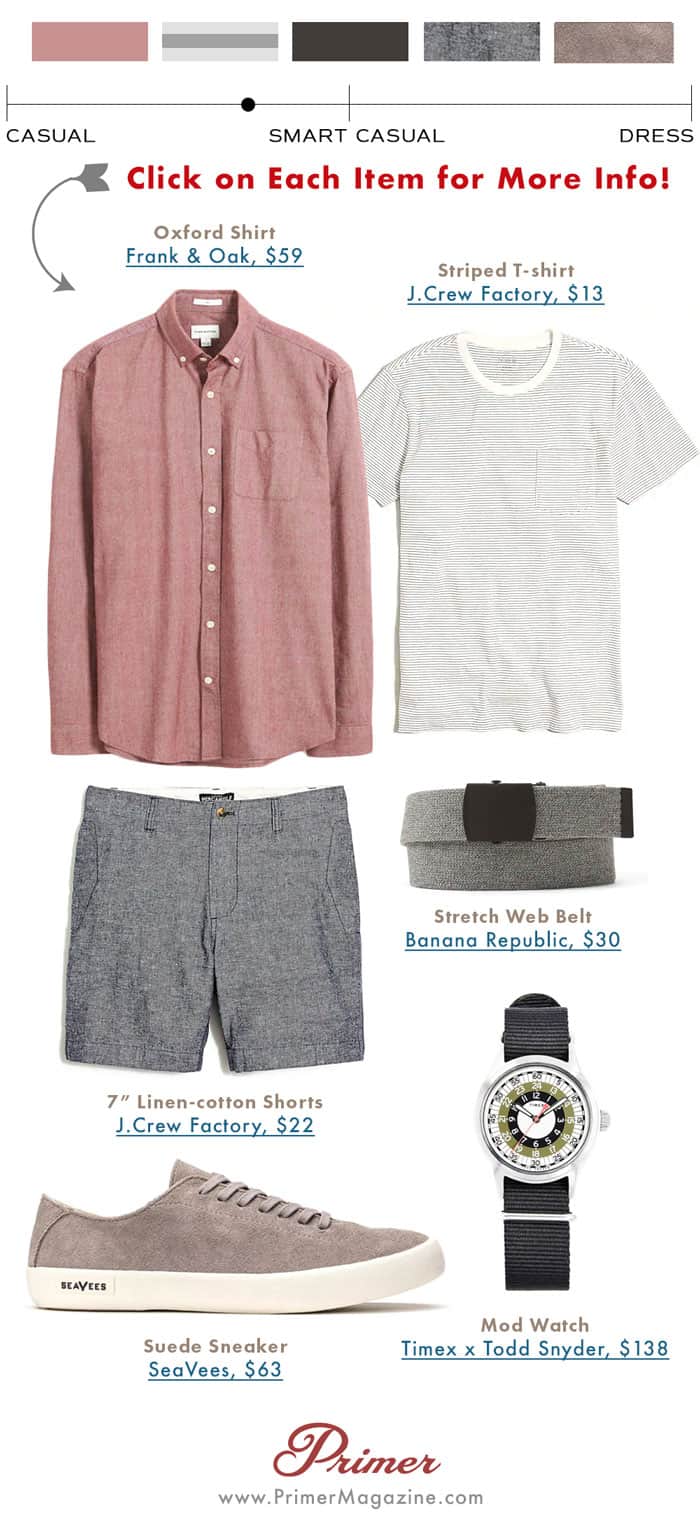
- Pair with a collared shirt or blouse. Polos, button-downs, or nice tops balance the casualness of shorts.
- Add a lightweight blazer or cardigan. This adds structure and professionalism.
- Choose neutral or classic colors. Navy, gray, khaki, or black look more professional.
- Wear a belt. A simple belt helps the outfit look “finished.”
- Pick the right shoes. Loafers, dressy sandals (if allowed), or clean sneakers work best. Avoid flip-flops or overly casual shoes.
- Mind your socks. No-show or dress socks are best.
Example Outfits
- Men: Navy tailored shorts, white button-down shirt, brown loafers, leather belt.
- Women: Khaki Bermuda shorts, soft blouse, blazer, flats.
Pros And Cons Of Wearing Shorts For Business Casual
Shorts can be both a blessing and a risk in the office. Weigh the pros and cons before making your choice.
| Pros | Cons |
|---|---|
| Comfort in hot weather | May appear unprofessional |
| Modern, relaxed image | Not accepted in all industries |
| Easy movement | Potential dress code violations |
| Shows company flexibility | Risk of looking too casual |
Practical Tips: How To Ask Or Suggest Shorts At Work
Want to wear shorts but aren’t sure if it’s okay? Here’s how to approach it:
- Read the dress code. Check your company’s employee handbook or ask HR.
- Notice what others wear. If you see managers or colleagues in shorts, it’s a good sign.
- Ask HR or your boss. A simple, polite question is often best: “Are tailored shorts okay during hot weather?”
- Suggest a trial. If your office doesn’t allow shorts, suggest a “Summer Shorts Friday” as a test.
- Be ready to compromise. If shorts aren’t allowed, consider lighter pants or breathable fabrics.
Shorts And Gender: Are Rules Different?
Dress codes often treat men’s and women’s shorts differently. Women may have more options, like Bermuda shorts or culottes, while men’s options are usually more limited. However, both should avoid anything too tight, short, or flashy.
In some offices, women’s tailored shorts are fine, but men’s shorts are not. If you feel the policy is unfair, you can politely raise the issue with HR. More companies are moving toward gender-neutral dress codes to avoid this double standard.
Mistakes To Avoid When Wearing Shorts At Work
Even in relaxed offices, some mistakes can ruin your look. Here are common pitfalls:
- Wearing athletic or denim shorts. These always look too casual.
- Choosing shorts that are too short or too tight. Stick to knee-length or just above.
- Ignoring grooming. Legs should look neat—consider shaving or using lotion if needed.
- Wearing shorts with loud prints or bright colors. Stick to simple, classic looks.
- Forgetting about shoes. Dress shoes or smart sandals are key; avoid flip-flops.

Credit: www.reddit.com
Alternatives To Shorts For Hot Weather
If your office doesn’t allow shorts, you still have options to stay cool:
- Lightweight chinos or linen trousers: Breathable and professional.
- Cropped pants or capris: For women, these can be a good compromise.
- Dresses or skirts: Knee-length or midi are usually business casual-friendly.
- Short-sleeved shirts: Keep arms cool without breaking dress code.
- No-show socks and breathable shoes: Small details make a big difference.
Real-world Examples: Shorts In Different Workplaces
Let’s look at how some companies handle shorts in business casual settings:
- Tech Startup in California: Employees wear tailored shorts and polo shirts in summer. The policy is clear: no athletic or denim shorts, and length must reach the knee.
- Marketing Agency in Miami: Both men and women can wear Bermuda shorts from June to September. Employees are encouraged to balance shorts with dressy tops.
- Bank in New York: Shorts are not allowed, but employees can wear lightweight dress pants and short-sleeved shirts.
- Retail Store: Uniform includes knee-length shorts for staff on the sales floor, but only in summer.
These examples show that company culture, climate, and customer interaction all matter.
Why Some Companies Are Still Strict About Shorts
Even as dress codes relax, many companies still say no to shorts. Here’s why:
- Image: Some businesses want to project a traditional, polished look.
- Clients: In industries where clients expect formality, shorts can feel out of place.
- Fairness: It’s easier to enforce a “no shorts” rule for everyone than to decide which shorts are okay.
- Safety: In factories or labs, shorts may not protect enough skin.
Changing Trends: The Future Of Shorts In Business Casual
Workplace fashion continues to evolve. Remote work, younger employees, and climate concerns are all pushing companies to rethink dress codes.
Some trends to watch:
- Climate adaptation: As summers get hotter, more offices may allow shorts or lighter clothing.
- Remote work: When working from home, employees dress for comfort, influencing what’s acceptable in the office.
- Flexible dress codes: More companies are letting employees decide what’s comfortable and professional for them.
But some things stay the same: looking clean, neat, and ready for work always matters more than following a specific rule.
Data: Office Dress Code Policies
A recent survey by SHRM (Society for Human Resource Management) found:
| Dress Code Policy | Percentage of Offices |
|---|---|
| Business casual (no shorts) | 56% |
| Business casual (shorts allowed in summer) | 12% |
| Formal business attire | 18% |
| Casual (shorts allowed year-round) | 9% |
| No dress code | 5% |
This shows that while most offices stick to traditional business casual, a growing number are experimenting with shorts—especially as younger generations join the workforce.
Making The Right Choice: A Step-by-step Guide
If you’re unsure whether to wear shorts in your business casual office, follow this path:
- Check the official policy: Start with the company handbook or HR department.
- Observe your managers: If leaders wear shorts, it’s likely okay for you.
- Notice your peers: If everyone else is in pants, think twice.
- Test with a safe choice: Try tailored, knee-length shorts first. See the response.
- Ask for feedback: If you’re unsure, ask your manager or HR.
- Respect the response: If told no, switch back to pants.
Two Insights Many Miss About Shorts In Business Casual
- Perception matters as much as policy. Even if shorts are technically allowed, how you wear them and how others perceive you can affect your professional image. A well-chosen pair of tailored shorts can look sharp, but sloppy or flashy shorts can hurt your reputation.
- Seasonal exceptions are common. Many companies don’t list shorts in the official dress code, but quietly allow them during heatwaves or special events. Watch for these “unwritten rules”—sometimes, flexibility is there if you look for it.
Frequently Asked Questions
What Length Of Shorts Is Appropriate For Business Casual?
Most Workplaces That Allow Shorts Prefer Knee-length Or Just Above The Knee. Avoid Anything Shorter, As It May Look Too Casual Or Revealing. For Both Men And Women, Tailored Or Bermuda Shorts Are Usually The Safest Bet.
Can I Wear Patterned Or Colorful Shorts To The Office?
Stick To Neutral Or Classic Colors Like Navy, Gray, Black, Or Khaki. Bright Colors Or Bold Patterns Can Look Unprofessional Unless Your Company Has A Very Creative, Relaxed Culture. When In Doubt, Choose Simple And Solid.
Are Sandals Or Open-toe Shoes Allowed With Shorts In Business Casual?
Policies Vary, But Closed-toe Shoes Are Safest In Most Business Casual Settings. If Your Office Allows Sandals, Choose A Dressy Pair, Not Flip-flops Or Athletic Slides. Always Avoid Shoes That Look Too Casual Or Beachy.
Do Dress Codes For Shorts Differ For Men And Women?
Often, Yes. Some Offices Allow Women More Flexibility, Such As With Culottes Or Dress Shorts, While Restricting Men’s Shorts. However, More Companies Are Moving Toward Gender-neutral Dress Codes. If You Feel The Rules Are Unfair, Discuss It With Hr.
Credit: www.primermagazine.com
How Can I Suggest A Change To Allow Shorts In My Office?
Collect Examples Of Other Similar Companies With Relaxed Dress Codes. Suggest A Trial Period During Hot Months Or Propose A “shorts Friday.” Focus On Comfort, Productivity, And Professional Appearance. Hr May Be Open To Change If You Show It Benefits The Team.
Wearing shorts in a business casual office is still a gray area, but the rules are changing. The most important thing is to know your company’s policy, choose styles that look professional, and always aim for a neat, confident appearance. The line between comfort and professionalism is moving, and with the right choices, you can stay cool—without breaking the dress code. For more on workplace dress codes, see this guide from SHRM.
