

Business Casual Vs Semi Formal: Dress Code Differences Explained
Business Casual Vs Semi Formal: Understanding the Differences and Making the Right Choice
How you dress speaks before you say a word. In the workplace, at events, and in social gatherings, your outfit tells others about your professionalism, confidence, and respect for the situation. But when invitations or company guidelines mention business casual or semi formal, many people feel confused. What do these dress codes mean? How are they different? And how can you choose the right style for your needs?
This guide will help you clearly understand business casual and semi formal dress codes. You’ll learn what each style looks like, how to pick the right outfit for different occasions, and what mistakes to avoid. Whether you’re preparing for a job interview, attending a wedding, or just want to look sharp at work, this article will give you practical advice and examples.
Dress smart, feel confident, and make the best impression every time.
What Is Business Casual?
Business casual is a popular dress code for offices and professional events. It blends traditional business attire with relaxed, comfortable clothing. You look neat and polished, but not overly formal.
Key Features Of Business Casual
- Comfort with professionalism: Business casual allows you to feel comfortable while still looking professional.
- Flexible choices: You can choose from many types of clothing, but should avoid items that are too casual or sloppy.
- Neutral colors: Common colors include navy, gray, black, beige, and white.
Typical Business Casual Outfits
For Men
- Collared shirts (button-down or polo)
- Slacks or chinos (no jeans)
- Blazers (optional, but add polish)
- Leather shoes (loafers or oxfords)
- Sweaters or cardigans in cooler months
- Belt and simple accessories
For Women
- Blouses or smart tops
- Skirts (knee-length or longer) or tailored pants
- Simple dresses (not evening style)
- Cardigans, blazers, or sweaters
- Closed-toe shoes (flats, loafers, or low heels)
- Minimal jewelry
What To Avoid In Business Casual
- T-shirts, tank tops, or graphic shirts
- Ripped jeans or shorts
- Sneakers or sandals
- Flashy accessories
- Extremely bright colors
Common Situations For Business Casual
- Office workdays in most industries
- Job interviews for entry-level or creative jobs
- Company meetings or conferences
- Networking events
Non-obvious insight: Many people think business casual means you can wear jeans or sneakers. In most offices, this is not true. Only wear jeans if your company specifically allows them, and choose dark, well-fitted styles.
What Is Semi Formal?
Semi formal is a step above business casual. It is dressy, but not as strict as full formal or black tie. You look polished and elegant, suitable for evening events or special occasions.
Key Features Of Semi Formal
- Elegant but not extravagant: Semi formal is neat, tailored, and stylish, but not as fancy as tuxedos or ball gowns.
- Dressier fabrics: Materials like silk, satin, or wool are common.
- Clear gender guidelines: Traditional semi formal has different rules for men and women.
Typical Semi Formal Outfits
For Men
- Dark suit and tie (navy, charcoal, or black)
- Dress shirt (white or light color)
- Polished dress shoes
- Belt and classic watch
- Optional: Pocket square or cufflinks
For Women
- Cocktail dress or tailored suit
- Dressy skirt and top, or a pantsuit
- Heels or elegant flats
- Evening bag or clutch
- Tasteful jewelry
What To Avoid In Semi Formal
- Casual shirts or polos
- Jeans, shorts, or casual pants
- Casual shoes (sneakers, sandals)
- Large, flashy accessories
Common Situations For Semi Formal
- Weddings and receptions
- Award ceremonies
- Evening parties or galas
- Some professional networking events
Non-obvious insight: For semi formal, men must wear a tie unless the invitation says otherwise. Many beginners think a suit without a tie is enough, but it often looks incomplete.
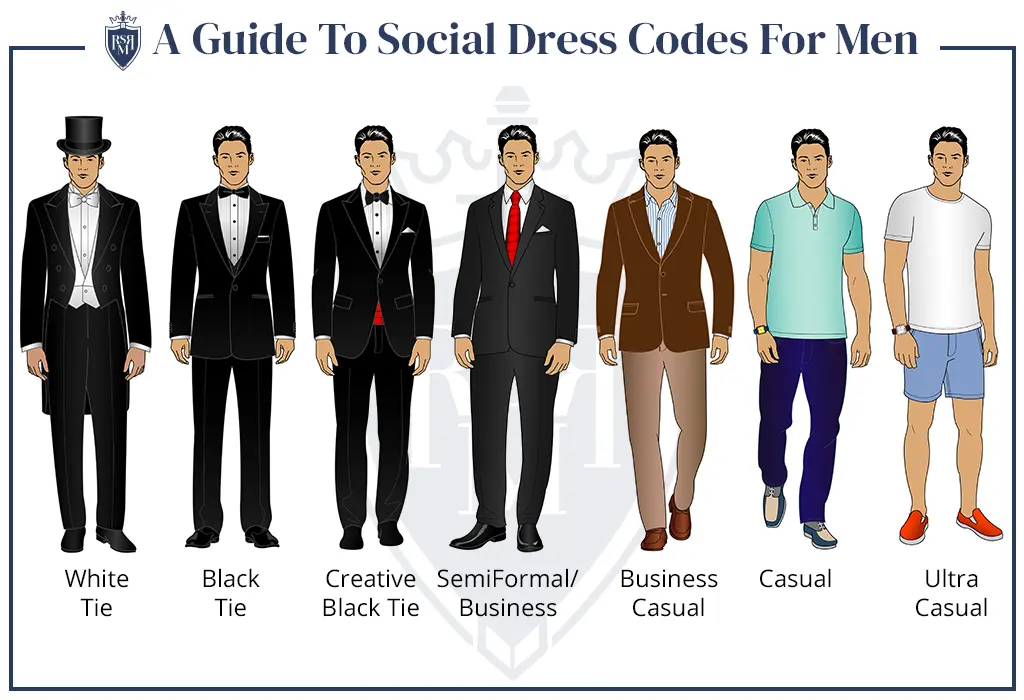
Credit: www.realmenrealstyle.com
Business Casual Vs Semi Formal: Direct Comparison
Understanding the differences is easier when you see both styles side by side. Here’s a clear comparison:
| Aspect | Business Casual | Semi Formal |
|---|---|---|
| Formality Level | Moderate | High |
| Common Colors | Neutral, muted | Darker, elegant |
| Typical Events | Work, meetings, daytime events | Weddings, evening events |
| Required Clothing | Collared shirts, slacks, skirts | Suit and tie, cocktail dress |
| Shoes | Leather loafers, flats | Dress shoes, heels |
| Accessories | Minimal | Classic, elegant |
| Allowed Jeans | Rarely | No |
Practical tip: If you’re unsure about the dress code, always aim for semi formal. You can remove a tie or blazer to look more business casual if needed.
When To Choose Business Casual Or Semi Formal
The right dress code depends on the event, your role, and cultural expectations.
Choosing Business Casual
Business casual fits well for:
- Daytime professional events
- Regular office work
- Interviews in creative fields
- Casual networking events
You look professional but approachable. Many tech companies and startups prefer business casual because it encourages comfort and creativity.
Choosing Semi Formal
Semi formal is best for:
- Evening events (after 5 pm)
- Weddings and receptions
- Award ceremonies
- Formal networking events
You show respect for the occasion and the hosts. Semi formal is often expected when the invitation says “cocktail,” “dressy,” or “evening attire. ”
Non-obvious insight: Some industries (law, finance, consulting) expect semi formal for client meetings, especially if you represent your company outside the office.
How To Build A Business Casual Wardrobe
A smart business casual wardrobe keeps you ready for work and day events.
Essentials For Men
- Button-down shirts (white, blue, or striped)
- Polo shirts (plain colors)
- Chinos or slacks (beige, navy, gray)
- Blazer (optional, but useful)
- Leather loafers or oxfords
- Dark belt
Essentials For Women
- Blouses or tops (neutral colors)
- Knee-length skirts or tailored pants
- Simple dresses (not evening style)
- Cardigans or blazers
- Flats or low heels
- Minimal jewelry
Shopping Tips
- Choose quality fabrics. Cotton, wool, and blends look better and last longer.
- Buy neutral colors for easy matching.
- Avoid oversized or very tight clothing.
- Invest in good shoes. Cheap shoes ruin the whole look.
Mistakes To Avoid
- Wearing casual jeans or shorts
- Choosing bright, loud patterns
- Forgetting to iron or clean clothes
- Ignoring company dress code updates
Practical tip: Build your wardrobe slowly. Buy one good piece per month, not a whole set at once. This saves money and helps you find your style.
How To Build A Semi Formal Wardrobe
Semi formal clothing is more expensive and less flexible. It’s for special occasions, so choose carefully.
Essentials For Men
- Dark suit (navy, charcoal, or black)
- Dress shirt (white or light color)
- Silk tie
- Dress shoes (polished leather)
- Classic watch
- Pocket square (optional)
Essentials For Women
- Cocktail dress or evening dress
- Dressy skirt and blouse or pantsuit
- Elegant heels or flats
- Evening bag or clutch
- Tasteful jewelry
Shopping Tips
- Invest in a high-quality suit or dress. It lasts for years.
- Look for timeless styles. Avoid trends that fade fast.
- Get clothing tailored. Proper fit is more important than brand.
- Select comfortable shoes. You may stand or walk for hours.
Mistakes To Avoid
- Buying cheap, flashy outfits
- Wearing casual shoes with formal clothing
- Forgetting accessories (tie, clutch, jewelry)
- Ignoring dress code on invitations
Experience-based advice: If you attend semi formal events often, buy two suits or dresses. Rotate them to avoid repetition and extend their life.
How To Transition Between Dress Codes
Sometimes you attend events with mixed dress codes or need to adjust your look quickly.
From Business Casual To Semi Formal
- Add a blazer or suit jacket.
- Switch to dress shoes.
- Wear a tie or add elegant jewelry.
- Choose darker colors.
From Semi Formal To Business Casual
- Remove tie or blazer.
- Swap dress shoes for loafers or flats.
- Choose lighter colors or less formal accessories.
Straight-to-the-point helper tip: Always keep a spare tie or blazer at work. You can upgrade your outfit in minutes if needed.
Real-life Examples And Situations
Understanding theory is good, but real-life examples make it clearer.
Example 1: Office Interview
You are interviewing for a marketing job. The company says “business casual.” You wear:
- Men: Blue button-down shirt, gray chinos, brown loafers, no tie.
- Women: White blouse, navy skirt, black flats, simple necklace.
Example 2: Wedding Reception
The invitation says “semi formal.” You wear:
- Men: Charcoal suit, white shirt, navy tie, black dress shoes.
- Women: Cocktail dress, silver heels, small clutch, pearl earrings.
Example 3: Networking Event
If the event is in the afternoon and says “business casual,” you choose:
- Men: Polo shirt, beige chinos, brown loafers.
- Women: Blouse, tailored pants, flats.
If the event is in the evening and says “semi formal,” you choose:
- Men: Navy suit, light blue shirt, burgundy tie.
- Women: Knee-length dress, nude heels, gold bracelet.
Common beginner mistake: Wearing the same outfit for day and night events. Evening events need darker, dressier clothing.
Cultural And Regional Differences
Dress codes vary around the world. Business casual in New York is not the same as in Tokyo or Paris. Semi formal rules also change with culture.
In The Us
- Business casual is common in tech, media, and creative fields.
- Semi formal is expected at weddings, graduations, and evening galas.
In Europe
- Business casual may include more stylish cuts and colors.
- Semi formal sometimes means full suit and tie, even for daytime events.
In Asia
- Business casual can be more conservative (long sleeves, closed shoes).
- Semi formal often means suit for men, elegant dress for women.
Non-obvious insight: Always check local dress code expectations, especially for international events.
How Dress Codes Affect Perception
Your choice of business casual or semi formal affects how others see you.
Professionalism
- Business casual shows you are relaxed but responsible.
- Semi formal shows you take the event seriously.
Confidence
- Wearing the right outfit boosts your confidence.
- Being underdressed makes you feel uncomfortable and stand out.
Respect
- Dress codes are a sign of respect for the company, hosts, or occasion.
- Ignoring dress codes can harm your reputation.
Data point: According to a survey by CareerBuilder, 41% of employers say dress code affects how they view a candidate’s ability to fit the company culture.
Business Casual And Semi Formal For Different Age Groups
Age impacts how you apply dress codes.
Young Professionals
- Business casual: Try stylish cuts, modern colors, but keep it polished.
- Semi formal: Avoid flashy trends. Classic styles make you look mature.
Mid-career Professionals
- Business casual: Choose higher-quality fabrics, add accessories like watches.
- Semi formal: Invest in tailored suits and dresses, select classic colors.
Seniors And Executives
- Business casual: Stick to timeless, conservative styles.
- Semi formal: Use luxury fabrics and classic brands.
Practical advisor tip: No matter your age, fit is more important than fashion. Well-fitted clothes look professional at any stage.
How To Read Dress Codes On Invitations
Sometimes invitations use unclear words. Here’s how to decode them:
- Smart casual: Slightly more relaxed than business casual. Nice jeans may be allowed.
- Cocktail attire: Semi formal, but with more stylish or trendy choices.
- Dressy casual: Nicer than business casual, but not semi formal.
If unsure, ask the organizer for guidance.

Credit: www.theknot.com
Caring For Your Business Casual And Semi Formal Clothes
Proper care keeps your clothes looking sharp.
Cleaning Tips
- Wash shirts and blouses after every use.
- Dry clean suits and dresses when needed.
- Air out shoes and accessories.
Storage Tips
- Hang suits and dresses to prevent wrinkles.
- Store shoes with supports to keep shape.
- Keep accessories in soft pouches.
Repair Tips
- Fix buttons, zippers, and hems quickly.
- Polish shoes regularly.
- Take damaged items to a tailor.
Non-obvious insight: Semi formal clothes last longer if you avoid wearing them too often. Reserve them for special events.
Business Casual And Semi Formal For Remote Work
Remote work has changed dress codes. Here’s how to adapt:
Video Meetings
- Business casual: Wear a collared shirt or blouse, even if you sit at home.
- Semi formal: Dress up for important video calls, like client meetings.
Home Office Tips
- Keep a blazer or tie nearby for quick outfit upgrades.
- Choose comfortable fabrics that look neat on camera.
- Avoid visible wrinkles, stains, or distracting patterns.
Friendly mentor tip: Even if you work from home, dressing well keeps you focused and motivated.
Sustainability And Ethical Choices
More people now care about ethical fashion.
Sustainable Fabrics
- Choose organic cotton, wool, or bamboo.
- Avoid synthetic materials that harm the environment.
Fair Trade Brands
- Buy from companies with ethical labor practices.
- Support brands that recycle or upcycle clothing.
Long-term Planning
- Buy fewer, higher-quality items.
- Donate or recycle old clothes.
Non-obvious insight: Business casual and semi formal wardrobes can be sustainable. Invest in timeless pieces that last, not fast fashion.
How To Handle Dress Code Emergencies
Unexpected situations happen. Here’s how to fix them fast:
Forgotten Item
- Borrow from a colleague or friend.
- Visit a nearby store for quick replacements.
Stained Or Damaged Clothes
- Keep stain remover wipes in your bag.
- Change into backup clothes if possible.
Last-minute Invitations
- Keep a spare suit or dress at work or home.
- Choose neutral accessories that match most outfits.
Straight-to-the-point helper tip: Always plan for emergencies. A little preparation saves a lot of stress.
Frequently Asked Questions
What Is The Main Difference Between Business Casual And Semi Formal?
Business casual is relaxed professional clothing, suitable for daily work or daytime events. Semi formal is dressier, used for evening events, weddings, or special occasions. Business casual allows more flexibility, while semi formal requires suits, ties, or cocktail dresses.
Can I Wear Jeans In Business Casual?
Usually, jeans are not allowed in business casual unless your company specifically says so. If jeans are allowed, choose dark, well-fitted styles without rips or decorations. Never wear jeans for semi formal events.
What Should I Wear If I’m Not Sure About The Dress Code?
If unsure, choose semi formal. You can always remove a tie or blazer to look more business casual. It’s better to be slightly overdressed than underdressed.
How Can Women Dress Semi Formal Without Wearing A Dress?
Women can wear a dressy skirt and blouse, a tailored pantsuit, or elegant separates. The key is to use dressy fabrics, stylish shoes, and tasteful accessories.
Are Business Casual And Semi Formal Dress Codes The Same In All Countries?
No, dress codes vary by country and culture. For example, business casual in the US may allow polo shirts, while in Japan it means full sleeves and closed shoes. Always check local expectations before attending an event.
For further details on dress codes and etiquette, you can explore Wikipedia's dress code guide.
Final Thoughts
Choosing between business casual and semi formal is not just about clothes—it’s about understanding the situation, respecting others, and showing your best self. With the right knowledge, you can build a wardrobe that fits your life, work, and events. Always check the dress code, prepare for emergencies, and invest in quality items.
Your outfit is your first impression; make it count.

Credit: polienvasestransparentes.com
