

How to Make Business Casual Look Good Men: Style Tips That Impress
How To Make Business Casual Look Good Men
Business casual is a dress code that confuses many men. It sits between formal suits and everyday casual wear. For some, it means a polo shirt and khakis; for others, a dress shirt and chinos. The truth is, business casual can look sharp and stylish, but only if you know how to build the right outfits.
If you want to stand out in the office or at a meeting without looking too stiff or too relaxed, you need to master the key details. This guide will show you how to make business casual look good, with practical advice and real examples.
You'll learn what makes an outfit business casual, how to choose the best clothes, and how to avoid common mistakes. Whether you're new to the dress code or want to upgrade your style, you'll find actionable tips here.
Understanding Business Casual
Business casual is not a strict set of rules. It’s a flexible dress code that depends on your workplace, industry, and even the region you live in. The basic idea is to look professional and approachable, but not overly formal.
You skip the suit and tie but keep the polished elements.
Most workplaces expect business casual to include:
- Collared shirts (dress shirts, polos)
- Slacks or chinos (not jeans or shorts)
- Dress shoes or clean loafers
- Optional layers (blazers, sweaters)
You should avoid:
- T-shirts or graphic shirts
- Athletic wear
- Sneakers (unless they are clean, minimalist, and allowed)
- Ripped or faded clothing
Some companies have their own version of business casual. A tech startup might allow jeans; a law firm might expect dress slacks. The safest approach is to observe what others wear or ask HR.
Non-obvious insight: Many men assume business casual means comfortable, but it really means professional with a relaxed touch. Comfort is important, but you must prioritize fit and neatness.
Essential Pieces For Business Casual
Building a business casual wardrobe starts with key items. These are versatile, easy to mix, and always look sharp.
Dress Shirts
A dress shirt is the foundation. Choose solid colors like white, light blue, or pale pink. Subtle patterns (stripes, checks) are fine, but avoid loud prints.
- Look for cotton or cotton-blend fabrics.
- Make sure the shirt fits your shoulders and chest.
- Avoid shirts with a lot of wrinkles or stains.
Chinos And Slacks
Chinos and slacks are perfect for business casual. Chinos are lighter, often with a slim fit. Slacks are more formal but still relaxed compared to suit pants.
- Colors: Navy, gray, beige, olive.
- Avoid baggy or overly tight styles.
- Always iron your pants.
Blazers And Sport Coats
A blazer adds instant polish. You don’t need to wear it every day, but it’s great for meetings or presentations.
- Pick unstructured, lighter fabrics for comfort.
- Stick with classic colors (navy, gray).
- Avoid shiny or bold patterns.
Sweaters And Cardigans
In cooler months, a sweater or cardigan looks smart over a shirt.
- Crew neck or V-neck styles work best.
- Neutral colors (black, navy, gray) are easy to match.
- Avoid bulky or worn-out knits.
Shoes
Shoes are often overlooked but make a big difference.
- Leather loafers, oxfords, or brogues are safe bets.
- Clean, minimalist sneakers may be acceptable in creative industries.
- Avoid sandals, athletic shoes, or anything dirty.
Belts And Accessories
A simple leather belt matches your shoes. Accessories like watches or subtle bracelets can add personality.
- Avoid flashy or oversized items.
- Keep it minimal and classic.
Non-obvious insight: Many men skip layering, but adding a blazer or sweater can hide fit issues and elevate your look.
Choosing The Right Fit
Fit is the most important factor in business casual. Even the best clothes will look sloppy if they don’t fit well.
Shirt Fit
A well-fitted shirt should:
- Hug your shoulders without pulling
- Allow room for movement
- Have sleeves that end at your wrist bone
If your shirt is too long, tuck it in. If it’s too tight, size up. Tailoring is often affordable and can make a big difference.
Pants Fit
Pants should:
- Sit comfortably at your waist (not hips)
- Have a straight or slim leg (not skinny or baggy)
- End just above your shoes, with a slight break
Jacket Fit
A blazer or sport coat should:
- Fit snugly at the shoulders
- Button easily without stretching
- Have sleeves ending at your wrist
If the jacket pulls or droops, it’s the wrong size.
Shoe Fit
Shoes should:
- Fit snugly but not tight
- Support your arch
- Be clean and polished
Poorly fitted shoes cause discomfort and look sloppy.
Practical tip: Try clothes on before buying. Move around, sit, and raise your arms. If you feel restricted or notice gaps, try a different size.
Choosing Colors And Patterns
Color and pattern choices can make your business casual outfit stand out without being loud.
Safe Color Choices
Start with safe, neutral colors:
- Navy
- Gray
- White
- Beige
- Olive
These colors mix easily. For a pop of color, add a pastel shirt or a muted sweater.
Pattern Advice
Subtle patterns like stripes, checks, or small dots are fine. Avoid anything too bold or distracting.
- Vertical stripes elongate your body.
- Small checks add interest without overwhelming.
- Avoid large prints or graphics.
Combining Colors
Match dark pants with lighter shirts for balance. Don’t wear all black or all white. Use your belt and shoes to tie the outfit together.
Example: Navy chinos, light blue shirt, brown belt, brown shoes.
Common mistake: Wearing clashing colors (like bright red and lime green) or too many patterns at once.
Layering For Business Casual
Layering is a smart way to add depth and adjust to changing temperatures. It also helps you look more polished.
Blazer Layer
A blazer over a dress shirt is classic. If you want less formality, swap for a cardigan or lightweight sweater.
Sweater Layer
A sweater over a shirt works well in colder months. Crew neck or V-neck styles keep things simple.
Shirt And Polo Layer
You can wear a polo shirt under a sweater or light jacket. Make sure collars stay flat and neat.
Combining Layers
Don’t wear bulky layers. Choose slim fabrics that stack without adding too much weight.
Example: White dress shirt, gray crew neck sweater, navy chinos, brown loafers.
Data point: Studies show that men who layer thoughtfully are perceived as more organized and confident.
Picking The Right Shoes
Shoes finish your business casual look. The wrong pair can ruin your outfit, so choose carefully.
Classic Dress Shoes
Leather shoes like loafers, oxfords, and brogues are safe. They’re comfortable and match almost any outfit.
Modern Loafers
Loafers are easy to slip on, and they look polished. Choose brown or black leather for most offices.
Clean Sneakers
Some workplaces allow sneakers. Choose minimalist styles in white, gray, or navy. Avoid flashy logos or colors.
Boot Options
Chelsea boots or chukka boots are stylish and work in colder months. Make sure they’re clean and not too rugged.
| Shoe Type | Formality | Best Occasions |
|---|---|---|
| Leather Loafers | High | Meetings, Presentations |
| Oxfords | High | Important Days |
| Minimalist Sneakers | Medium | Casual Fridays |
| Chelsea Boots | Medium | Cold Weather |
Non-obvious insight: If you walk a lot during work, invest in shoes with soft insoles and arch support. Comfort is part of looking good.
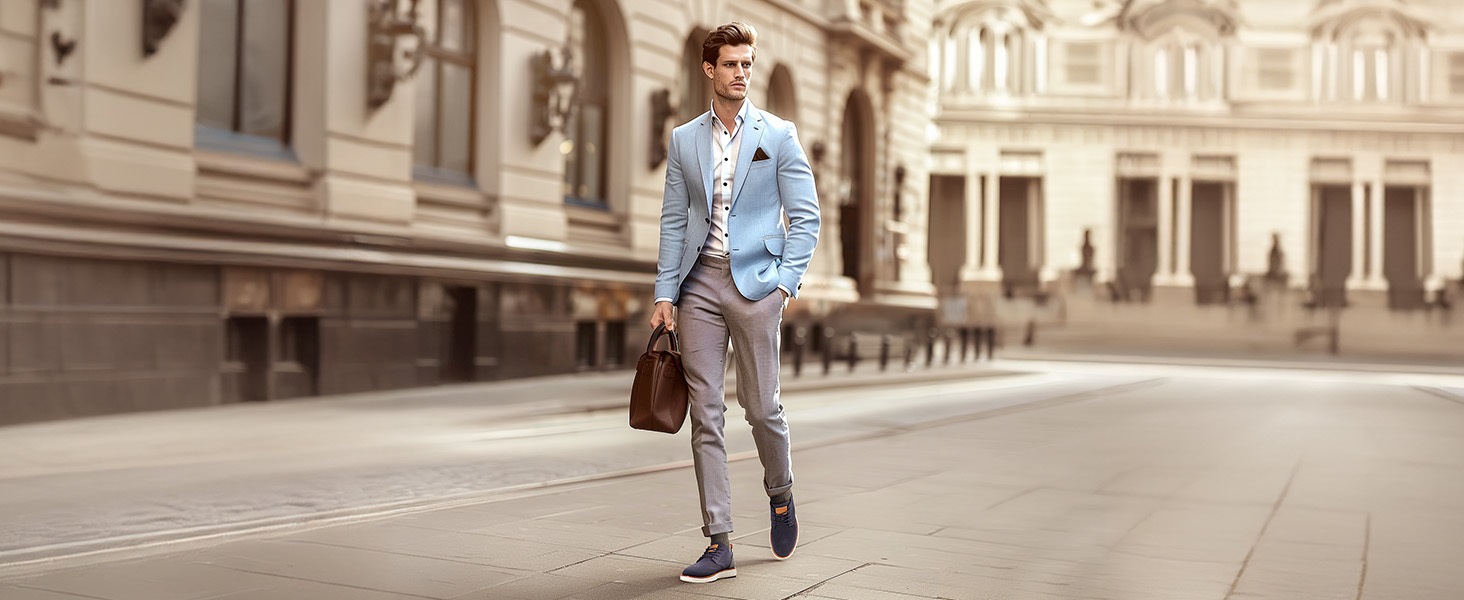
Credit: www.brunomarc.com
Accessorizing Smartly
Accessories add personality without overpowering your business casual look.
Belts
A simple leather belt in black or brown is best. Match your belt to your shoes for a coordinated look.
Watches
A classic watch adds a touch of sophistication. Metal or leather bands are both acceptable. Avoid digital or sporty watches.
Bags
Carry a slim briefcase or messenger bag. Avoid backpacks with loud colors or logos.
Jewelry
If you wear jewelry, keep it minimal. A wedding band, a slim bracelet, or cufflinks are fine.
Example: Brown belt, brown shoes, silver watch, black leather messenger bag.
Common mistake: Wearing too many accessories at once. Keep it simple.
Avoiding Common Business Casual Mistakes
Many men make mistakes with business casual. Avoid these to look your best.
- Wearing wrinkled clothes: Always iron shirts and pants.
- Choosing clothes that don’t fit: Tailor your items if needed.
- Mixing too many colors: Stick to 2–3 colors per outfit.
- Wearing athletic shoes: Save sneakers for casual days.
- Forgetting to tuck in shirts: Untucked shirts look sloppy unless they’re designed to be worn that way.
- Skipping grooming: Hair, beard, and nails should be neat.
- Ignoring socks: Wear clean, matching socks; avoid athletic styles.
- Over-accessorizing: Limit extras to 2–3 items.
- Not checking dress code: Every office has its own rules.
- Wearing old or faded clothes: Replace worn-out items.
Practical tip: Check yourself in a full-length mirror. Look for wrinkles, stains, or mismatched items.
Business Casual For Different Body Types
Business casual works for all body types, but you need to choose wisely.
Slim Build
Slim men should avoid overly tight clothes. Choose slim fit, not skinny. Layering (like sweaters or blazers) adds volume.
Athletic Build
Athletic men can highlight their shape with fitted shirts and straight-leg pants. Avoid baggy items.
Larger Build
Larger men should pick clothes that skim the body, not cling. Avoid bulky fabrics. Use vertical stripes to elongate your shape.
Shorter Height
Shorter men benefit from monochromatic outfits and vertical lines. Avoid long jackets or pants that bunch up.
Data point: According to style experts, well-fitted clothes improve confidence and how others perceive you.
| Body Type | Best Styles | Styles to Avoid |
|---|---|---|
| Slim | Slim fit, layering | Skinny, oversized |
| Athletic | Fitted shirts, straight pants | Baggy clothes |
| Larger | Regular fit, vertical stripes | Bulky fabrics, tight shirts |
| Short | Monochrome, short jackets | Long jackets, bunching pants |
Business Casual In Different Seasons
Adapting business casual for the weather keeps you comfortable and stylish.
Spring And Summer
- Lightweight fabrics (cotton, linen)
- Short-sleeve shirts or polos
- Chinos or lightweight slacks
- Loafers or minimalist sneakers
Fall And Winter
- Layer with sweaters, cardigans, blazers
- Wool or heavier cotton pants
- Chelsea boots or brogues
- Scarves in neutral colors
Practical tip: Keep a spare sweater or jacket at work for sudden weather changes.
Business Casual Outfit Examples
Seeing real examples helps you build your own style.
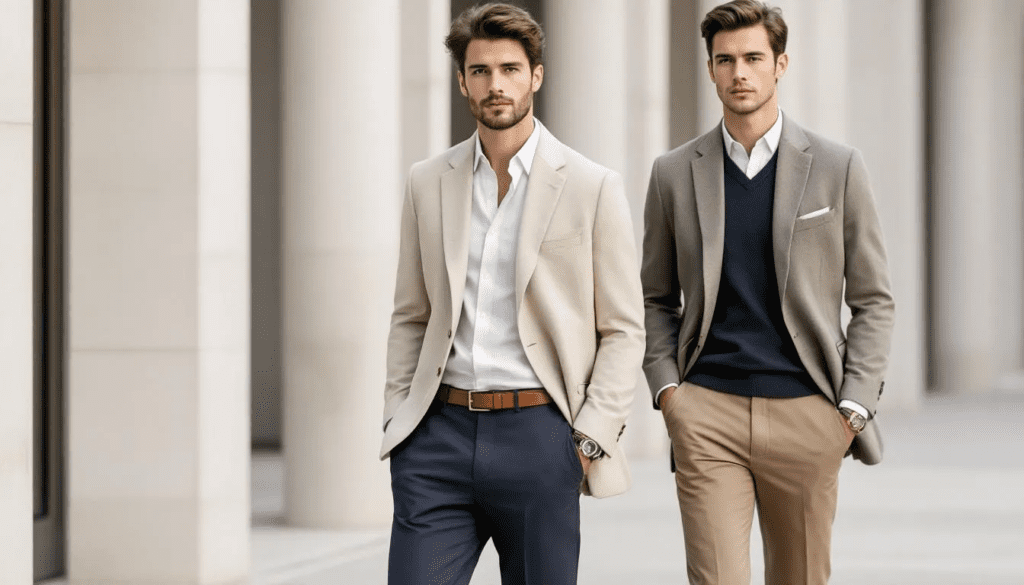
- Navy chinos, white dress shirt, gray cardigan, brown loafers
- Beige slacks, light blue shirt, navy blazer, black belt, black shoes
- Olive chinos, pale pink shirt, brown belt, brown loafers
- Gray slacks, striped shirt, slim sweater, minimalist white sneakers
- Dark jeans (if allowed), white polo, navy blazer, brown shoes
Non-obvious insight: You can mix and match these items to create many looks. Building a small wardrobe with versatile pieces is more effective than buying many items.
How To Shop For Business Casual
Shopping for business casual can be overwhelming. Follow these steps to make smart choices.
- Start with basics: Buy dress shirts, chinos, and loafers first.
- Choose versatile colors: Navy, gray, beige, white.
- Check fit: Try items on and move around. Look for comfort and style.
- Invest in quality: Spend more on items you wear often (shoes, blazers).
- Avoid trends: Stick to timeless styles.
- Shop sales: Many stores offer discounts on business casual items.
- Consider tailoring: Alter pants or shirts for a perfect fit.
Example: Buying three shirts, two pairs of pants, one blazer, and two pairs of shoes gives you over ten outfit combinations.

Credit: www.youtube.com
Grooming And Presentation
Grooming is as important as your clothes. Looking clean and polished completes the business casual look.
Hair
Keep hair neat and trimmed. Choose a style that fits your face shape and is easy to maintain.
Facial Hair
If you have a beard or mustache, keep it groomed. Clean-shaven is always safe.
Nails
Trim and clean nails. Avoid bright nail colors or chipped polish.
Fragrance
Use a subtle cologne or deodorant. Avoid strong scents.
Practical tip: Check your appearance in the morning and after lunch.
Upgrading Your Style Over Time
Once you have the basics, improve your business casual look with small changes.
Try New Layers
Experiment with blazers, sweaters, or jackets. Choose different textures (wool, cotton, linen).
Add Subtle Patterns
Add shirts or pants with subtle stripes or checks.
Upgrade Accessories
Try a leather watch or a slim briefcase.
Invest In Tailoring
Tailor your pants and shirts for a perfect fit.
Test New Shoes
Try Chelsea boots or minimalist sneakers if your office allows.
Non-obvious insight: Style is personal. Find what makes you feel confident, not just what others wear.
Business Casual Etiquette
Your behavior and attitude matter as much as your clothes.
- Be polite and friendly to coworkers.
- Listen and respond professionally.
- Keep your workspace clean and organized.
- Respect the dress code. If unsure, ask HR.
External resource: For more on business casual dress codes, see Business News Daily.
Frequently Asked Questions
What Is The Main Difference Between Business Casual And Formal Wear?
Business casual skips the suit and tie. You wear dress shirts, slacks, and loafers, but you don’t need a full suit. Formal wear includes a suit, tie, and dress shoes.
Can I Wear Jeans For Business Casual?
Only if your workplace allows it. If jeans are accepted, choose dark, clean jeans with no rips or fading. Pair them with a dress shirt and blazer for a polished look.
Are Sneakers Ever Ok For Business Casual?
Some creative industries allow clean, minimalist sneakers. Avoid athletic styles or bright colors. If unsure, stick to loafers or oxfords.
How Many Business Casual Outfits Should I Have?
Aim for at least five combinations. This covers a workweek and lets you mix and match. Start with basics and add more as you build your wardrobe.
What If I’m Not Sure About The Dress Code?
Observe what others wear, or ask HR directly. It’s better to be slightly overdressed than too casual. Start with classic business casual pieces and adjust as needed.
Business casual is a flexible, stylish dress code when done right. Focus on fit, neatness, and smart choices. Build your wardrobe around versatile basics, add layers and accessories, and keep grooming in mind. Avoid common mistakes, and you’ll look confident and professional every day.
Credit: www.familybritches.com
