

What are Positive Affirmations for Students: Boost Success Now
What Are Positive Affirmations For Students
Every student faces moments of doubt, stress, or anxiety. School life is demanding. Grades, exams, and social pressure can feel overwhelming. Many students struggle to stay motivated and confident. But there’s a simple tool that can help: positive affirmations. These are short, uplifting statements that you repeat to yourself. They encourage a healthy mindset, boost self-esteem, and help you focus on your goals.
Positive affirmations are not magic words. They don’t change your life instantly. But they can change how you see yourself and your abilities. When used correctly, affirmations help students build resilience, cope with challenges, and develop a positive attitude. In this article, you’ll learn what positive affirmations are, why they matter for students, and how to use them effectively.
You’ll also discover examples, practical strategies, common mistakes, and scientific insights.
Understanding Positive Affirmations
Positive affirmations are simple, self-empowering phrases. They are designed to replace negative thoughts with positive ones. For students, affirmations can be about learning, confidence, motivation, or handling stress. Saying these phrases daily helps train your mind to believe in your abilities.
Some examples:
- “I am capable of learning new things.”
- “I am confident in my abilities.”
- “I overcome challenges with courage.”
How Affirmations Work
When you repeat an affirmation, your brain starts to accept it as true. This process is called self-affirmation theory. It’s based on the idea that your beliefs and thoughts affect your actions. For example, if you tell yourself “I am good at math,” you’re more likely to approach math problems with confidence.
Studies show that positive affirmations can reduce stress, improve academic performance, and support mental health. According to research published in the journal *Social Cognitive and Affective Neuroscience*, self-affirmation activates parts of the brain related to self-processing and reward. This means affirmations can physically affect your brain and mood.
Why Negative Thoughts Are Harmful
Negative thoughts can weaken your confidence. If you constantly think “I’m not smart enough,” you may avoid challenges and feel discouraged. Negative thinking can become a habit, making it harder to succeed. Positive affirmations help break this cycle by promoting healthier self-talk.
Benefits Of Positive Affirmations For Students
Students benefit from affirmations in many ways. Here are some key advantages:
1. Improved Self-esteem
Self-esteem is how you value yourself. Positive affirmations encourage students to see their strengths, not just their weaknesses. For example, repeating “I am proud of my progress” can boost self-worth. Higher self-esteem leads to better performance and more confidence in social situations.
2. Reduced Stress And Anxiety
School can be stressful. Exams, deadlines, and peer pressure create anxiety. Affirmations like “I stay calm under pressure” help students manage stress. By focusing on positive self-talk, students learn to cope with challenges and reduce anxiety.
3. Enhanced Motivation
Motivation is essential for success. Positive affirmations keep students focused on their goals. Statements such as “I am motivated to learn” inspire action. Motivation grows when students believe in their abilities and stay positive.
4. Better Academic Performance
Affirmations can improve academic results. Studies show that students who use positive self-talk perform better in tests and assignments. For example, affirmations like “I am prepared for my exams” increase confidence and reduce fear of failure.
5. Strengthened Resilience
Resilience means bouncing back from setbacks. Affirmations help students face challenges with courage. Saying “I learn from my mistakes” teaches them to see failures as opportunities. Resilient students recover faster and keep trying.
6. Improved Social Relationships
Positive self-talk affects how you interact with others. Affirmations like “I am a good friend” or “I communicate clearly” build social skills and empathy. Students with positive attitudes are more likely to form healthy relationships.

Credit: www.thepathway2success.com
Common Types Of Positive Affirmations For Students
Affirmations can be tailored to a student’s needs. Here are some common types:
Academic Affirmations
- “I am a dedicated student.”
- “I enjoy learning new subjects.”
- “I focus on my studies.”
Confidence Affirmations
- “I believe in myself.”
- “I am confident speaking in class.”
- “I am proud of who I am.”
Motivation Affirmations
- “I work hard every day.”
- “I am committed to my goals.”
- “I am persistent and never give up.”
Stress Management Affirmations
- “I handle stress calmly.”
- “I breathe deeply and relax.”
- “I let go of worries and focus on the present.”
Social Affirmations
- “I make new friends easily.”
- “I listen to others with respect.”
- “I am kind and supportive.”
How To Create Effective Affirmations
Not all affirmations are equally powerful. The way you write and use them matters. Here’s how to make affirmations work for you:
1. Use Present Tense
Affirmations should be in the present tense, as if they are already true. For example, say “I am confident,” not “I will be confident. ”
2. Make Them Personal
Personalize your affirmations. Use “I” statements. For example, “I am improving every day” is more effective than “People improve every day. ”
3. Be Positive
Avoid negative words. Instead of “I am not afraid,” say “I am brave. ” Focus on what you want, not what you don’t want.
4. Keep Them Simple
Simple phrases are easier to remember and repeat. Choose short, clear statements.
5. Be Specific
Specific affirmations are more powerful. For example, “I am prepared for my math test” is better than “I am prepared. ”
6. Match Your Goals
Align your affirmations with your goals. If you want to improve in science, use “I am confident in science. ”
7. Believe In Your Words
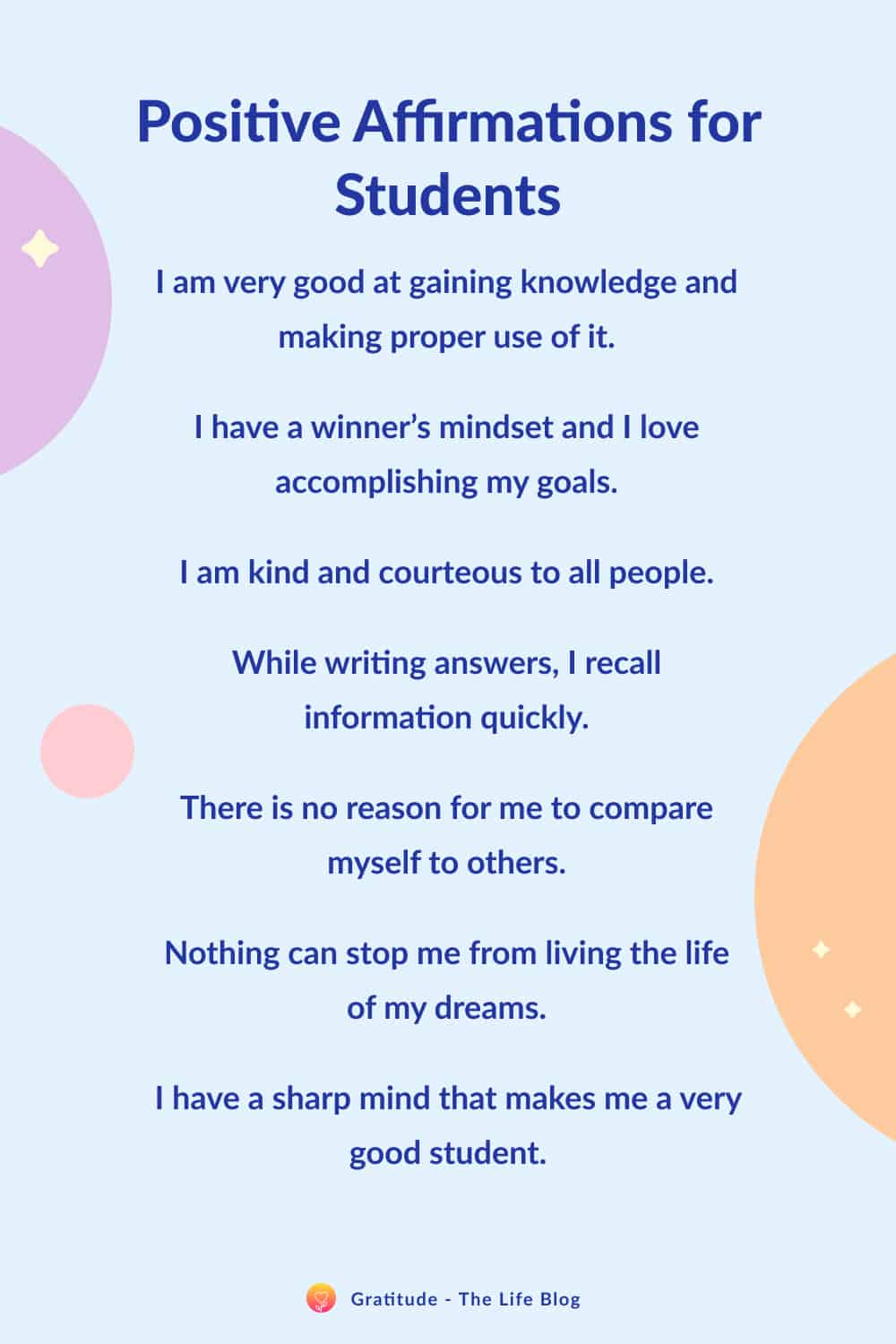
Affirmations must feel believable. If you don’t believe them, they won’t help. Start with small statements you can accept, then build up.
Credit: blog.gratefulness.me
Real-life Examples Of Affirmations Used By Students
Many students use positive affirmations daily. Here are some real stories and examples:
- A student struggling with math repeated “I am improving in math every day.” Over time, her grades improved, and she felt less anxious about tests.
- A shy student used “I am comfortable speaking in class.” He became more active in discussions and made new friends.
- During exam season, students wrote “I am prepared and calm” on sticky notes and put them on their desks. This helped them manage stress and focus better.
These examples show that affirmations can make a real difference when used consistently.
Scientific Evidence Behind Positive Affirmations
Positive affirmations are not just feel-good phrases. Research supports their effectiveness. Here are some key findings:
- A study in Psychological Science found that self-affirmation exercises improved students’ academic performance, especially for those under stress.
- MRI scans show that positive self-talk activates the brain’s reward centers, leading to better mood and motivation.
- Students who practice affirmations report lower levels of anxiety and higher self-esteem.
However, affirmations work best when combined with action. Repeating “I am a good student” is helpful, but studying and preparing are essential.
Comparing Affirmations With Other Methods
Let’s look at how affirmations compare to other self-improvement techniques:
| Method | Focus | Effectiveness | Ease of Use |
|---|---|---|---|
| Positive Affirmations | Mental attitude | High (when consistent) | Very easy |
| Meditation | Relaxation & focus | High | Requires practice |
| Goal Setting | Planning | High | Moderate |
| Therapy/Counseling | Emotional support | Varies | Needs professional help |
Affirmations are simple and accessible, making them a good starting point for students.
How To Use Affirmations In Daily Life
Using affirmations is easy, but consistency is key. Here’s how students can add them to their daily routine:
Morning Routine
Start your day with affirmations. Say them aloud or write them in a journal. This sets a positive tone for the day.
Before Exams
Repeat affirmations before exams or tests. For example, “I am prepared and confident” helps calm nerves and boost focus.
During Stressful Moments
When feeling stressed, use affirmations to regain control. “I can handle this” or “I am calm and strong” are good choices.
With Visual Reminders
Write affirmations on sticky notes and place them on your desk, mirror, or notebook. Seeing them often reinforces positive thinking.
Group Activities
Affirmations can be used in group settings. Teachers can encourage students to share positive self-talk in class. This builds a supportive environment.
Tracking Progress
Keep a log of your affirmations and note changes in mood, confidence, or academic performance. This helps you see the benefits and stay motivated.
Comparing Consistent Vs. Inconsistent Use
Here’s how results differ between students who use affirmations consistently and those who don’t:
| Usage | Self-Esteem | Academic Performance | Stress Levels |
|---|---|---|---|
| Consistent Use | High | Improved | Low |
| Occasional Use | Moderate | Some improvement | Moderate |
| No Use | Low | No improvement | High |
Consistency is the secret to success.
Practical Tips For Students
Affirmations are most effective when used thoughtfully. Here are some practical tips:
- Start small: Begin with 2-3 affirmations that feel comfortable.
- Be patient: Changes take time. Keep repeating your affirmations daily.
- Combine with action: Use affirmations alongside studying and practicing skills.
- Speak with conviction: Say your affirmations clearly and confidently.
- Use visualization: Imagine yourself achieving your goals as you repeat your affirmations.
- Adjust as needed: Change your affirmations as your goals evolve.
Common Mistakes Students Make
Many students make mistakes when using affirmations. Avoid these pitfalls:
- Choosing unrealistic affirmations: If the statement feels impossible, it may not help.
- Using negative language: Avoid words like “not” or “never.”
- Being inconsistent: Skipping days weakens the effect.
- Ignoring feelings: If you feel resistance, try a smaller, more believable affirmation.
- Relying only on affirmations: Pair them with real effort.
Examples Of Positive Affirmations For Students
Here are some powerful affirmations you can use:
- “I am capable of achieving my goals.”
- “I am focused and attentive in class.”
- “I handle challenges with strength.”
- “I learn from every mistake.”
- “I am proud of my hard work.”
- “I am creative and resourceful.”
- “I am organized and prepared.”
- “I believe in my abilities.”
- “I am calm during exams.”
- “I am motivated to improve every day.”
- “I am a good listener and friend.”
- “I am confident sharing my ideas.”
- “I am open to new experiences.”
- “I am resilient when facing setbacks.”
- “I am grateful for my education.”
Positive Affirmations For Different Age Groups
Students of all ages can use affirmations, but the phrases should match their level. Here’s how affirmations vary:
Elementary Students
Simple, clear statements work best:
- “I am smart.”
- “I am kind.”
- “I do my best.”
Middle School Students
Affirmations focus on confidence and social skills:
- “I am brave trying new things.”
- “I am a good friend.”
- “I am responsible.”
High School Students
More complex affirmations for academic and personal growth:
- “I am prepared for my exams.”
- “I am confident in my decisions.”
- “I am ready for new challenges.”
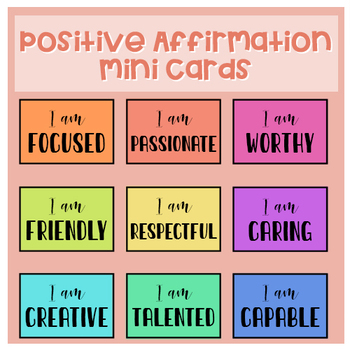
College Students
Affirmations support independence and career goals:
- “I am building my future.”
- “I am managing my time well.”
- “I am capable of succeeding.”
Credit: www.teacherspayteachers.com
Using Affirmations For Specific Challenges
Students face different challenges. Affirmations can target these areas:
Overcoming Test Anxiety
- “I am calm and prepared.”
- “I trust my memory and skills.”
Dealing With Peer Pressure
- “I make choices that are right for me.”
- “I stand up for myself.”
Improving Focus
- “I concentrate fully on my tasks.”
- “I avoid distractions easily.”
Building Confidence
- “I am comfortable speaking in groups.”
- “I express my opinions clearly.”
Teachers And Parents: Supporting Students With Affirmations
Teachers and parents play a big role in a student’s mindset. Here’s how they can help:
Teachers
- Encourage students to use affirmations in class.
- Create a positive environment with group affirmations.
- Remind students to focus on strengths.
Parents
- Help children choose affirmations that match their needs.
- Practice affirmations together at home.
- Celebrate progress and positive changes.
Comparing Teacher And Parent Support
| Support Type | Impact | Frequency | Best Used For |
|---|---|---|---|
| Teacher | Group motivation | Daily (in class) | Academic confidence |
| Parent | Individual encouragement | Daily (at home) | Personal growth |
Both forms of support are valuable.
Non-obvious Insights: What Most Students Miss
Many students overlook the deeper impact of affirmations. Here are two insights:
- Affirmations can help with emotional regulation. When you feel upset or frustrated, repeating a calming affirmation can help you regain control. This is especially useful during conflicts or stressful moments.
- Affirmations work best when combined with visualization. Imagine yourself achieving your goal as you say your affirmation. This strengthens your belief and makes the outcome feel more real.
These insights can make affirmations more effective.
How To Measure The Impact Of Affirmations
It’s important to track progress. Here are ways to measure the effect:
- Mood journals: Write down how you feel before and after using affirmations.
- Academic records: Note improvements in grades or participation.
- Feedback from teachers/parents: Ask for observations on your confidence or attitude.
- Self-reflection: Think about changes in your thinking and actions.
Tracking helps you see the benefits and adjust your approach.
Frequently Asked Questions
What Are Positive Affirmations For Students?
Positive affirmations are short, uplifting statements students repeat to themselves. They help build confidence, reduce stress, and encourage a positive mindset. Examples include “I am capable,” “I am prepared,” and “I learn from mistakes.”
How Often Should Students Use Positive Affirmations?
Students should use affirmations daily for best results. Morning routines, before exams, or whenever feeling stressed are good times. Consistency is key to seeing improvements in confidence and motivation.
Can Positive Affirmations Help With Exam Anxiety?
Yes, affirmations like “I am calm and prepared” or “I trust my abilities” can help reduce exam anxiety. They shift focus from fear to confidence. Pairing affirmations with deep breathing and study plans increases their effectiveness.
Are Positive Affirmations Backed By Science?
Research supports the use of affirmations. Studies show they can improve academic performance, lower stress, and boost self-esteem. For more details, see the article from Psychology Today.
Can Teachers And Parents Help Students Use Affirmations?
Absolutely. Teachers can encourage affirmations in class, and parents can support them at home. Both can help students choose the right statements, remind them to use affirmations, and celebrate progress.
Positive affirmations are a powerful tool for students. They are simple, easy to use, and backed by research. Whether you are a student, teacher, or parent, understanding and using affirmations can make school life more positive and successful. Remember, the journey starts with your words.
Choose them wisely and watch your confidence grow.
