

Can Affirmations Help With Anxiety? Discover Their True Impact
Can Affirmations Help With Anxiety
Anxiety is more common than most people realize. It touches millions of lives and often feels overwhelming, especially when worries spin in the mind like a never-ending loop. Many people look for ways to calm their thoughts and feel more at ease. One method gaining popularity is the use of affirmations—short, positive statements people repeat to themselves. But do affirmations truly help with anxiety, or are they just wishful thinking?
If you've ever felt anxious and wondered if changing your self-talk could make a real difference, this article is for you. Here, you'll learn what affirmations are, how they may impact anxiety, what science says, and how to use them effectively.
You'll also find practical examples, common mistakes, and a clear look at how affirmations compare to other anxiety-reduction strategies. By the end, you'll have a solid understanding of whether affirmations can play a meaningful role in managing anxiety—and how to get the most from them if you choose to try.
What Are Affirmations?
Affirmations are positive statements you say to yourself, often with the goal of changing your mindset or feelings. They are usually short and simple, such as “I am calm and in control” or “I can handle whatever comes my way.” People often repeat them daily, sometimes aloud or quietly in their minds.
The idea behind affirmations is to challenge negative or unhelpful thoughts. When someone feels anxious, their mind may focus on worst-case scenarios or self-doubt. Affirmations aim to interrupt these patterns and replace them with more balanced, positive beliefs.
There are different types of affirmations:
- Self-affirmations: Focus on your strengths and values (“I am strong and resourceful”)
- Situation-based affirmations: Target a specific fear or worry (“I can manage this meeting calmly”)
- General well-being affirmations: Promote overall peace and confidence (“I am safe and at peace”)
Affirmations can be written, spoken, or even listened to through recordings. The key is repetition and belief—saying them often enough that they begin to feel real, even if they don’t at first.
How Anxiety Affects Your Thoughts
Anxiety is not just a feeling; it changes the way you think. When anxious, your mind is more likely to focus on danger, failure, or uncertainty. This is sometimes called a negative thought loop. Here’s how it works:
- A trigger (like a stressful event) causes worry.
- Your mind imagines all the things that could go wrong.
- You start to believe these worries, even if they’re not true.
- The worry increases, making you feel more anxious.
This cycle can be hard to break. Negative thoughts become automatic, making it difficult to see the situation clearly. Over time, these thought patterns can make anxiety feel worse and harder to manage.
Affirmations try to interrupt these cycles. By repeating positive statements, you give your mind a new focus, which can reduce the power of anxious thoughts.
The Science Behind Affirmations And Anxiety
While affirmations are simple, their effect on the mind is surprisingly complex. Research in psychology shows that repeating positive statements can influence your mood, self-esteem, and even your physical health. But when it comes to anxiety, what does the evidence say?
What Studies Show
Several studies have looked at how affirmations affect stress and anxiety:
- Self-affirmation and stress: Research has found that people who use self-affirmations before stressful events, like public speaking, often feel less anxious and perform better. This suggests affirmations can help calm nerves in high-pressure situations.
- Brain imaging studies: Some studies using MRI scans show that affirmations activate areas of the brain linked to self-processing and reward. This means affirmations are not just “words”—they can actually change brain activity.
- Long-term effects: There is evidence that regular use of affirmations can improve general well-being over time, though results can vary depending on how they are used.
However, not all research is positive. Some studies suggest that if a person’s negative self-belief is very strong, positive affirmations that feel unrealistic can actually make them feel worse. For example, if someone feels deeply anxious and says “I am perfectly calm,” their mind may reject the statement, leading to more frustration.
Why Affirmations Can Work
Affirmations can help with anxiety for a few key reasons:
- Attention shift: They direct your focus away from anxious thoughts.
- Emotional regulation: Positive self-talk can calm the body’s stress response.
- Neural pathways: Repeating affirmations can help build new thought patterns in the brain.
It’s important to note that affirmations are not a cure for anxiety. They are a tool—one that can be powerful when used correctly, but not always effective on their own.
How To Use Affirmations For Anxiety
If you want to try affirmations to manage anxiety, the way you use them makes a big difference. Here are some practical steps to get started.
1. Choose The Right Affirmations
Pick statements that feel believable and relevant to your situation. If you struggle with panic before presentations, try “I can speak with confidence” instead of “I am never afraid. ” Avoid affirmations that feel fake or too far from your current reality.
2. Repeat Regularly
Consistency is important. Say your affirmations daily, ideally at the same time each day. Many people find it helpful to repeat them in the morning, before bed, or whenever anxiety strikes.
3. Use Emotion And Visualization
Don’t just say the words—try to feel them. Imagine yourself calm and confident as you repeat your affirmation. Visualization can make the message stronger in your mind.
4. Write Them Down
Some people get more benefit by writing affirmations instead of just saying them. Keep a journal and write your chosen statements several times each day.
5. Pair With Deep Breathing
Combining affirmations with slow, deep breaths can increase their calming effect. Each time you inhale, repeat your affirmation silently or aloud.
6. Adjust As Needed
If an affirmation doesn’t feel right, change it. The best affirmations are those you believe, even if just a little. Over time, you can shift to more confident statements.
Examples Of Affirmations For Anxiety
It can be hard to know where to start. Here are some effective affirmations for anxiety, grouped by common situations:
General Anxiety
- “I am safe in this moment.”
- “I trust myself to handle what comes.”
- “I am allowed to feel calm.”
- “My thoughts do not control me.”
Social Anxiety
- “I am comfortable being myself.”
- “I can connect with others.”
- “It’s okay to make mistakes.”
- “I am enough just as I am.”
Work Or School Stress
- “I am capable and prepared.”
- “I can take challenges one step at a time.”
- “I learn from every experience.”
- “I handle pressure with strength.”
Panic And Overwhelm
- “This feeling will pass.”
- “I can breathe through this.”
- “I am grounded in the present.”
- “I have survived anxious moments before.”
Sleep Anxiety
- “I give myself permission to rest.”
- “I let go of worries for tonight.”
- “My body knows how to relax.”
- “Peace is possible for me.”
When Affirmations Might Not Work
While affirmations can help many people, they are not a magic fix. Sometimes, they might not be effective or could even increase anxiety. Here’s why:
- Unrealistic statements: If an affirmation feels impossible, your mind may reject it, leading to more self-doubt.
- Strong negative beliefs: Deep-rooted anxiety or negative self-image may need more than affirmations alone, such as therapy or other support.
- Lack of repetition: Sporadic use of affirmations rarely leads to lasting change. Consistency is key.
- Ignoring root causes: Affirmations do not replace the need to address the underlying causes of anxiety.
If you find affirmations making you feel worse, it’s important to pause and reassess. Consider speaking with a mental health professional for guidance.
The Role Of Self-talk In Anxiety
The words you say to yourself, known as self-talk, have a powerful effect on anxiety. Negative self-talk, like “I can’t handle this” or “Something bad will happen,” can increase anxiety and make it harder to cope. Affirmations are a form of positive self-talk designed to break these patterns.
Changing self-talk takes practice. At first, positive statements may feel strange or forced. But over time, they can become more natural, especially if you notice even small improvements in how you feel.
One insight many beginners miss is that the goal is not to “erase” all negative thoughts, but to create space for more balanced thinking. It’s normal for doubts to appear—affirmations simply help you respond to them in a healthier way.
How Affirmations Compare To Other Anxiety Tools
Affirmations are just one tool in the anxiety management toolbox. How do they stack up against other common methods? Take a look at the comparison below.
| Method | How It Works | Best For | Limitations |
|---|---|---|---|
| Affirmations | Positive self-talk to challenge negative thoughts | Daily stress, mild anxiety | Less effective for deep-rooted beliefs |
| Mindfulness | Focus on present moment, accept thoughts | General anxiety, stress reduction | Requires practice and patience |
| CBT Techniques | Identify and change unhelpful thoughts | Persistent or severe anxiety | Often needs professional help |
| Medication | Alters brain chemistry to reduce symptoms | Moderate to severe anxiety | Side effects, not for everyone |
| Exercise | Reduces stress hormones, boosts mood | Mild to moderate anxiety | Needs regular effort |
As the table shows, affirmations are best for everyday stress or mild anxiety. They can be a great first step or an addition to other strategies. For more intense or long-lasting anxiety, methods like cognitive behavioral therapy (CBT) or medication may be needed.
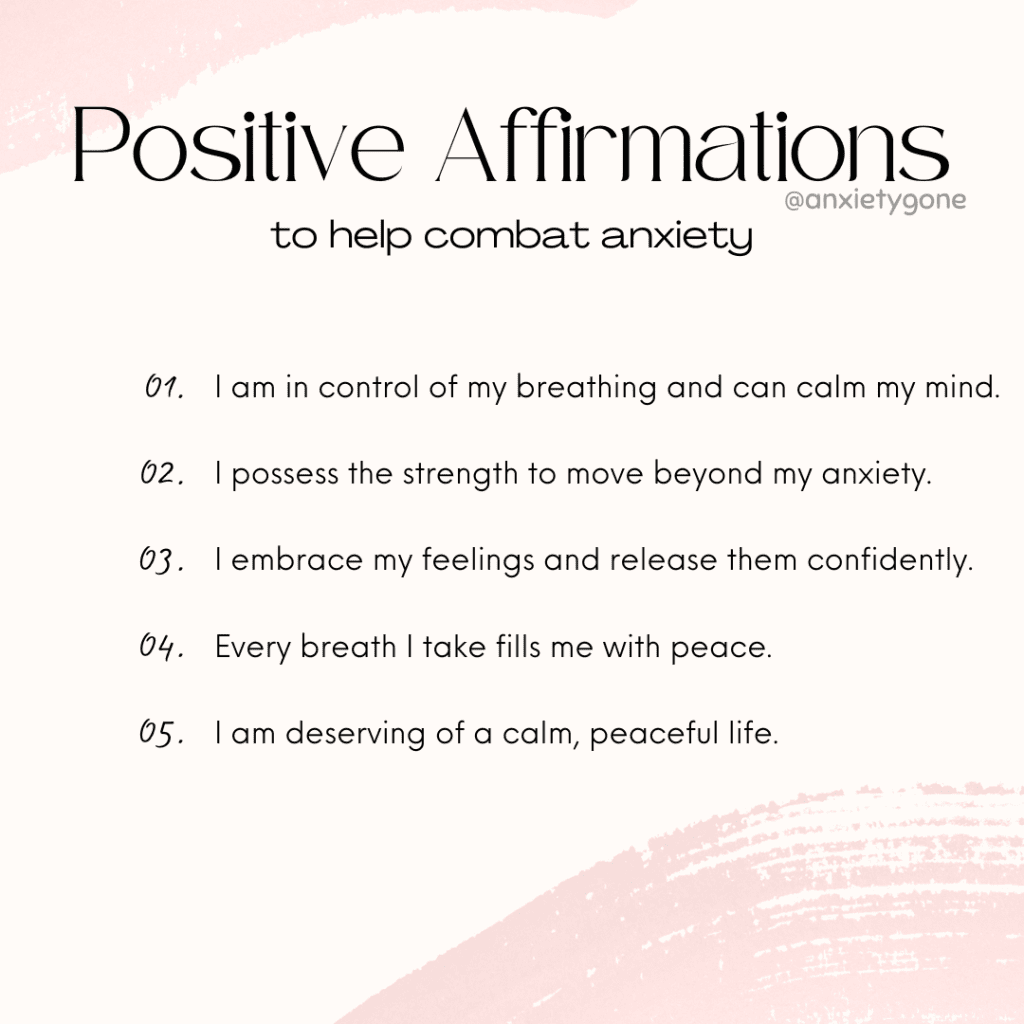
Credit: anxiety-gone.com
Tips For Making Affirmations More Effective
Many people try affirmations and give up quickly, thinking they don’t work. Often, this is because they skip some important steps. Here are ways to get more from your affirmation practice:
- Start small: Begin with affirmations that feel true or almost true. For example, “I am learning to manage my anxiety.”
- Personalize: Use your own words and focus on your specific worries.
- Combine with action: Use affirmations as motivation to take small steps, like reaching out to a friend or practicing deep breathing.
- Track progress: Write down how you feel before and after using affirmations. Look for subtle changes over time.
- Be patient: Change rarely happens overnight. Give yourself time to adjust to new ways of thinking.
- Practice self-compassion: If you forget or struggle, don’t criticize yourself. Every effort counts.
A useful but often overlooked tip: Try “if-then” affirmations. For example, “If I start to feel anxious, then I will remind myself I am safe.” This prepares your mind for real-life situations.
Common Mistakes When Using Affirmations
Even though affirmations are simple, some common mistakes can prevent them from working:
- Choosing statements that are too positive: If your mind rejects them, they lose power.
- Inconsistent practice: Skipping days or only using affirmations in crisis moments makes it hard to see benefits.
- Ignoring feelings: Saying affirmations without any emotion or belief often feels empty.
- Trying to force away negative thoughts: The goal is balance, not perfection.
- Using affirmations as the only tool: Most people need a mix of strategies for best results.
If you catch yourself making these mistakes, gently adjust. Remember, progress often happens in small steps, not big leaps.

Credit: www.amazon.com
Real-life Examples: Affirmations In Action
Hearing how others use affirmations can help you see their real-world value. Here are two examples:
Maria’s Story: Maria struggled with social anxiety, especially during work meetings. She started using the affirmation, “I can contribute value to this team.” At first, she didn’t believe it, but she repeated it every morning before work. Over time, she noticed she felt less nervous and started speaking up more often. Her affirmation didn’t erase her anxiety, but it helped her take small steps forward.
Eli’s Story: Eli had trouble sleeping because of constant worry. He began writing, “I am letting go of today’s worries,” in a journal every night. He also paired this with slow breathing. After a few weeks, Eli found it easier to relax before bed, and his sleep improved. He still had bad nights, but the affirmations gave him a tool to calm his mind.
These stories show that affirmations work best when they are part of a larger plan, used regularly, and chosen thoughtfully.
Data: Do Affirmations Really Help?
You might wonder how many people actually benefit from affirmations. While results vary, surveys and studies offer some insight.
| Survey Group | Reported Reduced Anxiety | Reported No Change | Reported Increased Anxiety |
|---|---|---|---|
| College Students | 65% | 28% | 7% |
| Working Adults | 52% | 38% | 10% |
| General Public | 55% | 35% | 10% |
These numbers show that more than half of people notice some reduction in anxiety after using affirmations, especially in settings where they are guided or combined with other techniques. However, a significant portion sees no change, and a small group may even feel worse.
This highlights the need to use affirmations thoughtfully and to adjust your approach if needed.
Combining Affirmations With Other Anxiety Tools
Affirmations work best when they are part of a larger strategy. For most people, using several methods together brings better results than using any one alone. Here are some combinations that work well:
- Affirmations + Mindfulness: Repeat your affirmation during meditation or mindful breathing.
- Affirmations + Journaling: Write about your worries, then create affirmations to counter them.
- Affirmations + Physical Activity: Use affirmations as a mental boost before or during exercise.
- Affirmations + Therapy: Share your affirmations with a therapist who can help refine them.
Blending tools helps anchor positive changes and gives your mind and body multiple ways to handle anxiety.
How To Create Your Own Affirmations
Making your own affirmations is simple, but a few guidelines can help:
- Keep them short and clear: Use simple language that feels natural to you.
- Focus on the present: Say “I am” or “I can” instead of “I will.”
- Be realistic: Choose statements that stretch you but don’t feel impossible.
- Make it personal: Use words that speak to your specific worries or situations.
For example, instead of “I am never anxious,” try “I am learning to face my anxiety with courage. ”
Credit: www.amaehealth.com
Non-obvious Insights For Beginners
Many people miss these two key points when starting with affirmations:
- Affirmations can highlight your real beliefs. If you notice strong resistance or discomfort when saying an affirmation, it can show where your deepest worries are. This is valuable information—use it to adjust your statements or explore these feelings with support.
- Progress is often invisible at first. Changes in thinking happen slowly and may show up in small ways, like feeling calmer for a few minutes or handling a stressful moment better than before. Track your progress over weeks, not days.
When To Seek Extra Help
If anxiety is interfering with your daily life and affirmations alone are not enough, don’t hesitate to reach out for support. Professional help, such as therapy, can offer tools and strategies tailored to your needs. Affirmations can be a helpful part of recovery, but they are not a substitute for medical or psychological care when needed.
If you want to learn more about anxiety and mental health, the National Institute of Mental Health offers helpful, evidence-based information.
Frequently Asked Questions
Can Affirmations Cure Anxiety?
Affirmations cannot cure anxiety, but they can be a helpful tool for managing symptoms. They work best as part of a larger plan that may include therapy, lifestyle changes, and other coping strategies.
How Long Does It Take For Affirmations To Work?
Some people notice small changes within days, but lasting effects usually take weeks or months of consistent practice. Patience and regular use are important for seeing results.
What If I Feel Worse After Using Affirmations?
If affirmations make you feel worse or trigger more anxiety, try adjusting your statements to be more believable. Focus on gentle, realistic affirmations, and consider seeking support from a therapist if negative feelings persist.
Are There Any Risks To Using Affirmations For Anxiety?
Affirmations are generally safe, but if used incorrectly (such as making unrealistic claims), they can sometimes increase self-doubt or frustration. It’s important to listen to your feelings and adjust as needed.
Should I Use Affirmations Alone Or With Other Techniques?
Affirmations are most effective when used with other anxiety-management tools, such as mindfulness, exercise, or therapy. Combining methods can offer stronger and more lasting relief.
Anxiety can feel like a heavy burden, but small steps—like using affirmations—can lighten the load. Try different approaches, notice what works for you, and remember: real change often starts with a single, positive thought.
