

How to Write Affirmation Statements That Truly Work
How To Write Affirmation
Many people want to feel more confident, happy, or positive in daily life. One simple tool can help: affirmations. If you have heard about affirmations but are unsure how to create them for yourself, you are not alone. Writing powerful affirmations is more than just repeating words. It is about understanding your goals, using the right language, and building a habit that changes your mindset. Whether you want to reduce stress, improve your self-esteem, or reach a new goal, learning how to write affirmation can unlock your inner potential. This guide will show you step by step how to create affirmations that truly work, with practical tips and real examples.
What Is An Affirmation?
An affirmation is a short, positive statement you repeat to yourself. The purpose is to help you believe in your abilities, change your mindset, and focus on your goals. For example, saying “I am confident” can help you feel more confident over time.
Affirmations are used in self-development, psychology, and even business to boost motivation and mental strength.
Affirmations are not just wishful thinking. They are based on the idea that your thoughts can shape your actions and feelings. When you repeat positive statements, your brain starts to accept them as true. This can help you overcome negative thoughts or limiting beliefs.
Why Affirmations Matter
Many studies show that affirmations can improve mental health and performance. For example, research shows that positive self-talk can reduce stress and increase self-esteem. Athletes, entrepreneurs, and students use affirmations to stay focused and motivated.
Here are some reasons why affirmations are important:
- Build confidence: Affirmations remind you of your strengths.
- Reduce negative thinking: They help you focus on positive ideas.
- Boost motivation: You feel more inspired to reach your goals.
- Improve mental health: Affirmations can lower anxiety and stress.
A non-obvious insight is that affirmations are most effective when they address real challenges. For instance, if you often feel shy, creating affirmations about social confidence will work better than general statements.
Common Types Of Affirmations
There are many ways to write affirmations. The most popular types include:
- Self-esteem affirmations: “I am worthy of respect.”
- Goal-based affirmations: “I am making progress every day.”
- Health affirmations: “I take care of my body.”
- Relationship affirmations: “I communicate clearly.”
- Career affirmations: “I am successful in my work.”
Each type focuses on a specific area of life. You can combine several types if you want to change more than one thing.
How Affirmations Work In The Brain
When you repeat an affirmation, it activates areas in your brain linked to reward and positive emotion. This process is called neuroplasticity—your brain changes over time based on your thoughts and actions. For example, if you often say “I am confident,” your brain starts to support this belief.
Studies using brain scans show that regular affirmations can reduce activity in the amygdala, which is the part of the brain linked to fear and stress. This helps you feel calmer and more positive. A key insight is that affirmations work best when you truly believe what you are saying, or at least feel open to believing it.
Steps To Write Effective Affirmations
Writing affirmations is simple, but to make them powerful, you need to follow a few key steps. Here is a detailed process to create your own affirmations.
1. Identify Your Goal Or Challenge
First, ask yourself: What do I want to change or improve? This could be confidence, stress, health, or any area of life. Be honest and specific.
Example:
- If you often feel nervous in meetings, your goal might be to feel confident when speaking.
2. Choose Positive, Present-tense Language
Affirmations should always use positive words and be written in the present tense. This helps your brain accept the statement as true now, not in the future.
Good example:
- “I am confident when I speak.”
Bad example:
- “I will be confident someday.”
3. Keep It Short And Simple
Use clear, simple language. Avoid complicated words or long sentences. Your affirmation should be easy to remember and repeat.
Example:
- “I am calm and relaxed.”
4. Focus On What You Want, Not What You Don’t Want
Affirmations should focus on the positive outcome, not the problem. For example, instead of saying “I am not nervous,” say “I am calm. ”
5. Make It Personal
Use “I” or “my” to make your affirmation about you. This makes it more powerful and meaningful.
Example:
- “I trust my abilities.”
6. Be Realistic And Authentic
Choose statements you can believe or grow into. If you say something too far from your reality, your brain may reject it.
Example:
- If you struggle with confidence, start with “I am learning to feel confident.”
7. Use Emotion And Feeling Words
Add words that show how you want to feel. This makes your affirmation stronger.
Example:
- “I am excited about new opportunities.”
8. Repeat Regularly
Affirmations work best when you repeat them daily. Set a time, such as morning or evening, to say your affirmation.
9. Write Down Your Affirmations
Writing your affirmation on paper or in a journal helps your brain remember it better.
10. Visualize While Saying Your Affirmation
Imagine yourself living the affirmation. For example, picture yourself speaking confidently in a meeting.
Examples Of Well-written Affirmations
Here are some examples for different areas:
- Self-esteem: “I am proud of who I am.”
- Stress: “I am peaceful and calm.”
- Health: “I make healthy choices every day.”
- Career: “I am successful in my work.”
- Relationships: “I listen with empathy.”
These statements use positive, present-tense, and personal language.

Credit: jackcanfield.com
Common Mistakes When Writing Affirmations
Many beginners make mistakes that reduce the power of affirmations. Here are some to avoid:
- Using negative words: “I am not afraid.”
- Writing in future tense: “I will be confident.”
- Choosing too long statements: “I am always confident, happy, energetic, and never afraid.”
- Making unrealistic promises: “I am a billionaire.”
- Forgetting to repeat regularly.
A non-obvious mistake is writing affirmations that do not match your values. For example, if you value honesty, writing “I am always positive” may feel fake.
Comparison: Strong Vs. Weak Affirmations
To help you see the difference, here is a comparison table:
| Strong Affirmation | Weak Affirmation |
|---|---|
| I am confident and calm. | I am not nervous. |
| I make healthy choices every day. | I will try to be healthy. |
| I am proud of my progress. | I wish I did better. |
| I trust myself to make good decisions. | I am not making mistakes. |
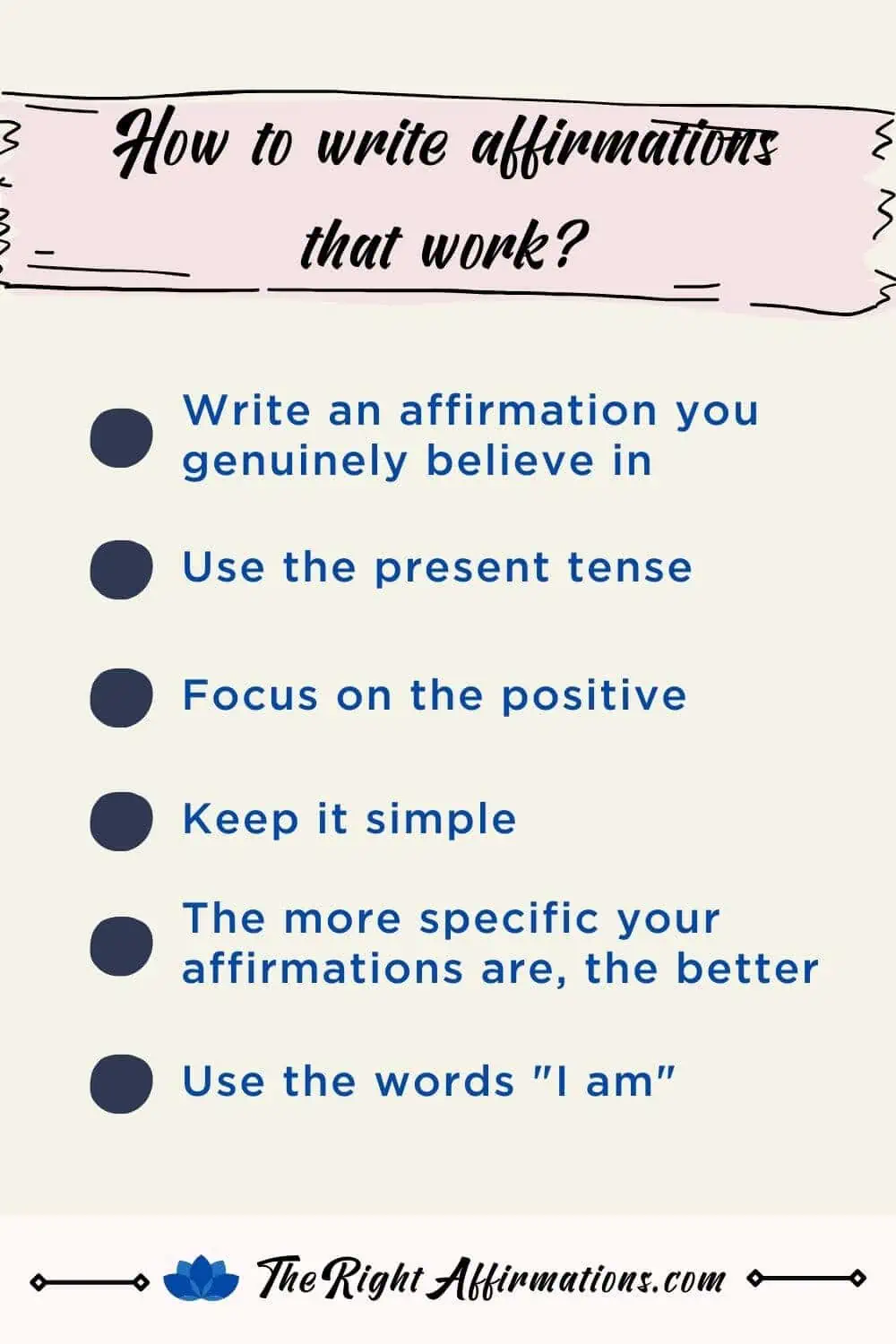
Notice that strong affirmations use positive, present-tense, and personal words.
Credit: unfinishedsuccess.com
How Many Affirmations Should You Use?
You do not need many affirmations to see results. For most people, 3 to 5 affirmations are enough. Using too many can make it hard to remember and focus.
A helpful tip is to start with one affirmation for each goal. If you want to improve confidence and reduce stress, create two separate affirmations.
When And How Often To Repeat Affirmations
Repeating affirmations daily is important. Most people say them in the morning, before bed, or during breaks.
Research shows that repeating affirmations 2–3 times a day can increase effectiveness. You can write them, say them aloud, or listen to recordings.
Here is a simple routine:
- Morning: Say your affirmations after waking up.
- Afternoon: Repeat during a quiet moment.
- Evening: Review your affirmations before sleep.
Where To Use Affirmations
Affirmations can be used in many places:
- At home: In front of a mirror.
- At work: Before meetings or presentations.
- While exercising: To boost motivation.
- In stressful situations: When feeling anxious.
You can also use reminders, such as sticky notes or phone alarms, to help you remember.
Data: Effectiveness Of Affirmations
Several studies show the impact of affirmations. For example, a study published in a psychology journal found that people who used daily affirmations for three weeks had lower stress and higher self-esteem. Another study showed that students who used affirmations before exams performed better.
Here is a summary in a data table:
| Study | Participants | Result |
|---|---|---|
| Self-Esteem Study | 100 adults | Increased self-esteem, reduced stress |
| Exam Performance Study | 50 students | Higher test scores after using affirmations |
| Health Motivation Study | 80 people | More healthy choices, greater motivation |
This data shows affirmations can be a powerful tool for mental and physical health.
How To Personalize Your Affirmations
Personalizing your affirmation makes it more meaningful. Here are some ways to do it:
1. Use Your Name
Adding your name can make the affirmation feel more real.
Example:
- “I, Maria, am strong and confident.”
2. Add Specific Details
Include details that matter to you.
Example:
- “I am confident when speaking in meetings.”
3. Connect To Your Values
Think about what matters most to you, like honesty, kindness, or growth.
Example:
- “I grow and learn every day.”
4. Adapt For Your Culture Or Language
If English is not your first language, you can translate affirmations or use words that feel natural.
5. Include Visual Cues
Write your affirmation on colorful cards or use symbols that inspire you.
Using Affirmations For Different Goals
Affirmations can be tailored for many purposes. Here are examples for popular goals:
1. Confidence
- “I am confident in my abilities.”
- “I speak clearly and calmly.”
2. Stress Relief
- “I am calm and relaxed.”
- “I handle challenges with ease.”
3. Health And Fitness
- “I enjoy eating healthy food.”
- “I am strong and active.”
4. Career Success
- “I am successful in my work.”
- “I solve problems with creativity.”
5. Relationships
- “I listen with empathy.”
- “I build positive connections.”
6. Learning And Growth
- “I learn new skills every day.”
- “I embrace challenges and grow.”
You can adjust these examples to fit your needs.
Advanced Tips For Writing Affirmations
For deeper results, try these advanced techniques:
1. Combine Affirmation With Visualization
While repeating your affirmation, picture yourself living it. For example, if your affirmation is “I am confident,” imagine yourself speaking confidently.
2. Use Power Words
Choose words that inspire you, such as “strong,” “creative,” “peaceful,” or “focused. ”
3. Create Affirmation Rituals
Make affirmations part of your daily routine. You can light a candle, play music, or meditate while saying them.
4. Track Your Progress
Keep a journal to record your thoughts and feelings. Notice how your attitude changes over time.
5. Change Affirmations As You Grow
As you reach your goals, update your affirmations to match new goals or challenges.
Comparison: Affirmation Methods
There are several ways to use affirmations. Here is a comparison:
| Method | Best For | How To Use |
|---|---|---|
| Spoken | Building confidence | Say aloud in front of mirror |
| Written | Improving memory | Write in journal daily |
| Audio Recording | Busy schedules | Listen to your own voice |
| Visual | Creative motivation | Use cards, art, or vision boards |
You can use one or combine several methods for best results.
How To Test If Your Affirmation Is Working
It is important to check if your affirmation is making a difference. Here are signs that your affirmation is effective:
- You feel more positive about your goal.
- Negative thoughts are less frequent.
- You notice changes in your behavior.
- Other people comment on your progress.
If you do not feel a change, try adjusting your affirmation or repeating it more often.
Overcoming Resistance To Affirmations
Sometimes, you may feel uncomfortable or doubtful when saying affirmations. This is normal. Here are ways to overcome resistance:
1. Start Small
If a statement feels too strong, begin with a softer version.
Example:
- “I am learning to feel confident.”
2. Use Gradual Language
Words like “I am becoming” or “I am learning” can help.
3. Address Your Doubts
Write about your doubts in a journal. Then create affirmations that answer those doubts.
4. Practice Self-compassion
Remind yourself that change takes time. Be patient and kind to yourself.
A non-obvious insight is that resistance often means your affirmation is touching a real challenge. This can be a sign that you need it most.
Combining Affirmations With Other Techniques
Affirmations can be even more powerful when combined with other self-help tools:
- Meditation: Repeat affirmations during meditation to deepen the effect.
- Visualization: Picture your goal while repeating your affirmation.
- Gratitude: Add gratitude statements to your routine, like “I am grateful for my progress.”
Some people also use affirmations along with therapy or coaching for faster results.
Creating Affirmation Cards
Affirmation cards are a fun and creative way to use your affirmations. Write each statement on a small card, decorate it, and place it where you see it often.
You can:
- Use colorful markers or stickers.
- Place cards on your desk, mirror, or fridge.
- Carry a card in your wallet for quick reminders.
Credit: www.reddit.com
Technology Tools For Affirmations
Many apps and websites help you create, track, and repeat affirmations. You can set reminders, record your voice, or join online communities.
Some popular features include:
- Daily reminders
- Custom affirmations
- Progress tracking
For more information on the science behind affirmations, visit Wikipedia.
Frequently Asked Questions
How Long Does It Take For Affirmations To Work?
Most people notice changes in their thoughts or feelings after a few weeks of daily practice. The key is consistency and belief. Sometimes, results come faster if you use affirmations for specific goals.
Can I Write Affirmations In My Native Language?
Yes, affirmations work best when they feel natural. You can write them in any language you are comfortable with. The meaning matters more than the language.
Do Affirmations Work For Everyone?
Affirmations are effective for most people, but results can vary. If you have strong doubts, try using softer language or combining affirmations with other techniques, like meditation.
How Many Times Should I Repeat My Affirmation Each Day?
Repeating your affirmation 2–3 times a day is ideal. You can say it aloud, write it, or listen to recordings. The more often you repeat, the stronger the effect.
What If My Affirmation Feels Unrealistic?
If your affirmation feels too far from your reality, start with a softer statement, like “I am learning to feel confident. ” Adjust your affirmation as you grow.
Affirmations are a simple yet powerful tool for changing your mindset and reaching your goals. The process is easy, but the impact can be deep and lasting. By following the steps in this guide, you can create affirmations that fit your needs and help you grow in any area of life.
Keep your statements positive, personal, and realistic. Repeat them daily, and watch how your confidence and motivation rise. Remember, real change starts with your thoughts—affirmations are the first step.
