

Choosing Comfortable Workout Clothing for Every Training Day
Updated on: February 3, 2026
Forget suffocating yourself in gym clothes that feel like medieval armor. Comfortable workout clothing is your secret weapon for actually enjoying exercise instead of counting down the minutes until you can peel off your sweaty prison. From breathable fabrics to strategic stretch, we're breaking down everything you need to know about finding gear that supports your body and your sanity. Spoiler alert: your fitness journey just got a whole lot more wearable.
Table of Contents
- Practical Guide to Finding Your Perfect Fit
- Key Advantages of Quality Workout Gear
- Summary and Next Steps
- Questions and Answers
Practical Guide to Finding Your Perfect Fit
Let's be honest: most people treat workout clothing shopping like a hostage situation. You grab whatever's on sale, squeeze into it, and hope for the best. That's basically financial self-sabotage wrapped in polyester. The truth is that comfortable workout clothing actually transforms how you move, breathe, and feel about showing up to exercise. And yes, that matters more than you think.
Step One: Understand Your Fabric Game
Not all fabrics are created equal, especially when your body is doing its best impression of a sprinkler system. Cotton looks innocent, but it's basically a sponge that holds onto moisture like it owes it money. Merino wool sounds fancy and scratchy, but it's actually temperature-regulating and naturally antimicrobial, which means you won't smell like a forgotten gym bag after one workout. Synthetic blends like polyester and nylon are the real MVPs here, wicking sweat away from your skin so you can actually focus on your fitness goals instead of your dampness. Look for fabrics with moisture-wicking properties listed on the tag, and your future self will send thank-you notes.
Step Two: Find the Right Fit Without Feeling Like a Sausage
Comfortable workout clothing should feel like a supportive friend, not a wrestling opponent. Too tight, and you're cutting off circulation and spending your entire workout thinking about how much you regret your choices. Too loose, and you're tripping over fabric and wondering if you accidentally grabbed your partner's oversized shirt. The sweet spot? Snug enough that everything stays in place during movement, loose enough that you can breathe like a normal human being. When you try on workout gear, do some jumping jacks in the fitting room. Your dignity will recover. Your workout experience will improve exponentially.

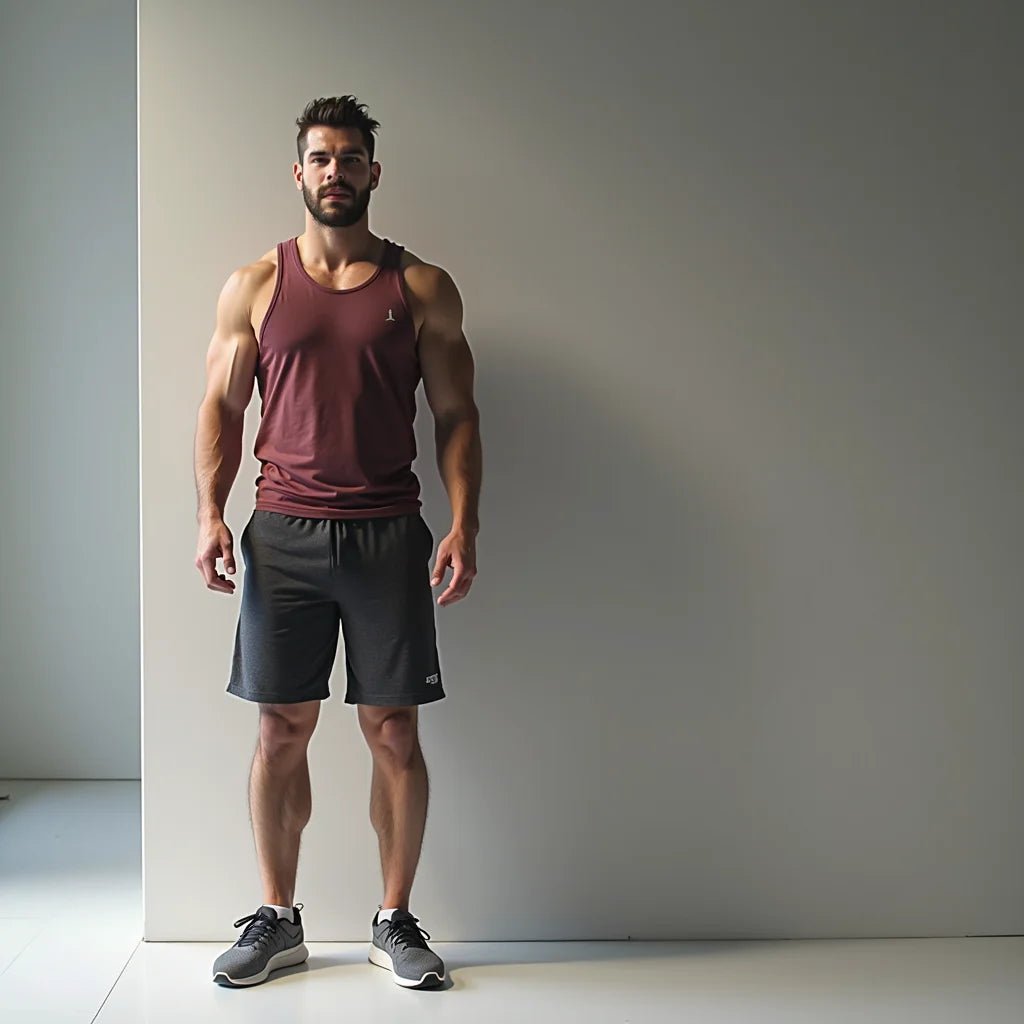
Athlete performing dynamic stretching movements while wearing breathable fitted activewear
Step Three: Match Your Gear to Your Activity
Running requires different support than yoga requires different considerations than swimming. A specialized rash guard for water activities serves purposes beyond casual streetwear. High-impact cardio demands supportive leggings that won't ride up or shift around, while yoga benefits from gear with more range of motion. Think about your specific activity and what your body actually needs, rather than buying everything in the same style and calling it a uniform.
Step Four: Layer Like You Actually Know What You're Doing
The concept of layering isn't just for winter coats and pretentious outdoor enthusiasts. Moisture-wicking base layers pull sweat away from your skin, mid-layers provide insulation when needed, and outer layers protect you from elements. Even in summer, this strategy prevents chafing and keeps temperature regulation in your favor. Build a system that works with your body, not against it.
Step Five: Don't Forget About Support Features
Pockets. We need to talk about pockets. Many workout clothes come with them now, and yes, they're actually useful for storing your keys or phone instead of carrying everything like you're running an underground convenience store. Built-in compression in certain areas supports muscles and can reduce soreness. Thumbholes in long sleeves keep sleeves from riding up. Gusseted seams prevent ripping in high-movement areas. These aren't luxuries—they're quality-of-life upgrades that transform adequate gear into actually functional clothing.
Key Advantages of Quality Workout Clothing
- Enhanced Performance: Proper gear reduces distraction, letting you focus on your workout instead of constantly adjusting, tugging, or suffering through discomfort.
- Injury Prevention: Supportive, well-fitting clothing reduces chafing, blistering, and unnecessary friction that can sideline your fitness routine.
- Temperature Regulation: Moisture-wicking and breathable materials keep your body at optimal temperature, preventing overheating or excessive chilling.
- Confidence Boost: Wearing gear that fits well and looks good triggers genuine psychological benefits. You move differently when you feel comfortable in your own skin and clothing.
- Longevity: Quality fabrics and construction last longer than cheap alternatives, saving money despite higher upfront costs.
- Health Benefits: Proper support reduces muscle fatigue and joint stress, allowing for longer, more effective workouts.
- Versatility: Well-chosen pieces work across multiple activities, creating a flexible wardrobe instead of activity-specific clutter.
- Comfort That Compounds: When your clothing doesn't fight you, you're more likely to actually show up to exercise consistently.

Close-up of premium moisture-wicking fabric texture highlighting breathable mesh and stretch fibers
The Real Talk About Investment
Quality comfortable workout clothing costs more upfront than those clearance bin items, and we're not here to pretend otherwise. But consider the actual cost-per-wear calculation. A pair of durable workout leggings worn twice weekly for two years costs significantly less per use than a cheap pair that falls apart after three months. Beyond numbers, there's the intangible value of actually enjoying your workout instead of being miserable in subpar gear. You're not just buying clothing; you're investing in your commitment to fitness.
Seasonal Considerations for Your Wardrobe
Winter workouts demand insulating layers without bulk. Summer requires maximum breathability and UV protection. Transition seasons let you experiment with layering systems. A well-rounded collection includes options for different temperatures so you're never choosing between comfort and preparation. This doesn't mean buying everything new each season—it means strategically adding pieces that extend your gear's usability year-round.
The Evolution of Workout Fashion
Remember when gym clothes were exclusively the domain of baggy, shapeless athletic wear? That was the dark ages. Modern comfortable workout clothing balances function with actual aesthetics, meaning you can look good while feeling good. This isn't about ego; it's about creating positive reinforcement loops. When your gear makes you feel capable and confident, you're more likely to use it, show up consistently, and actually progress toward your fitness goals. That's not shallow—that's psychology working in your favor.
Summary and Next Steps
Comfortable workout clothing isn't a luxury or vanity purchase. It's a fundamental component of a sustainable fitness practice. Quality fabrics, proper fit, activity-specific design, and thoughtful features transform exercise from a suffering endurance event into something that feels manageable and even enjoyable. Your body deserves to move in gear that supports rather than restricts, protects rather than irritates, and inspires rather than discourages.
Action items for your next move:
- Audit your current collection and identify what actually works versus what you tolerate.
- Identify your primary activity and research gear specifically designed for it.
- Invest in one or two quality pieces in moisture-wicking fabrics rather than multiple cheap alternatives.
- Check out options like specialized activewear collections that prioritize both function and design.
- Build a layering system appropriate for your climate and seasons.
- Remember that comfort and performance directly impact your willingness to show up consistently.
Questions and Answers
How do I know if my workout clothing fits properly?
Proper fit means you can move freely without excessive fabric bunching or tightness restricting breathing and circulation. Perform your intended activity in the fitting room if possible. Seams should align with your body's natural lines, straps shouldn't dig into shoulders, and waistbands shouldn't roll or slide. If you're constantly adjusting during movement, it doesn't fit properly.
Can I wear regular clothes for working out?
Technically yes, but practically no. Regular cotton clothing absorbs and holds moisture, leading to chafing, discomfort, and that heavy, soggy feeling that makes workouts feel miserable. Specialized comfortable workout clothing uses engineered fabrics that manage moisture, provide appropriate support, and allow freedom of movement. The investment in actual workout gear directly impacts your experience and performance.
What's the difference between expensive and budget workout clothing?
Premium gear typically features superior fabric blends, better construction quality, enhanced features like flatlock seams and gusseted crotches, and designs refined through extensive testing. Budget options often use inferior fabrics that lose elasticity quickly, have visible seaming that causes chafing, and lack strategic support. While you don't need luxury brands exclusively, choosing mid-range quality over bargain basement usually pays off in longevity and actual functionality.
How often should I replace my workout clothing?
Quality gear worn three to five times weekly typically lasts eighteen to twenty-four months before elastic degrades and fabric loses its properties. Pay attention to how items perform—if moisture-wicking properties decrease or elastic becomes loose, it's replacement time. Regular washing according to care instructions extends lifespan significantly.
Are there specific fabrics to avoid?
Heavy cotton absolutely. Denim is never appropriate. Anything with rough seaming or inadequate stretch limits movement. Avoid fabrics that pill easily or lose shape after washing. Stick with proven performers like nylon, polyester, spandex blends, and merino wool.
Can workout clothing double as casual wear?
Many modern pieces absolutely do. Stylish yoga leggings work for coffee runs and errands. Performance jackets work for everyday layering. However, not everything is crossover-appropriate, and that's fine. Specialized gear exists for specific reasons, and trying to make everything multi-purpose limits actual performance.
How do I care for my workout clothing to maximize lifespan?
Wash in cool water inside out to protect prints and reduce fading. Use gentle cycles and mild detergent—harsh chemicals damage elastic and break down moisture-wicking properties. Air dry whenever possible; high heat destroys synthetic fabrics and elastic. Follow specific care instructions on tags. These practices essentially add months to your gear's functional life.
Is there truly a best brand for comfortable workout clothing?
No single brand serves everyone equally. Different brands excel in different categories—some prioritize sustainability, others specialize in specific activities, some focus on specific body types. Test personal preferences by trying multiple options and paying attention to what actually feels best and performs best during your specific activities.
What's the relationship between comfort and performance?
Direct and inseparable. When your body isn't distracted by uncomfortable gear, you move more efficiently, maintain better form, and push harder. Mental focus improves when physical discomfort decreases. You're more likely to show up to exercise when gear feels good. Comfort creates compound benefits that extend far beyond individual workouts.
Should I prioritize fashion or function in workout clothing?
Both, actually. Gear that looks good and feels good creates psychological reinforcement that keeps you consistent. You don't need to sacrifice function for aesthetics or vice versa. Modern brands successfully balance both, creating pieces that perform excellently while looking genuinely stylish. This balanced approach is worth seeking out.
About the Author
Ryver Greene
Ryver Greene is a fitness and lifestyle writer specializing in performance-enhancing gear and sustainable workout practices. With over eight years of experience testing athletic equipment and examining the psychology of fitness consistency, Ryver combines practical knowledge with genuine enthusiasm for helping people ditch uncomfortable gear and actually enjoy their workouts. When not researching the latest in activewear technology, you'll find Ryver exploring how small comfort improvements create massive motivation shifts. Ready to go rogue in your fitness journey? Start with gear that doesn't fight you.
