

Workout Triceps And Back: Best Routines for Maximum Strength
Workout Triceps And Back: Complete Guide To Building Strength And Muscle
Building a strong upper body is more than just working your chest or shoulders. Many people overlook the triceps and back muscles, yet these are key to real strength, balanced physique, and better performance in sports or daily life. Whether you’re a beginner or experienced, training these areas will improve your posture, boost lifting power, and help you avoid injuries. This guide shows you how to workout triceps and back effectively, what exercises to choose, how to structure your routine, and how to avoid common mistakes. You’ll also find practical tips, data, and answers to the most frequent questions.
Most people are surprised at how much their everyday life depends on these muscles. For example, carrying groceries, pushing a door, or even reaching overhead all use your back and triceps. If you play sports like tennis, swimming, or basketball, you’ll notice a big improvement in performance when these muscles are stronger.
This is why focusing on triceps and back pays off far beyond the gym.
Why Train Triceps And Back Together?
Combining triceps and back workouts offers several benefits. These muscle groups are involved in many compound movements, and training them together saves time while targeting essential areas. The back muscles include the latissimus dorsi, rhomboids, trapezius, and erector spinae. The triceps, with their three heads (long, lateral, and medial), are vital for arm extension and pushing strength.
Key benefits:
- Improves overall upper body strength
- Enhances functional movements (pulling, pushing)
- Increases muscle balance, reducing injury risk
- Boosts metabolism through large muscle group engagement
- Promotes better posture and shoulder stability
Another advantage is the “push-pull” balance. Back exercises are mostly pulling, while triceps are mainly pushing. Working both in the same session creates a balanced workout, which helps your joints and keeps your progress steady.
Many beginners miss that balanced training prevents “muscle imbalances. ” For example, strong biceps but weak triceps can cause joint pain. Similarly, a strong chest but weak back leads to rounded shoulders.
Small muscle imbalances can lead to big problems over time. If your back is weak, your shoulders may slouch, causing neck pain or even headaches. On the other hand, strong triceps support healthy elbows and make daily tasks easier.
Anatomy Of Triceps And Back
Understanding muscle anatomy helps you target the right areas and select effective exercises.
Triceps
The triceps brachii is on the back of your upper arm. It has three parts:
- Long head: Runs along the back of the arm, helps with shoulder extension.
- Lateral head: Outside part, visible when flexing.
- Medial head: Underneath, less visible, but crucial for arm stability.
Triceps are responsible for straightening the arm, supporting pushing movements like bench press or push-ups. Each head is activated differently depending on grip, arm position, and exercise. For example, overhead movements focus on the long head, while pushdowns hit the lateral and medial heads harder.
Most people don’t realize that weak triceps can limit your bench press strength. Even if your chest is strong, your triceps finish the movement. So, strong triceps help you lift more in other exercises, not just arm movements.
Back Muscles
The back is complex, with several layers:
- Latissimus dorsi: Large, broad muscles on the sides, give the “V” shape.
- Rhomboids: Between shoulder blades, help pull shoulders back.
- Trapezius: Upper back, controls shoulder and neck movement.
- Erector spinae: Along the spine, keeps you upright.
- Teres major/minor: Small muscles near shoulder, support rotation and stability.
Targeting all these muscles ensures functional strength and aesthetic balance. The back is responsible for more than just pulling. It helps stabilize your body during squats, deadlifts, and many daily activities. If these muscles are weak, you’ll feel it not just in the gym but when lifting objects, keeping a good posture, or even sitting for long periods.
Some people focus only on “visible” muscles like the lats, but neglecting smaller muscles (like rhomboids and lower traps) can limit your progress and lead to shoulder pain.

Credit: www.strengthlog.com
Fundamental Exercises For Triceps And Back
Choosing the right exercises is crucial. Here are the core movements that build strength and muscle for each group.
Triceps Exercises
1. Close-grip Bench Press
Lie on a bench, grip barbell closer than shoulder width. Lower bar to chest, push up. Targets all triceps heads, also works chest.
*Tip:* Keep elbows close to your body to protect your shoulders and focus on the triceps.
2. Triceps Dips
Use parallel bars or a bench. Lower body, keeping elbows close, then push up. Highly effective for muscle growth.
*Variation:* For more intensity, add weight with a belt or hold a dumbbell between your feet.
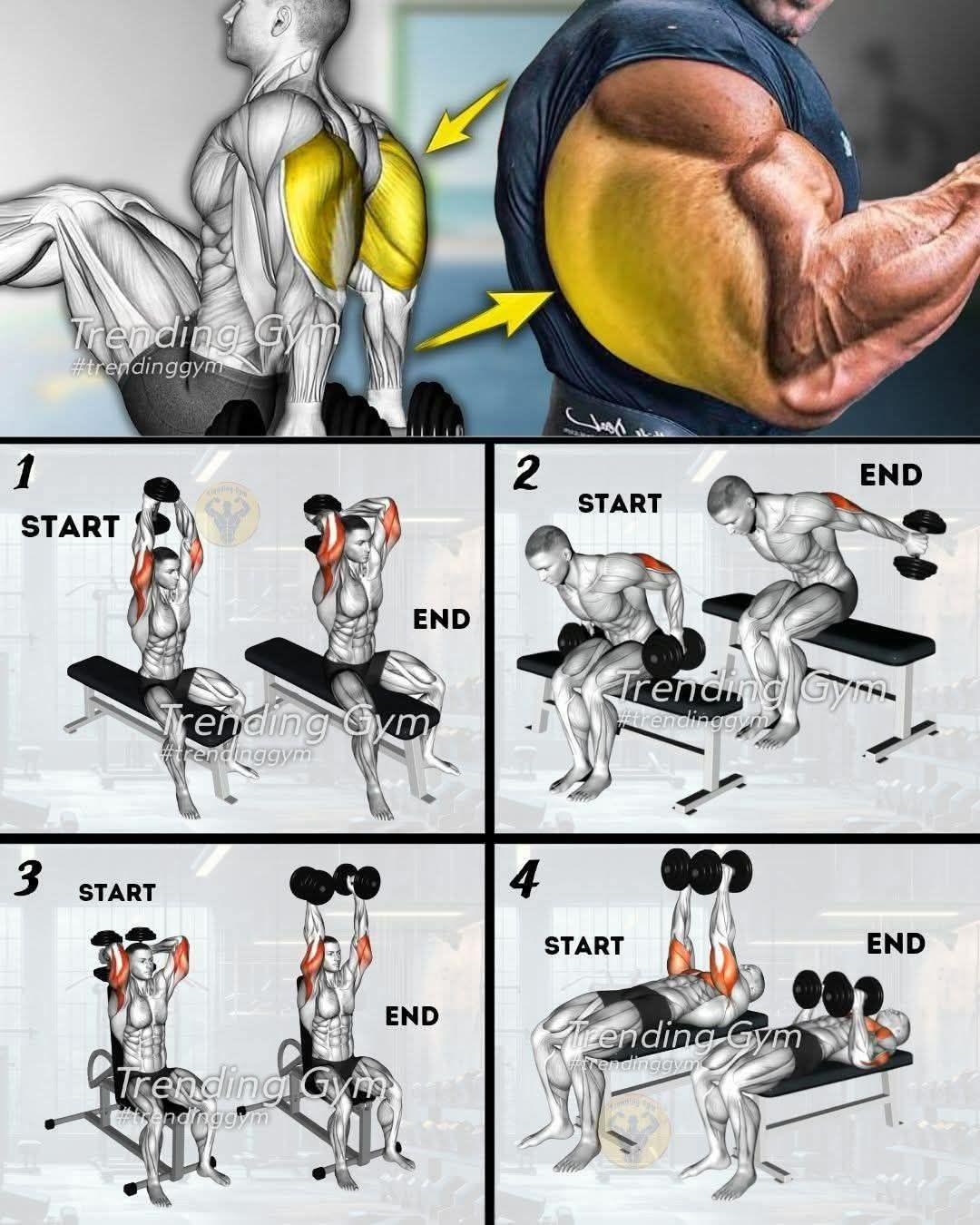
3. Overhead Triceps Extension
Hold dumbbell or cable overhead, bend elbow, extend arm. Great for the long head.
*Note:* Perform slowly to avoid straining your elbows.
4. Skullcrushers
Lie on bench, hold barbell or dumbbells above head, lower to forehead, extend arms. Focuses on triceps.
*Safety tip:* Lower the weight under control; don’t let it bounce or drop too fast.
5. Triceps Pushdown
Use cable machine, push bar down with elbows tucked. Works lateral and medial head.
*Variation:* Use a rope or straight bar for a different feel.
Back Exercises
1. Pull-ups/chin-ups
Hang from bar, pull body up. Pull-ups (palms away) focus lats; chin-ups (palms facing) involve biceps too.
*Progression tip:* If you can’t do a full pull-up, use a resistance band for assistance.
2. Barbell Rows
Bend at hips, pull barbell to lower chest. Builds middle back, lats, rhomboids.
*Form tip:* Keep your back flat and core tight to avoid strain.
3. Lat Pulldown
Sit at machine, pull bar down to chest. Good for beginners, targets lats.
*Variation:* Change grip width to activate different parts of the back.
4. Single-arm Dumbbell Row
Support body on bench, row dumbbell. Works lats, traps, and rhomboids.
*Practical tip:* Focus on pulling with your back muscles, not just your arms.
5. Face Pulls
Use cable, pull to face with elbows high. Strengthens upper back and rear shoulders.
*Insight:* Great for shoulder health and posture, especially if you work at a desk.
6. Deadlifts
Lift barbell from ground. Engages entire back, glutes, legs. Great for overall strength.
*Note:* Start light and focus on perfect form before adding weight.
Non-obvious insight: Many beginners think pull-ups are only for lats, but they also train triceps, especially during the lowering phase.
Another key point: exercises like deadlifts and rows also improve your grip strength, which helps with all other lifts and even daily activities.
Workout Structure: How To Combine Triceps And Back
How should you organize your triceps and back workout for best results? There are several approaches. Here’s a practical structure:
Sample Workout Routine
Warm-Up (10 Minutes):
- Arm circles, band pull-aparts, light rowing
- Dynamic stretches (shoulders, back, elbows)
Warming up is crucial. It increases blood flow, raises muscle temperature, and prepares your joints. You’ll perform better and reduce the risk of injury. Don’t skip this part, even if you’re short on time.
Main Workout:
- Pull-Ups: 3 sets x 8-12 reps
- Barbell Row: 3 sets x 10 reps
- Lat Pulldown: 3 sets x 10-12 reps
- Close-Grip Bench Press: 3 sets x 8 reps
- Triceps Dips: 3 sets x max reps
- Triceps Pushdown: 3 sets x 12 reps
- Face Pulls: 3 sets x 15 reps
Choose weights that allow you to finish each set with good form. If you struggle to complete the reps, reduce the weight.
Cool-Down (5-10 Minutes):
- Light stretching (triceps, lats, upper back)
- Foam rolling
Cooling down helps your body shift from exercise to recovery mode. Stretching at the end reduces muscle soreness and keeps your joints healthy.
Frequency
- Beginners: 1-2 times per week
- Intermediate/advanced: 2-3 times per week, with rest days between
Data insight: Studies show training each muscle group at least twice a week leads to more muscle growth than once weekly.
It’s important to listen to your body. If you’re very sore, it’s okay to rest an extra day. Recovery is when your muscles actually grow.
Rest And Recovery
- Rest 60-90 seconds between sets for strength, 30-60 seconds for endurance.
- Recovery is key: Muscles need 48 hours to rebuild after intense workouts.
Common mistake: Skipping rest and working the same muscle daily slows progress and increases injury risk.
Another mistake is not resting enough between sets. If you rush, your performance drops and the workout is less effective.

Credit: www.youtube.com
Choosing Weights And Reps For Results
Your goals affect how you pick weights and repetitions.
For Muscle Size (hypertrophy):
- 8-12 reps per set
- Use weights that feel challenging by rep 10
- 3-4 sets per exercise
For Strength:
- 4-6 reps per set
- Heavier weights, fewer reps
- 3-5 sets per exercise
For Endurance:
- 15-20 reps per set
- Lighter weights
- 2-3 sets per exercise
Example: If you want bigger arms, focus on 8-12 reps for triceps. For a wide back, do 10 reps of rows and pull-ups.
Non-obvious insight: Mixing rep ranges (some heavy, some moderate) leads to faster progress for most people.
Also, don’t be afraid to adjust your weights each week. If you’re too comfortable, it’s time to go heavier. If your form breaks down, drop the weight and master the movement.
Triceps And Back Workout Progression
To see continued results, you must challenge your muscles over time. This is called progressive overload.
How To Progress
- Increase weight: Add small amounts (2-5 lbs) when current weight feels easy.
- Add reps: Do one extra rep per set when possible.
- Increase sets: Add another set if you recover well.
- Vary exercises: Switch to different movements every few weeks.
Progress isn’t always linear. Some weeks you might not lift heavier, and that’s okay. Consistency and small improvements matter more than big jumps.
Tracking Progress
Keep a workout log: record exercises, weights, reps, and how you feel. This helps you notice improvements and stay motivated.
Data point: People who track workouts are 40% more likely to stick with their routine and see gains.
Another benefit of tracking: you’ll spot plateaus early. If you’re not progressing, you can change your routine before you lose motivation.
Advanced Techniques For Faster Results
Once basic workouts feel easy, try these advanced methods:
Supersets
Do two exercises back-to-back with no rest. Example: Barbell row followed by triceps pushdown. This saves time and increases intensity.
*Tip:* Superset a back exercise with a triceps move to avoid fatiguing the same muscle.
Drop Sets
Finish a set, reduce the weight, and continue without rest. Great for triceps pushdowns or rows.
*Tip:* Only do drop sets for the last set to avoid overtraining.
Pyramid Sets
Start with light weight and high reps, increase weight and lower reps each set. Then reverse. Good for both triceps and back.
*Example:* 15 reps (light), 12 reps (medium), 8 reps (heavy), then back down.
Practical tip: Use advanced techniques only once or twice a week, or you may overtrain.
It’s easy to get excited and do too much. Keep advanced techniques as “spice,” not the main course.
Common Mistakes And How To Avoid Them
- Poor form: Don’t swing weights or use momentum. Slow, controlled movements are safer and more effective.
- Neglecting warm-up: Cold muscles are more likely to get injured.
- Overtraining: More is not always better. Muscles need rest.
- Ignoring nutrition: Muscles won’t grow without protein and enough calories.
- Skipping back exercises: Many people focus on arms and chest, but a weak back affects posture and limits strength.
Example: A beginner might do only biceps curls, neglecting back rows. This leads to poor posture and slower gains.
Another common error is “ego lifting”—using too much weight and sacrificing form. This usually leads to injury and no real muscle growth.
Nutrition And Recovery For Muscle Growth
Training is only part of the equation. Your diet and recovery matter just as much.
Protein Intake
Muscle needs protein to rebuild. Aim for:
- 1.2–1.7 grams per kilogram of body weight daily
Carbohydrates And Fats
Carbs fuel workouts. Don’t cut them too low. Healthy fats support hormone health.
Hydration
Drink water before, during, and after workouts. Dehydration leads to fatigue and poor performance.
Sleep
Aim for 7–9 hours of sleep per night. Growth hormone releases during sleep, helping muscles recover.
Data: People who sleep less than 6 hours per night gain less muscle, even with good workouts.
If you’re not recovering well, you may feel tired, get sick more often, or notice sore joints. Adjust your sleep, food, and rest days as needed.
Equipment: Home Vs Gym Options
You can train triceps and back at home or in the gym. Here’s a comparison:
| Exercise | Home | Gym |
|---|---|---|
| Pull-Ups | Doorway bar, playground | Pull-up station |
| Rows | Resistance bands, dumbbells | Barbell, cable machine |
| Dips | Chairs, sturdy table | Dip bars, assisted machine |
| Pushdowns | Band anchored to door | Cable machine |
| Face Pulls | Resistance band | Cable machine |
Practical insight: Bands and bodyweight exercises are enough for beginners. For advanced lifters, gym equipment allows heavier weights and more variety.
If you train at home, focus on perfecting your form. Bodyweight moves like pull-ups and dips are challenging and effective. Add a backpack with books for extra weight if needed.
Sample Weekly Triceps And Back Workout Plan
Use this plan to structure your week. Adjust sets/reps to match your fitness level.
| Day | Workout Focus | Exercises |
|---|---|---|
| Monday | Triceps & Back | Pull-Ups, Barbell Row, Close-Grip Bench, Triceps Pushdown |
| Wednesday | Back & Core | Lat Pulldown, Face Pulls, Deadlift, Plank |
| Friday | Triceps & Back | Dips, Single-Arm Row, Overhead Extension, Skullcrushers |
Rest on other days or do cardio/leg workouts. If you’re a beginner, reduce the number of exercises.
It’s smart to listen to your body. If you feel worn out, skip a session or lower the intensity. Quality is more important than quantity.
How To Adjust Workouts For Your Goals
Your goals change how you train.
For Muscle Growth
- Focus on heavier weights and moderate reps (8-12)
- Eat a calorie surplus (more calories than you burn)
- Use compound exercises like barbell row, close-grip bench
For Fat Loss
- Higher reps (12-20), shorter rest (30-45 seconds)
- Include cardio (walking, running)
- Maintain protein intake to keep muscle
For Strength
- Lower reps (4-6), heavier weights
- Longer rest (2-3 minutes)
- Prioritize big lifts: Deadlifts, pull-ups
Example: If you want a lean look, combine triceps/back with cardio and diet changes.
If you’re older or have joint issues, focus more on form and range of motion, not just heavy weights. Safety always comes first.
Credit: www.fondation-enovos.lu
Stretching And Mobility: Essential For Long-term Success
Stretching keeps muscles flexible and prevents injuries. After your workout, focus on these:
Triceps Stretch
- Raise one arm overhead, bend elbow, touch back. Use other hand to gently pull.
Lat Stretch
- Hold onto a doorway, lean back and stretch side.
Upper Back Stretch
- Sit, clasp hands in front, round back, and push hands forward.
Hold each stretch 20-30 seconds. Repeat 2-3 times.
Non-obvious insight: Regular stretching improves muscle recovery and helps you lift heavier weights over time.
Add foam rolling if you feel tightness. This helps break up knots and keeps muscles healthy.
Tracking Progress And Staying Motivated
Keeping track of your workouts boosts motivation and results.
Tools
- Workout notebook
- Fitness apps (e.g., Strong, Jefit)
- Photos every 4 weeks
What To Track
- Exercises, sets, reps, weight used
- How you felt (energy, soreness)
- Body measurements (arms, chest, waist)
Data point: Tracking increases consistency, which is key for success.
Another tip: Set small goals. For example, aim for one more pull-up or 5 lbs more on rows. Small wins keep you motivated.
Comparing Triceps And Back Muscle Growth
Different muscles grow at different rates. Here’s a comparison based on average progress:
| Muscle Group | Average Weekly Growth (%) | Time To Notice Change |
|---|---|---|
| Triceps | 0.5–1% | 4–6 weeks |
| Back | 0.7–1.2% | 4–8 weeks |
Back muscles are larger, so changes may be more visible sooner. Triceps, being smaller, respond well to targeted training.
Individual results vary, but most people see their back getting wider and stronger before their arms grow much. Be patient and consistent.
Frequently Asked Questions
How Often Should I Workout Triceps And Back?
Most people see good results training triceps and back 2–3 times per week. It’s important to rest at least 48 hours between sessions for the same muscle group. Beginners can start with once a week, then increase as they get stronger.
Can I Train Triceps And Back On The Same Day?
Yes, training them together is effective. Many compound exercises (like pull-ups, rows) work both groups. It also saves time and creates balanced strength. You can alternate push (triceps) and pull (back) movements to keep workouts efficient.
What Is The Best Exercise For Building Triceps?
The close-grip bench press and triceps dips are considered top choices for building size and strength. Overhead extensions target the long head, while pushdowns are great for isolating the triceps.
How Do I Know If My Back Workout Is Working?
You’ll notice improvements in posture, strength, and muscle definition. Track your weights and reps. If you can lift more or do more reps over time, your back is getting stronger. Taking progress photos helps you see changes.
What Should I Eat For Triceps And Back Muscle Growth?
Focus on protein-rich foods (chicken, fish, eggs, beans), healthy carbohydrates (rice, oats, potatoes), and good fats (nuts, olive oil). Hydrate well and avoid processed foods. Aim for 1.2–1.7 grams of protein per kilogram of body weight, and eat a slight calorie surplus if you want to gain muscle.
Final Thoughts
Working out triceps and back is vital for a strong, balanced body. These muscle groups support your posture, improve daily movements, and make you look better. Choose exercises that fit your experience and equipment, track your progress, and don’t forget nutrition and recovery.
As you gain strength, challenge yourself with new techniques and keep your routine fresh. Avoid common mistakes like skipping warm-ups or neglecting form, and stretch after every session. With patience and consistency, you’ll see real results in strength, muscle, and confidence.
Remember, progress is not just about lifting heavier or seeing bigger muscles right away. It’s about feeling stronger in daily life, moving better, and having more energy. For best results, keep learning and adapting your routine as you improve. If you hit a plateau, change your exercises or rep ranges.
Stay flexible and keep your long-term goals in mind.
For more training and muscle science information, check ExRx.net—a trusted resource for exercise guides and research.
