

Tricep Training Benefits: Unlock Stronger, Sculpted Arms Faster
Tricep Training Benefits
Strong and well-shaped arms are not just for bodybuilders or fitness models. Many people focus on the biceps, but the triceps actually make up most of your upper arm size and play a key role in arm strength and everyday activities. Whether you want to lift heavier, improve your sports performance, or simply look better in short sleeves, tricep training can make a real difference.
Many gym-goers overlook the triceps, but this muscle group is essential for a balanced upper body. Tricep training is more than just building bigger arms — it affects your health, your joint safety, and even how you perform in daily life.
If you want practical reasons and real-life results, this guide will show you why training your triceps is worth your time.
Understanding The Triceps
The triceps brachii is a three-headed muscle on the back of the upper arm. It has three parts: the long head, lateral head, and medial head. Together, these muscles work to straighten your arm at the elbow and help with pushing movements.
When you push open a door, do a push-up, or press a heavy object overhead, your triceps are working hard. Many compound movements like bench presses, shoulder presses, and dips rely on the triceps for power and stability.
How Triceps Affect Arm Shape
If you look at a well-trained arm, you might notice that most of the size comes from the back — the triceps. In fact, the triceps make up about two-thirds of the upper arm’s muscle mass. This means that if you want bigger arms, focusing on triceps is more efficient than only working biceps.
The Triceps And Other Muscles
Your triceps do not work alone. They coordinate with the shoulders, chest, and even the back to help you perform many movements. Weak triceps can limit your progress in pressing exercises and can increase the risk of shoulder or elbow injuries.
Main Benefits Of Tricep Training
Training your triceps brings many benefits, both in and out of the gym. Some are obvious, but others are easy to miss if you have not trained this muscle group seriously. Here are the most important benefits:
1. Bigger And More Defined Arms
The first thing most people notice after consistent tricep training is that their arms look fuller and more toned. Since the triceps are the largest muscle in the upper arm, they give your arms that “finished” look, especially when viewed from the side or back.
2. Improved Strength In Pressing Movements
Any exercise that involves pushing — like bench presses, push-ups, or overhead presses — relies on the triceps. Strong triceps allow you to lift heavier weights and do more repetitions. This means better strength gains not only in your arms but also in your chest and shoulders.
3. Better Elbow And Joint Stability
The triceps help stabilize the elbow joint. This is important for preventing injuries, especially during sports or weightlifting. If you have weak triceps, your elbows may take on more stress, leading to pain or overuse injuries.
4. Enhanced Athletic Performance
Many sports require strong pushing actions — think of throwing a ball, swimming, boxing, or even martial arts. Strong triceps allow you to generate more force, move faster, and keep good form for longer periods.
5. More Functional Strength
Daily activities like pushing a heavy door, moving furniture, or getting up from the floor all use your triceps. Training these muscles makes everyday life easier and reduces the chance of injury during unexpected movements.
6. Balanced Muscle Development
Focusing only on biceps can lead to muscle imbalance, which may cause joint pain or limit your progress. Training the triceps helps keep the arm muscles balanced, improving both appearance and function.
7. Improved Metabolism
Building muscle increases your resting metabolic rate, which means you burn more calories even while resting. Since the triceps are a large muscle group, developing them can help with fat loss and overall fitness.
8. Injury Prevention
Strong triceps support the elbow and shoulder, reducing the chance of injuries in these joints. This is especially important for older adults or people who play sports that involve throwing or pushing.
9. Confidence And Self-esteem
Visible progress in your triceps can boost your confidence. Many people find that seeing results in their arms motivates them to stick with their fitness goals.
10. Support For Other Exercises
Many popular exercises — including bench presses, dips, and push-ups — depend on triceps strength. If your triceps are weak, your performance in these lifts may stall, even if your chest or shoulders are strong.
Common Myths About Tricep Training
Many people believe that you only need to do biceps curls or push-ups for strong arms. Let’s clear up some common myths:
Myth 1: “Triceps only matter for bodybuilders.”
Reality: Triceps are important for anyone who wants strong, functional arms, not just for people looking for big muscles.
Myth 2: “Push-ups are enough for triceps.”
Reality: While push-ups do work the triceps, they often do not provide enough resistance or variety for full development.
Myth 3: “Training triceps will make arms look bulky.”
Reality: Building muscle takes time and effort. Most people will see more definition, not bulk, from tricep training.
Myth 4: “Only men should train triceps.”
Reality: Women benefit just as much from tricep training, including better strength, appearance, and joint health.
How To Train Triceps Effectively
Knowing the benefits is one thing — but how do you train your triceps the right way? Here are the key factors:
Choose The Right Exercises
The best tricep exercises use both compound and isolation movements. Compound exercises work several muscles at once, while isolation exercises focus mainly on the triceps.
Popular compound tricep exercises:
- Close-grip bench press
- Dips
- Push-ups (especially narrow grip)
Popular isolation tricep exercises:
- Tricep pushdowns
- Overhead tricep extensions
- Skullcrushers
- Kickbacks
Use Proper Form
Poor form can lead to injuries or limit your progress. Focus on full range of motion and controlled movements. Avoid swinging your elbows out or using too much weight.
Train All Three Heads
To get full development, you need to target all three heads of the triceps. For example, overhead movements hit the long head, while pushdowns target the lateral head.
Adjust Volume And Frequency
For most people, training triceps 2-3 times per week with different exercises is enough. Each session should include 2-4 sets of 8-15 reps, depending on your goals.
Rest And Recovery
Triceps are used in many upper body exercises, so they need time to recover. Overtraining can lead to sore elbows or slow progress.
Progressive Overload
To keep making gains, you need to gradually increase the weight, reps, or sets over time. This principle, called progressive overload, is key for all muscle growth.
:max_bytes(150000):strip_icc()/Square_Crop-About-110-3498313-Skull-Crusher02-934-4cbccee106d94352a360722ae02178e0.jpg)
Credit: angradoheroismo.pt
Comparing Triceps To Biceps: What Matters More?
Many people wonder: should I spend more time on triceps or biceps? Here’s a side-by-side look:
| Feature | Triceps | Biceps |
|---|---|---|
| Size (upper arm) | About 60-70% | About 30-40% |
| Main function | Arm extension (straightening elbow) | Arm flexion (bending elbow) |
| Used in pushing | Yes | No |
| Used in pulling | No | Yes |
| Sports impact | High (throwing, pressing) | Moderate (pulling, curling) |
As you can see, triceps play a bigger role in arm size and pushing strength, while biceps are more involved in pulling and curling motions. For balanced arms, both should be trained, but triceps deserve more attention than most people give them.
Tricep Training For Different Goals
Depending on your goals, the way you train your triceps can change. Here’s how to adjust your routine:
For Muscle Size (hypertrophy)
- Use a mix of compound and isolation exercises
- 3-4 sets of 8-12 reps per exercise
- Rest 60-90 seconds between sets
For Strength
- Focus on lower reps (4-8) with heavier weights
- Use compound movements like close-grip bench presses and dips
- Rest 2-3 minutes between sets
For Endurance
- Higher reps (15-20) with lighter weights
- Short rest periods (30-60 seconds)
- Circuit training or supersets
For Joint Health And Longevity
- Use controlled movements, avoid locking out elbows
- Focus on proper form, not just heavy weights
- Include stretching and mobility work for elbows and shoulders
Sample Tricep Workouts
Here are some sample routines for different fitness levels. Always warm up before starting and adjust weights to your ability.
Beginner Tricep Workout
- Bench Dips – 3 sets of 10 reps
- Tricep Rope Pushdowns – 3 sets of 12 reps
- Overhead Dumbbell Extensions – 2 sets of 12 reps
Intermediate Tricep Workout
- Close-Grip Bench Press – 4 sets of 8 reps
- Skullcrushers (EZ Bar) – 3 sets of 10 reps
- Dumbbell Kickbacks – 3 sets of 15 reps
Advanced Tricep Workout
- Weighted Dips – 4 sets of 6-8 reps
- Overhead Cable Extensions – 4 sets of 12 reps
- Single-Arm Pushdowns – 3 sets of 10 reps (each arm)
- Diamond Push-Ups – 3 sets to failure
Tip: Change the order of exercises and rep ranges every few weeks to keep making progress and avoid boredom.
Tricep Training Mistakes To Avoid
Even experienced lifters make mistakes that slow their tricep progress. Here are some common pitfalls:
- Neglecting compound exercises – Only doing isolation work will not build maximum strength or size.
- Using poor form – Swinging weights or not going through full range of motion reduces effectiveness and raises injury risk.
- Ignoring elbow pain – If you feel sharp pain, stop and check your form or lighten the load.
- Not training all three heads – Relying on one exercise (like pushdowns) misses full development.
- Overtraining – Triceps are involved in many workouts; avoid training them heavily every day.
How Tricep Strength Supports Other Lifts
You might not realize it, but your triceps are the “finishing muscle” for many pressing movements. For example:
- Bench press: The triceps help lock out the weight at the top.
- Shoulder press: The last part of the movement is mostly triceps.
- Push-ups: The closer your hands, the more triceps are used.
- Dips: One of the most effective tricep and chest builders.
If your triceps are weak, you may get stuck (“plateau”) in these lifts even if your chest or shoulders are strong. Building up your triceps can break through these sticking points.
Tricep Training For Different Age Groups
Young Adults
Tricep training is safe and effective for young adults. It helps with sports, strength, and body confidence. Learning proper form early prevents injuries later.
Middle-aged Adults
As you age, muscle loss (sarcopenia) becomes a concern. Regular tricep work helps keep muscle mass, joint health, and functional strength for daily tasks.
Older Adults
Tricep training is important for maintaining independence. Activities like getting up from a chair or using a walker require strong triceps. Use lighter weights and focus on form to avoid injury.
The Role Of Diet And Recovery
Building muscle is not just about working out. Protein intake is crucial for muscle repair and growth. Aim for 0.7–1 gram of protein per pound of body weight if building muscle is your goal.
Sleep is also vital. Most muscle repair happens during deep sleep. Aim for 7–9 hours per night.
Hydration matters too. Muscles work best when well hydrated, so drink water regularly, especially if you sweat a lot during workouts.
Comparing Popular Tricep Exercises
With so many exercises to choose from, which ones should you focus on? Here’s a quick comparison:
| Exercise | Equipment Needed | Tricep Head Focus | Difficulty |
|---|---|---|---|
| Close-Grip Bench Press | Barbell | All heads | Moderate |
| Dips | Parallel bars or bench | All heads | Advanced |
| Pushdowns | Cable machine | Lateral, medial | Beginner |
| Overhead Extensions | Dumbbell or cable | Long head | Beginner/Moderate |
| Skullcrushers | EZ bar or dumbbells | All heads | Intermediate |
Using a mix of these exercises ensures you hit all parts of the triceps and prevent boredom or adaptation.
Tricep Training For Different Sports
Strong triceps benefit many sports in ways you might not expect:
- Basketball: Triceps power the push in a jump shot or pass.
- Tennis: Serving and smashing use the triceps for speed and force.
- Boxing: Punching power comes from strong triceps.
- Swimming: The pull and push phase uses triceps to move you through water.
- Volleyball: Spiking and serving require tricep strength for speed and accuracy.
Coaches often include tricep training in athlete programs because it improves both power and injury resistance.
How To Tell If Your Triceps Are Weak
Sometimes, you might not realize your triceps are the weak link. Here are signs to watch for:
- Sticking points at the top of presses (bench or overhead)
- Elbow pain during pushing moves
- Difficulty locking out at the end of push-ups or dips
- Visually smaller upper arms, even with biceps training
If you notice these issues, focus more on tricep strength and technique.
Stretching And Mobility For Triceps
Good flexibility in your triceps and elbows helps you avoid injuries. After tricep training, try these stretches:
- Overhead tricep stretch: Raise one arm, bend the elbow, and use your other hand to gently pull.
- Cross-body arm stretch: Pull your straight arm across your chest to stretch the shoulder and triceps.
- Wall triceps stretch: Place your hand on a wall above your head and lean forward.
Hold each stretch for at least 15–30 seconds and repeat 2–3 times.
Real-life Example: A Case For Tricep Training
Consider someone who trains chest and biceps but ignores triceps. After a few months, they notice their bench press stalls, their arms look uneven, and they start to feel elbow pain during workouts.
After adding regular tricep work and focusing on form, their pressing numbers improve, their arms look more balanced, and the elbow pain fades. This is a common story and highlights why triceps matter more than you might think.
Tricep Training For Women
Many women are hesitant to train their triceps, fearing bulky arms. However, women naturally build muscle more slowly than men, so tricep training usually results in toned and shapely arms rather than size.
Benefits for women include:
- Improved arm tone for sleeveless outfits
- Better support for daily tasks (lifting, pushing)
- Injury prevention, especially for elbows and shoulders
Women can use the same exercises as men but may prefer lighter weights and higher reps.
Tips For Faster Progress
- Track your workouts: Write down weights, reps, and sets. This helps you see progress and plan increases.
- Mix up your routine: Change exercises every 4–6 weeks to prevent adaptation.
- Focus on mind-muscle connection: Think about squeezing your triceps with each rep.
- Get enough protein: Without enough building blocks, muscles won’t grow.
- Stay consistent: Results come from regular effort, not one hard workout.
Expert Insights And Common Beginner Mistakes
Many beginners miss two key factors:
- Lockout is not everything: While the triceps finish pressing movements, locking out with too much force can stress the elbows. Use control, not momentum.
- Isolation is not always best: Compound exercises like dips and close-grip presses build more muscle than endless pushdowns or kickbacks.
Also, don’t get stuck doing only one or two tricep exercises. Variety trains all muscle fibers and keeps motivation high.
Sample Weekly Tricep Training Plan
Here’s a balanced plan that fits with a general upper-body routine:
- Day 1: Chest & Triceps (compound focus)
- Close-Grip Bench Press: 4x8
- Overhead Extensions: 3x12
- Day 3: Back & Biceps
- Day 5: Shoulders & Triceps (isolation focus)
- Pushdowns: 3x15
- Skullcrushers: 3x10
This split gives your triceps enough work without overtraining, and pairs them naturally with pressing muscles.
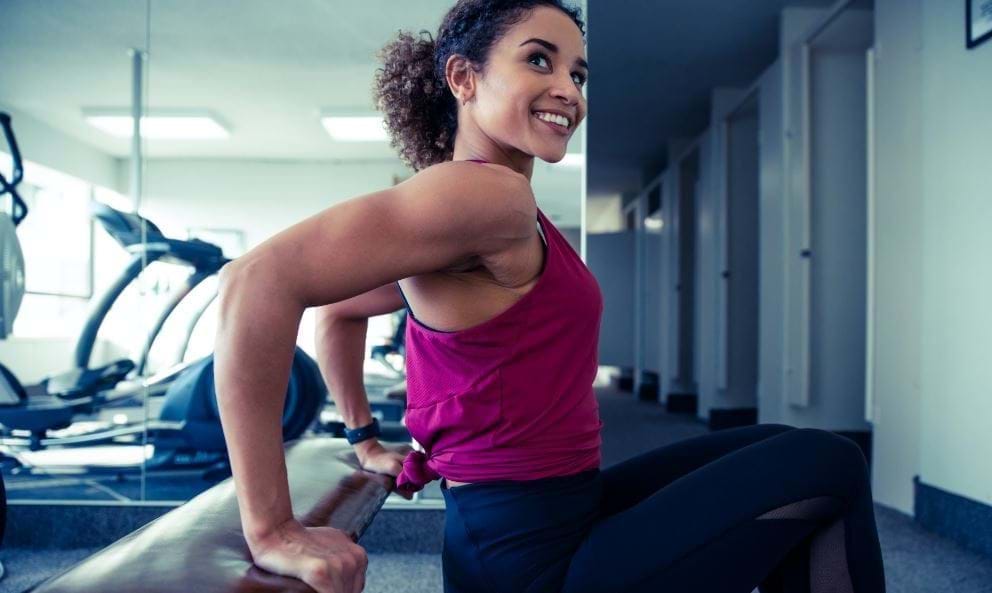
Credit: www.puregym.com
Comparing Free Weights, Machines, And Bodyweight For Triceps
Which is best: dumbbells, cables, or bodyweight? Each has strengths.
| Type | Benefits | Limitations | Best For |
|---|---|---|---|
| Free Weights | Versatile, builds stabilizers, full range | Needs good form, risk of cheating | Intermediate/Advanced |
| Machines | Safe, easy to adjust, isolates muscles | Less stabilizer work, fixed path | Beginners, injury rehab |
| Bodyweight | No equipment, functional, easy to start | Hard to add load, can plateau | All levels, home workouts |
The best programs use a mix, but pick the style you enjoy most to stay consistent.
Frequently Asked Questions
How Often Should I Train My Triceps?
For most people, 2–3 times per week is ideal. Spread sessions out so there’s at least one rest day between. If you train chest or shoulders on other days, your triceps will get extra work, so be careful not to overtrain.
What Is The Best Exercise For Tricep Growth?
There’s no single “best” exercise, but dips, close-grip bench presses, and overhead tricep extensions are proven to be highly effective. Variety is key — switch up exercises to hit all heads of the triceps.
How Long Does It Take To See Results In Triceps?
With consistent training and proper diet, most people see noticeable changes in their triceps after 6–8 weeks. Visible definition depends on your starting body fat and overall muscle mass.
Can I Train Triceps At Home Without Equipment?
Yes, you can use diamond push-ups, bench dips (using a sturdy chair), and close-grip push-ups. For more resistance, try slow negatives or higher reps. For more ideas, check out resources like Wikipedia.
Why Do My Elbows Hurt During Tricep Exercises?
Elbow pain is often caused by poor form, using too much weight, or overtraining. Make sure your elbows don’t flare out too much, and avoid locking out forcefully. If pain continues, reduce the load or rest a few days.
Tricep training is often underestimated, but its benefits go far beyond looks. Strong triceps mean more powerful arms, healthier joints, and better performance in sports and daily life. Whether you’re just starting or want to take your results to the next level, make tricep training a core part of your fitness plan.
Focus on good form, variety, and steady progress — your arms (and your body) will thank you.

Credit: toneopfit.com
