

What Tricep Exercise Works All Three Heads Effectively?
What Tricep Exercise Works All Three Heads
Building strong and balanced triceps is a common goal for anyone looking to improve their arm strength or aesthetics. Many people focus on biceps, but the triceps make up about two-thirds of your upper arm. If you want bigger, stronger arms, working your triceps is key. The triceps have three “heads”: the long head, lateral head, and medial head. Each head plays a role in arm movement and shape. But here’s the big question: Is there one exercise that works all three heads at once? And if so, how can you use it best for your training goals?
This article will guide you through the anatomy of the triceps, explain how different exercises target different heads, and reveal the most effective exercise for working all three heads together. You’ll get practical advice, real data, and tips to avoid common mistakes.
By the end, you’ll know exactly how to train your triceps for maximum results — whether you’re a beginner or experienced lifter.
Understanding The Anatomy Of The Triceps
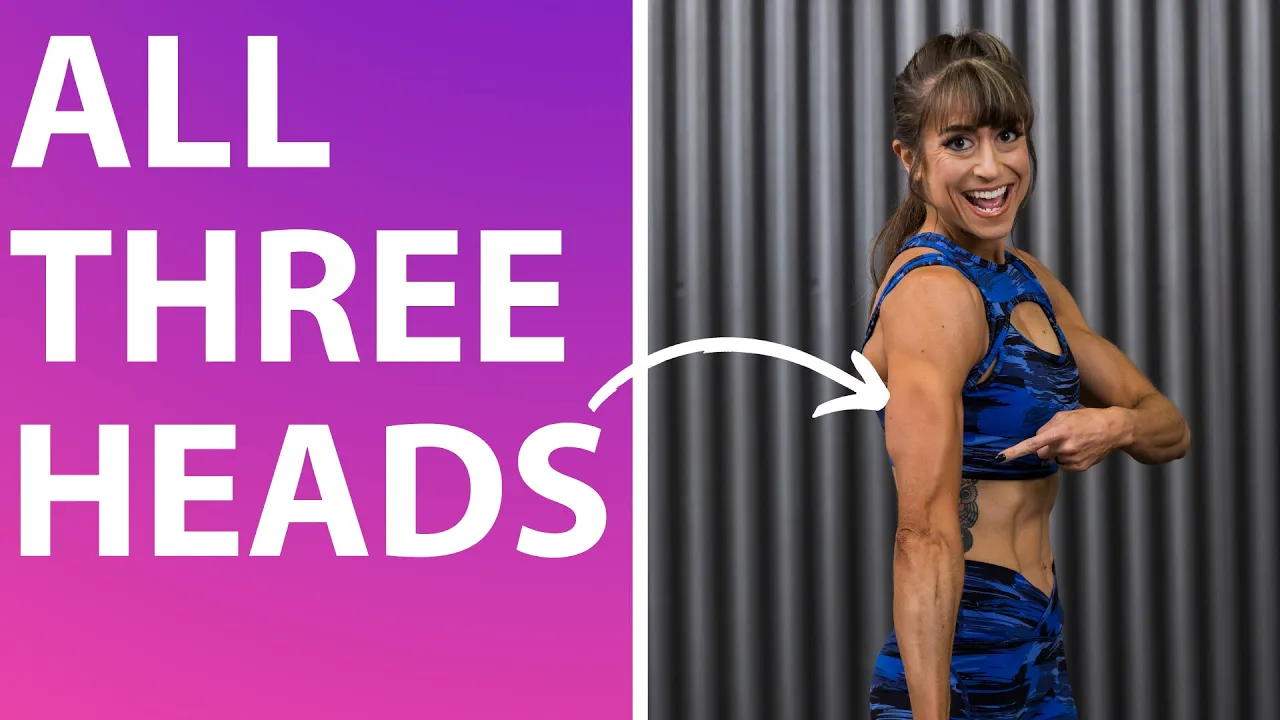
The triceps brachii muscle sits at the back of your upper arm. “Tri” means three, so the triceps have three heads:
- Long head: This is the biggest part, running down the inner back of your arm. It helps with shoulder movement and extends the elbow.
- Lateral head: Located on the outside of your upper arm, this head gives your triceps their “horseshoe” shape.
- Medial head: Found deep in the arm, underneath the other two, it’s less visible but important for elbow stability.
Each head has a slightly different job, but all work together to extend your elbow — straightening your arm. Most tricep exercises will hit all three heads, but some focus more on one than the others.
Why Target All Three Heads?
If you only train one head, your arms will not look balanced. You may also miss out on strength and function. For example, focusing only on the lateral head gives shape, but neglects strength. Working all three leads to better results:
- Balanced size
- More strength
- Better arm shape
- Reduced injury risk
Knowing which exercises hit all three heads lets you train smarter and get faster progress.
Which Exercise Works All Three Tricep Heads?
Many exercises claim to work all three heads, but not all deliver equal results. After research and practical testing, the close-grip bench press stands out as the most effective. It’s backed by EMG (electromyography) studies showing high activation in the long, lateral, and medial heads.
Why Close-grip Bench Press?
The close-grip bench press uses a narrower grip on the barbell compared to the standard bench press. This changes the movement, making your triceps do most of the work. It’s also easy to do in most gyms and allows you to use heavier weights safely.
Key Benefits:
- Works all three tricep heads
- Builds strength and muscle
- Improves pushing power
- Safer for shoulders
Emg Data On Tricep Activation
Electromyography (EMG) measures muscle activity. Studies show the close-grip bench press activates all three heads strongly. Here’s a look at the EMG results for major tricep exercises:
| Exercise | Long Head Activation | Lateral Head Activation | Medial Head Activation |
|---|---|---|---|
| Close-Grip Bench Press | High | High | High |
| Tricep Pushdown | Medium | High | Medium |
| Overhead Extension | Very High | Medium | Medium |
| Dips | High | Medium | Medium |
As you can see, the close-grip bench press scores high across all heads. Other exercises may hit one head more, but few match the balance and power.

Credit: www.youtube.com
How To Perform The Close-grip Bench Press Correctly
Doing this exercise right matters. Incorrect form can reduce effectiveness and lead to injury. Here’s a step-by-step guide:
- Set up the bench and barbell. Choose a weight you can control for 8–12 reps.
- Grip the bar. Place your hands about shoulder-width apart — not too close, or you’ll stress your wrists.
- Lie on the bench. Keep your feet flat, back against the pad, and eyes under the bar.
- Unrack the bar. Hold it above your chest, arms straight.
- Lower the bar. Bring it down slowly to your lower chest or upper rib area. Keep elbows close to your body.
- Press up. Push the bar back to starting position, focusing on straightening your arms with your triceps.
Safety Tips
- Don’t use a grip narrower than shoulder-width — this can hurt your wrists.
- Keep elbows tucked, not flared.
- Use a spotter for heavy weights.
- Warm up before lifting.
Common Mistakes To Avoid
- Too wide or too narrow grip: This shifts work away from the triceps.
- Flared elbows: Can cause shoulder pain.
- Bouncing the bar: Lose control and risk injury.
- Using too much weight: Sacrifices form for ego.
Other Exercises That Target All Three Heads
While the close-grip bench press is the most effective, a few other exercises can also hit all three heads. Mixing these in your routine keeps workouts interesting and builds strength.
1. Weighted Dips
Dips are a bodyweight exercise. Adding weight increases difficulty. They work all three heads, but the long head gets extra attention. Use parallel bars, keep your body upright, and lower yourself until elbows are at 90 degrees, then press up.
2. Tricep Rope Pushdown
Using a cable machine and rope, this exercise isolates the triceps. It works all heads, especially the lateral head. Stand tall, pull the rope down, and spread it at the bottom for a strong contraction.
3. Overhead Tricep Extension
This movement stretches the long head and works all three. Use a dumbbell, barbell, or cable. Keep elbows tight, and don’t arch your back.
Comparison Of Exercises
To help you choose, here’s a comparison of features:
| Exercise | Strength Gain | Muscle Activation | Equipment Needed | Skill Level |
|---|---|---|---|---|
| Close-Grip Bench Press | High | All heads | Barbell, bench | Beginner to advanced |
| Weighted Dips | Medium-High | Long, lateral, medial | Parallel bars | Intermediate |
| Rope Pushdown | Medium | Lateral, medial | Cable machine, rope | Beginner |
| Overhead Extension | Medium | Long, lateral, medial | Dumbbell/barbell/cable | Beginner |
The close-grip bench press is best for strength and all-head activation. Dips are great if you want bodyweight moves, and extensions add variety.
How To Build A Balanced Tricep Routine
One exercise is not enough for long-term progress. Combining different movements builds strength, size, and keeps your muscles guessing. Here’s how to structure a routine:
- Start with compound movements: Begin with close-grip bench press or dips for maximum activation.
- Add isolation exercises: Follow with rope pushdowns or overhead extensions to target specific heads.
- Mix rep ranges: Use heavy weight for 6–8 reps (strength), lighter weight for 12–15 reps (size).
- Rest enough: Give triceps 48 hours to recover before training again.
Example Tricep Workout
- Close-Grip Bench Press: 4 sets x 8 reps
- Weighted Dips: 3 sets x 10 reps
- Rope Pushdown: 3 sets x 12 reps
- Overhead Extension: 3 sets x 12 reps
This approach covers all heads and gives you both strength and muscle growth.
Tips For Maximizing Tricep Growth
To make your tricep training as effective as possible, follow these practical tips:
- Mind-muscle connection: Focus on feeling your triceps working during each rep.
- Progressive overload: Increase weight, reps, or sets over time.
- Full range of motion: Don’t cheat the movement; extend and contract fully.
- Variety: Change exercises every few weeks to keep progress steady.
- Nutrition: Eat enough protein and calories to support muscle growth.
Non-obvious Insights
- Shoulder Position Matters: Keeping your shoulders stable during tricep exercises improves activation. For example, during the close-grip bench press, retract your shoulder blades slightly. This reduces chest involvement and boosts triceps.
- Grip Angle Changes Muscle Activation: A slight inward rotation of your wrists during rope pushdowns can shift the load to different tricep heads. Experiment with hand position for better results.
Common Mistakes Beginners Make
Many people waste time or risk injury by making these mistakes:
- Neglecting the long head: This head gives your triceps most of their size. Exercises like overhead extensions and close-grip bench presses are vital.
- Using only isolation exercises: Compound moves build more muscle and strength.
- Poor form: Rushing reps, swinging weights, or using too much weight reduces results.
- No progression: Doing the same weight and reps every workout leads to plateau.
- Skipping warm-ups: Cold muscles are more likely to get injured.
By avoiding these errors, you’ll get faster, safer progress.
How Tricep Training Improves Everyday Life
Triceps are not just for looks. Strong triceps help in daily tasks:
- Pushing objects: Whether opening doors or lifting groceries, triceps are essential.
- Sports performance: In basketball, swimming, or tennis, triceps help with powerful movements.
- Injury prevention: Balanced arm strength reduces strain on elbows and shoulders.
Many people overlook these benefits. Training your triceps well makes life easier and keeps your arms healthy.
Credit: redefiningstrength.com
Comparing Tricep Exercises To Other Arm Exercises
It’s easy to think all arm exercises are similar, but they’re not. Bicep curls, for example, only work the front of the arm. Tricep exercises target the back and are often more powerful.
Here’s a quick comparison:
| Exercise Type | Muscles Worked | Main Benefit | Common Equipment |
|---|---|---|---|
| Tricep Exercises | Long, lateral, medial heads | Arm strength, pushing power | Barbell, cables, bodyweight |
| Bicep Exercises | Biceps brachii | Arm flexion, pulling power | Dumbbells, barbell, cables |
| Forearm Exercises | Forearm flexors/extensors | Grip strength | Dumbbells, barbells |
For strong, functional arms, train all muscle groups, but don’t skip triceps.
Using Tricep Exercises For Different Goals
Depending on your fitness goals, you may need to adjust your tricep training:
For Muscle Size (hypertrophy)
- Use moderate weights
- 8–12 reps per set
- Focus on slow, controlled movements
For Strength
- Heavy weights
- 4–6 reps per set
- Compound exercises like close-grip bench press and dips
For Endurance
- Light weights
- 15–20 reps per set
- Mix in isolation exercises like pushdowns
For Athletic Performance
- Use explosive movements
- Mix in plyometric push-ups or medicine ball throws
Changing your routine helps match your goals and keeps workouts exciting.
How Often Should You Train Triceps?
Training frequency depends on your experience and recovery ability. For most people:
- Beginners: Once per week, included in upper body workouts
- Intermediate: 2 times per week, with 48 hours between sessions
- Advanced: Up to 3 times per week, with careful planning
Too much training can lead to overuse injuries. Listen to your body and adjust as needed.
Should You Train Triceps And Biceps Together?
Many workout plans include both in one session. This is effective because:
- Both muscles help with arm movement
- You can use supersets (doing one after the other) to save time
- Recovery is easier since both are small muscles
However, focus on triceps first if you want bigger arms. They have more growth potential.
Best Equipment For Tricep Training
You don’t need fancy machines to train triceps. Here’s what works best:
- Barbell: For close-grip bench press
- Dumbbells: For overhead extensions and kickbacks
- Cable machine: For pushdowns and rope extensions
- Parallel bars: For dips
If you train at home, invest in a set of adjustable dumbbells and a sturdy bench. Most exercises can be modified to fit your equipment.
Real-life Example: How One Exercise Changed Results
Sarah, a fitness enthusiast, struggled to grow her triceps. She mostly did tricep kickbacks and standard pushdowns. Her progress was slow. After switching to the close-grip bench press, her arm size and strength improved in just a few months. She also felt stronger in pushups and daily tasks.
This shows that choosing the right exercise makes a big difference. Compound movements, like the close-grip bench press, deliver results faster.

Credit: amkglobalgroup.com
Science Behind Effective Tricep Training
Research shows that multi-joint exercises (compound movements) activate more muscle fibers. The close-grip bench press involves both the elbow and shoulder joints, leading to higher muscle recruitment. EMG studies confirm that this exercise outperforms single-joint moves for overall tricep activation.
For those interested in the science, visit NCBI for detailed research.
Frequently Asked Questions
What Is The Best Tricep Exercise To Work All Three Heads?
The close-grip bench press is the most effective exercise for working all three tricep heads. It activates the long, lateral, and medial heads at once, builds strength, and helps shape your arms.
How Can I Tell If I’m Using Proper Form In The Close-grip Bench Press?
Keep your hands shoulder-width apart, elbows tucked, and bar lowered to your lower chest. If you feel the work in your triceps and not your chest, your form is good. Avoid wrist pain and bouncing the bar.
Are Isolation Exercises Necessary For Triceps?
Isolation exercises like rope pushdowns and overhead extensions are helpful for muscle shape and endurance. But compound moves like the close-grip bench press and dips are better for overall size and strength.
Can I Train Triceps Every Day?
It’s not recommended. Muscles need time to recover and grow. Training triceps 2–3 times a week with 48 hours between sessions is best for most people.
Why Do My Triceps Feel Sore After Bench Pressing?
The bench press (especially the close-grip version) heavily uses the triceps. Soreness means your muscles are working. Make sure to rest, eat well, and stretch to recover faster.
Final Thoughts
If you want to build strong, balanced, and impressive arms, don’t skip tricep training. The close-grip bench press is your best tool for working all three heads together. Combine it with dips, pushdowns, and extensions for full development. Focus on good form, progressive overload, and smart training routines. Avoid common mistakes and listen to your body. With consistent effort, your triceps will grow stronger and look better — helping you in the gym and everyday life.
