

Upper Glute Workout at Home: Build a Stronger, Rounder Butt
Building strong, rounded glutes is more than just a trend. The upper glute area gives your hips a lifted look, improves your posture, and boosts athletic performance. You don’t need a gym or fancy machines to train this muscle group—your body weight and basic equipment are enough. Many people focus only on squats and lunges, but targeting the upper glutes needs a smarter approach. Let’s break down how you can create an effective upper glute workout at home, understand why it matters, and discover the best exercises and routines for visible results.
Why Target The Upper Glutes?
The glutes are made up of three muscles: gluteus maximus, gluteus medius, and gluteus minimus. Most workouts hit the maximus, but the upper glute is mainly the medius. This muscle sits at the upper side of your hip and gives the rounded, lifted look many people want. It also plays a key role in stabilizing your pelvis, helping you walk, run, and stand straight.
Neglecting the upper glute can cause muscle imbalance, leading to back pain, weak hips, or poor athletic performance. It’s common to see people with strong lower glutes but flat upper glutes, especially if they rely only on traditional squats. Training the upper glute helps:
- Shape your hips for a fuller appearance
- Prevent injuries by stabilizing your pelvis
- Boost lower body power for sports and daily activities
The Science Behind Glute Training
Muscle growth happens when you challenge your muscles with resistance and movement. The upper glute responds best to exercises that include abduction (moving your leg away from your body), hip extension, and rotation. Research shows that exercises like hip thrusts, lateral band walks, and single-leg movements activate the glute medius more than classic squats.
You don’t need heavy weights to see results. Studies found that even bodyweight exercises can stimulate muscle growth if you push close to failure (the point where you can’t do another rep). Using resistance bands or simple dumbbells increases the challenge.
One common mistake: doing only high-rep, low-resistance exercises. For muscle growth, aim for a mix of moderate reps (8–15) with enough resistance to feel the muscle working. Rest between sets is also important—about 60–90 seconds is ideal for most people.
Home Equipment For Upper Glute Workouts
You can train your upper glutes using only your body weight, but a few basic tools make workouts more effective and varied:
- Resistance bands: These are the best for glute abduction and activation. Medium to heavy bands work well.
- Dumbbells: If available, use light to medium weights for added resistance.
- Yoga mat: For comfort during floor exercises.
- Elevated surface: A sturdy chair, bench, or step for split squats and hip thrusts.
If you’re a beginner, start with bodyweight. As you get stronger, add resistance bands or dumbbells to keep challenging the muscles.
Key Upper Glute Exercises For Home
Let’s look at the best exercises to target the upper glute. You’ll find a mix of bodyweight and banded movements. Each exercise includes tips for form and common mistakes.
1. Side-lying Hip Abduction
Lie on your side with your legs straight. Lift your top leg up and away from your body, then lower it slowly.
- Tip: Don’t swing your leg. Move slowly and focus on the upper glute.
- Mistake: Rolling your hips back. Keep your hips stacked.
2. Banded Lateral Walk
Place a resistance band above your knees. Stand with feet hip-width apart and squat slightly. Step sideways, keeping tension on the band.
- Tip: Stay low and move slowly.
- Mistake: Letting the band go slack. Keep constant tension.
3. Single-leg Glute Bridge
Lie on your back, knees bent. Extend one leg. Push through the heel of the other leg to lift your hips.
- Tip: Squeeze at the top for two seconds.
- Mistake: Arching your back. Keep your core tight.
4. Standing Hip Abduction
Stand tall, hold onto a wall or chair. Lift one leg sideways, keeping it straight.
- Tip: Pause at the top.
- Mistake: Leaning your torso. Stay upright.
5. Bulgarian Split Squat
Stand in front of a chair. Place one foot behind you on the chair. Lower your body, keeping your front knee in line with your toes.
- Tip: Lean slightly forward to engage the glute.
- Mistake: Letting your knee collapse inward.
6. Clamshell
Lie on your side, knees bent. Open your top knee while keeping feet together.
- Tip: Use a band for extra resistance.
- Mistake: Moving your whole pelvis. Keep hips steady.
7. Curtsy Lunge
Stand tall. Step one leg behind and across your body, lowering into a lunge.
- Tip: Keep your chest up.
- Mistake: Not crossing enough; the movement should feel diagonal.
8. Fire Hydrant
On hands and knees, lift one leg out to the side, bent at 90 degrees.
- Tip: Pause at the top.
- Mistake: Rotating your hips too much.
9. Step-up With Knee Drive
Use a step or sturdy chair. Step up with one leg, drive the opposite knee up.
- Tip: Push through your heel.
- Mistake: Using momentum instead of muscle.
10. Hip Thrust (home Version)
Sit on the floor with your upper back against a chair. Feet flat, knees bent. Push hips up, squeeze glutes.
- Tip: Use a band or dumbbell for extra resistance.
- Mistake: Not fully extending hips.
Sample Upper Glute Workout Routine
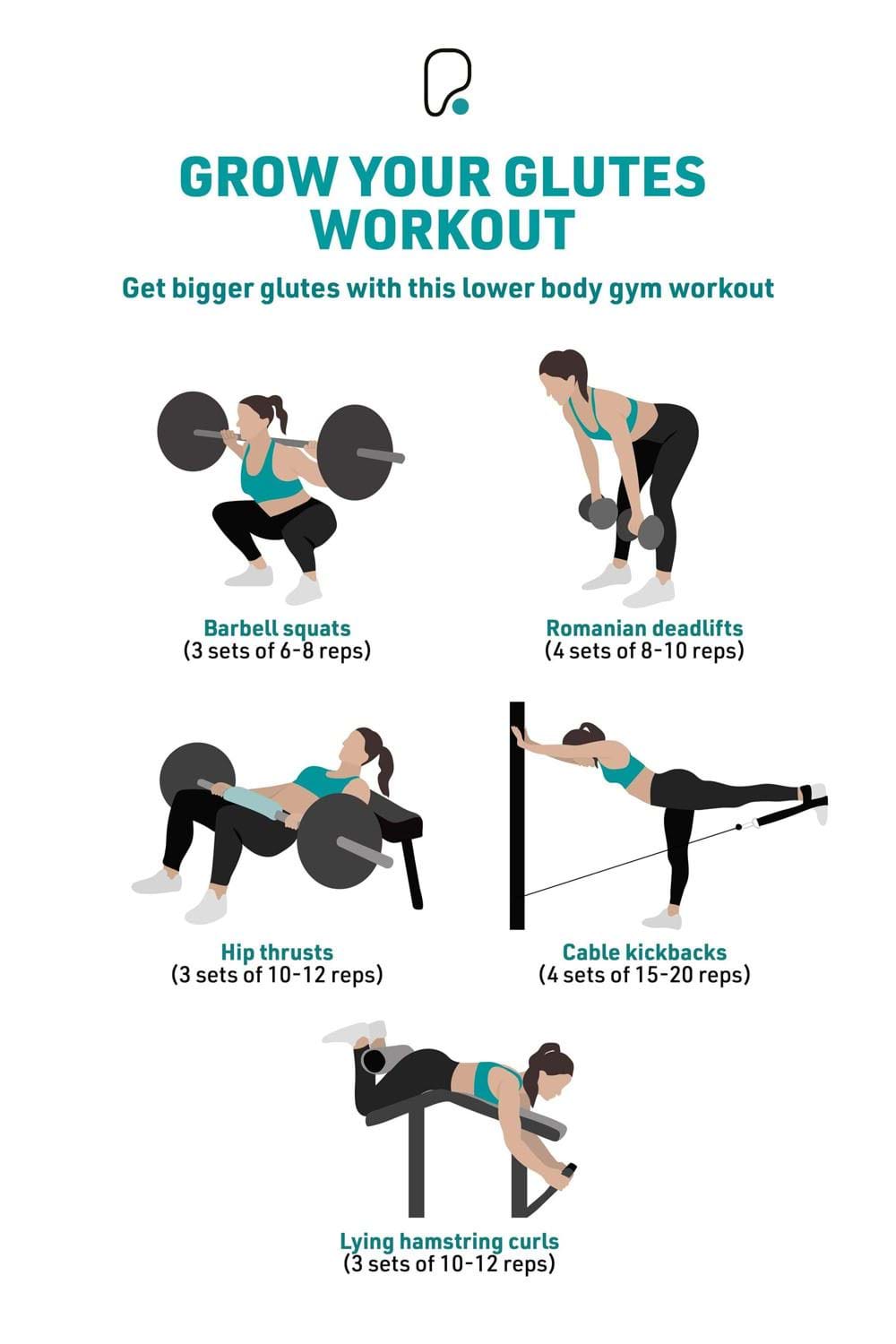
You can combine these exercises into a balanced routine. For best results, train upper glutes 2–3 times a week. Here’s a sample plan for home:
Warm-Up (5 minutes):
- Bodyweight squats: 15 reps
- High knees: 30 seconds
- Arm circles: 30 seconds
- Hip circles: 30 seconds
Main Workout:
- Banded Lateral Walk – 3 sets x 15 steps (each side)
- Bulgarian Split Squat – 3 sets x 12 reps (each leg)
- Side-Lying Hip Abduction – 3 sets x 15 reps (each leg)
- Clamshell – 3 sets x 15 reps (each side)
- Single-Leg Glute Bridge – 3 sets x 12 reps (each leg)
- Fire Hydrant – 3 sets x 15 reps (each leg)
- Step-Up with Knee Drive – 3 sets x 12 reps (each leg)
Cool-Down (5 minutes):
- Glute stretch: 30 seconds (each side)
- Hip flexor stretch: 30 seconds (each side)
- Child’s pose: 1 minute
Rest: 60–90 seconds between sets.
Upper Glute Progression: How To Make Workouts Harder
Muscles grow when you keep increasing the challenge. Here’s how to progress:
- Increase resistance: Use heavier bands or dumbbells.
- Add reps or sets: Raise reps to 20, or add a fourth set.
- Slow down the movement: Pause at the top or lower slowly.
- Change angles: Try exercises with feet in different positions.
- Include advanced moves: Add plyometrics (jumping) when ready.
Track your workouts in a notebook or app. If you can do 20 reps easily, it’s time to make it harder.
Credit: www.puregym.com
Common Mistakes In Upper Glute Training
Many beginners overlook key points that limit their results. Here are mistakes to avoid:
- Not activating the glutes: Warm up with band walks or hip abductions to feel the muscle.
- Using only squats and lunges: These hit the maximus, not the upper glute.
- Poor form: Swinging legs or arching back reduces muscle activation.
- Skipping rest: Muscles need time to grow. Don’t train glutes daily.
- Ignoring nutrition: Without enough protein and calories, muscles won’t grow.
Real-life Example: Transformation Story
Maria started with flat hips and weak glutes. She couldn’t do a single-leg glute bridge without pain. After three months of targeted upper glute training at home—using resistance bands and progressing her routine—she saw visible rounding in her hip area and felt stronger during runs. The key: focusing on abduction, doing slow reps, and tracking progress.

Credit: www.villamagia.com.br
How Upper Glute Training Benefits Daily Life
A strong upper glute isn’t just for looks. It helps with:
- Balance: You’ll stand and walk with better stability.
- Sports: Jumping, running, and changing direction get easier.
- Back health: Strong glutes protect your lower back.
- Confidence: Improved posture and shape boost self-esteem.
Comparing Upper Glute Workouts: Home Vs Gym
Some people wonder if home workouts can compete with gym routines. Here’s a comparison:
| Factor | Home Workout | Gym Workout |
|---|---|---|
| Equipment | Bands, bodyweight, dumbbells | Machines, barbells, cables |
| Muscle Activation | High with proper form | High, easier with heavy weights |
| Convenience | Train anytime | Travel needed |
| Progression | Limited by resistance | Unlimited progression |
| Cost | Low (bands, mat) | Gym membership |
With creativity and good technique, you can build strong upper glutes at home. For most people, home workouts are enough for visible results.
Upper Glute Activation: The Science Explained
Muscle activation is how much the glute fires during exercise. Studies show the glute medius is most active during movements that involve abduction and stabilization. Here’s a look at activation levels:
| Exercise | Glute Medius Activation (EMG %) | Glute Max Activation (EMG %) |
|---|---|---|
| Banded Lateral Walk | 75% | 50% |
| Side-Lying Hip Abduction | 80% | 40% |
| Squat | 40% | 85% |
| Hip Thrust | 60% | 90% |
This shows why you need specific upper glute exercises, not just squats.
Nutrition Tips For Glute Growth
Training is only half the battle. Nutrition matters if you want your muscles to grow. Here’s what to focus on:
- Protein: Aim for at least 1 gram per pound of body weight daily.
- Healthy fats: Support hormones and muscle repair.
- Carbs: Give energy for hard workouts.
- Hydration: Drink water throughout the day.
A common mistake is eating too little. If you don’t eat enough, your body won’t build muscle, no matter how hard you train.
Recovery: Why Rest Days Matter
Muscles grow during rest, not during exercise. If you train upper glutes every day, you risk injury and poor results. Plan 2–3 upper glute sessions per week, with at least one rest day between.
Recovery tips:
- Sleep: Get 7–8 hours per night.
- Stretch: After workouts to reduce soreness.
- Light activity: Walking or yoga helps blood flow.
How To Track Progress
Tracking helps you see what’s working and keeps you motivated. Here’s how:
- Take photos: Every 2–4 weeks.
- Measure hips: Use a tape measure around the widest part.
- Log workouts: Write reps, sets, resistance.
- Record strength: Note improvements in exercises (e.g., more reps, heavier band).
Many people miss progress because they don’t track. It’s not just about what you see in the mirror—strength and endurance matter, too.
Upper Glute Workout For Different Levels
You can adapt the routine for beginners, intermediate, or advanced levels. Here’s a quick guide:
| Level | Exercises | Sets x Reps | Resistance |
|---|---|---|---|
| Beginner | Side-Lying Hip Abduction, Clamshell, Single-Leg Glute Bridge | 2 x 10–12 | Bodyweight |
| Intermediate | Banded Lateral Walk, Bulgarian Split Squat, Fire Hydrant | 3 x 12–15 | Bands, light dumbbells |
| Advanced | Step-Up with Knee Drive, Hip Thrust, Plyometric Lunges | 4 x 15–20 | Heavier bands, dumbbells |
Choose the level that matches your ability. Progress as you get stronger.
Practical Tips For Fast Results
Getting visible upper glute gains takes patience, but you can speed up progress with these tips:
- Focus on mind-muscle connection: Think about the upper glute during each rep.
- Don’t rush reps: Slow, controlled movements work better.
- Use bands often: They keep tension on the muscle.
- Vary exercises: Change routine every 4–6 weeks.
- Stay consistent: Results come from steady work, not one hard session.
One insight: Most people see faster gains when they train upper glutes separately from full-leg workouts. This avoids fatigue and improves activation.
How Upper Glute Training Changes Your Body
Many people notice changes in body shape after consistent upper glute workouts:
- Hips look rounder and fuller
- Waist appears smaller (optical effect)
- Posture improves
- Clothes fit better
These changes happen slowly. Expect visible results in 8–12 weeks with regular training and good nutrition.
Avoiding Plateaus
It’s common to hit a plateau—where progress stalls. Here’s how to break through:
- Change exercise order: Start with a different movement.
- Try new resistance: Switch bands or use a backpack as weight.
- Increase time under tension: Hold reps longer.
- Add a new exercise: Try curtsy lunges or step-ups.
Plateaus are normal. Adjust your routine every 4–8 weeks for fresh stimulus.
Safety Tips For Home Workouts
Training at home is safe if you follow these basics:
- Warm up well: Prevents injury.
- Check equipment: Make sure bands are not worn out.
- Use a stable surface: Chairs or benches should not wobble.
- Listen to your body: Stop if you feel pain (not soreness).
- Keep space clear: Avoid tripping hazards.
One overlooked risk: Many people rush through exercises, leading to poor form and injury. Quality matters more than speed.
Motivation: Staying Consistent
Sticking to a routine is hard, especially at home. Here’s how to stay motivated:
- Set clear goals: “I want rounder hips in 10 weeks.”
- Track progress: Photos and logs help.
- Join online communities: Share results and get feedback.
- Reward yourself: After each workout, do something you enjoy.
- Remind yourself why: Better posture, less pain, more confidence.
One practical tip: Put your workout clothes out the night before. This small habit makes it easier to start.

Credit: gadgetseguros.com
Frequently Asked Questions
What Is The Best Exercise For Upper Glutes At Home?
The side-lying hip abduction and banded lateral walk are top choices. They activate the upper glute medius more than other movements. Using a resistance band increases effectiveness.
How Often Should I Train My Upper Glutes?
For muscle growth, aim for 2–3 sessions per week. Give at least one rest day between workouts. Overtraining can slow progress.
Can I Grow My Upper Glutes With Bodyweight Only?
Yes, but progress may be slower. To see faster gains, add resistance bands or light dumbbells. Focus on slow, controlled reps and push close to failure.
Why Do My Hips Stay Flat Even After Training?
This usually happens if you only do squats or lunges. These work the glute maximus, not the upper glute. Add abduction exercises and use a band for better activation.
Is Upper Glute Training Safe For Beginners?
Yes, but start with bodyweight and learn proper form. Avoid advanced moves until you feel comfortable. Always warm up and listen to your body.
---
Training your upper glutes at home is simple, effective, and can change your body and daily life. The right exercises—focused on abduction and hip extension—create stronger, rounder hips and improve balance. You don’t need expensive equipment. With consistency, good form, and smart progression, you’ll see results in weeks. Remember, nutrition and recovery matter as much as training. For more workout science and tips, check PubMed for advanced research. Start your upper glute workout today, and enjoy the benefits of a stronger, healthier lower body.
