

Glute Workout Home: Best Exercises for a Stronger Booty
Glute Workout Home: Transform Your Glutes Without The Gym
Building strong, shapely glutes is not just about looks. The glute muscles power your movements, protect your back, and help you run, jump, and climb. You don’t need fancy equipment or a gym membership to train your glutes. With smart exercises, clear technique, and a bit of dedication, you can get results right at home. This guide will show you how to train your glutes effectively, step-by-step, no matter your starting point. You’ll learn what really works, avoid common mistakes, and discover practical tips most beginners miss.
Why Glute Training Matters
Your glutes are the largest and strongest muscles in your body. They drive your hips, stabilize your pelvis, and support your lower back. Weak glutes can cause pain, poor posture, and slow performance. Strong glutes help you move better, protect your joints, and give you a more athletic shape.
Many people focus only on squats, but glutes need a mix of movements to grow. A balanced workout includes hip thrusts, bridges, lunges, and single-leg exercises. These target different parts of the glute muscles: gluteus maximus, gluteus medius, and gluteus minimus.
Understanding Your Glute Muscles
The glutes are not just one muscle. They are a group:
- Gluteus maximus: The biggest, responsible for hip extension (moving your leg backward)
- Gluteus medius: On the side, helps with hip abduction (lifting your leg out to the side)
- Gluteus minimus: Smallest, deep inside, helps stabilize your hips
Most home workouts miss the medius and minimus. If you only do squats, you won’t train all parts of your glutes. To get full results, include exercises that move your legs backward, outward, and rotate your hips.
Glute Workout Home: Key Benefits
Training glutes at home is easy, flexible, and cost-effective. You can fit workouts into your schedule, skip travel time, and avoid crowded spaces. Here are some benefits:
- No equipment needed: Many glute exercises use just your body weight.
- Better mobility: Strong glutes improve daily movements, from climbing stairs to picking up objects.
- Injury prevention: Glutes support your lower back and knees, lowering risk of pain.
- Boost athletic performance: Runners, cyclists, and athletes rely on powerful glutes.
- Enhanced shape: Defined glutes improve your silhouette and posture.
People often overlook glute training, thinking it’s only for athletes. But anyone can benefit, and progress is possible without expensive gear.
Essential Glute Exercises At Home
Not all glute exercises are equal. Some target only one part of the muscle, while others work all three. The best home exercises use simple movements you can do safely. Let’s explore the most effective ones.
| Exercise | Glute Area Targeted | Difficulty | Equipment Needed |
|---|---|---|---|
| Glute Bridge | Maximus | Beginner | None |
| Hip Thrust | Maximus | Intermediate | Chair/Bench |
| Lateral Band Walk | Medius/Minimus | Beginner | Resistance Band |
| Bulgarian Split Squat | Maximus/Medius | Intermediate | Chair |
| Single-Leg Glute Bridge | Maximus/Medius | Intermediate | None |
| Donkey Kicks | Maximus | Beginner | None |
| Fire Hydrant | Medius/Minimus | Beginner | None |
| Curtsy Lunge | Medius/Maximus | Intermediate | None |
Glute Bridge
Lie on your back with knees bent and feet flat. Push your hips up, squeeze your glutes, and lower slowly. This simple move works the maximus and improves hip mobility.
Hip Thrust
Place your upper back on a chair or sofa. Feet flat, knees bent. Push hips up, squeeze glutes, and lower. Hip thrusts activate more glute fibers than bridges. Beginners can start with bodyweight; advanced users may add resistance bands.
Lateral Band Walk
Put a resistance band around your thighs. Step sideways, keeping knees bent and tension in the band. This targets medius and minimus, essential for hip stability.
Bulgarian Split Squat
Stand in front of a chair, rest one foot behind. Lower into a squat, keeping front knee above the ankle. This move works both maximus and medius, plus your balance.
Single-leg Glute Bridge
Lie on your back, one foot flat, one leg straight up. Push hips up, squeeze glutes, and lower. Single-leg bridges increase activation and challenge stability.
Donkey Kicks
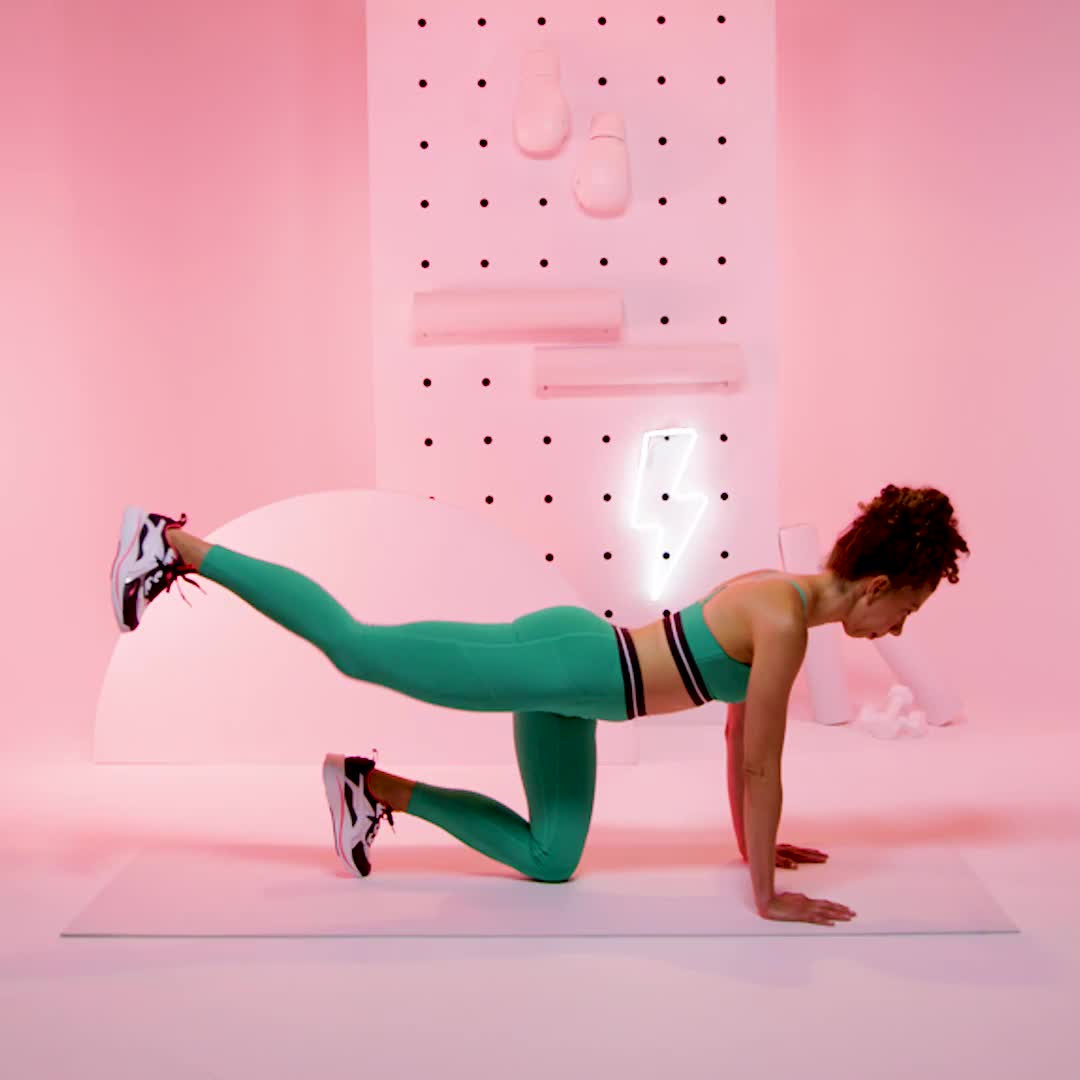
Start on all fours. Lift one leg up, keeping knee bent, then lower. Donkey kicks hit the maximus and can be done anywhere.
Fire Hydrant
On all fours, lift one knee out to the side. Keep hips steady. This exercise works medius and minimus, often neglected in standard routines.
Curtsy Lunge
Stand upright. Step one leg behind and across your body, lower into a lunge. Curtsy lunges train glute medius and maximus, improving shape and strength.
Creating Your Glute Workout Routine
Designing a glute workout at home is simple. The key is to use a mix of exercises, balance training days, and increase difficulty over time. Here’s how to start:
Sample Weekly Glute Workout
- Day 1: Glute Bridge, Donkey Kicks, Fire Hydrant
- Day 2: Rest or light cardio
- Day 3: Hip Thrust, Lateral Band Walk, Bulgarian Split Squat
- Day 4: Rest or stretch
- Day 5: Single-Leg Glute Bridge, Curtsy Lunge, Donkey Kicks
- Day 6: Rest or yoga
- Day 7: Repeat favorite exercises or try new variations
Aim for 3 sets of 10–15 reps per exercise. Rest 30–60 seconds between sets. Adjust reps based on your fitness level. Beginners can start with fewer reps, advanced users can increase sets or add resistance.
Progression Tips
- Add resistance bands for extra challenge
- Increase reps or sets as you get stronger
- Slow down movement for better muscle control
- Try advanced variations (single-leg, elevated, banded)
- Keep a workout log to track progress
Most people plateau because they repeat the same routine. Change one thing every week: add reps, swap exercises, or use bands.
Glute Activation: The Secret To Results
Many beginners miss a key step: glute activation. If your glutes are “sleepy,” other muscles take over. To fix this, warm up with short, focused exercises before your main workout.
Best Activation Moves
- Clamshells: Lie on your side, knees bent, feet together. Lift top knee, squeeze glutes, lower.
- Monster Walks: Band around thighs, step forward and sideways, stay low.
- Standing Hip Abduction: Stand, lift leg out to side, hold and lower.
Spend 5–10 minutes on activation before your workout. This helps you feel the glutes working and boosts results.

Credit: www.hevyapp.com
Common Mistakes In Home Glute Workouts
Most home trainees make mistakes that slow progress or cause injury. Avoid these pitfalls:
- Poor form: Rushing through reps or arching the back reduces glute activation.
- Neglecting warm-up: Cold muscles don’t perform well and risk injury.
- Repeating only squats: Squats are great, but glutes need variety.
- Skipping rest: Muscles need recovery to grow. Overtraining leads to fatigue.
- Ignoring progression: Doing the same workout every week stalls results.
A non-obvious mistake: Not using mind-muscle connection. Focus on squeezing glutes during each rep. This small change can double your progress.
Equipment For Glute Training At Home
You don’t need much, but a few tools can help. Here’s a comparison of popular equipment:
| Equipment | Benefit | Cost | Best For |
|---|---|---|---|
| Resistance Bands | Adds tension, portable | Low | All levels |
| Chair/Bench | Hip thrusts, split squats | None (use home furniture) | Intermediate/Advanced |
| Ankle Weights | Extra resistance | Medium | Advanced |
| Yoga Mat | Comfort, safety | Low | All levels |
Most people start with just body weight. As you get stronger, invest in resistance bands. They cost little and offer big benefits.
Credit: www.womenshealthmag.com
Glute Workout Home: Example Routines For All Levels
Let’s break down routines for different fitness levels. Choose the one that matches your ability.
Beginner Routine
- Glute Bridge: 3 x 12
- Donkey Kick: 3 x 10 each side
- Fire Hydrant: 3 x 10 each side
- Standing Hip Abduction: 2 x 15 each side
Rest 1 minute between sets. Focus on form, not speed.
Intermediate Routine
- Hip Thrust (using chair): 4 x 12
- Bulgarian Split Squat: 3 x 10 each leg
- Lateral Band Walk: 3 x 15 steps
- Single-Leg Glute Bridge: 3 x 8 each side
Add resistance band for extra challenge.
Advanced Routine
- Banded Hip Thrust: 4 x 15
- Curtsy Lunge: 4 x 12 each leg
- Elevated Single-Leg Glute Bridge: 3 x 10 each leg
- Monster Walks (band): 3 x 20 steps
Use ankle weights or heavier bands if needed.
Extra Challenge: Time-based Circuit
Try a circuit to boost endurance:
- Glute Bridge: 1 minute
- Lateral Band Walk: 45 seconds
- Donkey Kick: 1 minute
- Rest: 1 minute
Repeat 3–4 times.
Nutrition For Glute Growth
Exercise alone won’t grow your glutes. Muscles need fuel. Focus on:
- Protein: Essential for muscle repair. Aim for 0.7–1 gram per pound of body weight.
- Healthy fats: Support hormone health and recovery.
- Complex carbs: Give energy for tough workouts.
- Hydration: Muscles work better when hydrated.
A non-obvious insight: Consuming protein within 30–60 minutes post-workout boosts muscle recovery. Don’t skip meals after training.
| Food | Protein (per 100g) | Best for |
|---|---|---|
| Chicken breast | 31g | Lean, high protein |
| Eggs | 13g | Easy, affordable |
| Greek yogurt | 10g | Snack, dessert |
| Quinoa | 4g | Vegetarian option |
| Tofu | 8g | Vegan option |
Most people miss that muscle growth needs both training and nutrition. If you’re not seeing results, check your diet.
Credit: www.etsy.com
Recovery And Stretching
Recovery is as important as exercise. Glutes need rest to grow and repair. Stretching improves flexibility and prevents soreness.
Best Glute Stretches
- Pigeon pose: Sit with one leg bent in front, stretch other leg back, lean forward.
- Figure-four stretch: Lie on back, cross one ankle over opposite knee, pull legs towards chest.
- Standing quad stretch: Stand, pull foot behind, keep knees together.
Hold each stretch for 20–30 seconds. Repeat 2–3 times after workouts.
A common mistake: Skipping stretching leads to tightness and injury. Make stretching a habit.
Tracking Progress And Staying Motivated
Seeing progress keeps you motivated. Here’s how to track your glute gains:
- Take photos every 4 weeks: Compare shape and size.
- Measure hips and thighs: Use a tape measure, note changes.
- Record workouts: Write down reps, sets, and resistance.
- Note strength gains: Can you do more reps or harder variations?
Progress is not just about looks. Notice improved movement, less pain, and more confidence.
Motivation tip: Set small goals, like mastering a single-leg bridge or adding resistance. Celebrate every milestone.
Glute Workout Home: Safety And Injury Prevention
Safety is key. Always warm up, use proper form, and listen to your body. If you feel pain (not muscle burn), stop and check your technique.
Tips To Stay Safe
- Warm up for 5–10 minutes (walking, light squats)
- Focus on form, not speed or reps
- Don’t arch your back during bridges or thrusts
- Use stable furniture for exercises
- Rest if you feel sharp pain
It’s normal to feel muscle soreness after a tough workout. But sharp pain, swelling, or loss of movement means you should rest and consult a professional.
Glute Workout Variations And Advanced Tips
Once you master basics, try new variations to challenge your glutes. Here are some advanced moves:
- Banded glute bridge: Add a band above knees for extra tension.
- Elevated hip thrust: Use a higher bench or sofa.
- Pistol squat: Single-leg squat, advanced balance and strength.
- Reverse lunge with knee drive: Step back, then drive knee up.
Advanced tip: Mix up your routine every month. The glutes respond best to new challenges.
Many people miss the importance of slow, controlled reps. Fast movements often use momentum, not muscle. Slow down and focus on squeezing your glutes.
How Long Until You See Results?
Results depend on your starting point, effort, and consistency. Most people see changes in 4–8 weeks with regular workouts and good nutrition.
Visible changes include:
- More defined glutes
- Improved posture
- Stronger, more stable hips
If you don’t see progress, check your form, increase difficulty, and review your diet.
Glute Workout Home: Real-life Examples
Let’s look at how real people succeed with home glute workouts:
Case 1: Beginner
Maria started with glute bridges and donkey kicks. After 6 weeks, she noticed less back pain and stronger legs. She added resistance bands for more challenge.
Case 2: Intermediate
James used hip thrusts and split squats with a chair. He tracked his reps and added monster walks. After 2 months, his running speed improved.
Case 3: Advanced
Priya mixed banded bridges, pistol squats, and elevated hip thrusts. She combined workouts with protein-rich meals. Her glute shape improved, and she felt more confident.
A non-obvious insight: Progress is not always linear. Some weeks you improve quickly, other weeks are slower. Stay patient and consistent.
Glute Workout Home: Myths And Truths
There are many myths about glute training. Here’s what’s true:
1. Myth: Squats Alone Build Glutes.
Truth: Squats mostly target thighs. Glutes need bridges, thrusts, and abduction moves.
2. Myth: You Need Heavy Weights.
Truth: Bodyweight and bands are enough for most people.
3. Myth: Only Women Should Train Glutes.
Truth: Everyone benefits from strong glutes.
4. Myth: More Reps Is Always Better.
Truth: Quality matters more than quantity.
A little-known fact: Genetics play a role, but everyone can improve glute strength and shape.
For more science-backed info, check this research article on glute training.
Frequently Asked Questions
How Often Should I Do A Glute Workout At Home?
Aim for 2–4 times per week. Muscles need rest between workouts to recover and grow. If you feel very sore, take an extra rest day.
Can I Build Glutes Without Weights?
Yes. Bodyweight exercises and resistance bands are effective. Focus on slow, controlled reps and add resistance bands as you get stronger.
What If I Don’t Feel My Glutes Working?
Try activation exercises before your main workout. Focus on squeezing your glutes during each rep. Slow down movements and check your form.
How Long Does It Take To See Results?
Most people notice changes in 4–8 weeks. Visible improvements depend on consistency, effort, and nutrition.
Is Glute Training Safe For Beginners?
Yes, if you use proper form and start with basic exercises. Warm up, avoid rushing, and listen to your body. If you have pain, stop and check your technique.
Unlock Your Glute Potential At Home
Training your glutes at home is more than just a fitness trend—it’s a smart way to boost strength, shape, and health. With simple exercises, a clear plan, and smart nutrition, you can build powerful glutes without stepping into a gym.
Remember to mix up your routine, track your progress, and stay consistent. Avoid common mistakes, focus on form, and make stretching part of your habit. Whether you’re a beginner or advanced, you have everything you need to transform your glutes right at home.
