

Is Dips a Tricep Workout? Benefits, Form, and Muscle Activation
Is Dips A Tricep Workout
Dips are a classic bodyweight exercise seen in gyms, parks, and even in home workouts. Some fitness enthusiasts call them a “must-do” for upper body strength. Others worry about shoulder safety or think dips are only for advanced athletes. But one question often comes up for people building stronger arms: Is dips a tricep workout? The answer matters because many people want bigger, stronger triceps—the muscle at the back of your upper arm that helps push and straighten your arm.
Understanding if dips are effective for triceps can help you design better workouts, reach your goals faster, and avoid wasting time on exercises that don’t deliver. This article explores dips in detail: how they work, what muscles they target, how to perform them safely, and how to get the most tricep growth and strength from this exercise. We’ll also cover common mistakes, advanced variations, and compare dips to other tricep exercises so you can make informed choices in your training.
How Dips Work: The Basics
Dips are a compound movement, which means they involve more than one joint and muscle group at a time. The basic movement is simple: you support your body with your arms on parallel bars or a sturdy surface, lower yourself by bending your elbows, then push back up.
What Muscles Are Used During Dips?
The main muscles involved in a standard dip are:
- Triceps brachii – at the back of your upper arm, responsible for straightening your elbow.
- Pectoralis major – the chest muscle, especially the lower part.
- Anterior deltoid – the front part of your shoulder.
Other supporting muscles include the rhomboids, latissimus dorsi (upper back), and core muscles to stabilize the body.
But which muscle works the hardest? That depends on your body position and how you do the dip.
Triceps Activation In Dips
Studies using electromyography (EMG)—a tool that measures muscle activity—show that dips strongly activate the triceps, sometimes as much or more than many isolation exercises. However, dips also work the chest and shoulders.
If you keep your body upright and elbows close to your sides, your triceps do more of the work. If you lean forward and let your elbows flare out, your chest muscles take over. This is an important detail many beginners miss.
Non-obvious insight: The triceps are always involved in dips, but small changes in your form can shift the workload between triceps and chest. If your goal is bigger triceps, technique is everything.
Different Types Of Dips And Their Tricep Focus
Not all dips are the same. Let’s look at the main variations and how they target your triceps.
Parallel Bar Dips
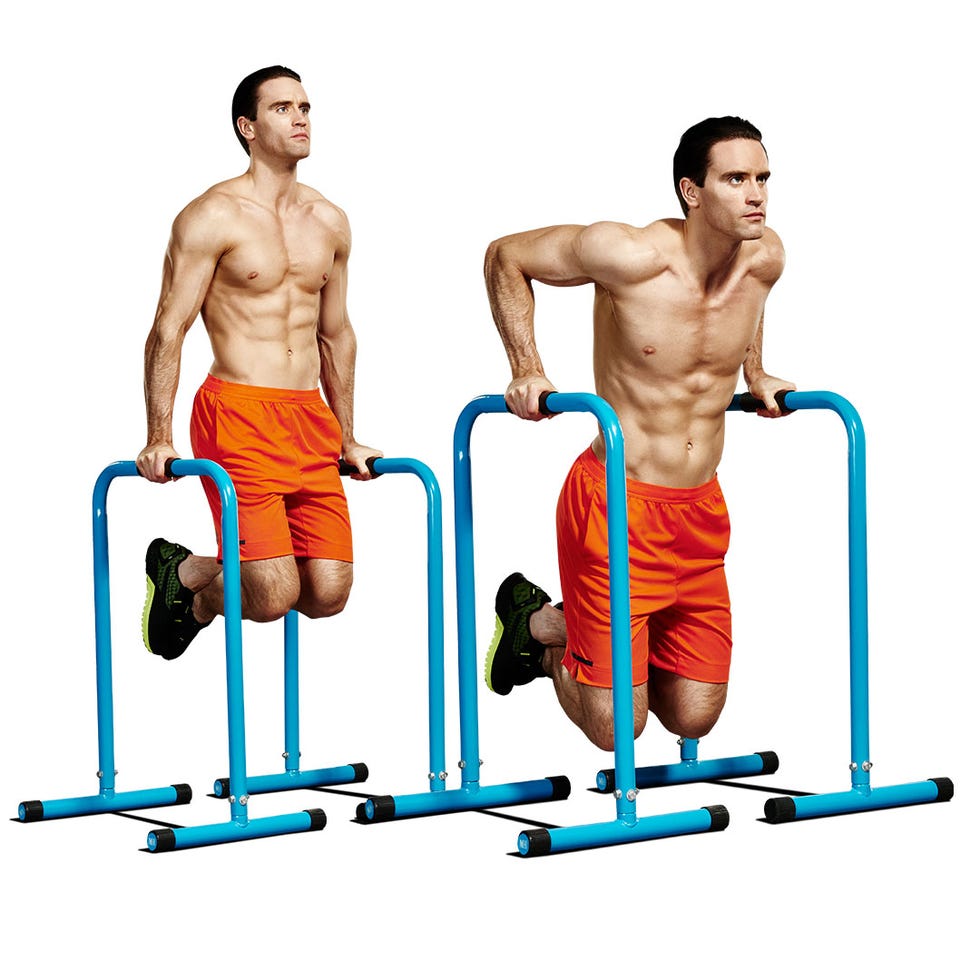
This is the most common type. You use two parallel bars set about shoulder-width apart. Start by supporting your body on locked arms above the bars, lower yourself until your elbows are bent to about 90 degrees, then push back up.
- Triceps focus: High, especially if you stay upright and keep elbows close.
- Chest involvement: Also high if you lean forward.
Bench Dips
You place your hands on a bench behind you, feet on the floor or another bench, and lower your body in front of the bench.
- Triceps focus: Moderate to high, but less than parallel bar dips.
- Shoulder risk: Higher, especially for people with tight shoulders.
Ring Dips
Done on gymnastic rings, these are much harder and require more stability.
- Triceps focus: Very high, but form is harder to control.
Straight Bar Dips
You grip a straight bar behind your back and perform the dip. This variation is less common.
- Triceps focus: High, similar to parallel bar dips.
Table: Dip Variations And Triceps Emphasis
Here’s a quick comparison of popular dip variations and how much they target the triceps:
| Dip Variation | Triceps Emphasis | Chest Emphasis | Difficulty |
|---|---|---|---|
| Parallel Bar Dips | High | High | Intermediate |
| Bench Dips | Moderate | Low | Beginner |
| Ring Dips | Very High | High | Advanced |
| Straight Bar Dips | High | Moderate | Advanced |
Key Takeaway
All dip variations work the triceps, but parallel bar dips and ring dips give the most stimulation if you use proper form. Bench dips are easier but can stress the shoulders if done incorrectly.
Proper Dip Technique For Maximum Triceps Activation
To get the most tricep growth from dips, technique is crucial. Here’s how to perform a parallel bar dip with a triceps focus:
- Start Position: Grip the bars with straight arms, shoulders down and away from ears, body upright.
- Lowering Phase: Keep your elbows close to your body, not flared out. Lower yourself slowly until your elbows reach a 90-degree angle.
- Body Position: Stay as vertical as possible. Leaning forward shifts more work to your chest.
- Pushing Up: Push through your palms, straighten your elbows, and return to the top.
- Breathing: Inhale as you lower, exhale as you push up.
Expert tip: Focus on squeezing your triceps at the top of the movement. This extra contraction boosts muscle activation.
Common Dip Mistakes That Hurt Triceps Gains
- Flaring elbows too wide: This puts more stress on the chest and shoulders, less on the triceps.
- Leaning forward: Moves focus to the chest.
- Going too deep: Increases shoulder injury risk and doesn’t increase triceps activation.
- Shrugging shoulders: Leads to poor form and can cause neck pain.
- Half reps: Not lowering to at least 90 degrees means less muscle work.
Non-obvious insight: Using a narrow grip (bars closer than shoulder width) does NOT always mean more triceps work. For many people, it just strains the wrists and shoulders. Focus more on elbow position and body angle.
How Dips Compare To Other Tricep Exercises
There are many ways to train the triceps. How do dips compare to popular exercises like tricep pushdowns, skull crushers, or close-grip bench presses?
Compound Vs Isolation
- Dips are a compound exercise. They work triceps plus chest and shoulders.
- Pushdowns and skull crushers are isolation exercises. They focus almost only on the triceps.
Strength And Muscle Growth
Research shows that compound exercises like dips often build more overall strength because they let you use more weight (even your full body weight). Isolation exercises are good for targeting the muscle directly, especially if you want to avoid working your chest or shoulders.
Table: Dips Vs Other Tricep Exercises
Here’s how dips stack up against other popular triceps moves:
| Exercise | Triceps Activation | Other Muscles Involved | Equipment Needed |
|---|---|---|---|
| Parallel Bar Dips | High | Chest, Shoulders | Parallel Bars |
| Tricep Pushdowns | Very High | Minimal | Cable Machine |
| Skull Crushers | Very High | Minimal | Barbell/Dumbbells |
| Close-Grip Bench Press | High | Chest, Shoulders | Barbell/Bench |
| Bench Dips | Moderate | Shoulders, Chest | Bench/Chair |
Practical Recommendation
If you can do dips with good form, they are one of the best compound triceps exercises. Combine them with an isolation move for complete development. For beginners or those with shoulder problems, pushdowns or dumbbell kickbacks may be safer.
Scientific Evidence: What Research Says About Dips And Triceps
Research supports dips as a powerful triceps builder. Studies using EMG have found that dips activate the triceps at high levels—sometimes as much as exercises like tricep pushdowns and skull crushers.
One study found that dips produced similar triceps muscle activation compared to close-grip bench presses and triceps extensions, especially when the movement was controlled and the elbows stayed close to the body.
Another study compared muscle growth in people who did only compound exercises (like dips and bench press) to those who used isolation moves (like pushdowns and extensions). Both groups gained triceps size, but the compound group built more overall upper body strength.
For those interested in the science, the National Strength and Conditioning Association supports dips as a solid triceps exercise for strength and muscle building (see NSCA).
Benefits Of Using Dips For Triceps
Dips offer some unique advantages for anyone who wants bigger, stronger triceps.
1. Use Your Body Weight
You don’t need fancy equipment. Parallel bars or even sturdy chairs are enough. This makes dips possible almost anywhere.
2. Build Functional Strength
Because dips work multiple muscles at once, they train your arms, chest, and shoulders to work together. This translates to better performance in sports and daily activities.
3. Easy To Progress
You can make dips harder by adding weight (with a belt or backpack), slowing down the movement, or using gymnastic rings.
4. Highly Effective For Triceps
With good form, dips match or beat many isolation exercises for muscle activation. You get a big return for your effort.
5. Can Be Adapted For Any Level
From bench dips for beginners to weighted dips for advanced lifters, you can find a version that matches your ability.
Drawbacks And Risks Of Dips
Dips are powerful, but they’re not perfect for everyone.
1. Shoulder Stress
The biggest risk with dips is to the shoulders. Going too deep or letting your elbows flare can pinch the shoulder joint. People with previous shoulder injuries should be extra careful.
2. Difficult For Some Beginners
Lifting your whole body weight is tough if you’re new to strength training or carrying extra weight.
3. Hard To Adjust Load
Unlike pushdowns or extensions, you can’t simply change the weight in small steps. This can make progress slower for some people.
4. Form Breaks Down Easily
Fatigue can cause your form to slip, putting stress on your joints instead of your muscles.
Practical tip: If you feel pain (not just muscle fatigue) in your shoulders or wrists during dips, stop immediately and try a safer alternative.
How To Add Dips To Your Tricep Workout
If you want to use dips for triceps growth, here’s how to do it safely and effectively.
Frequency
- 1 to 2 times per week is enough for most people.
- More isn’t always better, especially for beginners.
Sets And Reps
- For muscle growth: 3–4 sets of 8–15 reps.
- For strength: 4–6 sets of 4–8 reps, possibly adding weight.
Warm-up
Always warm up your shoulders, elbows, and wrists before dips. Arm circles, push-ups, and light stretching help prevent injury.
Pairing With Other Exercises
Combine dips with isolation triceps exercises, such as pushdowns or kickbacks, for complete development. Avoid training chest and triceps hard on the same day if you’re new, since both use similar muscles.
Progression
Once you can do 12–15 clean reps, make dips harder by:
- Wearing a weight belt.
- Slowing the movement.
- Using rings for instability.
Pro tip: Don’t rush to add weight. Master perfect form first.
Advanced Dip Variations For Triceps
If basic dips get too easy, or you want a new challenge, try these advanced options:
Weighted Dips
Wear a dipping belt or hold a dumbbell between your feet to add resistance. This is excellent for building strength and muscle, but only attempt when you can do at least 12 bodyweight dips with perfect form.
Ring Dips
Doing dips on gymnastic rings makes your body work much harder to stabilize. This increases triceps activation but also the risk of poor form. Start with assistance if possible.
Slow Eccentric Dips
Lower yourself as slowly as possible (4–6 seconds down) and push up quickly. This increases muscle damage and growth stimulus.
One-arm Dips
Very advanced and not recommended for most people. Requires great strength and shoulder stability.
Plyometric Dips
Push up explosively so your hands leave the bars for a moment. This builds power but can be risky for joints.
Safety warning: Only try advanced variations if you have perfect form and no shoulder pain. Focus on control over speed or added weight.
Dips For Different Fitness Levels
For Beginners
- Start with bench dips or assisted parallel bar dips (using a resistance band for support).
- Focus on form, not reps or weight.
- If you can’t do parallel bar dips yet, practice negative reps: Jump to the top, then lower yourself slowly.
For Intermediates
- Aim for 3–4 sets of 8–12 bodyweight parallel bar dips.
- Add more sets or slow reps for challenge.
- Combine with other triceps moves for balanced development.
For Advanced Athletes
- Progress to weighted dips, ring dips, or slow eccentrics.
- Track your reps and weight for steady improvement.
- Use dips as a main strength move, not just an accessory.
Non-obvious insight: Even advanced lifters can benefit from occasional bodyweight-only dip workouts to check form and keep joints healthy.
Credit: www.menshealth.com
Sample Tricep Workouts With Dips
Here are example tricep-focused routines for different levels:
Beginner Routine
- Bench Dips: 3 sets x 10 reps
- Tricep Rope Pushdowns: 3 sets x 12 reps
- Overhead Dumbbell Extension: 2 sets x 15 reps
Intermediate Routine
- Parallel Bar Dips: 4 sets x 8–10 reps
- Skull Crushers: 3 sets x 10 reps
- Tricep Kickbacks: 3 sets x 12 reps
Advanced Routine
- Weighted Parallel Bar Dips: 5 sets x 6–8 reps
- Close-Grip Bench Press: 4 sets x 8 reps
- Ring Dips: 3 sets x 6 reps (if possible)
- Rope Pushdowns: 2 sets x 15 reps (burnout)
Rest 60–90 seconds between sets. Always warm up first.
Dips For Women And Older Adults
Dips are often seen as a “men’s exercise,” but they are valuable for women and older adults too. They build arm strength, help with daily activities like pushing or getting up from a chair, and improve bone health.
Women can start with bench dips or assisted parallel bar dips. Older adults should focus on slow, controlled movement and avoid deep dips if they have shoulder issues.
Expert tip: For all ages and genders, quality matters more than quantity. One perfect dip is better than ten sloppy ones.

Credit: spotebi.com
Dips And Calorie Burn
Dips are not just for muscle building. Because they use many muscles at once, they also burn calories and raise your heart rate. This can help with fat loss as part of a balanced workout plan.
If you do dips in a circuit (back-to-back with other exercises), you’ll boost your metabolism and improve cardiovascular health.
But remember: Dips alone are not enough for fat loss. Combine them with a healthy diet and other exercises for best results.
Dips Vs Push-ups For Triceps
Some people wonder if push-ups can replace dips for triceps training. Here’s a quick comparison:
- Triceps activation: Dips generally work the triceps harder, especially for experienced lifters.
- Difficulty: Push-ups are easier to start with and safer for shoulders.
- Equipment: Push-ups need no equipment; dips require bars or a bench.
- Progression: Dips are easier to make harder (by adding weight).
For maximum triceps growth, use both exercises. Start with push-ups, move to dips as you get stronger.

Credit: www.anytimefitness.com
Comparing Dips To Diamond Push-ups
Diamond push-ups (hands close together under your chest in a diamond shape) are also great for triceps. Here’s how they compare:
- Both exercises strongly activate the triceps.
- Dips allow for more load (body weight or added weight).
- Diamond push-ups are safer for some people with shoulder problems.
Practical advice: If dips cause joint pain, try diamond push-ups instead.
Frequently Asked Questions
What Is The Difference Between Bench Dips And Parallel Bar Dips For Triceps?
Bench dips involve placing your hands on a bench behind you with your feet on the floor or another bench. They are easier for beginners but put more stress on the shoulders, especially if you go too deep. Parallel bar dips use your full body weight and allow for better triceps activation with less risk to the shoulders if done with good form.
For triceps growth, parallel bar dips are usually more effective.
How Deep Should I Go When Doing Dips For Triceps?
Lower yourself until your elbows are bent at about a 90-degree angle. Going deeper does not increase triceps activation and can increase the risk of shoulder injury. If you feel pain, stop immediately. Focus on slow, controlled movement and quality reps.
Are Dips Enough To Build Big Triceps?
Dips are one of the best compound exercises for triceps. For some people, especially beginners and intermediates, dips alone can build impressive triceps. However, for best results, combine dips with other triceps isolation exercises like pushdowns or extensions for complete development.
Can I Do Dips Every Day For Faster Triceps Growth?
It is not recommended to do dips every day. Your triceps and supporting muscles need time to recover and grow. Training dips 1–2 times per week is enough for most people. Overtraining can lead to injury and slow progress.
What Should I Do If Dips Hurt My Shoulders Or Wrists?
If you feel pain in your shoulders or wrists during dips, stop immediately. Check your form—keep elbows close and don’t go too deep. Try bench dips, assisted dips, or triceps pushdowns instead. Always warm up before training, and see a doctor or trainer if the pain continues.
Dips are a time-tested exercise that can deliver serious triceps growth, improved upper body strength, and better overall fitness when done correctly. They work the triceps as a primary muscle, especially when you keep your body upright and elbows close.
With many variations, dips can be adapted to any level, but proper form is essential for safety and effectiveness.
For the best results, combine dips with other triceps exercises and always listen to your body. Whether you’re a beginner or an advanced athlete, dips can be a powerful tool in your workout routine for strong, defined triceps.
