

How to Workout Tricep Long Head for Maximum Muscle Growth
How To Workout Tricep Long Head
Big, strong arms are a common goal for anyone hitting the gym. But what many people miss is that the triceps make up a larger part of the upper arm than the biceps. The triceps have three parts, called “heads.” Among these, the long head is the biggest, and growing it can make your arms look thicker and stronger from all angles. If you want a well-shaped arm, you need to pay close attention to the long head, not just the other two.
This guide will help you understand the role of the long head, how to target it with the right exercises, and how to avoid common mistakes. You’ll get expert tips, workout plans, and answers to the most asked questions. Whether you are a beginner or experienced lifter, you’ll find strategies here to improve your triceps and overall arm strength.
Understanding The Tricep Long Head
The triceps muscle sits at the back of your upper arm. It has three parts: the long head, lateral head, and medial head. Each part helps to straighten your arm, but the long head does something special.
What Makes The Long Head Different?
The long head starts from your shoulder blade (scapula) and goes down to your elbow. This means it crosses two joints: your shoulder and your elbow. Because of this, the long head helps with both straightening your arm and moving your arm backward at the shoulder. If you want to fully activate it, you need to use exercises where your arms move at both the shoulder and the elbow.
Why Focus On The Long Head?
- Size and Shape: The long head is the largest part of the triceps. Growing it gives your arm a rounded, full look.
- Strength: It helps with pushing movements like bench press and overhead press.
- Balance: Training all heads of the triceps prevents muscle imbalance and injury.
Many people don’t realize that regular pushdowns and close-grip presses work the lateral and medial heads more. The long head needs special attention.
Key Principles For Targeting The Tricep Long Head
Before jumping into exercises, it’s important to understand how to train the long head correctly. The following rules will make your workouts much more effective.
1. Arm Position Is Critical
The long head stretches more when your arms are overhead or behind your body. This stretch makes it work harder during the movement.
- Overhead triceps extensions are better for the long head than pushdowns.
- Exercises with your arms at your sides or in front (like pushdowns) hit the other heads more.
2. Use Full Range Of Motion
Don’t cut your reps short. Lower the weight all the way down until you feel a stretch in your triceps, then press up until your arms are straight.
3. Train With The Right Volume
For muscle growth, 8 to 15 reps per set is a good target. Beginners can start with 2-3 sets per exercise, while advanced lifters may use 3-5 sets.
4. Don’t Ignore Rest And Recovery
Muscles grow when you rest. Give your triceps at least 48 hours before training them hard again.
5. Progressive Overload
To keep growing, you need to slowly increase the weight, reps, or sets over time. Track your workouts and aim to do a little more each week.
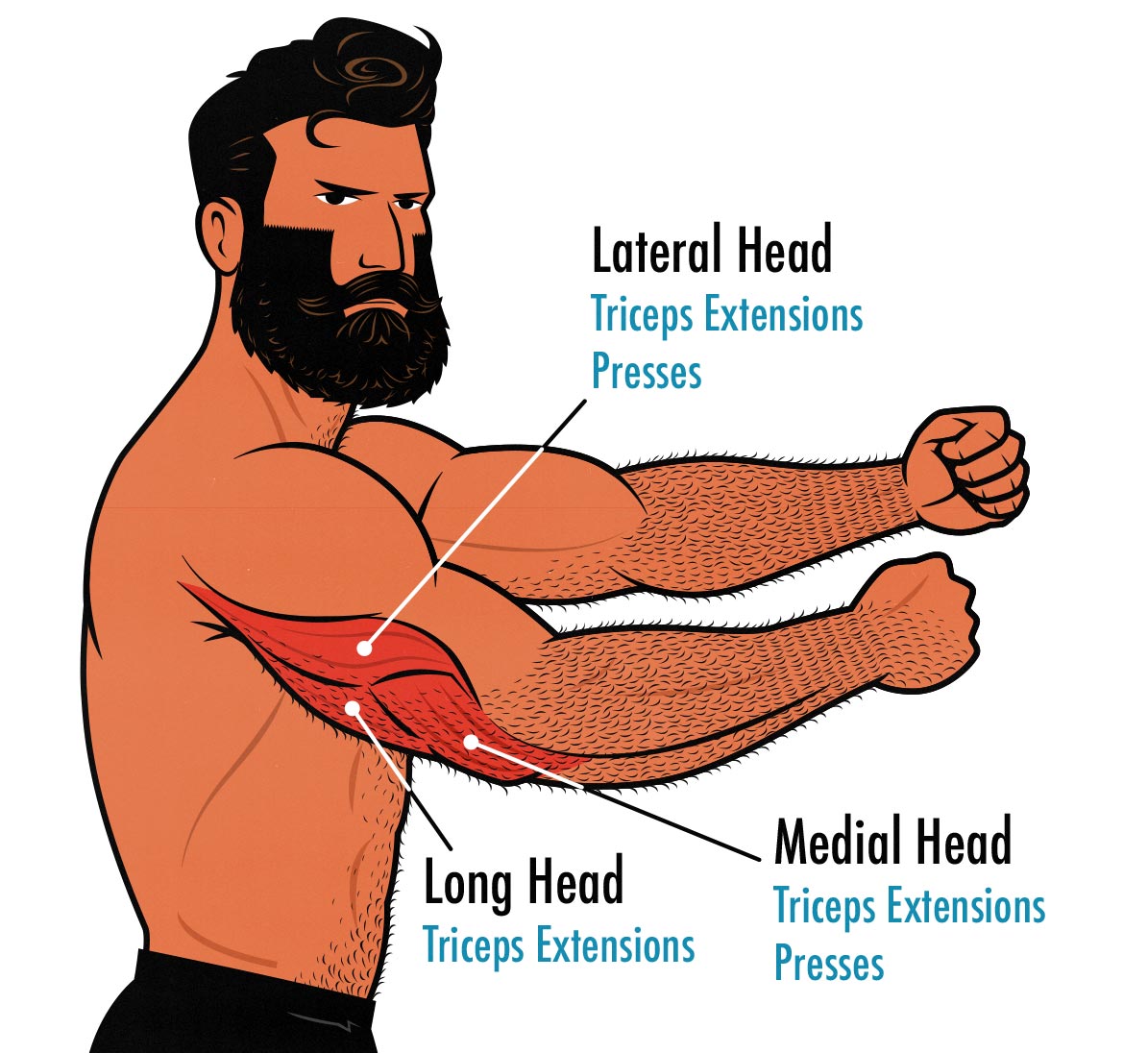
Credit: outlift.com
Best Exercises For The Tricep Long Head
Not all triceps exercises are equal. The best movements for the long head put your arms overhead or behind your torso, stretching the muscle. Here are the top options, with tips for each.
1. Overhead Triceps Extension
This can be done with a dumbbell, barbell, or cable. Sit or stand with the weight overhead, lower it behind your head, and extend your arms back up.
Tips:
- Keep elbows close to your head.
- Move slowly to avoid hitting your head or neck.
- Use a weight you can control for all reps.
2. Skullcrushers (lying Triceps Extensions)
Lie on a bench with a barbell or EZ bar. Lower the weight toward your forehead, then press back up.
Tips:
- Keep your upper arms still.
- Lower the weight until you feel a stretch.
- Don’t let your elbows flare out.
3. Incline Dumbbell Triceps Extension
Set a bench at a slight angle (30-45 degrees). Lie back and extend dumbbells above your chest, then lower them behind your head.
Tips:
- Incline angle gives a deeper stretch to the long head.
- Go slow to prevent shoulder strain.
4. Overhead Cable Triceps Extension
Stand facing away from a cable machine, grab the rope with both hands, and step forward. Extend your arms overhead, then lower behind your head.
Tips:
- Use a rope for better wrist position.
- Keep your core tight to avoid arching your back.
5. Dumbbell Kickbacks (with Proper Form)
Lean forward, keep your upper arm in line with your body or slightly behind, and straighten your elbow.
Tips:
- Squeeze the triceps at the top.
- Don’t swing the dumbbell; move slowly.
6. Close-grip Bench Press (with Minor Tweaks)
While this move hits all heads, you can emphasize the long head by lowering the bar to your lower chest and keeping elbows tucked in.
Tips:
- Use a grip narrower than shoulder width.
- Don’t bounce the bar off your chest.
7. Bench Dips
Sit on the edge of a bench, place hands beside your hips, and lower your body down, then press back up. Put your feet on another bench to increase difficulty.
Tips:
- Go as low as you can without shoulder pain.
- Keep elbows pointing straight back.
Exercise Comparison: Which One Hits The Long Head Hardest?
Here’s a comparison of popular triceps exercises and how much they work the long head (based on muscle activation studies):
| Exercise | Long Head Emphasis | Other Triceps Heads |
|---|---|---|
| Overhead Triceps Extension | Very High | Moderate |
| Skullcrusher | High | Moderate |
| Pushdown | Low | High |
| Kickback | Moderate | Moderate |
| Bench Dip | Moderate | Moderate |
The overhead extension is usually the best choice for the long head.
Sample Tricep Long Head Workout Routines
Here are two routines that focus on the long head. One is for beginners, and one is for advanced lifters.
Beginner Routine
- Overhead Dumbbell Triceps Extension: 3 sets x 10-12 reps
- Bench Dips: 3 sets x 10-15 reps
- Incline Dumbbell Triceps Extension: 2 sets x 12 reps
Rest 60-90 seconds between sets. Do this routine once or twice per week.
Advanced Routine
- Overhead Cable Triceps Extension: 4 sets x 8-12 reps
- Skullcrushers: 4 sets x 10 reps
- Close-Grip Bench Press: 3 sets x 8 reps
- Dumbbell Kickbacks: 3 sets x 12 reps
Rest 60-90 seconds between sets. Do this after your main chest or shoulder workout.
Practical insight: Advanced lifters can also add a “finisher” set, using lighter weights for 20-30 reps, to burn out the muscle and encourage growth.
Common Mistakes When Training The Tricep Long Head
Many people train their triceps without seeing real growth in the long head. Here’s what often goes wrong:
1. Using Only Pushdowns
Cable pushdowns mostly hit the lateral head. If you skip overhead moves, your long head will lag behind.
2. Poor Elbow Position
Letting your elbows move too much or flare out reduces long head activation and can cause elbow pain.
3. Not Using Full Stretch
Stopping short at the bottom of the rep means the long head does less work. Lower the weight until you feel a stretch.
4. Going Too Heavy
Using too much weight leads to bad form. This takes the work away from the triceps and can lead to injury.
5. Ignoring Recovery
Training triceps every day or not getting enough sleep slows growth and increases risk of injury.
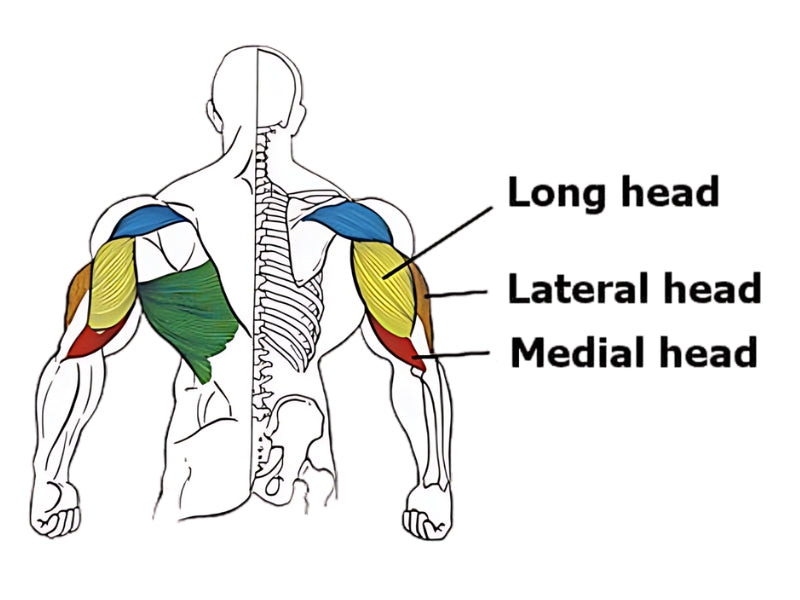
Credit: homegymsupply.co.uk
Tips For Maximum Growth
If you want the best results, use these tips:
1. Warm Up Well
Warm up your elbows and shoulders with light weights and easy movements before heavy sets. This reduces injury risk.
2. Try Different Rep Ranges
The long head responds to different types of stress. Use heavier weights for 6-8 reps sometimes, and lighter weights for 15-20 reps other times.
3. Use Slow Eccentrics
Lower the weight slowly on each rep. This increases muscle tension and helps growth.
4. Don’t Forget To Squeeze
At the top of each extension or press, pause and squeeze the triceps for a second.
5. Track Your Progress
Write down your exercises, weights, and reps. Try to improve a little each week.
6. Nutrition Matters
Protein helps muscles grow. Aim for 0. 7-1 gram of protein per pound of bodyweight per day. Eat enough calories to support growth.
7. Don’t Overtrain
More is not always better. Quality reps are more important than doing more sets.
The Role Of Stretch And Muscle Activation
Recent studies show that stretching a muscle under load increases muscle growth. Overhead exercises stretch the long head more than other moves.
Non-obvious insight: Pausing at the bottom of an overhead extension (when the muscle is fully stretched) for 1-2 seconds can give even better results. Most people rush this part, but if you hold and feel the stretch, you’ll see gains faster.
Choosing Equipment: Free Weights, Machines, Or Cables?
You can train the tricep long head using many types of equipment. Each has pros and cons.
| Equipment Type | Pros | Cons |
|---|---|---|
| Free Weights (Dumbbells/Barbells) | Work stabilizing muscles Easy to adjust weight Can do at home |
Need good form Risk of injury if used wrong |
| Cables | Constant tension Smoother movement Easy to change weight |
Need access to gym Can be crowded |
| Machines | Safe for beginners Good for isolation Less strain on joints |
Can limit range of motion May not fit all body types |
Experience-based insight: If you have elbow pain, cables are often more comfortable. But using both free weights and cables in your routine gives the best of both worlds.
Advanced Techniques To Boost Tricep Long Head Growth
As you get more advanced, you can use special techniques to break through plateaus.
1. Supersets
Do two exercises back-to-back with no rest. For example, do overhead extensions, then immediately do kickbacks.
2. Rest-pause Sets
Use a heavy weight for as many reps as you can. Rest 10-15 seconds, then do more reps. Repeat 2-3 times.
3. Drop Sets
After reaching failure, lower the weight and do more reps without resting.
4. Partials At The Bottom
When you can’t do full reps, keep doing small “partial” reps in the stretched position to fully exhaust the long head.
5. Isometric Holds
Hold the stretched position (bottom of overhead extension) for 10-20 seconds at the end of your set.
Pro tip: Only use these techniques for the last 1-2 sets of each exercise, not every set.
How Often Should You Train The Tricep Long Head?
For most people, training the triceps 2 times per week is best. This gives enough time to recover and grow.
- Beginners: Once or twice per week is enough.
- Advanced: Two sessions, with at least 2 days between, helps maximize growth.
Don’t train them every day. Recovery is when the muscle grows.
Sample Weekly Schedule
Here’s an example of how to fit long head training into your week:
- Day 1: Chest + Triceps (focus on overhead extensions)
- Day 2: Back + Biceps
- Day 3: Rest or legs
- Day 4: Shoulders + Triceps (focus on skullcrushers)
- Day 5: Rest or full body
This schedule gives your triceps time to rest and recover.
How To Know If The Long Head Is Working
You should feel a stretch in the back of your arm during overhead movements. A good sign is soreness at the back of your upper arm the next day. But don’t chase pain—focus on good form and a strong mind-muscle connection.
Non-obvious tip: Video yourself from the side. Check if your upper arms move during the exercise. If they do, you may be using your shoulders or back instead of your triceps.
Common Questions From Beginners
- Why don’t my arms look bigger after doing pushdowns? Pushdowns mostly work the lateral head.
- Do I need to use heavy weights? No, form and stretch are more important.
- Should I lock my elbows? Lock at the top for a squeeze, but don’t force it if it hurts.
Injury Prevention And Safety
Training the triceps long head can put stress on your elbows and shoulders if you’re not careful. Here’s how to stay safe:
1. Start Light
Use light weights to learn the movement. Only increase when you’re confident in your form.
2. Warm Up Joints
Circle your arms, do light pushups, and use resistance bands before heavy sets.
3. Avoid Sharp Pain
If you feel sharp pain, stop immediately. Soreness is normal, but pain is not.
4. Don’t Overextend
Lower weights until you feel a stretch, but don’t force your arms beyond their natural range.
5. Use Support When Needed
If you have joint issues, try machines or cables, which are often more joint-friendly.
Nutrition And Recovery For Bigger Triceps
Exercise is just one part of the muscle-building equation. To get bigger triceps, you also need to eat right and recover well.
Protein For Growth
Muscles are made of protein. Try to eat some protein with every meal. Good sources include chicken, fish, eggs, beans, and tofu.
Hydration
Drink plenty of water. Muscles work better when you’re hydrated.
Rest And Sleep
Aim for 7-9 hours of sleep per night. Growth happens when you rest.
Supplements
If you struggle to get enough protein, a protein shake after your workout can help. Creatine is another safe supplement for strength. But food and sleep are most important.
Tracking Progress: How To Measure Results
It’s easy to get stuck or feel like you aren’t growing. Tracking your progress helps keep you motivated.
Use A Tape Measure
Measure your upper arm every 2-4 weeks. Measure both flexed and relaxed for comparison.
Take Photos
Photos show changes you might not see day to day.
Track Weights And Reps
Write down how much you lift and how many reps you do. Aim to improve over time.
Real-world Example: Making A Change
Let’s look at a real-life case. “Joe” had been doing pushdowns for months but saw no arm growth. When he switched to overhead extensions and focused on full range of motion, his arms grew by half an inch in three months.
The main reason was better targeting of the long head and using a stretch at the bottom of each rep.
Integrating Long Head Work Into Full Arm Training
Don’t ignore the other two heads of the triceps. A full arm routine should include:
- Overhead extensions (long head)
- Pushdowns (lateral head)
- Close-grip presses or dips (all heads)
This balanced approach prevents weak spots and helps your arms look good from every angle.
Common Beginner Mistakes And How To Fix Them
- Using only machines: Add free weights and cables for best results.
- Skipping warm-ups: Always warm up your joints.
- Copying advanced routines: Start simple, master form, then add more sets or techniques.
- Not eating enough protein: Growth needs fuel.

Credit: www.youtube.com
When To Change Your Routine
Change your exercises every 6-8 weeks to keep progress going. You can switch grip, equipment, or the angle of the bench.
Comparing Triceps Long Head Workouts: Dumbbells Vs Cables
Which equipment is best? Here’s a quick comparison:
| Feature | Dumbbells | Cables |
|---|---|---|
| Range of Motion | Very Good | Excellent |
| Muscle Stretch | Good | Excellent |
| Stability Needed | High | Low |
| Joint Stress | Moderate | Low |
| Best For | Building Size | Isolation and Safety |
If you have access to both, use them together for best results.
Staying Motivated
Sometimes, results come slowly. Here’s how to stay on track:
- Set clear goals (for example, add 1 inch to your arms).
- Train with a partner for motivation.
- Celebrate small wins (more reps, better form).
- Focus on progress, not perfection.
When To See A Professional
If you have constant pain, trouble with form, or just don’t see progress, ask a certified trainer for help. They can check your technique and build a plan for you.
Where To Learn More
For those who want to dive deeper, check resources like the Wikipedia page on the triceps brachii muscle for more details on muscle anatomy and function.
Frequently Asked Questions
How Often Should I Train My Triceps For Best Results?
For most people, 2 times per week is enough. This gives the muscle time to recover and grow. Advanced lifters can add a third session, but only if they recover well.
What Is The Best Exercise For The Tricep Long Head?
The overhead triceps extension is the best for the long head. This can be done with a dumbbell, cable, or barbell. The key is keeping your arms overhead to stretch the muscle.
Can I Work Out Triceps And Biceps On The Same Day?
Yes, you can. Many people do “arm days” where they train both. Just make sure to warm up well and not overdo the volume.
Is It Normal To Feel Elbow Pain During Triceps Exercises?
Mild discomfort is common, but sharp or lasting pain is not normal. Check your form, lower the weight, or try cables instead of free weights. If pain continues, see a professional.
How Long Will It Take To See Results In My Triceps?
Most people see visible changes in 8-12 weeks with consistent training, good nutrition, and enough rest. Progress depends on your starting point and effort.
Building the tricep long head takes focus and smart training, but the results—strong, full arms—are worth the effort. Train with good form, use the right exercises, and be patient. With time and consistency, you’ll see real growth and improved strength.
