

How to Tricep Exercise: Build Strong Arms Fast
How To Tricep Exercise
Strong, defined arms are a goal for many people who work out. But often, the triceps — the large muscle at the back of your upper arm — get less attention than the biceps. This is a mistake. The triceps are actually responsible for most of your arm’s size and play a key role in pushing movements, stability, and overall arm strength. If you want stronger, more balanced arms, learning how to tricep exercise effectively is essential.
Many beginners make the mistake of copying random routines or using improper form, which can lead to slow progress or even injury. The good news is that building your triceps does not require complicated moves or expensive equipment. With the right technique and exercise selection, you can develop stronger triceps at home, in the gym, or anywhere.
This guide will walk you through the basics of tricep anatomy, the best exercises, how to create your own triceps routine, and tips to get the most out of each workout. You’ll learn not just what to do, but how to do it safely and efficiently — and why your approach matters for results.
Understanding Your Triceps
Before you start any triceps exercise, it helps to know what you’re working. The triceps brachii, or simply “triceps,” is a three-headed muscle on the back of your upper arm. Each “head” has a different role.
- Long head: Runs along the back of your arm and attaches to your shoulder blade. It helps with arm extension and shoulder stability.
- Lateral head: The outer part of the triceps. It gives your arms a defined, “horseshoe” shape.
- Medial head: Located underneath the other two heads, it is important for strength and elbow joint stability.
To fully develop your triceps, you need to target all three heads. Most exercises work all heads to some degree, but some moves emphasize one part more than the others. Knowing this helps you choose the right exercises for your goals.
Why Triceps Training Matters
You might wonder why you should focus on triceps instead of just doing general arm workouts. There are several reasons:
- Arm size: Triceps make up about two-thirds of your upper arm mass.
- Pushing strength: Any pushing movement, such as push-ups, bench presses, or overhead presses, uses the triceps.
- Joint health: Strong triceps support your elbows and shoulders, reducing the risk of injury.
- Aesthetic appeal: Well-developed triceps give your arms a balanced, athletic look.
Neglecting triceps can lead to muscle imbalances, which may cause pain or limit your progress in other exercises.
Types Of Triceps Exercises
Triceps exercises fall into two main categories: compound and isolation.
- Compound exercises work the triceps along with other muscles. Examples: Push-ups, bench presses, and dips.
- Isolation exercises target only the triceps. Examples: Triceps pushdowns, overhead extensions, and kickbacks.
Both types are important. Compound moves build overall strength and allow you to lift heavier weights. Isolation moves help you focus on the triceps and correct weak points.
Best Triceps Exercises
Let’s look at the most effective triceps exercises. You don’t have to do all of them in one workout. Choose 2–4, based on your fitness level and equipment.
1. Triceps Dips
Dips are a classic move that works all three triceps heads, plus your chest and shoulders.
How to do it:
- Find parallel bars, a sturdy bench, or a chair.
- Place your hands shoulder-width apart.
- Lower your body slowly until your elbows are at about 90 degrees.
- Press back up, focusing on using your triceps.
Tips:
Keep your elbows close to your body. Avoid letting your shoulders shrug up.
Common mistake:
Going too low or letting your elbows flare out can stress your shoulders.
2. Close-grip Push-ups
A simple way to target your triceps without equipment.
How to do it:
- Get into a push-up position with your hands closer than shoulder width.
- Keep your elbows tucked as you lower your chest to the ground.
- Push back up, squeezing your triceps.
Variation:
Do these on your knees if you’re a beginner.
3. Triceps Pushdown
Usually done with a cable machine, this isolates the triceps well.
How to do it:
- Stand facing the cable machine.
- Hold the bar or rope with an overhand grip.
- Keep your elbows at your sides.
- Push the bar down until your arms are straight, then return slowly.
Tip:
Do not swing your body; let your triceps do the work.
4. Overhead Triceps Extension
This move stretches the long head of the triceps, giving a fuller look.
How to do it:
- Sit or stand with a dumbbell, kettlebell, or cable handle.
- Lift the weight overhead.
- Bend your elbows to lower the weight behind your head.
- Extend your arms back up.
Safety note:
Keep your core tight and avoid arching your back.
5. Skull Crushers (lying Triceps Extension)
A gym favorite for muscle growth.
How to do it:
- Lie on a bench with a barbell, EZ-bar, or dumbbells.
- Hold the weight above your chest.
- Lower it toward your forehead by bending your elbows.
- Extend your arms to lift the weight back.
Mistake to avoid:
Do not let your elbows flare out or move during the exercise.
6. Triceps Kickbacks
A good isolation move that works well with light weights.
How to do it:
- Hold a dumbbell in one hand.
- Lean forward with a flat back.
- Keep your upper arm still, extend your arm back.
- Squeeze your triceps, then return.
Focus:
Quality over quantity—use controlled movement.
7. Bench Press (close Grip)
A variation of the bench press that targets the triceps more than the chest.
How to do it:
- Lie on a bench.
- Grip the bar with hands closer than shoulder width.
- Lower the bar to your chest.
- Press back up.
8. Diamond Push-ups
A challenging bodyweight move.
How to do it:
- Get into a push-up position.
- Put your hands together under your chest, forming a diamond shape with your fingers.
- Lower down, keeping your elbows close.
- Push up.
9. Single-arm Overhead Extension
Helps fix strength imbalances.
How to do it:
- Hold a dumbbell in one hand.
- Raise it overhead.
- Lower behind your head, then extend.
10. Cable Overhead Extension
A cable variation for constant tension.
How to do it:
- Use a rope or bar on a cable machine.
- Face away from the machine, grip the handle overhead.
- Extend arms forward, then return.
Bodyweight Vs. Weighted Triceps Exercises
You can train your triceps with just your body weight or by adding weights. Both methods have benefits.
| Exercise Type | Benefits | Drawbacks |
|---|---|---|
| Bodyweight | No equipment, easy to start, builds endurance | Progression can stall, harder to isolate triceps fully |
| Weighted | More overload, easier to target all heads, adjustable resistance | Needs equipment, risk of poor form if too heavy |
Insight:
Many people stick to only one style. Mixing both gives better results by working your triceps in different ways and rep ranges.
How To Structure A Triceps Workout
To get the best results, you need a plan. Doing random exercises every session will not maximize growth or strength.
Step 1: Warm Up
Always warm up before lifting. Spend 5–10 minutes on light cardio (like brisk walking or jumping jacks) and dynamic arm movements. This increases blood flow and reduces injury risk.
Step 2: Choose Your Exercises
Pick 2–4 triceps moves, combining a compound and isolation exercise. For example:
- Close-grip bench press (compound)
- Triceps pushdown (isolation)
- Overhead extension (isolation)
Step 3: Set Reps And Sets
- Strength: 4–6 reps per set, 3–5 sets, heavier weights
- Size (hypertrophy): 8–12 reps per set, 3–4 sets, moderate weights
- Endurance: 15–20 reps per set, 2–3 sets, lighter weights
Step 4: Rest And Recovery
Rest 60–90 seconds between sets for muscle growth. Rest 2–3 minutes for heavy strength sets. Allow at least 48 hours before training the triceps hard again.
Sample Triceps Routine
Here’s how a balanced triceps session might look:
- Close-grip bench press: 4 sets x 8 reps
- Triceps pushdown: 3 sets x 12 reps
- Overhead dumbbell extension: 3 sets x 10 reps
- Diamond push-ups: 2 sets to failure (as many as possible)
Note:
If you’re new, start with 1–2 exercises and add more as you improve.
Common Mistakes And How To Fix Them
Even with the best exercises, mistakes can limit your progress or cause injury. Here are the most common errors people make with triceps training:
1. Using Too Much Weight
Lifting heavier than you can control leads to bad form and less muscle activation. Instead, choose a weight you can move smoothly for the target reps.
2. Ignoring Full Range Of Motion
Many people stop short or lock out their elbows too quickly. Lower the weight until your elbows are fully bent, then extend completely.
3. Letting Elbows Flare Out
Keep your elbows tucked close to your body on most triceps moves. Flaring elbows put stress on your joints and reduce effectiveness.
4. Training Triceps Too Often
The triceps are used in many pressing exercises. Overtraining can lead to soreness and slow recovery. Train triceps directly 1–2 times per week.
5. Neglecting The Long Head
Most people focus only on pushdowns or kickbacks, which target the lateral and medial heads. Include overhead extensions to work the long head for full development.
6. Poor Mind-muscle Connection
Don’t just move the weight. Focus on squeezing and controlling the triceps throughout each rep. This leads to better muscle growth.
Equipment For Triceps Training
You don’t need a gym full of machines to build your triceps. Here’s a quick look at what you can use:
| Equipment | Best Exercises | Pros | Cons |
|---|---|---|---|
| Dumbbells | Kickbacks, overhead extensions, skull crushers | Versatile, easy to use, good for home | Limited by weight at home |
| Barbells | Close-grip bench press, skull crushers | Heavier loads, great for strength | Needs a bench/rack, not as isolating |
| Cable Machine | Pushdowns, cable extensions | Constant tension, many attachments | Gym required, more setup |
| Bodyweight | Dips, push-ups | No equipment, portable | Progression can be tough |
| Resistance Bands | Pushdowns, extensions, kickbacks | Lightweight, good for travel | Harder to measure resistance |
Non-obvious insight:
If you only have resistance bands, step farther from the anchor to increase tension at the end of the movement. This helps keep the triceps working hard.

Credit: www.youtube.com
Advanced Triceps Training Techniques
Once you have the basics, you can use these methods to challenge your triceps more:
1. Drop Sets
After your last set, immediately reduce the weight and continue for more reps. This increases muscle fatigue and growth.
2. Supersets
Do two triceps exercises back-to-back with no rest. For example, pushdowns followed by overhead extensions.
3. Slow Negatives
Take 3–5 seconds to lower the weight on each rep. This creates more tension and can lead to greater muscle gains.
4. Partial Reps
At the end of a set, do short-range reps to keep working the muscle after you’re tired.
Tip:
Use advanced techniques only after building a solid foundation. Overdoing them can lead to overtraining.
Training For Different Goals
Your triceps routine will change depending on what you want to achieve.
For Muscle Size
- Focus on 8–12 reps per set.
- Use moderate to heavy weights.
- Include overhead and pushdown variations.
- Use slow, controlled reps and squeeze at the top.
For Strength
- Do compound moves like close-grip bench press or weighted dips.
- Use lower reps (4–6) with heavier weights.
- Rest 2–3 minutes between sets.
For Endurance
- Use lighter weights or bodyweight.
- Do higher reps (15–20+).
- Shorten rest periods to 30–60 seconds.
For Home Workouts
You can still build great triceps at home. Try:
- Diamond push-ups
- Chair dips
- Resistance band extensions
- Single-arm dumbbell overhead extensions
Insight:
Even with light weights or just your body, slowing down each rep and focusing on form can make the exercise much harder and more effective.
How To Progress In Triceps Training
Without progression, your muscles will not grow or get stronger. Here’s how to keep making gains:
- Increase weight: Add small increments when you can do all reps with good form.
- Add reps: If you can’t add weight, do more reps per set.
- Add sets: Increase the number of sets for more volume.
- Improve form: Slow down reps or pause at the peak for more tension.
- Reduce rest time: Shorter breaks make your muscles work harder.
Non-obvious tip:
Track your workouts. Writing down your sets, reps, and weights helps you see progress and identify when you need to change your routine.
Nutrition And Recovery For Triceps Growth
Training is only part of the equation. Your triceps will not grow if you don’t eat and recover properly.
- Protein: Aim for about 0.7–1 gram per pound of body weight daily for muscle growth.
- Carbs: Fuel your workouts and recovery with healthy carbs.
- Hydration: Drink enough water, as dehydration can reduce performance.
- Sleep: Aim for 7–9 hours of sleep for muscle repair.
- Rest days: Do not train triceps hard every day. Muscles need time to rebuild.
Missing these basics is one reason many people see slow progress, even with good workouts.
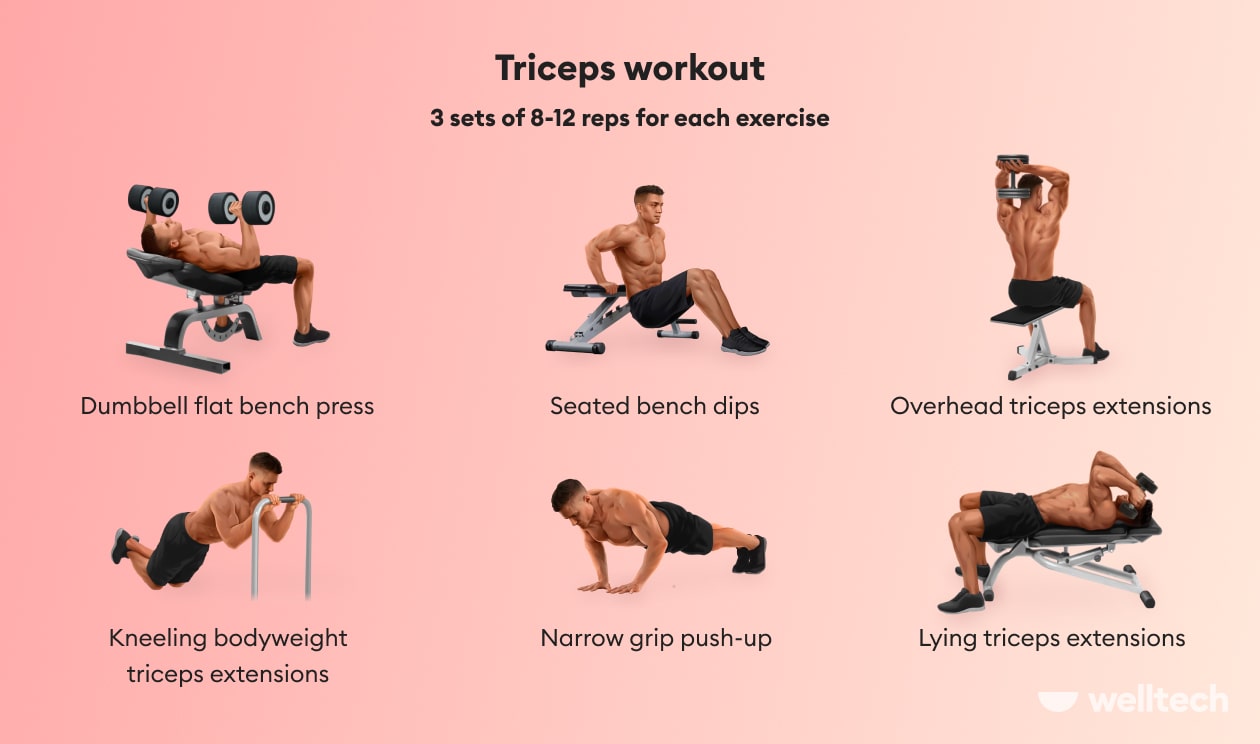
Credit: welltech.com
Signs Your Triceps Are Improving
How do you know your triceps training is working? Look for these signs:
- Increased strength: You can lift more weight or do more reps over time.
- Better arm definition: Your upper arms look more toned, even when relaxed.
- Improved performance: Push-ups, bench presses, and other pushing moves get easier.
- Less fatigue: Daily activities like lifting or pushing feel smoother.
Remember, changes in muscle size take weeks or months, not days. Be patient and stay consistent.
Comparing Popular Triceps Exercises
Here’s a quick comparison of some top triceps moves by how well they activate the muscle, based on EMG (electromyography) studies.
| Exercise | Triceps Activation (1–5) | Equipment Needed | Best For |
|---|---|---|---|
| Skull Crusher | 5 | Barbell/Dumbbell | Muscle growth |
| Triceps Pushdown | 4 | Cable | Isolation, shaping |
| Close-Grip Bench Press | 4 | Barbell | Strength |
| Dips | 4 | Bodyweight/Parallel bars | Overall mass |
| Kickbacks | 3 | Dumbbell | Finishing, isolation |
| Diamond Push-Ups | 3 | Bodyweight | Home, endurance |
Note:
Higher activation usually means better muscle-building potential, but variety is still important.
Triceps Training For Women
Many women avoid triceps training, fearing bulky arms. In reality, building triceps helps with toned, lean arms and improves daily activities. Because women have lower levels of muscle-building hormones, it’s very hard to get “bulky” without specific training and diet.
Benefits for women:
- Better arm tone and shape
- Improved strength for lifting, pushing, or carrying
- Reduced risk of arm flab with age
Women can follow the same triceps exercises as men. Focus on moderate weights, higher reps, and good form.
When To Train Triceps
You can train triceps alone or with other muscle groups. Most people pair triceps with chest or shoulders, since all these muscles work together in pressing moves.
Popular splits:
- Chest + triceps: Do compound chest moves first, then triceps isolation.
- Push day (chest, shoulders, triceps): For those on a push/pull/legs plan.
- Full body: Include a few sets of triceps after main lifts.
Tip:
Don’t do heavy triceps workouts the day before bench press or shoulder day, as your arms may be too tired.
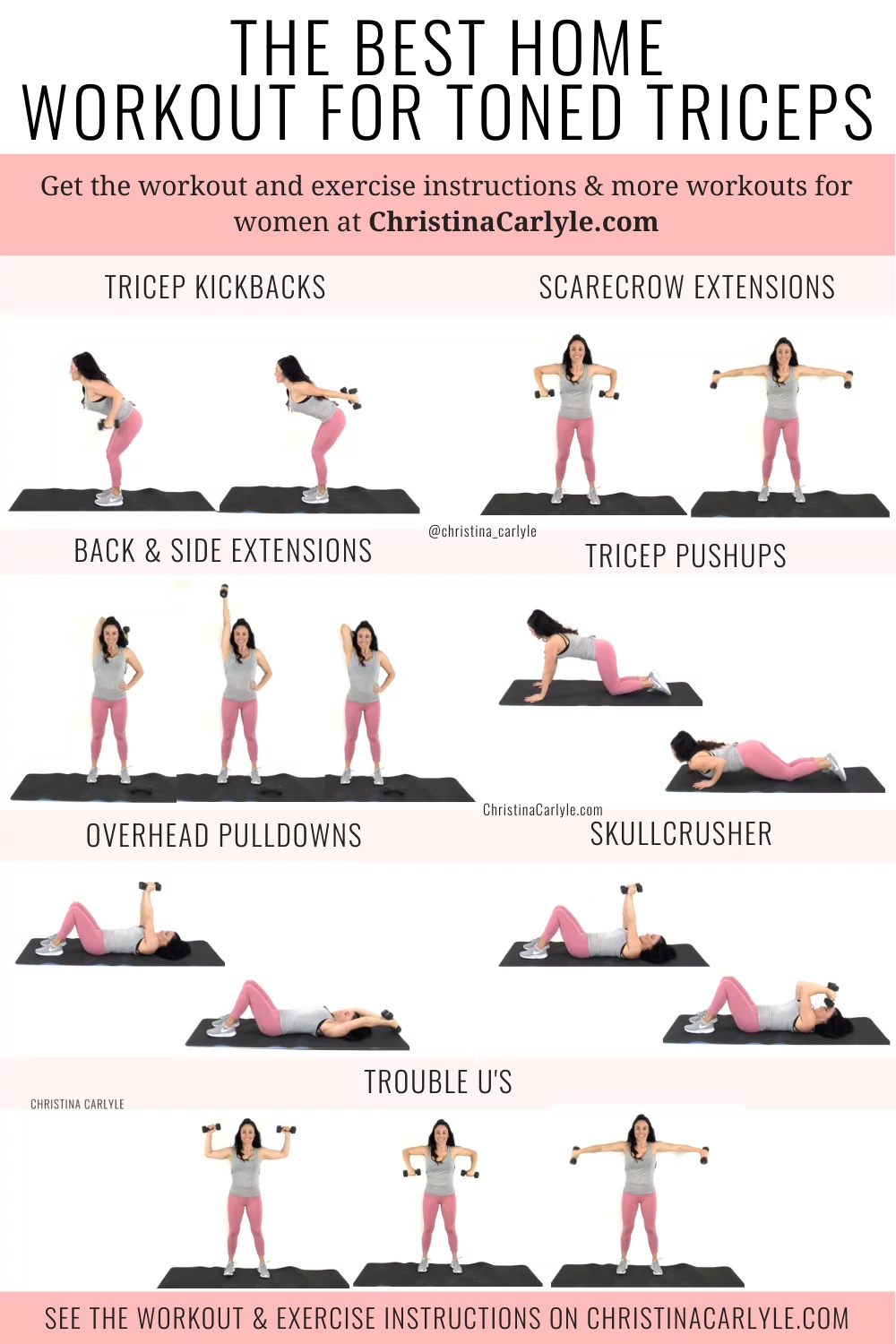
Credit: www.christinacarlyle.com
How To Avoid Injury In Triceps Training
Safety should always come first. Here are some simple rules:
- Warm up thoroughly before heavy lifting.
- Use proper form on every rep, not just heavy sets.
- Don’t lock out elbows forcefully at the top of moves.
- Increase weight gradually; don’t rush progress.
- Stop if you feel sharp pain. Soreness is normal, but joint pain is not.
Ignoring these basics can lead to elbow or shoulder injuries that set you back for weeks.
How To Stretch And Cool Down After Triceps Training
Stretching helps your muscles recover and maintain flexibility.
Simple triceps stretch:
- Raise one arm overhead, bend the elbow, and reach down your back.
- Use your other hand to gently push the elbow.
- Hold for 20–30 seconds, then switch arms.
Foam rolling can also help reduce soreness.
Tracking Your Progress
Keeping track of your triceps workouts is one of the easiest ways to stay motivated and see results.
- Write down the exercises, sets, reps, and weight used.
- Take regular photos of your arms to compare changes over time.
- Note how you feel during and after workouts.
This makes it easier to spot plateaus or decide when to change your routine.
Useful Resources
If you want to learn more about triceps anatomy or exercise science, check out the Wikipedia page on the triceps brachii muscle for in-depth information.
Frequently Asked Questions
How Often Should I Do Triceps Exercises?
Most people should train triceps directly 1–2 times per week. This allows for muscle recovery and growth. Remember, your triceps also work during chest and shoulder exercises, so you may not need extra sessions.
Can I Train Triceps At Home Without Equipment?
Yes. You can do push-ups, chair dips, and resistance band exercises at home. Focus on slow reps and good form to make each move more effective.
How Long Does It Take To See Results In My Triceps?
Most people notice stronger triceps and better definition in 4–8 weeks with consistent training, proper nutrition, and rest. Visible muscle growth takes longer, especially for beginners.
Is It Okay To Train Triceps And Biceps On The Same Day?
Yes. You can train both in one session, usually after larger muscle groups (like chest or back). This is called an “arm day” and works well if you recover properly.
What’s The Best Triceps Exercise For Beginners?
Close-grip push-ups and triceps kickbacks are simple, safe, and effective for beginners. Start with bodyweight or light weights and focus on mastering the form.
Strong triceps are more than just good looks—they help you push, lift, and move better every day. By choosing the right exercises, focusing on form, and training consistently, you’ll build arms that are both powerful and balanced. Stay patient, listen to your body, and enjoy the process as you get stronger and more confident with every workout.
