

Glute Workout With Dumbbell: Sculpt Stronger, Rounder Glutes Fast
Glute Workout With Dumbbell
Strong glutes are not just about looks—they help with walking, running, lifting, and keeping your back healthy. Many people want a better-shaped backside, but they also want to move better and feel stronger. The good news is you don’t need fancy machines or a gym membership to build your glutes.
With just a pair of dumbbells, you can do powerful exercises at home, in a park, or anywhere you have space. This guide will show you how to use dumbbells for glute workouts, explain the best exercises, and help you avoid common mistakes.
Whether you are a beginner or you want to improve your routine, you will find practical advice, examples, and tips to get results.
Why Glute Strength Matters
The glutes are the biggest muscle group in your lower body. They include the gluteus maximus, gluteus medius, and gluteus minimus. These muscles are responsible for hip movement, keeping your pelvis stable, and supporting your lower back. When your glutes are weak, other muscles try to do their job, which can cause pain or injuries—especially in your knees and lower back.
Glute workouts also improve athletic performance. Strong glutes help you jump higher, run faster, and lift heavier. They also protect your hips and knees during sports or daily activities. If you sit a lot, your glutes can become inactive or weak. Regular glute exercises can fix this problem.
Benefits Of Dumbbell Glute Workouts
Many people use machines for glute training, but dumbbells have unique advantages:
- Accessibility: You can use dumbbells anywhere. No need for a gym.
- Variety: Dumbbells allow more movement choices. You can adjust exercises to fit your body.
- Balance and stability: Dumbbell workouts force your smaller muscles to work harder, improving balance.
- Progressive overload: It’s easy to increase the weight as you get stronger.
- Cost-effective: Dumbbells are affordable and last for years.
A study from the Journal of Strength and Conditioning Research found that free weight exercises activate more muscles than machine-based movements. This means dumbbell workouts can give you better results for glute building.
Anatomy Of The Glutes: What You Need To Know
Before you start training, it helps to understand the main muscles in your glutes:
| Muscle | Function | Exercise Example |
|---|---|---|
| Gluteus Maximus | Hip extension, outward rotation | Dumbbell hip thrust |
| Gluteus Medius | Hip abduction, pelvis stability | Dumbbell lateral lunges |
| Gluteus Minimus | Hip abduction, internal rotation | Dumbbell step-ups |
Each muscle plays a different role. To get full glute development, your workout should target all three.
Key Principles For Glute Training With Dumbbells
For the best results, follow these important principles:
- Progressive overload: Increase weight or reps over time.
- Proper form: Focus on technique to avoid injury.
- Full range of motion: Move your hip through its whole range for maximum muscle growth.
- Mind-muscle connection: Think about squeezing your glutes during each rep.
- Recovery: Give your muscles time to rest and rebuild.
Many beginners miss the mind-muscle connection. If you only move through the motions without focusing on your glutes, other muscles might take over. This is a common mistake and slows your progress.
Dumbbell Glute Exercises: The Essentials
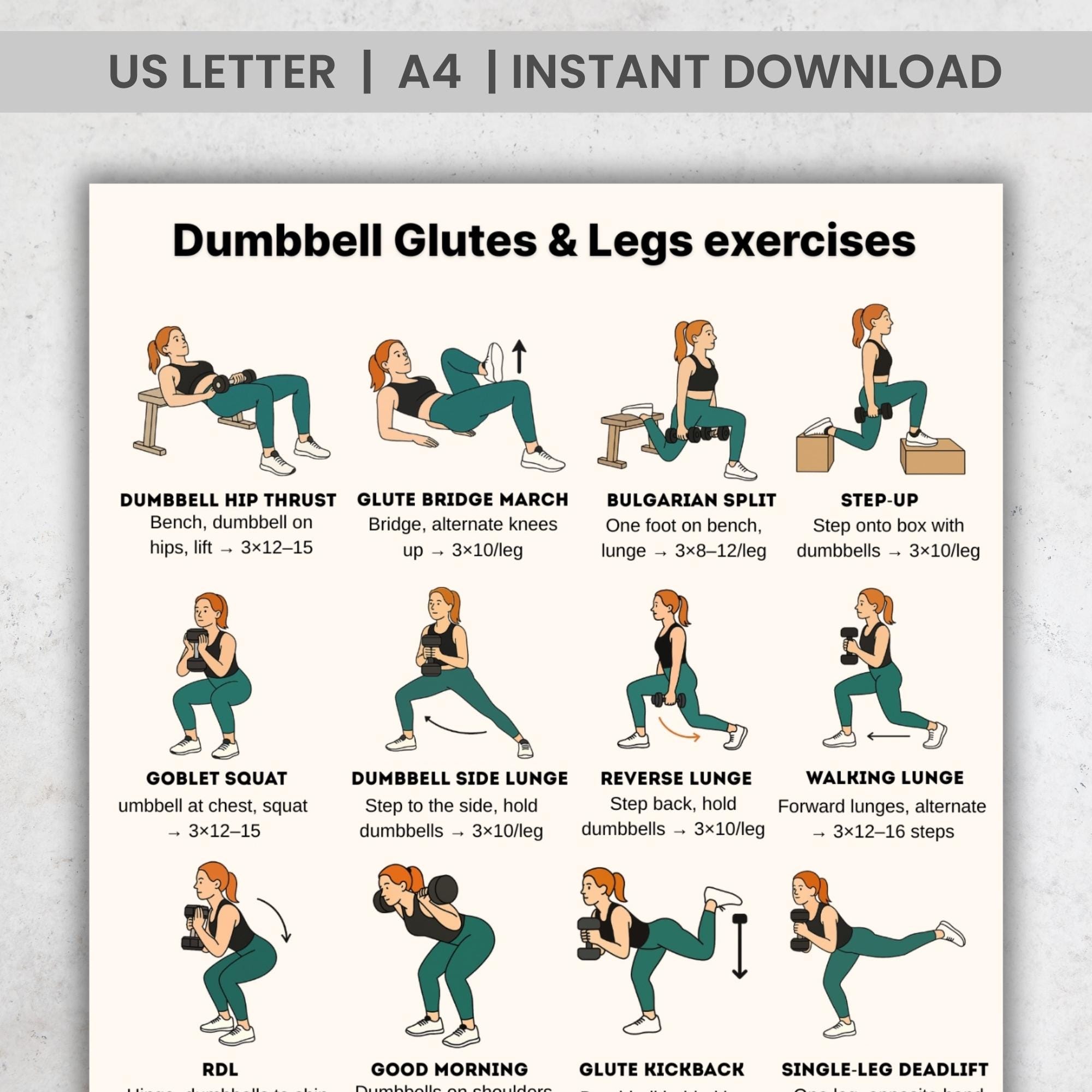
You don’t need many exercises to see progress. These are the most effective dumbbell moves for glutes:
1. Dumbbell Hip Thrust
This exercise is one of the best for gluteus maximus activation. You can use a bench, chair, or even the ground.
- Sit on the ground with your upper back against a bench.
- Place a dumbbell on your hips and hold it steady.
- Bend your knees, feet flat on the floor.
- Push through your heels, lifting your hips until your body is straight.
- Squeeze your glutes at the top, then lower slowly.
Aim for 3 sets of 10–15 reps.
2. Dumbbell Bulgarian Split Squat
This move targets both glutes and legs. It also improves balance.
- Stand facing away from a bench, place one foot behind you on the bench.
- Hold a dumbbell in each hand.
- Lower your body until your front thigh is parallel to the floor.
- Push up through your front heel.
Do 3 sets of 8–12 reps per leg.
3. Dumbbell Romanian Deadlift
This is a great exercise for the hamstrings and glutes.
- Stand with feet hip-width apart, dumbbells in front of your thighs.
- Keeping your back straight, hinge at the hips and lower the dumbbells down.
- Go as low as you can without rounding your back.
- Return to standing by squeezing your glutes.
Do 3 sets of 10–15 reps.
4. Dumbbell Step-up
This move is simple but effective.
- Stand in front of a sturdy bench or box.
- Hold dumbbells by your sides.
- Step up with one leg, press through your heel, and bring the other leg up.
- Step down and repeat.
Do 3 sets of 10–12 reps per leg.
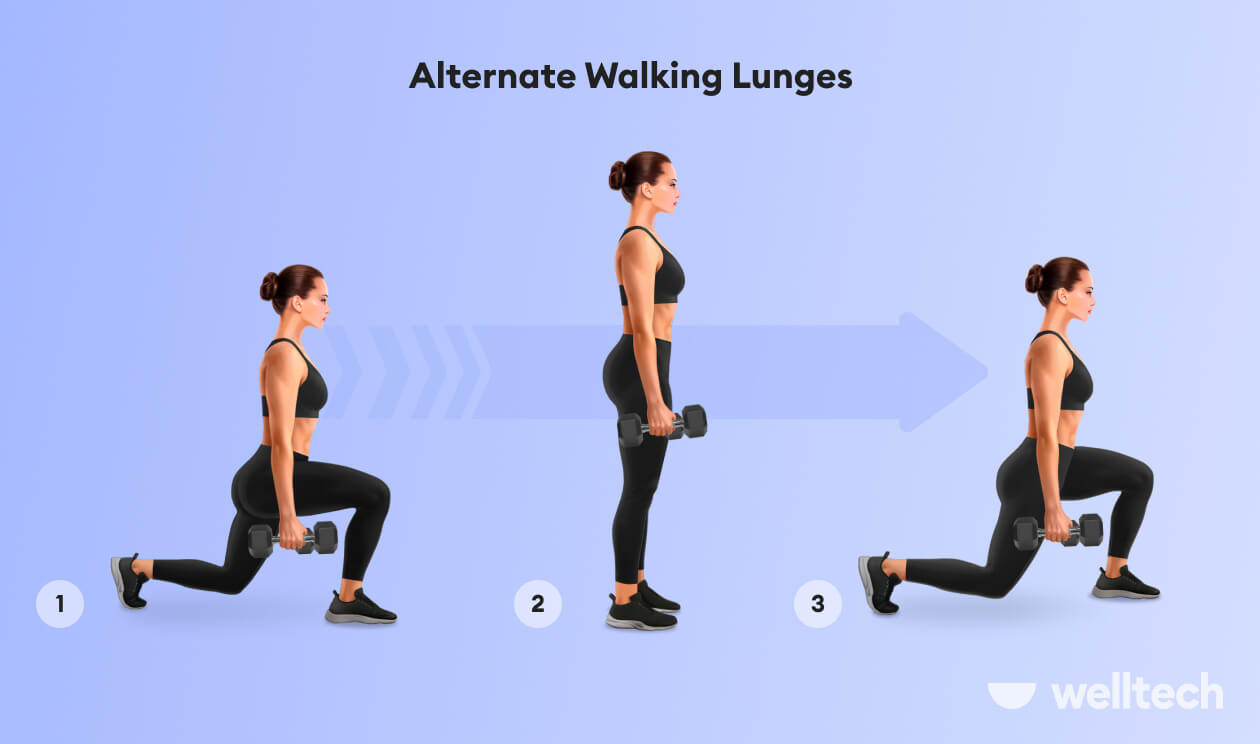
5. Dumbbell Lateral Lunge
This exercise targets the gluteus medius and helps with hip stability.
- Stand with dumbbells at your sides.
- Step out to one side, bending your knee and sitting back.
- Keep the other leg straight.
- Push back to the starting position.
Do 3 sets of 8–12 reps per side.
6. Dumbbell Glute Bridge
This is similar to hip thrust but easier for beginners.
- Lie on your back, knees bent, feet flat.
- Place a dumbbell on your hips.
- Lift your hips, squeeze glutes, and lower back down.
Do 3 sets of 15–20 reps.
7. Dumbbell Sumo Squat
This wide-stance squat hits the inner thighs and glutes.
- Stand with feet wider than shoulder-width.
- Hold a dumbbell in both hands, hanging between your legs.
- Squat down, keeping your chest up.
- Push through your heels to stand up.
Do 3 sets of 12–15 reps.
8. Dumbbell Kickback
This move isolates the glutes.
- Start on all fours, holding a dumbbell behind your knee.
- Kick your leg back and up, squeezing your glute.
- Lower and repeat.
Do 3 sets of 10–12 reps per leg.
Sample Dumbbell Glute Workout Routine
Here is a practical routine you can use:
- Dumbbell Hip Thrust – 3x12
- Bulgarian Split Squat – 3x10 each leg
- Romanian Deadlift – 3x12
- Step-Up – 3x10 each leg
- Lateral Lunge – 3x10 each side
- Glute Bridge – 3x15
Rest 60–90 seconds between sets. Start with light dumbbells to learn the movements.
How To Choose The Right Dumbbell Weight
Picking the correct weight is important. If your dumbbells are too light, you won’t challenge your muscles. If they are too heavy, your form will suffer.
Use this guide:
| Exercise | Beginner Weight (lbs) | Intermediate Weight (lbs) | Advanced Weight (lbs) |
|---|---|---|---|
| Hip Thrust | 10–20 | 20–40 | 40+ |
| Bulgarian Split Squat | 8–15 | 15–25 | 25+ |
| Romanian Deadlift | 15–25 | 25–40 | 40+ |
| Step-Up | 8–15 | 15–25 | 25+ |
Choose a weight that is hard for the last few reps, but you can still keep perfect form.
Common Mistakes In Dumbbell Glute Workouts
Many beginners make errors that reduce their results:
- Using too much weight: This leads to bad form and can cause injury.
- Not squeezing the glutes: If you don’t feel your glutes working, adjust your form.
- Short range of motion: Only going halfway doesn’t build full strength.
- Neglecting balance: Always train both sides equally.
- Skipping warm-up: Cold muscles are more likely to get hurt.
- Rushing reps: Quality is more important than speed.
A non-obvious mistake is ignoring your hip position. If your hips are not level during exercises like hip thrusts, you might be working one glute more than the other. Pay attention to your body and make sure both sides are working.

Credit: www.bibliotecaoscura.com
Warm-up And Mobility For Glute Workouts
A good warm-up increases blood flow, prepares your muscles, and helps prevent injury. Try this routine before your workout:
- 5 minutes brisk walking or jogging
- Dynamic stretches: Leg swings, hip circles, bodyweight squats
- Activation: 2 sets of glute bridges (no weight), 2 sets of clamshells
Mobility is also important. If your hips or ankles are stiff, your form will suffer. Spend time stretching your hips, hamstrings, and calves.
How To Track Your Progress
Tracking your workouts helps you stay motivated and see improvement. Here are practical ways to measure progress:
- Reps and sets: Write down how many reps and sets you do.
- Weight: Track the dumbbell weight used for each exercise.
- Photos: Take progress photos every month.
- Strength: Notice if daily activities feel easier.
A useful tip is to focus on how you feel after each session. If your glutes are sore or tired, you are likely working them well.
Glute Workout Frequency And Scheduling
How often should you train your glutes with dumbbells? It depends on your goals and recovery:
- Beginners: 2–3 times per week
- Intermediate: 3–4 times per week
- Advanced: Up to 5 times per week (if recovery is good)
Never train your glutes hard on back-to-back days. Muscles need time to recover and grow. Space your workouts by at least one day.
Nutrition For Glute Growth
Exercise is only part of the equation. Nutrition is crucial for building muscle:
- Protein: Aim for 0.7–1 gram per pound of body weight.
- Carbohydrates: Fuel your workouts and help with recovery.
- Healthy fats: Support hormone balance and joint health.
- Hydration: Drink plenty of water.
After your workout, eat a meal with protein and carbs. This helps your muscles rebuild and grow stronger.
Credit: www.etsy.com
Advanced Training Techniques
Once you master the basics, you can try advanced methods to keep your glutes growing:
- Drop sets: After finishing a set, reduce the weight and keep going.
- Supersets: Pair two glute exercises back-to-back without rest.
- Tempo training: Slow down your reps to increase muscle tension.
- Unilateral work: Focus on one leg at a time for better balance.
You can also try single-leg hip thrusts or combine dumbbells with resistance bands for more challenge.
How Dumbbell Glute Workouts Compare With Other Methods
Many people wonder if dumbbells are as effective as machines or barbells. Here’s a quick comparison:
| Method | Strength Gains | Muscle Activation | Accessibility | Cost |
|---|---|---|---|---|
| Dumbbells | High | Very High | Easy | Low |
| Machines | Moderate | Moderate | Limited | High |
| Barbells | Very High | High | Moderate | Medium |
Dumbbells are effective because they require balance and stability. This means your glutes and supporting muscles work harder.
Glute Activation: Why It Matters
Before any workout, it’s important to “activate” the glutes. Many people have weak glute activation because of sitting too much. Simple activation moves can help:
- Bodyweight glute bridges
- Clamshells
- Fire hydrants
Spend 5–10 minutes doing these before your main workout. You’ll feel your glutes working during the harder exercises.
Practical Tips For Better Results
Here are some insights that are often missed:
- Heel drive: Push through your heels in every glute exercise. This increases glute engagement.
- Foot placement: Small changes can target different glute areas. For example, wider stance in squats hits the outer glute.
- Pause at the top: Hold the peak contraction for 2 seconds to boost muscle growth.
- Don’t neglect single-leg moves: They build balance and prevent muscle imbalances.
- Use mirrors or video: Checking your form can help you fix mistakes you didn’t notice.
Many beginners think only heavy weights build glutes. But using a lighter weight with good form and full range works just as well, especially for people starting out.
Credit: welltech.com
Glute Workouts For Different Goals
Whether you want to build size, improve shape, or increase strength, you can use dumbbells:
- Size: Focus on higher weight, lower reps (8–12).
- Shape: Use a mix of exercises and rep ranges.
- Strength: Choose challenging weights and keep reps moderate.
Adjust your routine based on what you want to achieve.
How To Avoid Plateaus
Plateaus happen when your progress stops. Here’s how to break through:
- Change your exercise order.
- Increase weight or reps.
- Try new exercises.
- Use advanced techniques like supersets or drop sets.
- Rest longer or shorter between sets.
A common reason for plateaus is doing the same routine for too long. Change things every few weeks for best results.
Safety And Injury Prevention
Safety is essential. Here are key points:
- Always warm up.
- Use proper form.
- Stop if you feel sharp pain.
- Start with light weights and build up.
- Focus on controlled movements, not speed.
If you have hip or knee injuries, consult a doctor or trainer before doing glute exercises.
Glute Workout Modifications For Beginners
If you are new, start with easier versions:
- Use just one dumbbell or none at first.
- Decrease range of motion if needed.
- Focus on bodyweight glute bridges and squats.
- Build up to harder moves as your strength improves.
Don’t rush. Quality is more important than quantity.
Glute Workout Modifications For Advanced Users
If you are experienced, make your routine harder:
- Use heavier dumbbells.
- Add pauses or slow reps.
- Try single-leg variations.
- Use resistance bands with dumbbells.
Advanced users can also train more often, but must pay attention to recovery.
Real-life Examples And Success Stories
Many people have changed their bodies and lives with dumbbell glute workouts. For example, a woman named Sara started training at home with just two 20-pound dumbbells. In six months, she noticed her jeans fit better, her posture improved, and she felt stronger.
She also reported less back pain.
Another example is Mike, who used dumbbell hip thrusts and step-ups after knee surgery. He built stronger glutes, which helped him return to running and sports.
These stories show that simple tools can produce real results.
Choosing The Best Dumbbells For Glute Workouts
When buying dumbbells, consider these factors:
- Weight range: Adjustable dumbbells let you change weight easily.
- Grip: Choose a comfortable, non-slip handle.
- Material: Rubber-coated dumbbells protect floors.
- Shape: Hex dumbbells don’t roll away.
Don’t buy the heaviest dumbbells right away. Start with a moderate range and build up.
For more guidance on selecting equipment, you can check Verywell Fit.
Frequently Asked Questions
How Many Dumbbell Glute Workouts Should I Do Per Week?
Most people get good results with 2–3 sessions per week. Beginners can start with 2 days and add a third as they get stronger. Listen to your body and don’t train on sore muscles.
Can I Build Glutes With Only Dumbbells?
Yes. Dumbbells provide enough resistance and variety to build strong, shapely glutes. Focus on progressive overload, good form, and full range of motion.
What Is The Best Dumbbell Glute Exercise?
The dumbbell hip thrust is one of the best for glute activation and growth. Combine it with split squats and Romanian deadlifts for a balanced routine.
How Long Does It Take To See Results?
Most people notice changes in 4–8 weeks if they train regularly and eat well. Results depend on effort, consistency, and recovery.
Should I Use Heavy Or Light Dumbbells?
Use a weight that challenges you for the last few reps of each set. For glute growth, both heavy and lighter weights can work if you use proper form and full range.
Building strong glutes with dumbbells is possible for anyone—no gym required. With good exercises, correct form, and consistent effort, you’ll see results in your strength, movement, and shape. Remember, progress takes time, but every workout moves you closer to your goal.
Stay committed, track your progress, and enjoy the benefits of strong, healthy glutes.
