

Glute Workout at Gym: Best Exercises for a Stronger Butt
Glute Workout At Gym
Most people want stronger, rounder, or more toned glutes. But they often do not know where to start, or what exercises really help. The glutes are the largest muscles in your body. They play a big role in how you move, keep balance, and even help avoid injuries.
Many people think glute workouts are only for athletes or models. Actually, anyone can benefit from training the glutes. Better glute strength means easier everyday movement, less back pain, and improved athletic performance.
This guide will help you understand how to train your glutes at the gym. You will learn about the most effective exercises, how to build a workout plan, common mistakes to avoid, and how to track your progress. Whether you are a beginner or more advanced, you will find practical advice, real examples, and clear explanations.
Let’s get started on building strong, healthy glutes.
Why Glute Training Matters
The glutes are made up of three muscles: gluteus maximus, gluteus medius, and gluteus minimus. Together, they help with hip movement, stability, and posture. Strong glutes are important for:
- Walking and running: They help move your legs and keep you stable.
- Jumping and climbing: Powerful glutes give you more strength and lift.
- Protecting your back: Weak glutes can cause lower back pain and bad posture.
- Sports performance: Athletes rely on glutes for speed, agility, and power.
Research shows that weak glutes are linked to injuries like knee pain, hamstring strains, and even ankle problems. If you sit a lot, your glutes can become inactive. This makes glute workouts even more important.
What Makes A Good Glute Workout?
A good glute workout at the gym should have a mix of compound movements and isolation exercises. Compound movements work several muscles at the same time. Isolation exercises focus on the glutes alone. Both are needed for strong, well-shaped glutes.
Your workout should include:
- Heavy lifts: These help build size and strength.
- Single-leg exercises: These improve balance and fix muscle imbalances.
- Isolation movements: These target the glutes for better muscle shape.
- Volume and frequency: Enough sets and reps, done often enough.
Aim for 2-3 glute-focused sessions per week. Each workout should have 4-6 exercises, combining different types. Rest for 48 hours between hard glute sessions to allow recovery.

Credit: www.kaylaitsines.com
The Best Glute Exercises At The Gym
Different exercises work the glutes in different ways. Here are the most effective gym exercises for glute growth and strength:
1. Barbell Hip Thrust
This is one of the best for glute activation. You sit on the floor with your upper back against a bench. Roll a barbell over your hips, and thrust upwards, squeezing your glutes at the top.
- Benefits: Very high glute activation, easy to add weight.
- Tip: Use a pad to protect your hips. Pause at the top for maximum squeeze.
2. Squats (back Squat, Front Squat)
Squats work the glutes, quads, and hamstrings. The deeper you go, the more your glutes work.
- Benefits: Builds overall leg and glute strength.
- Tip: Keep your chest up and knees tracking over toes.
3. Deadlift (conventional, Romanian)
Deadlifts are a full-body lift. The Romanian deadlift (RDL) focuses more on glutes and hamstrings.
- Benefits: Heavy strength builder. RDL isolates glutes.
- Tip: Keep your back straight and push hips back.
4. Bulgarian Split Squat
A single-leg squat with your back foot raised on a bench. Forces your glutes to work hard.
- Benefits: Fixes imbalances, builds stability.
- Tip: Lean slightly forward to hit glutes more.
5. Lunges (walking, Reverse)
Lunges are a classic for glute and leg training.
- Benefits: Great for balance and unilateral strength.
- Tip: Step far enough so your knee stays behind your toes.
6. Glute Cable Kickback
Use a cable machine with an ankle strap. Kick back your leg, squeezing your glute.
- Benefits: Isolation, easy to adjust weight.
- Tip: Keep your back stable, focus on the muscle.
7. Leg Press
The leg press targets glutes and quads. Adjust foot placement to work glutes more.
- Benefits: Allows heavy loads, less back stress.
- Tip: Place feet higher and wider for glutes.
8. Step-ups
Step onto a bench or box, driving through your heel.
- Benefits: Single-leg strength, functional movement.
- Tip: Use a challenging height, control the descent.
9. Glute Bridge
Similar to the hip thrust, but on the floor and often without weight.
- Benefits: Beginner-friendly, activates glutes.
- Tip: Pause at the top and squeeze.
10. Abduction Machine
Sit and push your knees out against resistance.
- Benefits: Targets glute medius and minimus.
- Tip: Go slow, do high reps for burn.
11. Smith Machine Hip Thrust
Like the barbell version, but safer for beginners.
- Benefits: Controlled movement, easy to load.
- Tip: Adjust bench height for comfort.
12. Sumo Squat
Wide stance squat, toes pointed out.
- Benefits: Extra glute and inner thigh activation.
- Tip: Keep knees tracking over toes.
13. Cable Pull-through
Stand facing away from cable machine, pull the cable between your legs.
- Benefits: Glute and hamstring focus, safe for back.
- Tip: Use moderate weight, keep movement controlled.
14. Kettlebell Swing
Powerful hip movement with a kettlebell.
- Benefits: Explosive glute activation, cardio boost.
- Tip: Drive hips forward, do not squat.
15. Frog Pump
Feet together, knees out, thrust hips up.
- Benefits: Intense glute squeeze, high reps.
- Tip: Use bodyweight or light weight.
Sample Glute Workout Routines
Here are two sample routines. Adjust weights and reps based on your fitness level.
Beginner Routine
- Glute Bridge: 3 sets x 15 reps
- Bulgarian Split Squat: 3 sets x 10 reps per leg
- Leg Press: 3 sets x 12 reps
- Cable Kickback: 3 sets x 15 reps per leg
- Abduction Machine: 3 sets x 20 reps
Rest 60-90 seconds between sets.
Intermediate Routine
- Barbell Hip Thrust: 4 sets x 10 reps
- Romanian Deadlift: 4 sets x 12 reps
- Walking Lunges: 3 sets x 12 reps per leg
- Step-Ups: 3 sets x 10 reps per leg
- Frog Pump: 4 sets x 20 reps
Rest 90-120 seconds between sets.
Advanced Routine
- Barbell Hip Thrust: 5 sets x 8 reps (heavy)
- Back Squat: 4 sets x 8 reps
- Bulgarian Split Squat: 4 sets x 10 reps per leg
- Cable Pull-Through: 3 sets x 15 reps
- Kettlebell Swing: 3 sets x 20 reps
Rest 2 minutes between heavy sets.
How To Build Your Own Glute Workout
You do not need to follow the same routine every time. You can build your own, using these simple rules:
- Start with a compound lift (hip thrust, squat, deadlift)
- Add one single-leg exercise (split squat, lunge, step-up)
- Add one isolation movement (kickback, abduction, frog pump)
- Finish with high-rep burnout (cable, machine, bodyweight)
Change your exercises every 4-6 weeks to keep progress. Choose weights that challenge you but allow good form.
Common Mistakes In Glute Training
Many people do glute workouts but see little change. Here are mistakes that stop progress:
- Poor form: Using bad technique means other muscles take over. Always focus on glute squeeze.
- Not enough weight: Glutes are strong. You need challenging loads to grow.
- Skipping single-leg moves: Both sides should be trained for balance.
- Low volume: Too few sets or reps will not build muscle.
- No mind-muscle connection: If you do not focus on your glutes, you will not activate them fully.
- Neglecting recovery: Muscles grow when resting. Overtraining slows progress.
- Only doing squats: Squats are good, but hip thrusts and bridges hit glutes better.
A non-obvious insight: Many people do not realize that foot placement can change how much the glutes work in exercises like the leg press or squat. Try wider stances and higher feet for more glute focus.
How To Track Glute Progress
Seeing progress motivates you. Here are ways to track:
- Strength gains: Are you lifting more weight over time?
- Muscle size: Measure hips and thighs every month.
- Photos: Take progress pictures from the side and back.
- Performance: Are you running faster, jumping higher, or feeling more stable?
You may not see big changes in a few weeks. But with regular training and patience, your glutes will grow and get stronger.
Glute Training Frequency And Recovery
You need to train your glutes often, but also allow them to recover. Studies suggest 2-3 sessions per week is ideal for most people. Each session should have enough volume (sets x reps) and intensity. Recovery is also key. Muscles grow when you rest, not just when you train.
Tips for recovery:
- Sleep 7-9 hours per night
- Eat enough protein (about 1.6-2.2g per kg bodyweight)
- Stretch and foam roll after workouts
- Take rest days between hard sessions
A common mistake is training glutes every day. This can lead to soreness and slow progress. If you feel tired or weak, take an extra rest day.
Glute Training For Different Goals
People train glutes for different reasons. Here’s how to adjust your workout:
Building Muscle And Size
- Use heavy weights, low to moderate reps (8-12)
- Focus on progressive overload (adding weight over time)
- Include hip thrusts, squats, and deadlifts
Improving Athletic Performance
- Add explosive moves like kettlebell swings and jump squats
- Include single-leg exercises for balance
- Train glutes with both strength and speed
Toning And Shaping
- Use moderate weight, higher reps (12-20)
- Focus on isolation moves (kickbacks, abduction)
- Keep rest short (30-60 seconds) for more burn
Reducing Back Pain
- Strengthen glutes with hip bridges, step-ups
- Avoid exercises that strain your back
- Train core muscles alongside glutes
Glute Activation: Why It Matters
Before heavy lifts, it helps to “wake up” your glutes. This is called activation. If your glutes are inactive, other muscles take over. This can lead to injury and slow progress.
How to activate glutes:
- Do mini-band walks (side steps with a resistance band)
- Try clamshells (lying on your side, open knees against resistance)
- Do light glute bridges, focusing on squeezing
Spend 5-10 minutes on activation before your main workout. You will feel the glutes working better in big lifts.
Equipment For Glute Training At The Gym
Gyms have many tools for glute workouts. Here’s what you can use:
- Barbells: For hip thrusts, squats, deadlifts
- Dumbbells: For lunges, step-ups, single-leg moves
- Smith Machine: Safer squats and hip thrusts
- Cable Machines: Kickbacks, pull-throughs
- Leg Press Machine: Heavy glute and leg work
- Abduction Machine: Targets glute medius/minimus
- Resistance Bands: Activation and high-rep moves
Some gyms also have special hip thrust benches or platforms. If yours does not, use a normal bench for hip thrusts.
Glute Exercise Comparison: Activation Levels
Not all glute exercises activate the muscle the same way. Here’s a comparison of how much the gluteus maximus is used in popular exercises:
| Exercise | Glute Activation (%) | Other Muscles Worked |
|---|---|---|
| Barbell Hip Thrust | ~87 | Hamstrings, core |
| Back Squat | ~70 | Quads, hamstrings |
| Romanian Deadlift | ~65 | Hamstrings, lower back |
| Bulgarian Split Squat | ~80 | Quads, core |
| Glute Bridge | ~85 | Hamstrings |
| Leg Press (high/wide) | ~60 | Quads |
The hip thrust and glute bridge are top choices for pure glute activation. Squats and deadlifts also work glutes, but involve more other muscles.
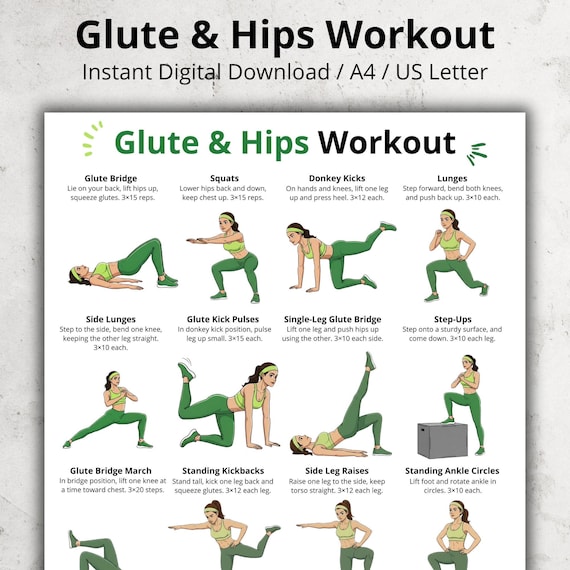
Credit: www.etsy.com
Glute Workout Results: What To Expect
You might wonder: How fast will I see results from glute training? Here’s what most people experience:
- First 2-4 weeks: Better muscle activation, less soreness, improved form
- 4-8 weeks: Noticeable strength gains, some muscle growth
- 8-12 weeks: Visible changes in shape, more power and balance
A non-obvious tip: Many people only look for bigger glutes. But stronger glutes also mean better posture, easier movement, and less injury risk—even if the shape change is slow.
Diet And Glute Growth
Training is only one part. You need the right food to build glutes.
- Protein: Aim for 1.6-2.2g per kg bodyweight. Helps muscles repair and grow.
- Carbohydrates: Give energy for hard workouts.
- Healthy fats: Support hormones and recovery.
Eat after workouts for best recovery. Include lean meats, fish, eggs, beans, rice, potatoes, nuts, and seeds.
Glute Workout Myths
Some myths stop people from making progress:
- Myth 1: Squats alone will grow your glutes. Hip thrusts and bridges are better for glute isolation.
- Myth 2: You need expensive supplements. Real food works best.
- Myth 3: Only women should train glutes. Men also need strong glutes for health and performance.
- Myth 4: High reps are all you need. Both heavy and light weights are important.
Real-life Glute Training Example
Let’s look at a real example. Sarah, a beginner, wanted to build her glutes and reduce back pain. She started with twice-weekly gym sessions, focusing on hip thrusts, lunges, and abduction machine. In 10 weeks, Sarah increased her hip thrust weight by 40 pounds and noticed her jeans fit differently.
She also reported less back pain and easier movement.
Another example: Mike, a runner, added glute bridges and step-ups to his routine. After two months, his sprint times improved, and he felt less tired during runs. This shows that glute training helps both appearance and performance.
Glute Workout Progression Table
To keep improving, you need to increase your workout challenge over time. Here’s a simple progression table:
| Week | Hip Thrust Weight | Lunge Reps | Abduction Machine Weight |
|---|---|---|---|
| 1 | 60 lbs | 10 | 40 lbs |
| 4 | 80 lbs | 12 | 50 lbs |
| 8 | 100 lbs | 15 | 60 lbs |
| 12 | 120 lbs | 18 | 70 lbs |
Aim to increase weight or reps every 2-4 weeks. If progress stalls, try new exercises or adjust your routine.
Glute Training And Injury Prevention
Strong glutes protect your knees, hips, and lower back. Many injuries happen because the glutes are weak or not working. For example, runners often get knee pain because their glutes are not stabilizing the leg. Glute workouts reduce injury risk by:
- Improving hip stability
- Balancing leg strength
- Reducing stress on lower back
If you have past injuries, start with bodyweight moves and build up slowly. Always focus on good form.
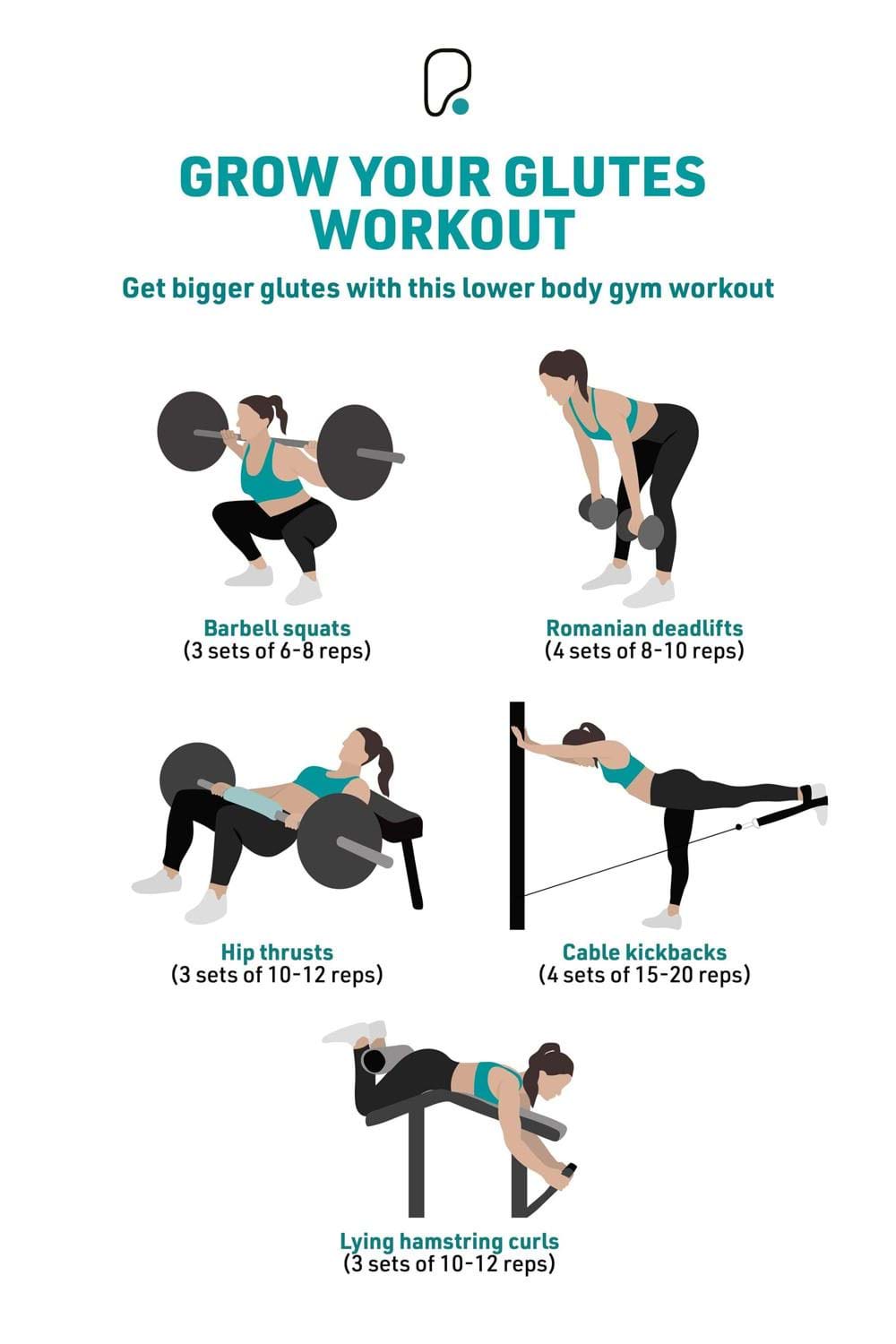
Credit: www.cedarvilleschool.com
Science Behind Glute Training
Studies show glute activation is highest in hip thrusts and bridges. One research found that hip thrusts activated the gluteus maximus more than squats or lunges. These exercises also improve sprint speed and jumping ability. For more details, see this scientific review.
Glute Training For Different Ages
You can train glutes at any age. Older adults benefit from stronger glutes for balance and fall prevention. Teens and young adults gain power and performance. Adjust weights, reps, and rest based on your needs.
- Older adults: Use lighter weights, focus on balance, do glute bridges and step-ups.
- Young adults: Use heavier weights, add explosive movements.
- Children/teens: Bodyweight moves are safest.
Glute Workout Motivation
Staying motivated is tough. Here are tips:
- Set clear goals (strength, shape, performance)
- Track progress with photos and measurements
- Train with a friend or group
- Change your routine every few weeks
Remember, results take time. Celebrate small wins—like lifting more weight or feeling stronger.
Frequently Asked Questions
How Often Should I Train My Glutes At The Gym?
Most people get best results with 2-3 sessions per week. This allows muscles to grow and recover. You can add light activation moves on rest days.
What Is The Best Exercise For Glutes?
Barbell hip thrust is the top choice for pure glute activation. But squats, lunges, and glute bridges are also effective. Combine different exercises for best results.
How Long Until I See Results From Glute Workouts?
You will feel stronger in 2-4 weeks, see shape change in 8-12 weeks if you train consistently and eat well. Progress depends on age, diet, and workout intensity.
Can I Train Glutes Without Equipment?
Yes, you can do glute bridges, bodyweight lunges, step-ups, and mini-band exercises at home. But gym equipment allows heavier loads and faster progress.
Should Men Train Their Glutes?
Definitely. Strong glutes help men with sports, protect the back, and improve posture. Glute workouts are for everyone, not just women.
Building strong glutes takes smart workouts, good nutrition, and patience. Whether your goal is shape, strength, or health, glute training at the gym will help you move better and feel better. Remember to use a mix of exercises, challenge yourself, and track your progress.
With consistent effort, you will see and feel the benefits.
