

Glute Resistance Bands Workout: Boost Your Booty Fast
Glute Resistance Bands Workout: Build Stronger Glutes Anywhere
A strong, balanced lower body is essential for daily movement, posture, and injury prevention. The glute muscles—gluteus maximus, medius, and minimus—are the powerhouses behind walking, running, climbing, and lifting. But glutes often get neglected in standard routines or become underactive due to long hours of sitting. That's where glute resistance bands workouts offer a powerful, flexible solution.
These lightweight bands can help anyone—from beginners to athletes—activate, strengthen, and grow their glutes without heavy gym equipment. Whether you want a better shape, more strength, or improved stability, resistance bands make glute training simple and effective. Plus, you can use them at home, in the gym, or while traveling.
Let’s explore how glute resistance bands work, their benefits, and the best ways to use them for a complete, effective lower body workout.
Why Train Glutes With Resistance Bands?
Many people think they need heavy weights to build muscle. But resistance bands provide unique benefits that free weights sometimes can’t match—especially for glute training.
Benefits Of Resistance Bands For Glutes
- Constant tension: Bands keep your muscles under tension during both the lifting and lowering parts of a movement. This maximizes muscle activation and growth.
- Improved muscle activation: Bands help target smaller glute muscles like the gluteus medius and minimus. These are often missed with traditional squats or deadlifts.
- Joint-friendly: Resistance bands are easier on the joints than heavy weights. This reduces the risk of injury and is perfect for beginners or those returning from injury.
- Portable and affordable: Bands fit in a small bag and cost far less than dumbbells or machines.
- Versatile: With bands, you can perform a wide range of exercises and adjust resistance by changing band thickness or hand placement.
Data: Why Glute Activation Matters
A study published in the Journal of Orthopaedic & Sports Physical Therapy showed that using a resistance band above the knees during squats increased gluteus medius activity by more than 20% compared to squats without a band. Activating these smaller glute muscles helps with hip stability, knee health, and overall strength.
Types Of Glute Resistance Bands
There are several kinds of bands you can use for glute workouts. Understanding the differences helps you pick the right one for your needs.
| Type of Band | Material | Best For | Pros | Cons |
|---|---|---|---|---|
| Loop Bands (Mini Bands) | Latex or Fabric | Glute activation, hip exercises | Compact, easy to use | May roll up or snap |
| Long Resistance Bands | Latex | Full-body workouts | Versatile, more resistance options | Bulky for some glute moves |
| Figure-8 Bands | Latex | Targeted glute/leg work | Easy grip, stable | Limited exercises |
| Hip Bands | Fabric with grip | Glute bridges, squats, lunges | Does not roll, stays in place | Less stretch, higher resistance only |
For most glute-focused exercises, mini loop bands and hip bands are the top choices. They fit snugly above your knees or around your thighs and provide just the right resistance for lower-body moves.
How To Choose The Right Resistance Band
Selecting the right band can make your workout more effective and comfortable. Here’s what to consider:
- Resistance level: Bands come in light, medium, heavy, and extra-heavy. Beginners should start light to learn form, while advanced users can use heavier bands for more challenge.
- Material: Fabric bands are less likely to roll and pinch, making them great for glute work. Latex bands offer more stretch but can sometimes move out of place.
- Length and width: Wider bands are more stable for glute bridges and squats. Shorter bands work well for lateral walks or clamshells.
- Grip: Some bands have silicone strips inside to prevent slipping.
It’s smart to buy a set with multiple resistances. This way, you can adjust as you get stronger or switch bands for different exercises.
Glute Muscle Anatomy And Function
Before jumping into exercises, it helps to know what muscles you’re targeting and why. The gluteal group includes:
- Gluteus maximus: The largest muscle, responsible for hip extension (moving your leg behind you), outward rotation, and helping you stand up from a squat.
- Gluteus medius: Sits on the side of your hip, stabilizes your pelvis, and moves your leg out to the side.
- Gluteus minimus: The smallest, under the medius, also helps with hip stability and abduction.
Weak glutes can lead to poor posture, back pain, knee injuries, and even reduced athletic performance. Strong glutes are key for walking, running, climbing stairs, and lifting heavy objects.
Best Glute Resistance Band Exercises
Building a strong lower body doesn’t require dozens of movements. A few well-chosen exercises, done with proper form and resistance, are enough for most people. Below are some of the most effective glute resistance band exercises. Each one targets the glutes in a slightly different way.
1. Glute Bridge
How to do it:
- Lie on your back, knees bent, feet flat on the floor, and place a band above your knees.
- Push through your heels, squeeze your glutes, and lift your hips toward the ceiling.
- Pause, then lower slowly.
Tip: Push your knees out against the band as you lift. This activates the gluteus medius and minimus.
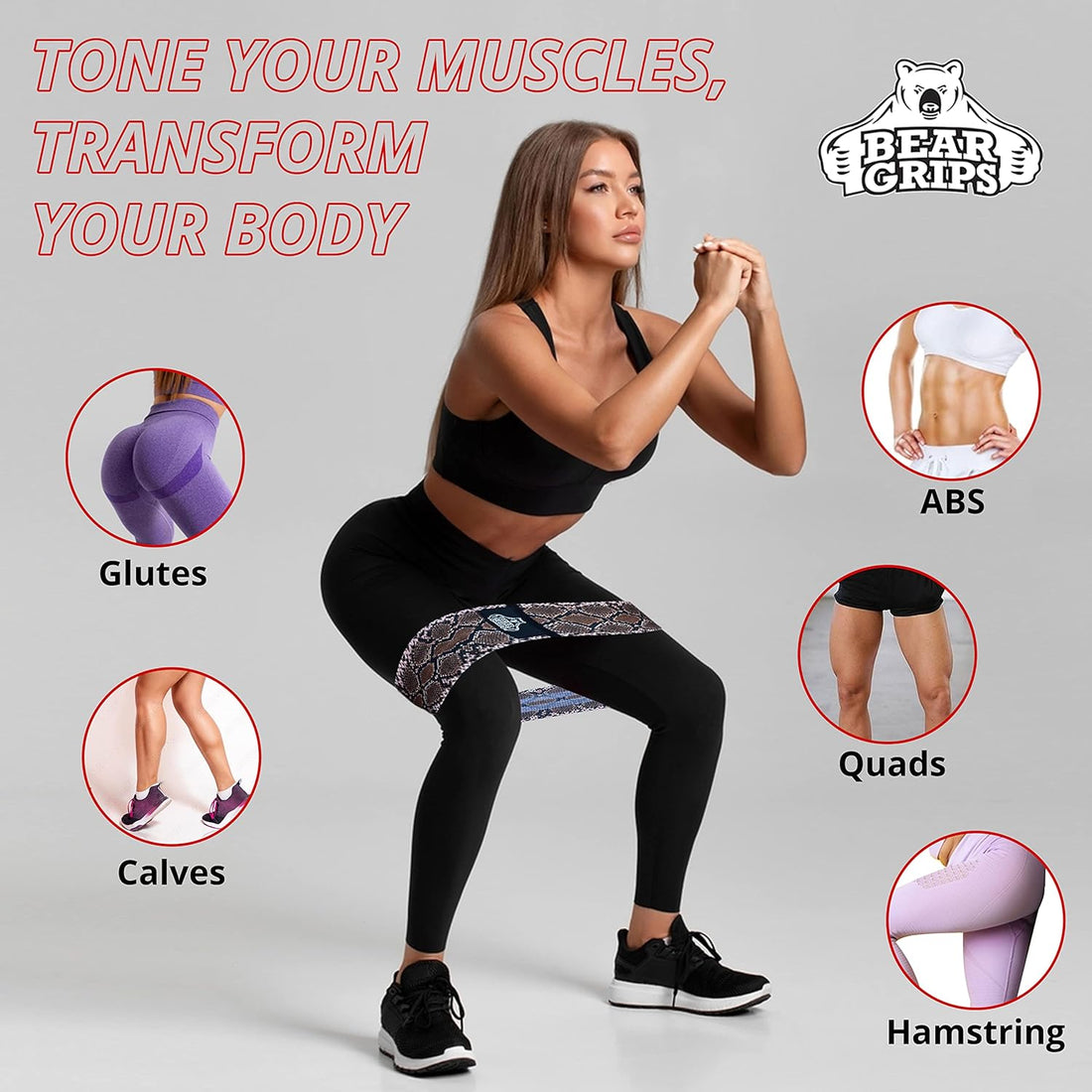
2. Banded Squat
How to do it:
- Stand with feet hip-width apart, band above your knees.
- Squat down, keeping your chest up and knees out.
- Stand back up, pressing knees out against the band.
Tip: The band helps prevent your knees from caving in, a common squat mistake.
3. Lateral Band Walk
How to do it:
- Place the band above your ankles or just below your knees.
- Lower into a half squat, take small steps sideways, keeping tension on the band.
Tip: Keep your core engaged and don’t let your feet touch.
4. Clamshell
How to do it:
- Lie on your side, knees bent, band above your knees.
- Keeping feet together, open your top knee as far as you can.
- Pause, then return to start.
Tip: Do not roll your hips backward; keep your hips stacked.
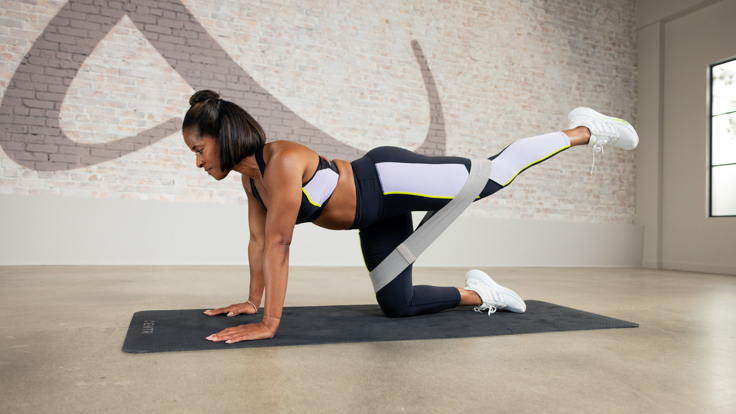
5. Donkey Kick
How to do it:
- Start on all fours, band around your thighs.
- Push one heel up toward the ceiling, squeezing your glute.
- Lower and repeat.
Tip: Keep your back flat and avoid arching.
6. Fire Hydrant
How to do it:
- On all fours, band above your knees.
- Lift one knee out to the side, keeping your hips stable.
- Lower and repeat.
Tip: Move slowly—control is more important than height.
7. Standing Kickback
How to do it:
- Stand, band around ankles.
- Hold onto a wall for support, kick one leg straight back.
- Squeeze your glute, then return.
Tip: Don’t swing your leg—use muscle, not momentum.
8. Single-leg Glute Bridge
How to do it:
- Lie on your back, band above knees, one leg lifted.
- Push through your heel, lift hips, squeeze glute.
- Lower and repeat on the other side.
Tip: Keep your hips level.
9. Banded Step-up
How to do it:
- Place band above knees, stand in front of a bench or sturdy chair.
- Step up, pressing through your heel, drive opposite knee up.
- Step down and repeat.
Tip: Focus on using your glute to lift, not your quad.
10. Seated Abduction
How to do it:
- Sit on a bench or chair, band above knees, feet hip-width.
- Open knees outward against the band, pause, return.
Tip: Great for finishing a workout or activating glutes before squats.
Sample Glute Resistance Band Workout Routine
You don’t need to do every exercise in one session. Here’s a balanced, effective routine for most people. Start with a light warm-up, then follow this circuit.
| Exercise | Sets | Reps | Rest |
|---|---|---|---|
| Glute Bridge | 3 | 15-20 | 30 sec |
| Lateral Band Walk | 3 | 12 steps each way | 30 sec |
| Clamshell | 3 | 15 each side | 30 sec |
| Banded Squat | 3 | 12-15 | 45 sec |
| Standing Kickback | 2 | 15 each leg | 30 sec |
| Seated Abduction | 2 | 20 | 30 sec |
Repeat the circuit 2-3 times, depending on your fitness level. Always focus on slow, controlled movements and proper form, rather than rushing through.
Progressing Your Glute Resistance Band Workout
To see results, you need to challenge your muscles over time. Here’s how to make your workouts harder and keep progressing:
- Increase resistance: Move to a heavier band as you get stronger.
- Add reps or sets: Gradually do more repetitions or add another set.
- Slow down the tempo: Lower more slowly, pause at the top, or use a 3-second lowering phase.
- Try single-leg versions: Exercises like single-leg glute bridge or standing kickback are more challenging.
- Combine movements: For example, add a banded squat at the top of a glute bridge.
Tracking your progress, such as noting how many reps you did or what band you used, helps keep you motivated and ensures you’re moving forward.
Common Mistakes With Glute Bands
Even simple tools like resistance bands can be misused. Watch out for these pitfalls:
- Letting the band snap back: Always control the band both ways. Don’t let it pull your legs together quickly.
- Not keeping tension: Make sure the band stays tight, especially at the top and bottom of each movement.
- Using a band that’s too heavy: If your form suffers, use a lighter band. Quality over quantity.
- Neglecting mind-muscle connection: Think about squeezing your glutes, not just moving your legs.
- Ignoring the glute medius/minimus: Don’t only focus on glute bridges—side steps and abductions are equally important.
How Often Should You Train Glutes With Bands?
Glutes recover quickly and are used often in daily movement. For most people, 2-3 sessions per week with at least one day of rest between is ideal. Beginners can start with two, while advanced users might go up to four shorter sessions. Listen to your body—if you’re very sore, take an extra rest day.
Glute Band Workouts For Different Goals
Everyone’s reason for training glutes is unique. Here’s how to tailor your band workouts:
For Muscle Growth (hypertrophy)
- Use moderate to heavy resistance bands.
- Focus on 8-15 reps per set, slow tempo, and full range of motion.
- Include both compound (squats, bridges) and isolation (abductions, clamshells) movements.
For Strength And Power
- Use heavier bands and fewer reps (6-10).
- Explosive movements like banded jump squats or banded step-ups can build power.
- Focus on pushing through the ground and squeezing glutes at the top.
For Endurance And Toning
- Use lighter bands, higher reps (15-25).
- Shorter rest periods (20-30 seconds).
- Circuit-style workouts with little rest keep the heart rate up.
For Prehab And Injury Recovery
- Focus on activation moves with light bands.
- High-quality movement over intensity.
- Perfect for warming up before running, lifting, or sports.
Credit: centr.com
Glute Resistance Bands Vs. Weights
Many people wonder if bands can replace weights for glute training. Both tools have value, and often the best results come from using both.
| Resistance Bands | Free Weights |
|---|---|
| Constant tension throughout the move | Gravity-based, tension varies |
| Easy on joints, less risk of injury | Can overload muscles for more growth |
| Portable, great for travel/home | Require more space and equipment |
| Great for activation and stability | Best for maximal strength gains |
Pro tip: Many trainers use bands and weights together—such as wrapping a band above the knees during barbell squats—to maximize activation.
Two Non-obvious Insights For Better Glute Band Workouts
- Warm up with bands before heavy lifting: Even if you’re planning a heavy squat or deadlift day, using resistance bands for activation first “wakes up” the glutes, leading to better performance and fewer injuries.
- Use bands for “burnout” finishers: After your main workout, do 1-2 sets of high-rep banded glute moves (like abductions or bridges) to fully exhaust the muscle. This can help with muscle growth and endurance.

Credit: www.bibliotecaoscura.com
Practical Tips For Glute Band Success
- Check your bands often: Look for tears or weak spots, especially on latex bands.
- Stay consistent: Results come from regular training, not one hard session.
- Don’t rush: Quality reps with good form are more effective than fast, sloppy sets.
- Mix it up: Change your routine every 4-6 weeks to keep making progress and avoid boredom.
- Use bands for stretching too: Bands aren’t just for strength—they help with mobility work for hips and glutes.
How To Avoid Plateaus
It’s common to stop seeing progress after a few weeks. To avoid plateaus:
- Switch up exercises or the order you do them.
- Try new band positions (ankles vs. knees).
- Increase resistance or add more sets.
- Focus on eccentric (lowering) phase—count to three as you lower your hips in a bridge.
Keeping a workout log can help you see where you need to make changes.
Credit: www.beargrips.com
Safety And Injury Prevention
Resistance bands are safer than heavy weights, but you still need to use good technique:
- Keep your knees tracking over your toes during squats and bridges.
- Don’t let the band pull your joints out of alignment.
- Start with light resistance if you’re recovering from injury.
- If you feel sharp pain (not normal muscle burn), stop immediately.
Bands can snap if overstretched or old, so replace them when needed.
Combining Glute Bands With Other Training
You don’t have to choose between bands and other equipment. Try:
- Using bands as a warm-up before barbell squats or deadlifts.
- Adding a band to bodyweight exercises for extra challenge.
- Including bands in HIIT or circuit training for variety.
This mix keeps your workouts fresh and helps target the glutes from different angles.
Who Should Use Glute Resistance Bands?
Beginners: Learn good form and build a base of strength safely.
Experienced lifters: Break through plateaus and activate underused glute muscles.
People with joint issues: Bands are low-impact and joint-friendly.
Travelers or busy people: Bands fit in a suitcase or bag and allow full workouts anywhere.
Athletes: Improve hip stability, running speed, and jumping power.
Where To Buy Quality Glute Bands
Not all bands are equal. Look for:
- Strong stitching and high-quality materials.
- Multiple resistance levels in a set.
- Good grip (especially for hip bands).
- Brand reputation and user reviews.
Popular brands include Booty Bands, Perform Better, and Mark Bell’s Sling Shot. Always check for warranties or satisfaction guarantees.
For more guidance on choosing the right band for your needs, check reputable fitness resources like Healthline.
Frequently Asked Questions
How Long Does It Take To See Results From Glute Resistance Band Workouts?
Most people begin to notice more muscle tone and strength within 4-6 weeks if they train consistently, at least 2-3 times per week. Visible shape changes can take a bit longer, depending on your starting point, diet, and genetics.
Can Resistance Bands Really Grow My Glutes, Or Do I Need Weights?
Yes, resistance bands can build and shape your glutes effectively, especially for beginners and intermediate users. Bands provide enough resistance to stimulate muscle growth and are excellent for muscle activation. For maximum size or advanced strength, combining bands with weights is ideal.
How Do I Know If I’m Activating My Glutes Properly With Bands?
You should feel a strong “burn” or muscle contraction in your glutes during and after each set. If you feel the work mostly in your thighs or lower back, adjust your form—push your knees out against the band, squeeze your glutes at the top, and slow down your movements.
Is It Safe To Use Bands Every Day For Glute Training?
While bands are low-impact, your muscles still need time to recover and grow. Training glutes 2-4 times per week is best for most people. Daily training can lead to overuse injuries or burnout, so always listen to your body.
Do I Need To Change Bands As I Get Stronger?
Yes, as you get stronger, you’ll need to progress to heavier resistance bands or more challenging exercises to keep seeing results. Many band sets come with several resistance levels, so you can easily swap as needed.
A well-planned glute resistance bands workout can help you shape, strengthen, and protect your lower body. With a small investment in bands and consistent effort, you’ll enjoy better movement, improved confidence, and stronger glutes—wherever you choose to train.
