

Glute Lift Workout: Transform Your Glutes With These Top Moves
Glute Lift Workout: The Complete Guide To Stronger, Rounder Glutes
A strong, lifted backside isn’t just about looks—it’s a sign of power, balance, and healthy movement. Many people chase the “glute lift” for confidence in jeans or swimsuits, but the benefits go much deeper. Your glutes, made up of three main muscles, are key to daily movement, athletic performance, and injury prevention.
If you want to walk taller, run faster, or simply feel stronger, focusing on your glutes pays off.
But not all glute workouts are created equal. Some routines target only surface muscles, leaving the deep muscles weak. Others promise fast results but ignore good form, leading to frustration or injury. In this guide, you’ll discover how to build a complete glute lift workout—one that sculpts, strengthens, and protects your body for the long run.
Let’s break down what makes a glute workout truly effective, how to avoid common mistakes, and the best exercises and routines for every level. You’ll also find tips for better results, sample plans, and answers to questions most beginners have.
Understanding Your Glutes
Before jumping into exercises, it’s smart to know what you’re working. The glutes are not just one big muscle. They include:
- Gluteus maximus: The largest muscle, responsible for hip extension (moving your leg behind you) and much of your butt’s shape.
- Gluteus medius: Found on the side of your hip, this muscle helps with leg movement to the side and stabilizes your pelvis.
- Gluteus minimus: A smaller muscle under the medius, it also helps control hip movement and stability.
Strong glutes do more than turn heads. They support your lower back, help your knees track properly, and power movements like standing, climbing, or jumping. Weak glutes can lead to back pain, poor posture, and even injuries in your knees or ankles.
Why A Glute Lift Workout Matters
Many people focus on glutes for a rounder or firmer look. That’s fine—but the real value is function. Here’s why a glute lift workout is essential for nearly everyone:
- Improved posture: Glutes stabilize your hips and spine, helping you stand tall.
- Lower injury risk: Strong glutes take pressure off your back and knees.
- Better athletic performance: Running, jumping, and lifting all rely on glute power.
- Everyday strength: From standing up to climbing stairs, glutes are always working.
- Confidence boost: Building glutes can improve body image and how clothes fit.
Key Principles Of An Effective Glute Lift Workout
Not all glute workouts bring real results. For a true lift and strength, keep these principles in mind:
1. Train All Parts Of The Glutes
Good routines target the maximus, medius, and minimus. This means using different moves, not just squats.
2. Use Both Heavy And Light Loads
Heavy lifts build strength and shape, while lighter, higher-rep moves add endurance and detail. Combining both works best.
3. Include Hip Extension, Abduction, And Rotation
Don’t just squat. Use exercises that move your leg behind (hip extension), to the side (abduction), and rotate the hip.
4. Focus On Form, Not Just Weight
Proper technique targets the right muscles and avoids injuries. Quality is always more important than quantity.
5. Progressive Overload
To keep seeing results, you must slowly increase the challenge. This could mean adding weight, reps, or sets as you get stronger.
The Best Glute Lift Exercises
Let’s dive into the top exercises for a lifted, round, and powerful backside. Each one has a unique benefit. Mix and match for a complete workout.
1. Hip Thrust
This is a glute-building favorite. Sit on the ground with your upper back against a bench, roll a barbell over your hips, and thrust your hips toward the ceiling. Pause, squeeze your glutes, and lower.
- Targets: Gluteus maximus
- Tip: Keep your chin tucked and core tight. Don’t over-arch your back.
2. Glute Bridge
Similar to the hip thrust, but your upper back stays on the ground. Push through your heels to lift your hips, pause, and lower.
- Targets: Gluteus maximus, medius
- Tip: For more challenge, try single-leg glute bridges.
3. Bulgarian Split Squat
Stand a few feet from a bench, place one foot behind you on the bench, and squat down on your front leg. This move fires up glutes and legs.
- Targets: Gluteus maximus, medius, quads
- Tip: Lean your torso slightly forward for more glute activation.
4. Romanian Deadlift (rdl)
Hold weights in front of your thighs, hinge at your hips (not your waist), push your hips back, and lower the weights down your legs. Stand back up, squeezing your glutes.
- Targets: Gluteus maximus, hamstrings
- Tip: Keep a soft bend in your knees and a straight back.
5. Cable Kickback
Attach an ankle strap to a low cable, stand facing the machine, and kick your leg straight back. Focus on squeezing your glute at the top.
- Targets: Gluteus maximus
- Tip: Go slow and control the movement.
6. Lateral Band Walk
Place a resistance band above your knees, squat slightly, and step side-to-side. This wakes up the side glutes.
- Targets: Gluteus medius, minimus
- Tip: Don’t let your knees cave in as you step.
7. Clamshell
Lie on your side, knees bent, band above your knees. Lift your top knee while keeping your feet together, then lower.
- Targets: Gluteus medius, minimus
- Tip: Move slowly to feel the side of your hip working.
8. Step Up
Step onto a box or bench, driving through your heel and squeezing your glute at the top. Step down and repeat.
- Targets: Gluteus maximus, medius, quads
- Tip: Don’t push off the trailing leg—let the working leg do the job.
9. Curtsy Lunge
Step one leg behind and across your body, lowering into a lunge. This move works the glute from a different angle.
- Targets: Gluteus medius, maximus
- Tip: Keep your chest up and don’t twist your knee.
10. Frog Pump
Lie on your back, feet together and knees out wide. Push through your heels and lift your hips, squeezing the glutes.
- Targets: Gluteus maximus
- Tip: Short, powerful reps work best here.
Sample Glute Lift Workout Routines
Now, let’s put those exercises into real routines. Here are sample plans for beginners, intermediates, and advanced lifters. Adjust the weights and reps to fit your level.
Beginner Glute Lift Workout
- Glute Bridge – 3 sets x 12 reps
- Lateral Band Walk – 3 sets x 15 steps each way
- Step Up – 3 sets x 10 reps each leg
Rest: 60 seconds between sets
Frequency: 2 times per week
Intermediate Glute Lift Workout
- Hip Thrust – 4 sets x 10 reps
- Bulgarian Split Squat – 3 sets x 8 reps each leg
- Clamshell – 3 sets x 15 reps each side
- Romanian Deadlift – 3 sets x 10 reps
Rest: 60–90 seconds between sets
Frequency: 2–3 times per week
Advanced Glute Lift Workout
- Barbell Hip Thrust – 5 sets x 8 reps (heavy)
- Romanian Deadlift – 4 sets x 10 reps
- Cable Kickback – 3 sets x 12 reps each leg
- Lateral Band Walk – 4 sets x 20 steps each way
- Curtsy Lunge – 3 sets x 10 reps each leg
Rest: 90 seconds between heavy sets, 60 seconds for others
Frequency: 3 times per week
Sample Weekly Training Split
Many people ask: “How often should I train glutes?” Here’s a basic weekly plan:
- Day 1: Glute workout (heavy hip thrusts, RDLs, lateral band walks)
- Day 2: Rest or upper body training
- Day 3: Glute workout (bulgarian split squats, clamshells, step ups)
- Day 4: Rest or core/cardio
- Day 5: Glute workout (mix of previous exercises)
- Days 6–7: Rest or light activity
You don’t need to train glutes every day. Quality and recovery matter more than quantity.
Comparing Glute Exercises: Activation And Difficulty
Some exercises work your glutes harder than others. Here’s a quick comparison of activation levels and difficulty, based on research and experience:
| Exercise | Glute Activation | Difficulty Level |
|---|---|---|
| Hip Thrust | Very High | Intermediate-Advanced |
| Glute Bridge | High | Beginner |
| Bulgarian Split Squat | High | Intermediate |
| Romanian Deadlift | High | Intermediate |
| Lateral Band Walk | Moderate | Beginner |
| Cable Kickback | Moderate-High | Intermediate |
| Clamshell | Moderate | Beginner |
| Curtsy Lunge | Moderate-High | Intermediate |
| Step Up | High | Beginner-Intermediate |
| Frog Pump | High | Beginner |
Insight: Many people stick to squats alone, but hip thrusts and split squats often activate glutes more. Don’t just go by how “hard” an exercise feels—some of the best glute moves don’t feel painful but give great results.
Common Mistakes In Glute Lift Workouts
Even with the right exercises, simple mistakes can stall your progress. Avoid these common errors:
1. Not Using Enough Weight
To build muscle, you must challenge your glutes. Light weights and high reps are fine for endurance, but you also need heavier sets (with good form) for muscle growth.
2. Poor Form
Rushing through reps, arching your back, or letting knees cave in can take the work off your glutes and put it on your back or legs.
Tip: Film yourself or ask a trainer to check your form.
3. Skipping Activation
If you sit a lot, your glutes may “turn off. ” Warm up with band walks, bridges, or clamshells to “wake up” your glutes before heavy lifts.
4. Not Varying Exercises
Your body adapts. Doing the same moves every week limits progress. Change exercises, foot positions, or resistance every few weeks.
5. Ignoring Recovery
Muscles grow when you rest. Training glutes every day can lead to fatigue and slow gains.
How To Progress Your Glute Workouts
Many people get stuck doing the same routine and wonder why their glutes aren’t growing. Here’s how to keep improving:
1. Add Weight
If you’re using bodyweight, add resistance bands, dumbbells, or barbells as you get stronger.
2. Increase Reps Or Sets
Don’t jump to heavy weights too soon. Try adding more reps or another set first.
3. Slow Down
Slower reps (especially lowering the weight) can make exercises harder without more weight.
4. Use Advanced Variations
Try single-leg versions, pause reps, or band-resisted moves for a new challenge.
5. Track Your Progress
Write down your sets, reps, and weights. Aim to improve something every week, even if it’s just one more rep.
Credit: www.youtube.com
Nutrition For Glute Growth And Recovery
Building muscle isn’t just about lifting. Your body needs fuel to grow and recover. Here are key nutrition tips for glute development:
- Protein: Aim for about 1.6–2.2 grams per kilogram of body weight. Good sources include chicken, fish, eggs, Greek yogurt, and beans.
- Carbohydrates: Give you energy for tough workouts. Choose whole grains, fruits, and vegetables.
- Healthy fats: Support hormone health. Include nuts, olive oil, and avocado.
- Hydration: Muscles work best when you’re well hydrated. Drink water throughout the day.
- Post-workout meals: Try to eat a mix of protein and carbs within two hours after training.
Insight: Many people under-eat, slowing their muscle growth. If you want a bigger lift, you may need to eat slightly more than you burn.
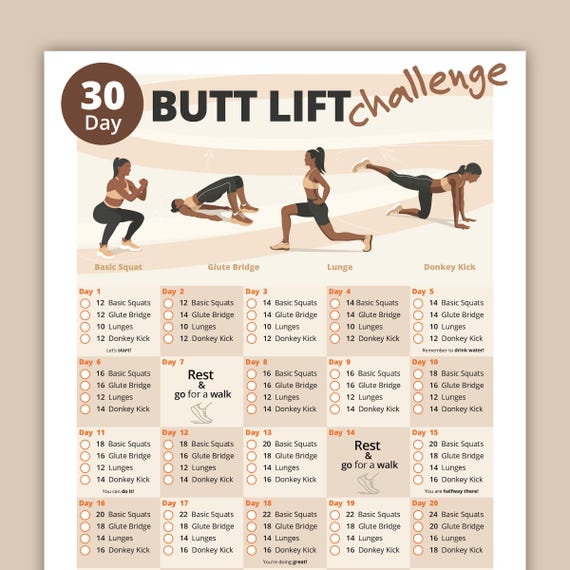
Glute Lift Workout For Home (no Equipment)
No gym? No problem. You can still get a great glute lift at home with just your body and maybe a resistance band.
- Glute Bridge – 4 sets x 15 reps
- Single-Leg Glute Bridge – 3 sets x 10 reps each side
- Lateral Band Walk (if you have a band) – 3 sets x 20 steps
- Frog Pump – 3 sets x 20 reps
- Curtsy Lunge – 3 sets x 12 reps each side
Rest 30–45 seconds between sets. For more intensity, slow down the lowering phase, add pauses, or do more reps.
Pro Tip: Use a backpack with books for extra weight on bridges or step-ups.
Credit: www.etsy.com
Glute Activation Vs. Glute Strength: What’s The Difference?
Many beginners confuse “activation” and “strength. ” Activation means waking up the muscle—making sure it’s firing when you move. Strength means being able to produce force. Both matter for a lifted, firm glute.
- Activation drills: Band walks, clamshells, glute bridges (bodyweight)
- Strength exercises: Hip thrusts (heavy), Romanian deadlifts, split squats
Insight: If your glutes are hard to “feel,” spend 5–10 minutes on activation drills before your main workout.
How Long To See Results From A Glute Lift Workout
Most people want to see a rounder, firmer glute as soon as possible. But real changes take consistency. Here’s a simple timeline:
| Timeframe | What to Expect |
|---|---|
| 2–4 weeks | Better mind-muscle connection, less soreness, improved form |
| 6–8 weeks | Noticeable firmness, slight lift, clothes fit better |
| 3–6 months | Visible size and shape changes, stronger lifts |
| 6+ months | Major transformation, more confidence, better athletic performance |
Everyone is different. Genetics, diet, and starting point all play a role. Stay patient and focus on consistent effort.
Glute Lift Workout Myths And Truths
There’s a lot of hype and misinformation around glute training. Let’s clear up a few big myths:
- Myth: Squats are enough for a glute lift
*Truth*: Squats are good, but they mainly hit your quads and only part of your glutes. Hip thrusts and split squats are often better for a true lift.
- Myth: You need fancy machines
*Truth*: Bodyweight and bands can be very effective, especially for beginners.
- Myth: High reps are better for glutes
*Truth*: Both high and low reps have value. For building size and shape, you need both heavy sets (6–12 reps) and lighter, higher-rep sets (15–20+).
- Myth: You can “spot reduce” fat from your glutes
*Truth*: You can’t pick where you lose fat. Focus on building muscle, and fat loss will come from overall calorie balance.
- Myth: Glute training is only for women
*Truth*: Strong glutes help everyone—men and women—run faster, lift more, and avoid injuries.
Advanced Glute Lift Techniques
If you’ve hit a plateau, try these advanced methods:
1. Contralateral Loading
Hold weight in the opposite hand from your working leg during split squats or step-ups. This increases glute activation and core work.
2. Paused Reps
Hold the top of a hip thrust or bridge for 2–3 seconds before lowering. This increases time under tension for muscle growth.
3. Drop Sets
After your last set, drop the weight and do more reps to failure. This burns out the glute for more growth.
4. Banded Hip Thrusts
Place a resistance band just above your knees during hip thrusts. The band forces your glutes to work harder to keep your knees out.
5. Unilateral Training
Single-leg exercises reveal and fix left-right imbalances, making your glutes more symmetrical and strong.
Pro Tip: Don’t add every advanced technique at once. Pick one and use it for 3–4 weeks before changing.
How To Combine Cardio With A Glute Lift Workout
Many worry that cardio will “eat away” muscle or slow glute growth. The truth? You can do both—if you’re smart.
- Low-impact cardio (walking, cycling) is fine on rest days.
- HIIT (high-intensity interval training) can boost fat loss and athleticism. Include sprints, uphill walking, or sled pushes for a glute burn.
- Don’t overdo cardio if you want to build glutes. Too much can slow muscle growth if you’re not eating enough.
Insight: Add 2–3 cardio sessions per week, 20–30 minutes each, separate from heavy glute days if possible.
Stretching And Mobility For Glute Health
Tight hips, hamstrings, or quads can limit glute results. Regular stretching helps your muscles work better and reduces injury risk.
- Hip flexor stretch: Kneel, tilt your pelvis under, and stretch the front of your hip.
- Pigeon pose: Sit with one leg bent in front, other leg behind, and fold forward to stretch the glute.
- Hamstring stretch: Sit with one leg out, reach for your toes.
Spend 5–10 minutes after your workout on these stretches.
Pro Tip: If you struggle to “feel” your glutes, stretching your hip flexors before training can help your glutes fire better.
Tracking Your Glute Progress
You can’t improve what you don’t measure. Here are smart ways to track your glute lift journey:
- Photos: Take pictures from the side and back every 4–6 weeks.
- Measurements: Use a tape measure around the fullest part of your glutes.
- Strength goals: Track how much you lift on hip thrusts, split squats, or RDLs.
- Clothing fit: Notice changes in how your jeans or shorts fit.
Insight: The scale may not change much as you build muscle and lose fat. Trust the mirror, measurements, and your strength.
Finding Reliable Glute Training Resources
With so much information online, it’s easy to get confused. Stick to trusted sources: certified trainers, physical therapists, or respected fitness organizations. For more research-backed advice, check the National Institutes of Health.
Credit: www.youtube.com
Frequently Asked Questions
How Often Should I Do A Glute Lift Workout?
For most people, 2–3 sessions per week is enough. This gives your muscles time to recover and grow. More frequent training can help advanced lifters, but only if each session is high quality and you’re recovering well.
Can I Do A Glute Lift Workout At Home Without Equipment?
Yes. Bodyweight moves like glute bridges, step-ups, and curtsy lunges are effective. Adding resistance bands or household items (a backpack with books) can make workouts harder. Focus on good form and higher reps if you don’t have heavy weights.
Why Don’t I Feel My Glutes Working During Workouts?
This is common, especially if you sit a lot. Try glute activation drills (band walks, clamshells) before your main workout. Make sure you’re pushing through your heels, not your toes, on most exercises. Slow down and focus on squeezing your glutes at the top of each rep.
How Long Does It Take To See A Glute Lift?
Visible changes often start in 6–8 weeks with consistent training and good nutrition. You’ll notice better strength and firmness first. Big shape changes can take 3–6 months or more, depending on your body and effort.
What’s The Best Exercise For A Glute Lift?
Hip thrusts are often rated best for overall glute activation and shape. But no single exercise is enough. A mix of hip thrusts, split squats, and lateral band walks will give the best results.
Building a stronger, rounder glute isn’t magic—but it’s possible for anyone with the right plan and patience. Train smart, focus on good form, challenge yourself, and stay consistent. Your glutes will thank you—not just with a better look, but with more power, balance, and confidence every day.
