

Glute Bands Workout: Sculpt Stronger Glutes Fast
Glute Bands Workout: The Complete Guide To Stronger, Sculpted Glutes
Building strong, shapely glutes is not just about appearance—it’s about power, balance, and whole-body strength. Whether you want to improve your athletic performance, relieve back pain, or simply enhance your daily movement, glute bands (also called resistance bands or booty bands) are an effective, affordable tool for everyone. These simple loops of elastic can make your workouts more challenging, boost your results, and add variety to your routine. Yet, many people don’t realize how much a small band can do.
In this guide, you’ll learn how glute bands work, the best exercises for every skill level, sample routines, and expert tips to maximize your glute training. You’ll also find clear answers to common questions about safety, effectiveness, and technique. By the end, you’ll know exactly how to start and progress your own glute bands workout for real results.
What Are Glute Bands And Why Use Them?
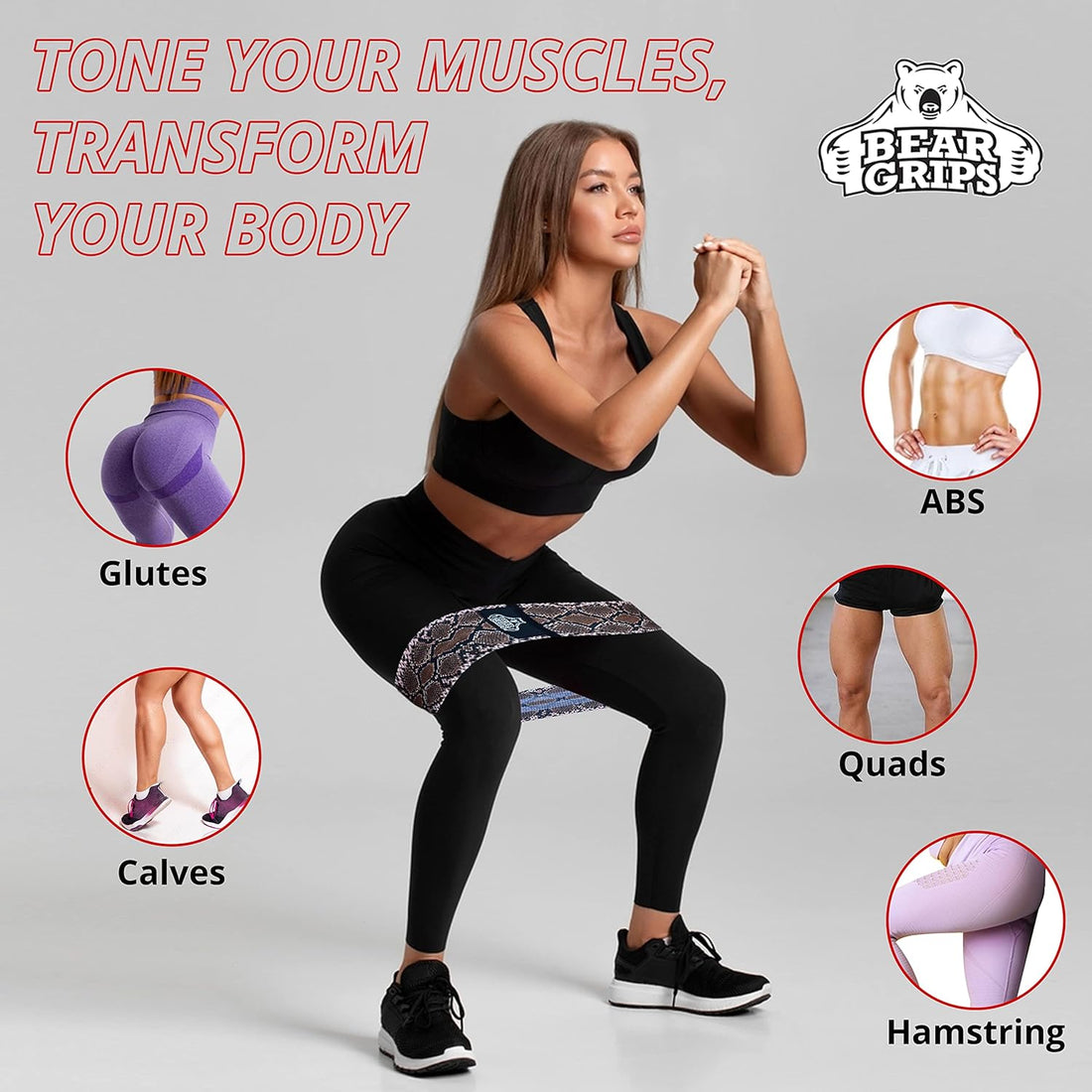
Glute bands are strong, looped bands made from fabric, latex, or rubber. They come in different resistance levels, from light to extra-heavy. When placed around your thighs, knees, or ankles, they add resistance to lower body exercises. This forces your glute muscles to work harder, activating more muscle fibers and increasing strength.
Unique Benefits Of Glute Bands
- Enhanced Muscle Activation: Studies show that adding a resistance band to exercises like squats or bridges increases glute activation by up to 40%. This means better results in less time.
- Joint-Friendly: Bands provide tension without heavy weights, making them safer for knees and hips. They are ideal for people who want to avoid high-impact workouts.
- Portable and Versatile: You can take a glute band anywhere—home, gym, office, or travel. They fit easily in a bag and can be used for dozens of exercises.
- Progressive Overload: With multiple resistance levels, you can increase the challenge as you get stronger, just like adding weights.
- Corrects Imbalances: Bands help fix muscle imbalances and improve hip stability, which is vital for athletes and anyone who sits a lot.
Non-obvious insight: Many beginners overlook the value of using bands for *warm-ups*. Activating glutes with bands before lifting weights can prevent injuries and improve performance.
Choosing The Right Glute Band
There are many types and strengths of glute bands. Picking the right one depends on your goals, comfort, and exercise style.
Band Material And Construction
- Fabric Bands: Usually wider and more comfortable, they don’t roll or pinch skin. Best for stationary exercises like squats and bridges.
- Latex/Rubber Bands: More elastic and lighter, but can roll up and may cause skin irritation. Better for dynamic exercises like side steps.
- Hybrid Bands: Combine fabric with rubber lining for grip and durability.
Resistance Levels
Most brands color-code their bands. Typical resistance levels:
- Light (10–20 lbs)
- Medium (20–30 lbs)
- Heavy (30–40 lbs)
- Extra Heavy (40+ lbs)
Beginners should start with light or medium. As you get stronger, move to heavier bands.
Size And Fit
Bands come in different lengths. Most adults do well with a band 12–15 inches in diameter. If a band feels too tight or loose, try another size.
Common beginner mistake: Picking the heaviest band. This often leads to poor form and less muscle activation. Start lighter and focus on quality movement.
Comparing Band Types
Here’s a quick comparison:
| Type | Comfort | Best For | Price |
|---|---|---|---|
| Fabric | High | Squats, bridges | $$ |
| Latex/Rubber | Medium | Dynamic moves | $ |
| Hybrid | High | All exercises | $$$ |
How Glute Bands Build Stronger Glutes
The glutes are made up of three main muscles: gluteus maximus, medius, and minimus. Together, they stabilize your hips, power your legs, and shape your lower body. But daily life, sitting, and poor posture can make these muscles weak or inactive.
Glute bands target all three muscles by adding sideways and outward resistance. This is called *lateral* and *abduction* movement. When you step, squat, or bridge with a band, your glutes must work harder to push against the band. This recruits more muscle fibers, especially in the gluteus medius (the side of your hips), which is often underdeveloped.
Real-world Example
Many runners and athletes use glute bands to prevent knee pain and injuries. Stronger glutes mean better alignment, faster sprinting, and safer landings.
Non-obvious insight: You’ll feel a “burn” in your side glutes (medius/minimus) with bands in a way you won’t with bodyweight alone. This burn means you’re hitting muscles that are often missed in regular workouts.
Essential Glute Band Exercises
Let’s dive into the most effective exercises for activating your glutes with bands. Each move has unique benefits, and together they target your entire glute area.
1. Glute Bridge With Band
- Place the band above your knees, lie on your back, feet flat on the floor.
- Push your knees outward as you lift your hips up.
- Squeeze your glutes at the top, then lower slowly.
Targets: Gluteus maximus, medius.
Tip: Don’t let your knees cave in. Keep tension on the band throughout.
2. Banded Squat
- Stand with feet hip-width apart, band above knees.
- Squat down, pushing your hips back, chest up.
- Drive knees out against the band.
Targets: Entire glute, quads.
Tip: Go as low as you can with good form.
3. Lateral Band Walk
- Band above ankles or knees, stand slightly squatted.
- Step sideways, keeping tension on the band.
- Move 10–15 steps in one direction, then switch.
Targets: Gluteus medius, minimus.
Tip: Keep hips level. Don’t let your upper body lean.
4. Clamshell
- Lie on your side, knees bent, band above knees.
- Open your top knee while feet stay together.
- Lower with control.
Targets: Side glutes, hip rotators.
Tip: Don’t roll your hips back—keep core braced.
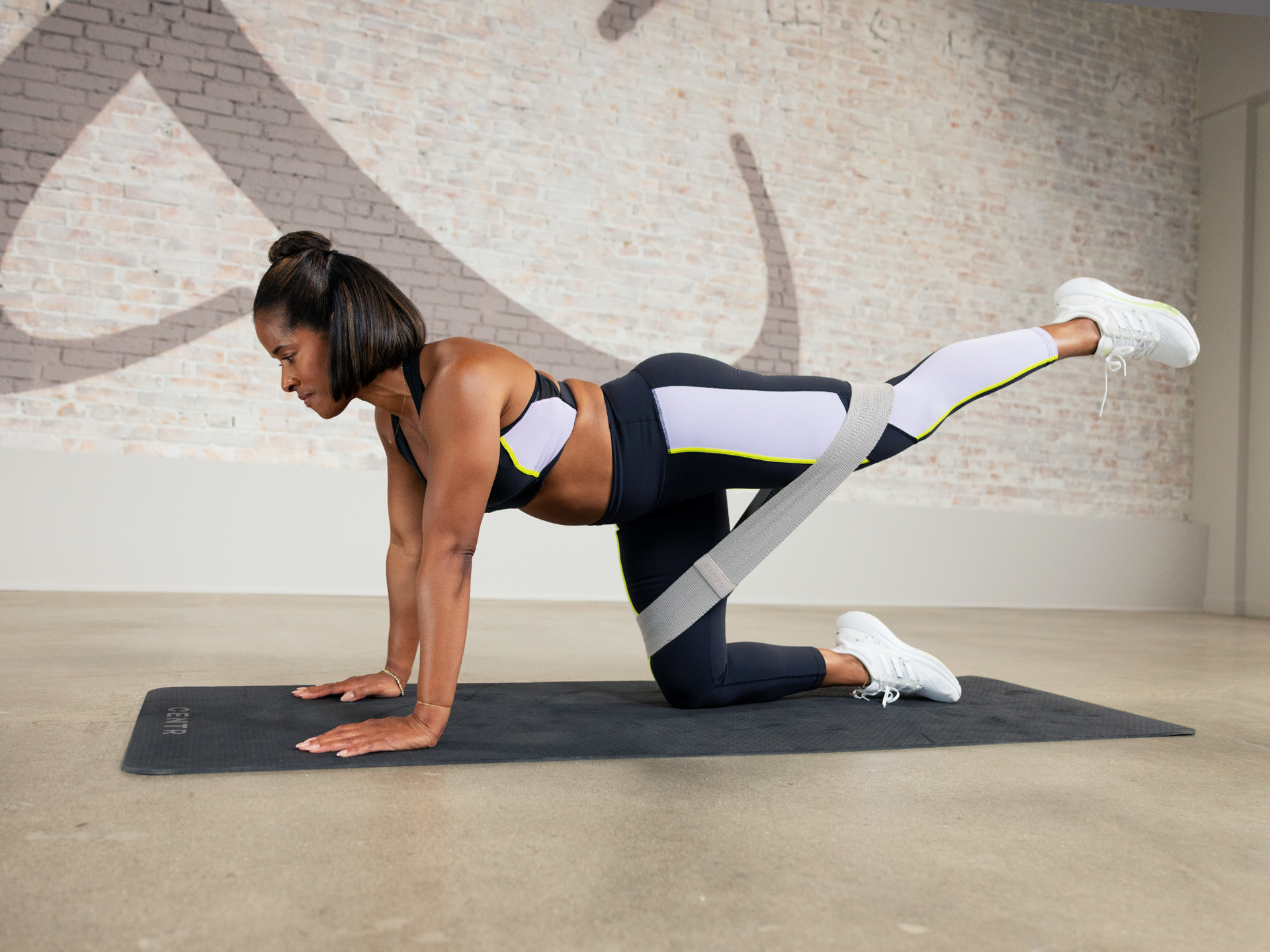
5. Donkey Kick
- On hands and knees, band around thighs.
- Kick one leg up and back, squeezing glute.
- Lower and repeat.
Targets: Gluteus maximus.
Tip: Avoid arching your lower back.
6. Standing Kickback
- Stand, band above ankles.
- Kick one leg straight back without leaning forward.
- Control the return.
Targets: Gluteus maximus, hamstrings.
Tip: Hold onto a wall for balance if needed.
7. Fire Hydrant
- On hands and knees, band above knees.
- Lift one knee out to the side.
- Pause, then lower.
Targets: Gluteus medius, minimus.
Tip: Keep hips square to the floor.
8. Curtsy Lunge With Band
- Stand, band above knees.
- Step one leg behind and across, lowering into a lunge.
- Push through the front heel to return.
Targets: All glute muscles, inner thighs.
Tip: Maintain tension on the band throughout.
9. Monster Walk
- Band above ankles, squat slightly.
- Step forward and out diagonally.
- Alternate sides for 10–20 steps.
Targets: Gluteus medius, hip stabilizers.
Tip: Stay low to keep tension.
10. Single-leg Glute Bridge
- Band above knees, one foot on the floor, one leg lifted.
- Lift hips up, driving through the grounded heel.
- Keep knee pushed out against the band.
Targets: Gluteus maximus, medius.
Tip: Don’t twist your hips.
Movement Comparison: Activation Levels
To see how much each move activates your glutes, here’s a helpful summary:
| Exercise | Gluteus Maximus | Gluteus Medius | Difficulty |
|---|---|---|---|
| Bridge | High | Medium | Easy |
| Banded Squat | Medium | High | Easy-Medium |
| Lateral Walk | Low | High | Medium |
| Donkey Kick | High | Low | Medium |
| Clamshell | Low | High | Easy |
Sample Glute Bands Workout Routines
You can design many routines using glute bands. Here are three sample workouts for different goals and fitness levels.
Beginner Glute Band Circuit
Repeat 2–3 rounds. Rest 60 seconds between rounds.
- Glute Bridge with Band – 15 reps
- Clamshell – 12 reps each side
- Banded Squat – 15 reps
- Fire Hydrant – 12 reps each side
- Standing Kickback – 12 reps each side
Why this works: Focuses on learning form and activating all glute muscles without overloading.
Intermediate Lower Body Burner
Repeat 3 rounds. Rest 45 seconds between moves.
- Monster Walk – 20 steps
- Curtsy Lunge with Band – 12 reps each side
- Single-Leg Glute Bridge – 10 reps each side
- Lateral Band Walk – 15 steps each side
- Donkey Kick – 15 reps each side
Why this works: Adds single-leg moves and more dynamic steps for increased challenge.
Advanced Glute And Leg Power
Repeat 3–4 rounds. Rest 30 seconds only.
- Banded Squat Jump – 12 reps
- Bulgarian Split Squat with Band – 10 reps each side
- Lateral Band Walk – 20 steps
- Single-Leg Glute Bridge Hold (5 seconds) – 8 reps each side
- Curtsy Lunge Pulse (band tension at bottom) – 10 reps each side
Why this works: Combines explosive, isometric, and high-rep work for maximum muscle fatigue.
Note: If you feel your lower back during any move, check your form. Glutes should do the work.
How To Progress With Glute Bands
To keep seeing results, you need to make your workouts harder over time. This is called progressive overload.
Ways To Progress
- Increase band resistance: Move from a light to a medium or heavy band.
- Add more reps or sets: Start with 2 sets and build up to 4.
- Slow down the tempo: Lower for 3 seconds, hold at the top for 2 seconds.
- Combine moves: Do a banded squat, then immediately a lateral walk.
- Reduce rest: Shorten your rest periods between sets.
Tracking Progress
Keep a simple log:
- Which band you used (color/strength)
- Number of reps and sets
- How the exercise felt
Over time, you’ll see if you’re getting stronger, need a heavier band, or can add more reps.
Beginner tip: Do not switch to a heavier band too soon. If you can’t keep tension on the band or lose form, stick with your current level.
Common Mistakes To Avoid
Even simple exercises can go wrong if you’re not careful. Avoid these frequent errors:
- Letting Knees Cave In: Always drive knees outward against the band. Caving in reduces glute activation and can stress your knees.
- Using Too Much Band Resistance: If you can’t perform the move with control, the band is too strong.
- Rushing Reps: Fast, sloppy movements use momentum, not muscle. Slow down for maximum results.
- Neglecting Warm-Up: Band work is safer after a short dynamic warm-up—5 minutes of light cardio or mobility.
- Ignoring Pain: You should feel muscle fatigue, not joint pain. If an exercise hurts your knees or hips, adjust your form or try a lighter band.
- Doing Only One Type of Move: Mix up squats, bridges, side steps, and lunges to hit all glute areas.
Pro insight: Using a mirror or filming yourself can reveal technique problems you might not feel.
Glute Band Workouts For Different Goals
For Muscle Growth (hypertrophy)
- Use heavier bands, higher reps (12–20), and slow, controlled motions.
- Add isometric holds at the peak of each rep (hold for 2–3 seconds).
- Train 2–3 times per week, giving muscles time to recover.
For Strength And Athletic Performance
- Mix heavier bands with explosive moves (banded squat jumps).
- Include single-leg exercises to improve balance and coordination.
- Use fewer reps (6–12) with harder bands.
For Fat Loss And Toning
- Use circuits with minimal rest for higher heart rate.
- Add banded exercises to your cardio days.
- Combine upper and lower body moves for full-body calorie burn.
Example: 30 seconds of banded squats, 30 seconds rest, 30 seconds mountain climbers, repeat.
For Injury Prevention And Rehab
- Focus on form, activation, and light resistance.
- Do more reps (15–20), but keep the band light.
- Use as part of warm-up before running, sports, or lifting.
Important: Always check with a physical therapist if recovering from injury.
Integrating Glute Band Workouts Into Your Routine
Glute bands are flexible tools. You can use them as:
- Warm-up: 1–2 sets of lateral walks or bridges before lifting.
- Main workout: Full circuit of 5–8 banded exercises, 2–4 times per week.
- Finisher: After your main workout, do 2 sets of clamshells or monster walks for burnout.
- Active recovery: Use light band work on rest days for blood flow and mobility.
Pro tip: Glute bands pair well with other equipment. Try adding them to barbell squats, lunges, or deadlifts for extra challenge.
Safety, Form, And Injury Prevention
Correct technique is more important than heavy resistance. Here’s how to stay safe:
- Band placement: For most moves, place the band above your knees. For more advanced work, move to ankles or feet.
- Posture: Keep your chest up, spine neutral, and core engaged.
- Range of motion: Only go as low or high as you can keep good form.
- Listen to your body: Stop if you feel sharp pain, numbness, or joint discomfort.
Safety Comparison: Bands Vs. Weights
| Factor | Glute Bands | Free Weights |
|---|---|---|
| Joint Stress | Low | Medium-High |
| Injury Risk | Low | High (if poor form) |
| Portability | Very High | Low |
| Space Needed | Small | Large |
Non-obvious insight: Glute bands can be used for mobility work and stretching, not just strength. This keeps your hips healthy and glutes active even on rest days.
Advanced Techniques For Experienced Users
If you’ve mastered the basics, try these advanced glute band strategies:
- Tempo training: 3 seconds up, 3 seconds down on each rep.
- Supersets: Pair two exercises back-to-back (e.g., banded squats + lateral walks).
- Drop sets: Start with a heavy band, switch to a lighter one after failure, continue reps.
- Double banding: Use two bands (one above knees, one at ankles) for maximum tension.
- Unilateral overload: Add pauses or extra reps on your weaker side to fix imbalances.
Warning: These methods are intense. Use them only when you can perform regular moves with perfect form.
Nutrition And Recovery For Glute Growth
No workout delivers results without proper recovery and fuel. Focus on:
- Protein: Helps repair and build muscle. Aim for 0.7–1 gram per pound of body weight daily.
- Carbohydrates: Needed for energy, especially on training days.
- Hydration: Muscles work better when hydrated—aim for at least 8 cups of water daily.
- Sleep: At least 7 hours per night helps recovery and growth.
Beginner insight: Skipping rest days can slow your progress. Muscles need time to rebuild after tough workouts.

Credit: centr.com
Glute Bands For All Ages And Abilities
Glute bands are suitable for all ages and fitness levels. Seniors and those with injuries can use lighter bands to improve balance, stability, and reduce fall risk. Athletes can use heavy bands for power and speed. Pregnant women (with doctor’s OK) can do gentle band work for hip health.
Example: A study found that older adults using resistance bands for hip exercises improved walking speed and balance.
Real-world tip: If you struggle with stairs or standing from a chair, glute band training can make daily life easier.
How To Care For Your Glute Bands
To keep your bands in top shape:
- Store out of direct sunlight and heat.
- Avoid sharp surfaces or jewelry that can tear the material.
- Wash fabric bands by hand with mild soap, air dry.
- Check for cracks or tears before each use.
Pro tip: Always have a backup band, especially if you use them daily.
Credit: www.afvt.org
The Science Behind Glute Bands
Research supports the use of bands for glute activation and strength. One study published by the National Institutes of Health found that adding a resistance band to squats increased gluteus medius activation by 23% compared to bodyweight alone. Another analysis showed that glute band exercises improved hip stability and reduced knee injury risk in female athletes.
For more on the science, see the National Institutes of Health.
Frequently Asked Questions
How Often Should I Do Glute Band Workouts?
Most people see best results with 2–4 sessions per week. Rest at least one day between workouts. Overtraining can slow progress and increase injury risk.
Can Glute Bands Build Muscle Or Only Tone?
Glute bands can build muscle, not just tone. When used with enough resistance and volume, they stimulate muscle growth. For maximum growth, combine band work with weights and proper nutrition.
Where Should I Place The Band For Best Results?
For most exercises, place the band just above your knees. For more challenge, move it to your ankles or feet. Avoid placing the band on joints (like directly on knees).
Are Glute Bands Safe For Beginners And Seniors?
Yes. Glute bands are low-impact and joint-friendly. Beginners should start with light bands and focus on technique. Seniors benefit from improved stability and balance.
What’s The Best Way To Clean And Store My Glute Bands?
Wash fabric bands with mild soap and air dry. Latex bands can be wiped with a damp cloth. Store bands in a cool, dry place, out of sunlight. Check for tears before each use.
Building strong, sculpted glutes is possible for everyone with the right tools and guidance. Glute bands offer a safe, effective way to activate, strengthen, and shape your lower body at home or anywhere. Start simple, focus on form, and progress at your own pace.
With consistency and smart training, you’ll feel—and see—the difference in your strength, performance, and confidence.
Credit: centr.com
