

Glute And Abs Workout: Sculpt Your Core and Booty Fast
Glute And Abs Workout: Build A Strong Core And Powerful Glutes
A strong, balanced body is not just about looks—it’s about power, stability, and health. Two muscle groups often prioritized for both function and appearance are the glutes and the abs. These areas are the foundation of many movements, from walking and lifting to sports and daily activities. Yet, many people find themselves frustrated by slow progress, confusion about what really works, or the challenge of balancing workouts with a busy life.
If you’re looking to transform your glutes and abs, you’re in the right place. This guide gives you a practical, experience-based roadmap. You’ll learn why these muscles matter, how to train them safely and efficiently, and get routines designed for all levels.
You’ll also get tips that most beginners miss—helping you avoid wasted effort and common mistakes. Whether you want a more athletic shape, better posture, or improved performance, understanding glute and abs training can help you reach your goals faster.
Why Focus On Glutes And Abs?
The glutes are the largest muscles in your lower body, while the abdominal muscles support your spine and posture. When these areas are strong:
- You move more efficiently.
- You’re less likely to get injured.
- Your body looks more balanced and toned.
Glutes: More Than Just Looks
Strong glutes power your stride, protect your knees and back, and help you stand, jump, or climb. Weak glutes are linked to lower back pain and poor athletic performance.
Abs: Not Just About A Six-pack
The abs stabilize your spine, support your organs, and help transfer force between your upper and lower body. A strong core helps with everything from picking up groceries to playing sports.
Key Muscles Involved
Understanding which muscles you’re targeting helps you train smarter.
Glute Muscles
- Gluteus maximus – Main muscle for hip extension and shape.
- Gluteus medius – Stabilizes hips; key for side movements.
- Gluteus minimus – Assists with hip stability.
Abdominal Muscles
- Rectus abdominis – The “six-pack” muscle.
- Transverse abdominis – Deep core stabilizer.
- Obliques (internal and external) – Side abs for rotation and bending.
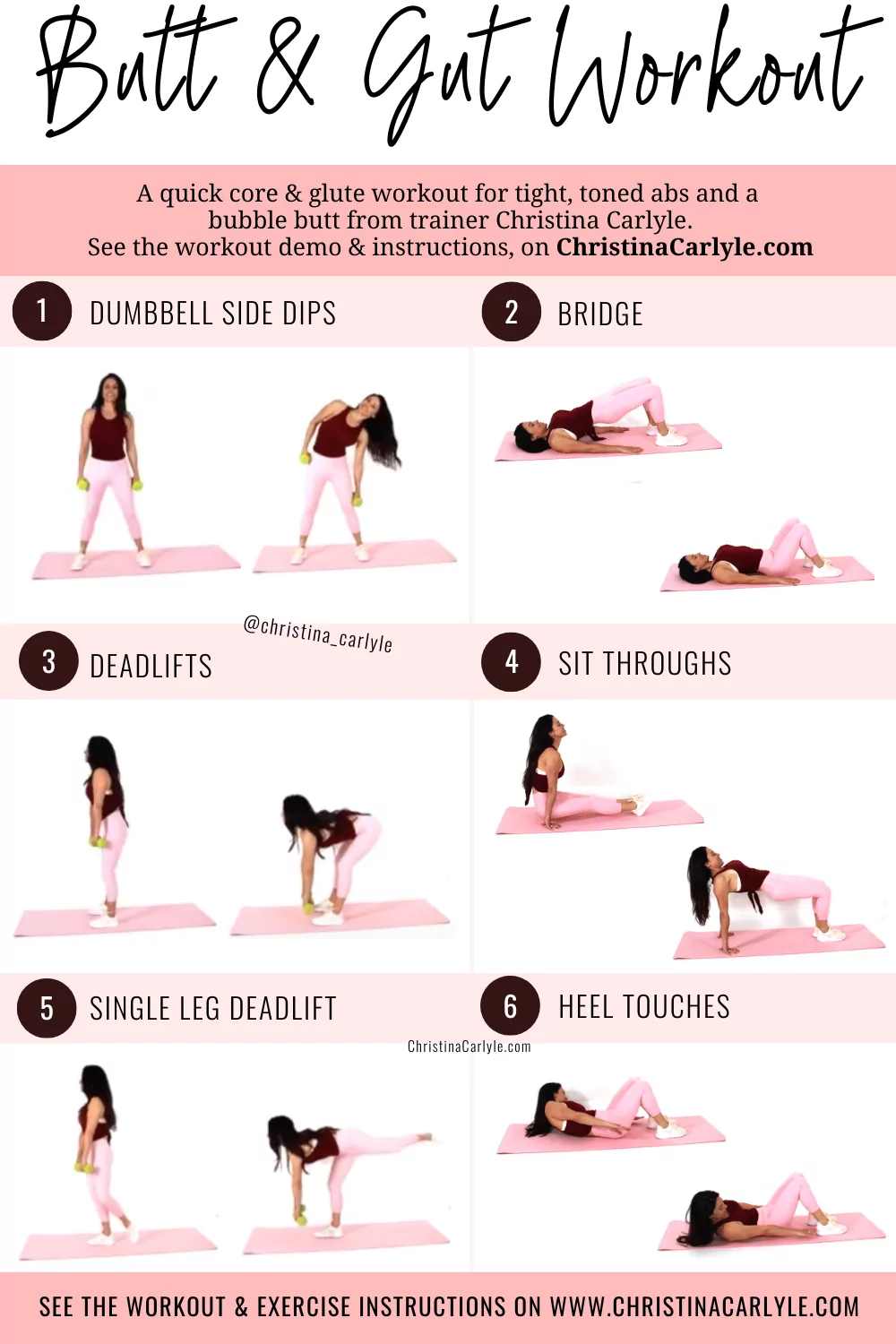
Credit: zve.gca.mybluehost.me
Benefits Of Glute And Abs Training
- Improved posture – Strong core and glutes keep your body upright.
- Reduced injury risk – Stabilizing muscles support your joints.
- Enhanced athletic performance – Power, speed, and control.
- Better movement efficiency – Everyday tasks become easier.
- Aesthetic improvements – Firmer, rounder glutes and a flatter stomach.
How To Structure Your Glute And Abs Workout
To get the best results, you need a plan. Here’s how to build a program that works:
Frequency
- Beginners: 2-3 times per week.
- Intermediate/Advanced: 3-4 times per week, with rest days between sessions.
Workout Split
You can train glutes and abs together or separately. Many people pair them in a single session for efficiency.
Reps And Sets
- For strength and muscle growth: 3-4 sets of 8-15 reps.
- For endurance and definition: 2-3 sets of 15-25 reps.
Rest
- 30-60 seconds between sets for most exercises.
- Up to 90 seconds for compound (multi-joint) moves.
Progression
Increase the challenge over time. Add reps, sets, weight, or try harder exercises. This is called progressive overload.
Essential Glute Exercises
Choosing the right exercises makes a big difference. Here are the most effective moves for building strong, round glutes.
- Hip Thrusts
- Sit with your shoulders on a bench, feet flat on the floor.
- Roll a barbell or place a weight plate over your hips.
- Drive through your heels, lift your hips toward the ceiling.
- Squeeze your glutes at the top, then lower slowly.
- Tip: Focus on the squeeze, not just moving the weight.
- Squats
- Stand with feet shoulder-width apart.
- Lower your body as if sitting back into a chair.
- Keep your chest up, knees tracking over toes.
- Drive up through your heels to stand.
- Tip: Depth matters—try to get thighs at least parallel to the floor.
- Deadlifts
- Stand with feet hip-width apart, barbell over your midfoot.
- Hinge at hips, grip the bar.
- Keep back flat, drive hips forward to stand tall.
- Lower with control.
- Tip: Start light to master form—protect your lower back.
- Lunges
- Step forward with one foot, lower your body until both knees are at 90 degrees.
- Push back to starting position.
- Alternate sides.
- Tip: Keep upper body tall, core engaged.
- Glute Bridges
- Lie on your back, feet flat on the floor.
- Push through your heels, lift hips.
- Squeeze glutes at the top, lower down.
- Tip: Great for beginners or as a warm-up.
- Bulgarian Split Squats
- Stand with one foot behind you on a bench.
- Lower your back knee toward the floor.
- Push through your front heel to rise.
- Tip: Great for single-leg strength and balance.
- Step-Ups
- Step onto a bench or box with one foot.
- Drive through your heel to stand up.
- Lower back down.
- Tip: Use a box high enough to challenge you but safe for your knee.
- Cable Kickbacks
- Attach an ankle strap to a low cable.
- Stand facing the machine, kick one leg back.
- Squeeze glute at the top.
- Tip: Keep your core tight to avoid swinging.
- Clamshells
- Lie on your side, knees bent, feet together.
- Open your top knee without moving your hips.
- Lower slowly.
- Tip: Targets glute medius—a weak area for many people.
- Frog Pumps
- Lie on back, soles of feet together, knees out.
- Pump hips up and down, squeezing glutes.
- Tip: High-rep finisher for a strong burn.
Essential Ab Exercises
Target all parts of your abs for a complete core.
- Plank
- Forearms on the ground, body in a straight line.
- Hold position, squeezing abs and glutes.
- Tip: Avoid letting hips sag.
- Dead Bug
- Lie on your back, arms up, knees bent.
- Extend one arm and the opposite leg, then return.
- Alternate sides.
- Tip: Lower back stays pressed to the floor.
- Bicycle Crunch
- Lie on your back, hands behind head.
- Bring elbow to opposite knee, switch sides.
- Tip: Move slowly for better muscle control.
- Leg Raises
- Lie flat, legs straight.
- Lift legs to the ceiling, lower slowly.
- Tip: Do not arch your back.
- Russian Twists
- Sit with knees bent, lean back slightly.
- Twist your torso side to side, tapping the floor.
- Tip: Add weight for more challenge.
- Mountain Climbers
- Start in push-up position.
- Alternate driving knees toward chest.
- Tip: Keep hips low and core tight.
- Reverse Crunch
- Lie on back, knees bent.
- Curl hips off the floor, bringing knees toward chest.
- Tip: Control the motion—don’t use momentum.
- Hanging Knee Raises
- Hang from a pull-up bar.
- Bring knees up toward chest, lower slowly.
- Tip: Avoid swinging.
- Ab Wheel Rollout
- Kneel with hands on an ab wheel.
- Roll forward, keeping core tight.
- Pull back to start.
- Tip: Only go as far as you can keep your back flat.
- Side Plank
- Lie on your side, support your body on one forearm.
- Lift hips, hold position.
- Tip: Great for obliques and hip stability.
Sample Glute And Abs Workout Routines
Below are routines for different levels. Each routine balances effort and recovery, targeting all key muscles.
Beginner Routine
- Glute bridges – 3 sets x 15 reps
- Bodyweight squats – 3 x 15
- Clamshells – 2 x 15 per side
- Plank – 3 x 20 seconds
- Dead bug – 2 x 12 per side
Rest 1 minute between sets.
Intermediate Routine
- Hip thrusts – 4 x 12
- Bulgarian split squats – 3 x 10 per leg
- Step-ups – 3 x 12 per leg
- Bicycle crunch – 3 x 20
- Leg raises – 3 x 12
- Russian twist – 3 x 16
Rest 45 seconds between sets.
Advanced Routine
- Barbell squats – 4 x 8
- Deadlifts – 4 x 8
- Cable kickbacks – 3 x 15 per leg
- Frog pumps – 2 x 25
- Hanging knee raises – 4 x 10
- Ab wheel rollout – 3 x 10
- Side plank – 3 x 30 seconds per side
Rest up to 90 seconds between heavy sets.
Home Vs Gym: Equipment Comparison
Training glutes and abs works in both settings. Here’s a comparison of common equipment:
| Equipment | Home | Gym | Best For |
|---|---|---|---|
| Resistance Bands | Yes | Yes | Glute activation, ab twists |
| Dumbbells | Yes | Yes | Lunges, step-ups |
| Barbell | Rare | Yes | Squats, deadlifts, hip thrusts |
| Cable Machine | No | Yes | Cable kickbacks, ab twists |
| Pull-up Bar | Yes | Yes | Hanging knee raises |
| Bodyweight | Yes | Yes | Planks, bridges, lunges |
Glute And Abs Supersets For Maximum Efficiency
Supersets mean performing two exercises back-to-back with no rest. This saves time and boosts intensity.
Examples:
- Hip thrust + Plank (glute activation + core stability)
- Squats + Russian twist (leg power + core rotation)
- Lunges + Mountain climbers (single-leg strength + cardio core)
This method keeps your heart rate up, burns more calories, and provides a full workout in less time.
Common Mistakes To Avoid
Many beginners make simple errors that slow progress or cause injury. Here’s what to watch for:
- Poor technique: Sacrificing form for heavier weights can lead to back pain and poor muscle growth.
- Not activating glutes: If you can’t “feel” your glutes, other muscles take over. Use warm-ups like glute bridges and clamshells.
- Neglecting the core: Training only “abs” and skipping deeper core muscles (like transverse abdominis) reduces stability.
- Not progressing: Doing the same workout for months leads to a plateau. Add weight, reps, or try harder variations.
- Overtraining: Muscles need rest to grow. Training glutes and abs daily can slow results.
- Not controlling the movement: Fast, jerky reps use momentum, not muscle. Slow, focused reps work better.
How Nutrition Supports Your Goals
You can’t out-train a poor diet. For muscle growth and fat loss, nutrition is as important as exercise.
- Protein: Aim for about 0.7–1 gram per pound of body weight. Protein helps build and repair muscles.
- Carbohydrates: Fuel your workouts and help recovery.
- Healthy fats: Needed for hormone balance and satiety.
- Hydration: Muscles perform best when you’re well-hydrated.
If your goal is visible abs, lowering body fat is key. No amount of crunches will “spot-reduce” belly fat. Focus on overall calorie control and healthy eating.
Rest And Recovery: The Hidden Key
Muscles grow when you rest, not during the workout. Here’s how to recover:
- Sleep: 7–9 hours per night boosts muscle repair.
- Rest days: Take at least one full rest day per week.
- Active recovery: Gentle walks, stretching, or yoga can help blood flow and reduce soreness.
- Foam rolling: Loosens tight muscles, especially after glute-heavy days.
Tracking Progress: How To Know You’re Improving
Numbers don’t lie. Track your workouts and measurements to stay motivated and adjust as needed.
What To Track
- Reps/sets/weight: Write down each workout.
- Photos: Take progress photos monthly.
- Measurements: Waist, hips, thighs.
- Performance: Are exercises getting easier? Can you do more reps or use more weight?
Example Progress Table
| Exercise | Week 1 | Week 4 | Improvement |
|---|---|---|---|
| Hip Thrust | 3x10 (50 lbs) | 3x12 (70 lbs) | +20 lbs, +2 reps |
| Plank | 3x20 sec | 3x40 sec | +20 sec |
| Squat | 3x12 (bodyweight) | 3x12 (20 lbs) | Added weight |
How Long Until You See Results?
Change takes time, but most people notice:
- Better strength: After 2–4 weeks.
- Muscle shape: After 6–8 weeks, with consistent training and good nutrition.
- Visible abs: Depends mostly on body fat levels, not just exercise.
Stay patient and focus on steady progress.
Glute And Abs Workout For Fat Loss Vs Muscle Gain
Your training can shift slightly based on your goal.
For Fat Loss
- Higher reps (15–25) with shorter rest.
- Add cardio (HIIT, brisk walking, cycling).
- Focus on calorie control.
For Muscle Gain
- Lower reps (8–12) with heavier weights.
- More rest between sets.
- Eat more calories, especially protein.
You can combine both approaches in one program. For example: heavy glute lifts followed by higher-rep ab work.
Advanced Techniques For Faster Progress
When you’re ready for more challenge, try these:
- Tempo training: Slow the lowering phase of squats or hip thrusts for greater muscle tension.
- Pause reps: Hold the hardest part of the movement (like the top of a glute bridge) for 2–3 seconds.
- Drop sets: After your last set, reduce weight and do more reps to failure.
- Unilateral training: Single-leg or single-arm moves expose weak spots and improve balance.

Credit: www.youtube.com
Two Non-obvious Insights
- Mind-muscle connection matters: Actively thinking about squeezing your glutes and abs during each rep makes a real difference. Many studies show better results when you focus on the working muscle.
- Glute and core strength help prevent knee and back pain: Most people don’t realize weak glutes and core muscles are a top cause of lower back and knee issues. By strengthening these areas, you improve your body’s alignment and movement patterns.
Sample Four-week Glute And Abs Progression
Here’s a simple program for steady improvement:
Weeks 1–2:
- Glute bridges, bodyweight squats, planks, dead bugs
- 3 sets, 12–15 reps, 2–3 times per week
Weeks 3–4:
- Hip thrusts (add weight if possible), Bulgarian split squats, side planks, Russian twists
- 4 sets, 10–12 reps, 3 times per week
Increase reps or weight each week. After four weeks, switch up exercises or add new variations to keep making progress.
Should You Train Glutes And Abs On The Same Day?
Yes, you can. Both muscle groups recover quickly and don’t usually interfere with each other. Many people find that training them together saves time and increases workout intensity. However, if one muscle group is a priority (for example, glutes for athletes), you might want to give it extra attention with a separate day.
Cardio And Glute/abs Training: How They Work Together
Cardio helps with fat loss, which makes your glute and ab muscles more visible. However, doing too much cardio can interfere with muscle gains if you’re not eating enough. The best approach:
- Do strength training first, then cardio.
- Keep cardio sessions moderate (20–30 minutes).
- Try HIIT (High-Intensity Interval Training) for efficient fat burning and core engagement.
Credit: www.etsy.com
Mobility And Flexibility For Glutes And Abs
Tight muscles can limit your range of motion and slow progress. Spend 5–10 minutes at the end of your workout stretching:
- Hip flexor stretch – Opens up the front of your hips.
- Figure-four stretch – Targets glutes.
- Cat-cow stretch – Loosens the spine and abs.
These routines help prevent injury and speed up recovery.
Training At Home: Minimal Equipment, Maximum Results
You don’t need a gym to build strong glutes and abs. Here’s a sample plan with just bodyweight and a band:
- Squats (add a resistance band above knees)
- Glute bridges
- Step-ups (use stairs)
- Lunges
- Plank
- Dead bug
- Side plank
Increase reps, slow down the movement, or add a backpack with books for more resistance.
Glute And Abs Workout For Different Goals
| Goal | Best Exercises | Tips |
|---|---|---|
| Muscle Growth | Hip thrusts, squats, deadlifts, ab wheel rollout | Focus on progressive overload, lower reps, heavier weight |
| Fat Loss | Mountain climbers, reverse crunch, step-ups | Higher reps, shorter rest, add cardio |
| Athletic Performance | Bulgarian split squats, planks, lunges | Include single-leg moves, core stability work |
| Injury Prevention | Clamshells, side plank, dead bug | Emphasize technique, warm-up, and mobility |
When To Change Your Routine
If you stop seeing progress, feel bored, or develop aches and pains, it’s time to change up your exercises. Every 4–8 weeks, swap some moves, increase weight, or try new rep ranges. This keeps workouts fresh and muscles challenged.
Supplements: Do You Need Them?
Supplements are not required for results, but some can help:
- Protein powder: Helps meet daily protein needs if you can’t get enough from food.
- Creatine: Supports strength and muscle gains.
- Fish oil: May help joint health.
Always focus on real food first. Supplements are just that—a supplement to a good diet.
How To Stay Motivated
- Set clear, realistic goals (e.g., “I want to do 20 hip thrusts with 100 lbs”).
- Track your progress—little wins add up.
- Find a workout buddy or online community.
- Celebrate improvements in strength, not just appearance.
- Remind yourself: Consistency beats perfection.
Frequently Asked Questions
How Often Should I Train My Glutes And Abs?
For most people, training glutes and abs 2–4 times per week is ideal. Beginners should start with 2 sessions, while more advanced trainees can handle 3–4. Always allow at least one full rest day between similar workouts.
Can I Get Visible Abs And Round Glutes At The Same Time?
Yes, but it depends on your body fat level and consistency. Visible abs require low body fat, while round glutes need muscle growth. Combine strength training, good nutrition, and some cardio for best results.
How Long Does It Take To See Changes In My Glutes And Abs?
Strength and endurance improve in 2–4 weeks. Muscle shape and definition usually show after 6–8 weeks, depending on your training, diet, and starting point. For visible abs, lowering body fat is key.
What Should I Eat To Support Glute And Ab Gains?
Eat enough protein (chicken, fish, eggs, beans), healthy fats (olive oil, nuts), and carbohydrates (whole grains, fruits, veggies) to fuel workouts and recovery. Stay hydrated, and watch your total calorie intake if you want to lose fat.
Where Can I Learn More About Exercise Technique?
For clear exercise demonstrations and tips, visit the ACE Exercise Library. They offer trusted, science-based guidance for all fitness levels.
Building strong glutes and abs is about more than just looks. It’s about feeling confident, moving better, and protecting your health for the long term. Stay consistent, focus on good technique, and remember—every rep gets you closer to your goal.
