

Dumbbells Glute Workout: Sculpt Stronger, Rounder Glutes Fast
A dumbbells glute workout is one of the most effective and convenient ways to build strong, round, and functional glutes. Whether you’re new to fitness or a seasoned lifter, using dumbbells adds challenge and variety to your routine. You don’t need a gym full of machines to grow your glutes—just a pair of dumbbells and the right techniques.
In this guide, you’ll learn how to create a powerful glute workout, why dumbbell training is so effective, and how to avoid common mistakes. You’ll also get a full workout plan, sample progressions, pro tips, and answers to common questions.
Why Focus On Glute Training?
The glutes are more than just a show muscle—they’re the largest and strongest muscles in your body. Their main jobs are to extend your hips, rotate your legs, and stabilize your pelvis. When your glutes are strong, you move better, reduce your injury risk, and look great in jeans.
Weak glutes can cause back pain, poor posture, and even knee problems.
Most people spend hours sitting each day. This can make your glutes “sleepy” and underused. A well-designed glute workout wakes up these muscles and helps you move with power.
Benefits Of Using Dumbbells For Glute Workouts
Dumbbells are a smart choice for glute training for several reasons:
- Versatile: You can use them for many exercises, from squats to lunges to hip thrusts.
- Easy to Progress: Increase the weight as you get stronger.
- Safer for Beginners: Easier to control than heavy barbells.
- Great for Home Workouts: No need for expensive gym equipment.
- Improves Balance: Many dumbbell moves work one side at a time, fixing muscle imbalances.
Research shows that glute activation with dumbbells can be as high as with barbells, especially when you use good form and the right exercises.

Credit: www.bibliotecaoscura.com
Anatomy Of The Glutes
To train your glutes effectively, it helps to know a bit about how they work. The glutes are made up of three main muscles:
- Gluteus Maximus: The biggest muscle, responsible for hip extension (standing up, climbing stairs).
- Gluteus Medius: On the side of your hip, helps with leg abduction and stabilization.
- Gluteus Minimus: Under the medius, assists with abduction and internal rotation.
A good dumbbell workout targets all three for balanced growth.
Key Principles For A Successful Dumbbells Glute Workout
Before jumping into exercises, keep these principles in mind:
- Use Proper Form: Quality over quantity. Good form ensures the glutes do the work—not your back or quads.
- Focus on Mind-Muscle Connection: Think about squeezing your glutes during each rep.
- Progressive Overload: Gradually use heavier weights or more reps over time.
- Include Different Movements: Mix hip extension, abduction, and rotation.
- Allow Rest: Muscles grow when you rest, not just when you train.
Credit: www.bibliotecaoscura.com
The Best Dumbbell Exercises For Glutes
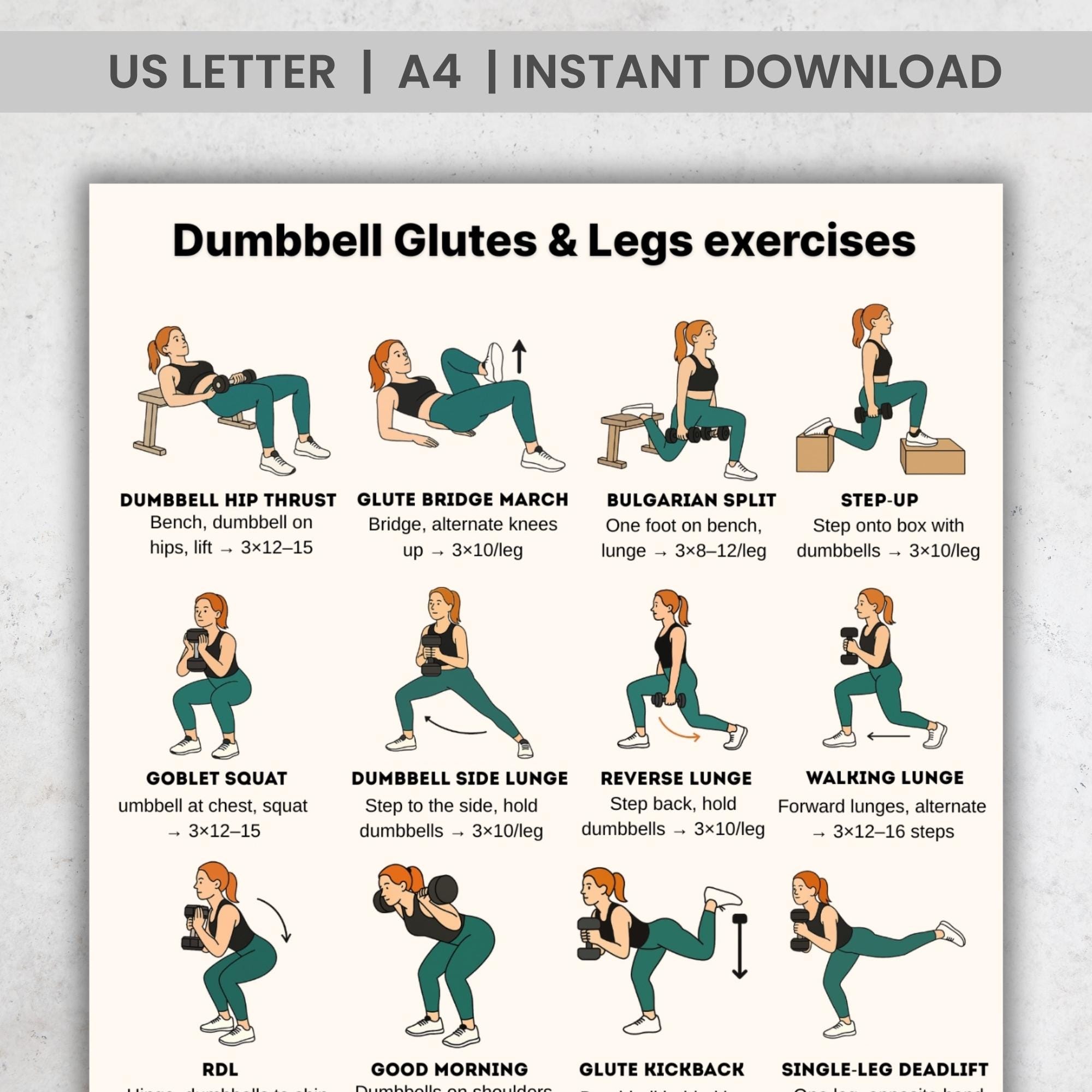
A strong dumbbells glute workout uses a mix of compound and isolation exercises. Here are some of the most effective:
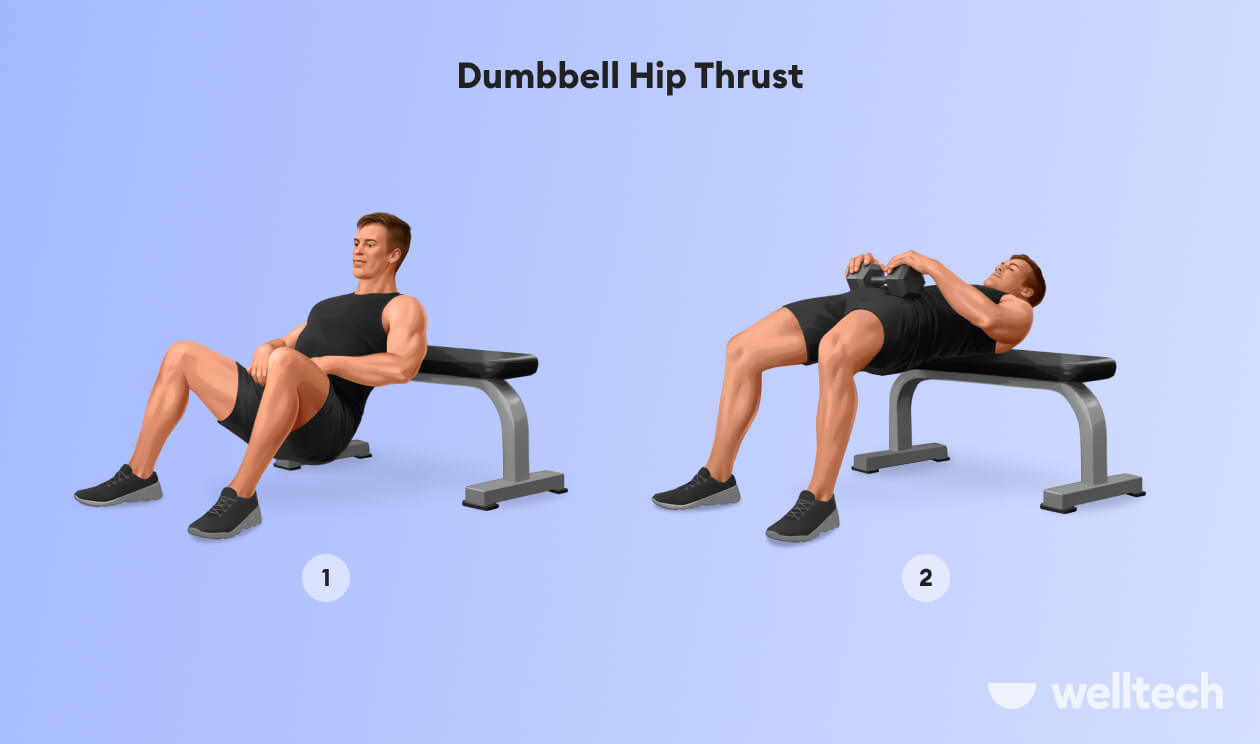
1. Dumbbell Hip Thrust
Sit on the floor with your upper back against a bench. Roll a dumbbell over your hips, feet flat. Push through your heels, lifting your hips and squeezing your glutes at the top. Lower and repeat.
- Tip: Pause at the top for 1-2 seconds for more glute activation.
2. Dumbbell Romanian Deadlift (rdl)
Stand tall, dumbbells in hand. Hinge at the hips, push your butt back, and lower the weights down your legs. Keep your back straight. Return to standing by driving your hips forward.
- Tip: Don’t round your back. Focus on feeling a stretch in the hamstrings and glutes.
3. Bulgarian Split Squat
Stand about two feet in front of a bench. Rest one foot behind you on the bench. Hold a dumbbell in each hand. Lower your hips until your front thigh is parallel to the floor. Push back up.
- Tip: Keep your torso upright and drive through your front heel.
4. Dumbbell Glute Bridge
Lie on your back, knees bent, feet flat. Place a dumbbell on your hips. Push through your heels to lift your hips up, squeezing the glutes.
- Tip: Don’t overarch your back. Move slowly and control the weight.
5. Dumbbell Step-up
Stand in front of a sturdy bench or step. Hold dumbbells at your sides. Step up with one foot, press through your heel, and bring the other foot up. Step down and repeat.
- Tip: Use a bench high enough to make the move challenging but safe.
6. Dumbbell Sumo Squat
Stand with feet wider than shoulders, toes out. Hold a dumbbell with both hands between your legs. Squat down, keeping your chest up, then push back up.
- Tip: This targets the inner thighs and glutes more than a regular squat.
7. Dumbbell Curtsy Lunge
Stand tall, dumbbells at your sides. Step one leg behind and across the other, lowering your knee toward the ground. Return to start and repeat on the other side.
- Tip: Keep your chest lifted and avoid letting your front knee cave in.
8. Dumbbell Single-leg Deadlift
Hold a dumbbell in one hand, stand on the opposite leg. Hinge at your hips, letting your free leg extend back. Lower the dumbbell toward the floor, keeping your back straight. Return to standing.
- Tip: This move works your balance and glute medius.
Full Dumbbells Glute Workout Routine
Here is a sample workout you can do 2-3 times per week. Adjust the dumbbell weight so the last few reps are challenging but you keep good form.
| Exercise | Sets | Reps | Rest (seconds) |
|---|---|---|---|
| Dumbbell Hip Thrust | 3-4 | 8-12 | 60-90 |
| Bulgarian Split Squat | 3 | 8-10 each leg | 60 |
| Dumbbell Romanian Deadlift | 3-4 | 10-12 | 60-90 |
| Dumbbell Step-Up | 3 | 10 each leg | 60 |
| Dumbbell Sumo Squat | 3 | 12-15 | 60 |
| Dumbbell Glute Bridge | 3 | 12-15 | 45-60 |
Note: Warm up for 5-10 minutes before starting, and cool down with stretches after.
Progressions: How To Keep Challenging Your Glutes
Your body adapts to exercise. To keep growing your glutes, you need to add challenge over time. Here’s how:
- Increase the Weight: When a set feels too easy, use a heavier dumbbell.
- Add Reps or Sets: Do more work with the same weight.
- Slow Down the Tempo: Take 3-4 seconds to lower the weight. This increases muscle tension.
- Pause at the Top: Hold the squeeze for 2-3 seconds in moves like hip thrusts.
- Try Single-Leg Variations: These are harder and work stabilizer muscles.
A common mistake is to increase weight too fast. Aim for small progress each week. If your form breaks down, drop the weight.
Common Mistakes To Avoid
Even experienced lifters make errors that limit glute growth. Watch out for these:
- Using Too Much Weight: If you can’t feel your glutes, the weight is too heavy.
- Leaning Forward on Squats/Lunges: This shifts work to your quads and back.
- Not Using Full Range of Motion: Partial reps mean less muscle worked.
- Neglecting Mind-Muscle Connection: If you don’t feel the glutes, slow down and focus.
- Skipping Rest Days: Glutes need time to recover and grow.
How Dumbbell Workouts Compare To Other Glute Training Methods
You might wonder how dumbbell glute workouts stack up against other popular methods like barbells, resistance bands, or machines. Here’s a quick comparison:
| Method | Pros | Cons |
|---|---|---|
| Dumbbells | Versatile, easy for home, balance improvement | Limited by max weight available |
| Barbells | Heavier loads possible, good for max strength | Need more equipment, higher injury risk for beginners |
| Resistance Bands | Portable, low impact, good for activation | Limited resistance for advanced lifters |
| Machines | Stable, good for isolation | Expensive, not always available at home |
Dumbbells strike a balance—challenging, flexible, and accessible.
Sample 4-week Dumbbells Glute Workout Plan
Here’s a plan to get you started and keep you progressing for a month. Do this routine 2-3 times per week, with at least one rest day between sessions.
| Week | Main Focus | Adjustments |
|---|---|---|
| 1 | Learn proper form, establish routine | Start with light dumbbells, focus on technique |
| 2 | Increase challenge | Add 2-5 lbs to each dumbbell, add 1-2 reps per set |
| 3 | Tempo and pause | Slow down the lowering phase, pause 2 seconds at the top |
| 4 | Single-leg focus | Swap in single-leg deadlifts, add Bulgarian split squats |
If you’re consistent and push yourself, you’ll notice stronger, firmer glutes after just a month.
Tips For Maximum Glute Activation
Getting the most out of your dumbbells glute workout isn’t just about doing the right moves—it’s about how you do them. Here’s how to maximize your results:
- Warm Up Properly: Do 5-10 minutes of cardio and dynamic stretches. Try bodyweight glute bridges or banded walks to “wake up” the glutes.
- Focus on Heels: In most glute moves, pushing through your heels targets the glutes better than the toes.
- Keep Your Core Tight: This protects your back and helps transfer power to the glutes.
- Don’t Rush Reps: Move with control, especially on the lowering phase (eccentric).
- Check Your Range: Try videoing your form or using a mirror to ensure you’re hitting full depth.
A non-obvious insight: Many people forget to keep their ribs down and avoid arching their back on moves like bridges and hip thrusts. This keeps tension in the glutes, not the lower back.
Nutrition And Recovery For Glute Growth
Strong glutes are built in the gym and the kitchen. Here’s what you need to know:
- Eat Enough Protein: Aim for 0.7–1 gram per pound of body weight daily to support muscle growth.
- Don’t Skimp on Calories: Building muscle needs energy. If you’re always dieting, growth slows down.
- Hydrate: Muscles perform best when you’re well hydrated.
- Prioritize Sleep: Aim for 7-9 hours per night for best recovery.
- Active Rest: On rest days, gentle walks or stretching helps blood flow and recovery.
Many beginners try to “out-train” a poor diet. But without enough protein and calories, your glutes won’t grow, no matter how hard you work.
How To Choose The Right Dumbbells
Not sure which dumbbells to use? Here’s how to pick:
- Weight: Start with a weight you can lift for 10-12 reps with good form, but that feels challenging at the end. For most women, this might be 10-20 lbs per dumbbell; for men, 20-35 lbs. Adjust as needed.
- Type: Fixed dumbbells are sturdy, but adjustable ones save space if you train at home.
- Grip: Choose a handle that feels comfortable and doesn’t slip.
A common mistake: Sticking with the same weight for months. As you get stronger, increase your dumbbell weight to keep challenging your glutes.
Can You Build Big Glutes With Dumbbells Alone?
The short answer is yes—with the right approach. Studies show that muscle growth depends more on effort and progressive overload than on equipment type. As long as you keep challenging your glutes, eat enough protein, and recover well, you can build impressive glutes with only dumbbells.
However, as you get stronger, you might need to use heavier dumbbells or add advanced techniques, like single-leg work, to keep progressing. Some advanced lifters eventually add barbells for even heavier loads. But for most people, dumbbells are more than enough.
Real-life Results: What To Expect
Most people who do a focused dumbbells glute workout see results in 4–8 weeks. Common changes include:
- Better shape: Glutes look rounder and fuller
- More strength: Easier to climb stairs, run, or play sports
- Less pain: Improved posture and less back/knee pain
Everyone’s body is different, but consistency is key. Track your progress with photos or by measuring your hip circumference every few weeks.
Advanced Strategies For Experienced Lifters
If you’ve been training your glutes for a while, try these advanced methods:
- Rest-Pause Sets: Do as many reps as possible, rest 10 seconds, then do more reps.
- Drop Sets: Start heavy, then drop to lighter dumbbells without resting.
- Pre-Exhaustion: Start with an isolation move (like glute bridges), then do a compound move (like split squats).
- Supersets: Pair two glute moves back to back, like RDLs and sumo squats.
- Isometric Holds: Hold the top of a bridge or thrust for 10-20 seconds.
A non-obvious insight: Varying your foot position (wide, narrow, toes out) can hit different glute fibers and boost growth.
Safety Tips And Injury Prevention
Glute training with dumbbells is generally safe, but accidents can happen. Follow these tips:
- Always Warm Up: Cold muscles are more likely to strain.
- Start Light: Get the movement right before going heavy.
- Use a Stable Surface: For step-ups or Bulgarian split squats, make sure your bench or box won’t tip.
- Don’t Overdo It: Muscles need at least 48 hours to recover between hard sessions.
- Listen to Your Body: Sharp pain is a red flag—stop and check your form.
If you have knee or back pain, consult a physical therapist to adjust your routine.
Adapting Your Dumbbells Glute Workout For Home
Training at home? No problem. Here’s how to get the most from your dumbbells glute workout:
- Use Furniture for Support: A sturdy chair or couch works for hip thrusts and split squats.
- Increase Reps: If your dumbbells are light, do more reps or slow down the tempo.
- Use a Backpack: Fill it with books to add weight if needed.
- Add Resistance Bands: Place a band above your knees for extra glute work.
Consistency matters more than fancy equipment.
How To Warm Up For A Dumbbells Glute Workout
A good warm-up prepares your muscles and joints, reduces injury risk, and boosts performance. Here’s a quick routine:
- 5 minutes light cardio: March in place, jog, or use a bike.
- Dynamic stretches: Leg swings, bodyweight squats, walking lunges.
- Glute activation drills: Bodyweight glute bridges, clamshells, or banded side steps (20 reps each).
Take your time—this step can make your workout more effective.
Should You Train Glutes With Dumbbells If You’re A Beginner?
Absolutely. Dumbbells are beginner-friendly and let you build strength safely. Start with light weights, focus on good form, and progress slowly. If you’re new, consider doing 2 sets of each exercise for the first two weeks, then build up.
Many beginners are surprised how quickly their glute strength improves with consistent training.
Using Dumbbells For Glute Workouts: Myths Vs. Facts
Let’s clear up some common myths.
- Myth: You need heavy barbells to grow glutes.
- Fact: Dumbbells can build impressive glutes, especially with good technique and progression.
- Myth: High reps are always better.
- Fact: Both heavy (6-8 reps) and moderate (10-15 reps) ranges work. Mix them for best results.
- Myth: Glute isolation is enough.
- Fact: Compound moves like split squats and RDLs are essential for full development.
- Myth: Dumbbell workouts are only for women.
- Fact: Strong glutes help men and women alike—with sports, injury prevention, and strength.
How To Track Your Progress
Seeing progress keeps you motivated. Here are easy ways to track glute gains:
- Take Progress Photos: Every 2-4 weeks, same lighting and angle.
- Measure Hips/Glutes: Use a tape measure at the widest point.
- Track Weights/Reps: Write down your sets, reps, and dumbbell weight.
- Note Strength Gains: Can you do more reps or use heavier dumbbells?
Small changes add up. Celebrate your wins—even if they seem minor.
Credit: www.etsy.com
Glute Training And Everyday Life
Strong glutes do more than look good—they improve how you move every day. You’ll notice:
- Easier stairs and hills
- Better running and jumping
- Less low back pain
- Improved posture
- Greater sports performance
Most people don’t realize how much weak glutes hold them back until they get stronger.
When To Change Your Routine
Change your dumbbells glute workout every 4-8 weeks. Signs it’s time to switch:
- You’re bored or lose motivation
- Your progress plateaus (no gains in strength or size)
- You master all moves and need a new challenge
Try new exercises, higher reps, different tempos, or new single-leg moves. Variety keeps your body adapting.
Frequently Asked Questions
How Many Times A Week Should I Do A Dumbbells Glute Workout?
Most people get the best results with 2–3 glute workouts per week. Leave at least one rest day between sessions. This gives your glutes time to recover and grow.
What Weight Dumbbells Should I Start With For Glute Exercises?
Start with a weight you can lift for 10–15 reps with good form, but that feels hard by the last few reps. For beginners, 10–20 lbs per dumbbell works well. Adjust as needed based on your strength.
Can I Grow My Glutes At Home With Just Dumbbells?
Yes! With the right exercises and progressive overload, you can build strong, round glutes at home. Use a mix of compound and isolation moves and increase the weight or reps as you get stronger.
Why Aren’t I Feeling My Glutes During Dumbbell Exercises?
This is common. Focus on squeezing your glutes, use full range of motion, and slow down your reps. Sometimes, reducing the weight and improving form helps activate the glutes better.
Where Can I Find More Information About Glute Anatomy And Training?
A reliable resource is the Wikipedia page on the gluteus maximus, which explains the muscle’s function and importance in movement.
Building your glutes with dumbbells is simple, effective, and accessible for everyone. With the right plan, persistence, and smart training, you’ll see and feel the difference in your strength, confidence, and overall health.
