

At Home Glute Workout: Build Stronger Glutes Fast
At Home Glute Workout: Build Stronger Glutes Without A Gym
For many people, strong glutes are not just about looks. They help with posture, balance, and daily movement. If you sit a lot or have a busy schedule, you may feel your glute muscles are weak or tight. The good news is, you don’t need an expensive gym or fancy equipment to grow your glutes. With the right at-home glute workout, you can build strength, improve your health, and boost confidence—all from your living room.
Many people believe that only heavy weights or gym machines can build glutes. This is not true. You can get great results with bodyweight exercises, resistance bands, and simple household items. In fact, working out at home can sometimes help you stick to your routine better, since you save travel time and avoid crowded gyms.
Let’s explore everything you need to know for an effective at-home glute workout: why strong glutes matter, how glute muscles work, the best exercises, step-by-step routines, tips for faster results, and common mistakes to avoid. By the end, you’ll have a complete system to grow and shape your glutes, no matter your starting point.
Why Strong Glutes Matter
Your glutes are the largest and strongest muscle group in your body. They include the gluteus maximus, gluteus medius, and gluteus minimus. These muscles are responsible for hip movement, stability, and power. When your glutes are weak, you may feel:
- Lower back pain
- Knee pain
- Poor posture
- Less balance and athletic ability
Strong glutes help you walk, climb stairs, run, jump, and even stand up straight. For athletes, glutes are key for speed and power. For everyone else, they help prevent injuries and make daily tasks easier.
If you sit for hours each day, your glutes can become “inactive.” This is called gluteal amnesia or “sleepy glutes.” It means your body forgets how to use your glutes, and other muscles work too hard, causing pain or weakness. The good news? With regular glute exercises, you can “wake up” these muscles and feel stronger in daily life.
How Glute Muscles Work
Before you start training, it’s helpful to understand how your glute muscles function. Each part of the glutes has a special job:
- Gluteus Maximus: The largest muscle, helps with hip extension (moving your leg behind you), standing up, climbing, and jumping.
- Gluteus Medius: Located on the side of your hip, it keeps your pelvis stable when you walk or stand on one leg.
- Gluteus Minimus: The smallest part, helps with rotating your leg and stabilizing your hip.
For the best results, you want to target all three parts. Many people only train the gluteus maximus. But strong, round glutes need balanced work.
Key Movements For Glute Activation
To fully work your glutes, include exercises that use these main movements:
- Hip Extension: Moving your leg backward (e.g., glute bridges, donkey kicks)
- Hip Abduction: Moving your leg out to the side (e.g., side-lying leg lifts, clamshells)
- Hip External Rotation: Rotating your leg outward (e.g., clamshells with a band)
- Single-Leg Movements: Standing on one leg challenges your glute medius and minimus for stability.
A well-rounded glute workout will include all of these.
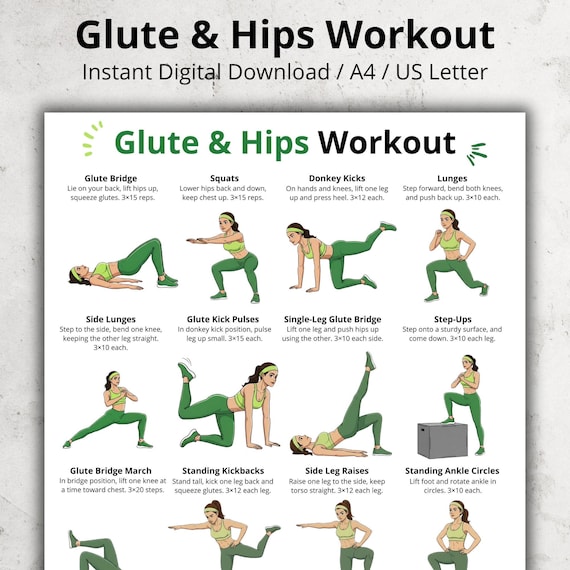
Credit: www.etsy.com
Benefits Of At-home Glute Workouts
You may wonder if at-home glute workouts can really deliver results. The answer is yes—if you train smart. Here’s why training glutes at home works:
- Convenience: No need to travel. You can work out any time.
- Privacy: You don’t need to feel self-conscious.
- Low Cost: You can get results with little or no equipment.
- Flexibility: You can adjust your routine as your schedule or energy changes.
Research shows that bodyweight training can be as effective as using machines, especially for beginners. For example, a study published in the *Journal of Strength and Conditioning Research* found that exercises like squats and lunges activate the glutes as much as weighted machines.
Essential Equipment For Home Glute Training
While you can train your glutes with just your bodyweight, a few simple items can boost your results:
- Mini Resistance Bands: Great for adding intensity to bodyweight moves, especially hip abduction and glute activation.
- Long Resistance Bands: Useful for adding load to bridges, hip thrusts, or squats.
- Sturdy Chair or Couch: For step-ups, Bulgarian split squats, or hip thrusts.
- Yoga Mat: Optional, but adds comfort for floor exercises.
If you want to challenge yourself more, you can use a backpack filled with books, a heavy water bottle, or similar household items for extra resistance.
The Best At-home Glute Exercises (with Form Tips)
Let’s break down the most effective glute exercises you can do at home. Mastering these will help you build strength and shape.
1. Glute Bridge
This classic move targets the gluteus maximus. Lie on your back, feet flat and hip-width apart. Press through your heels to lift your hips. Squeeze your glutes at the top, then lower slowly.
Form tips:
- Don’t arch your lower back.
- Keep your neck relaxed.
- Push from your heels, not your toes.
2. Single-leg Glute Bridge
Similar to the glute bridge, but with one leg raised. This variation increases the challenge and targets stability muscles.
Form tips:
- Keep your hips level.
- Don’t let your raised leg drop.
3. Hip Thrust (using A Couch Or Chair)
Sit with your upper back on a sturdy chair or couch. Place feet flat on the floor, knees bent. Push your hips up by squeezing your glutes. Lower down with control.
Form tips:
- Your body should form a straight line from shoulders to knees at the top.
- Avoid pushing with your lower back.
4. Bulgarian Split Squat
Stand with one foot behind you on a chair or couch. Lower your back knee toward the floor while keeping your chest up. Press through your front heel to stand.
Form tips:
- Keep your front knee over your ankle.
- Don’t let your knee collapse inward.
5. Donkey Kicks
Start on all fours. Keeping your knee bent, lift one leg up and back, squeezing your glute at the top. Lower and repeat.
Form tips:
- Don’t arch your back.
- Focus on using your glute, not your lower back.
6. Fire Hydrants
On all fours, lift one knee out to the side, keeping your hip bent. Pause, then lower.
Form tips:
- Keep your core tight.
- Don’t twist your torso.
7. Clamshells (with Or Without Band)
Lie on your side, knees bent. Keep feet together and open your top knee like a clamshell. Add a resistance band for more challenge.
Form tips:
- Don’t roll your hips back.
- Pause at the top for extra tension.
8. Step-ups
Using a sturdy chair or stairs, step up with one leg and bring the other to meet it. Step down and repeat.
Form tips:
- Push through your heel.
- Keep your knee aligned with your toes.
9. Side-lying Leg Lifts
Lie on your side. Lift your top leg up, keeping it straight, then lower slowly. Great for the gluteus medius.
Form tips:
- Don’t swing your leg.
- Keep your hips stacked.
10. Squat Variations (bodyweight, Sumo, Pulse)
Squats are a must for glutes. Try different types:
- Bodyweight Squat: Feet shoulder-width, lower hips back and down, stand up.
- Sumo Squat: Wider stance, toes out, targets inner thighs and glutes.
- Pulse Squat: Hold the bottom of a squat and pulse up and down for extra burn.
Form tips:
- Keep chest up.
- Don’t let knees go past toes.
Full At-home Glute Workout Routines
You now know the best exercises. But how do you put them together for real results? Here are two sample routines: one for beginners, and one for intermediate/advanced levels.
Beginner At-home Glute Workout
This routine focuses on mastering form and building a base.
- Glute Bridge – 3 sets of 15 reps
- Bodyweight Squat – 3 sets of 12 reps
- Donkey Kicks – 3 sets of 12 reps per side
- Fire Hydrants – 3 sets of 12 reps per side
- Clamshells – 3 sets of 15 reps per side
Rest: 30-45 seconds between sets. Do this routine 2-3 times per week.
Intermediate/advanced At-home Glute Workout
For more challenge, add single-leg moves and resistance bands.
- Hip Thrust (with band or weight) – 4 sets of 12 reps
- Bulgarian Split Squat – 3 sets of 10 reps per leg
- Single-Leg Glute Bridge – 3 sets of 10 reps per leg
- Sumo Squat Pulse – 3 sets of 15 reps
- Step-Ups – 3 sets of 12 reps per leg
- Side-Lying Leg Lifts (with band) – 3 sets of 15 reps per side
Rest: 30-60 seconds between sets. Train 2-4 times per week.
How To Progress Over Time
Your glutes need new challenges to grow. Use these simple ways to progress:
- Increase reps or sets
- Slow down the movement (longer time under tension)
- Add resistance (bands, weights)
- Try harder variations (e.g., from bridge to single-leg bridge)
- Reduce rest time
If you always do the same workout, your results will slow down. Change one variable every few weeks for best results.
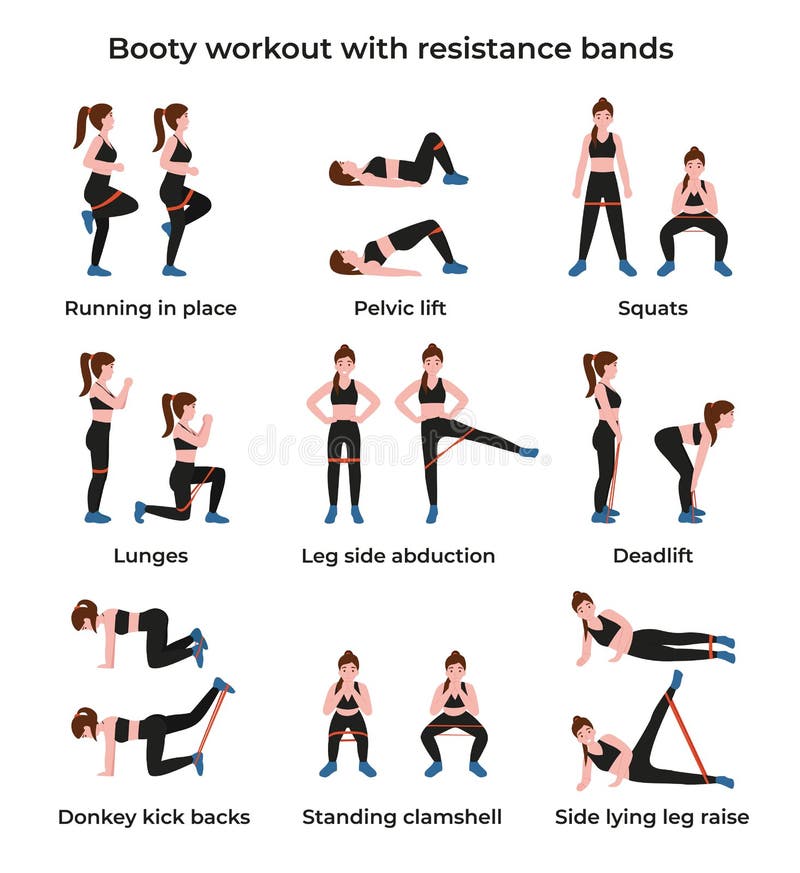
Credit: www.dreamstime.com
Weekly Training Schedule Examples
People often ask how often to train glutes. Recovery is important for muscle growth. Most people get good results with 2-4 glute-focused sessions per week.
Here are two sample weekly schedules:
| Day | Beginner | Intermediate/Advanced |
|---|---|---|
| Monday | Glute Workout | Glute Workout |
| Tuesday | Rest or Walk | Upper Body / Cardio |
| Wednesday | Glute Workout | Glute Workout |
| Thursday | Rest or Walk | Rest or Light Cardio |
| Friday | Optional Glute Workout | Glute Workout |
| Saturday | Rest | Upper Body / Cardio |
| Sunday | Rest | Rest |
If you’re sore, take an extra day to recover. Overtraining can slow your progress and increase injury risk.
How To Activate Your Glutes Before A Workout
A key factor many people miss is glute activation. If your glutes are “sleepy,” other muscles may take over during your workout. This can make your glute training less effective.
Spend 5-10 minutes before your main workout doing activation exercises. Good options are:
- Banded clamshells
- Glute bridges with pause
- Fire hydrants
- Monster walks with a band
Focus on squeezing your glutes hard. This “wakes up” the muscles and helps you feel them working during your main exercises.
Common Mistakes In At-home Glute Workouts
Even with the best exercises, progress can stall if you make common mistakes. Here are errors to avoid:
1. Using Only Squats
Squats are great, but they don’t target the glutes as much as people think, especially for some body types. Include hip thrusts, bridges, and abduction moves for best results.
2. Not Using Full Range Of Motion
Partial reps limit muscle work. Lower yourself fully in squats, bridges, and split squats. If you can’t go low, work on mobility.
3. Rushing Through Reps
Slow, controlled movements activate more muscle. Don’t just go through the motions.
4. Ignoring Glute Activation
If you don’t “feel” your glutes working, your workout is less effective. Always do a short activation warm-up.
5. Overtraining
More is not always better. Muscles grow when you rest. If you’re always sore or tired, take more rest days.
6. Not Progressing
If you always do the same exercises with the same reps and no extra resistance, your progress will stop. Add challenge regularly.
Nutrition Tips For Glute Growth
Training is only part of the story. To build muscle, your body needs enough protein, calories, and nutrients.
Key Points For Nutrition:
- Protein: Aim for about 0.7-1 gram per pound of body weight daily. Protein helps repair and build muscle.
- Calories: To grow muscle, you may need a slight calorie surplus (eating more than you burn).
- Carbs and Fats: Both are important for energy and recovery.
- Water: Stay hydrated for muscle function and recovery.
You don’t need a strict diet. Focus on whole foods: lean meats, fish, eggs, beans, dairy, whole grains, fruits, vegetables, nuts, and healthy fats.
If you want more details on muscle nutrition, this Healthline guide is helpful.
Tracking Your Glute Workout Progress
Many people lose motivation because they don’t see fast changes. Glute growth is a slow process. Tracking progress helps you stay focused and see results over time.
How To Track Effectively
- Take photos every 2-4 weeks (same lighting, same pose).
- Measure your hips and glutes with a tape measure.
- Track weights, bands, and reps in a notebook or phone app.
- Write down how you feel—strength, energy, soreness.
Small changes add up. Don’t just rely on the scale, since muscle can replace fat without big weight changes.
At-home Glute Workout Myths
There’s a lot of bad information online about glute training. Here are some myths to ignore:
“you Can’t Build Glutes Without Heavy Weights.”
Not true. Bodyweight and bands can build strong glutes, especially for beginners and intermediates. Challenge comes from how you do the exercise, not just the weight.
“doing Hundreds Of Reps Is Best.”
High reps can help, but quality matters more. Doing 15 slow, controlled bridges is better than 50 rushed ones.
“squats Alone Will Build Your Glutes.”
Squats are good, but not enough. You need hip thrusts, bridges, abductions, and single-leg moves for full glute growth.
“you Can Spot-reduce Fat From Your Glutes.”
No exercise can reduce fat in a specific spot. You lose fat all over with diet and exercise.
Sample At-home Glute Workouts (no Equipment Vs. With Bands)
Here’s how a no-equipment routine compares to a band-resistance routine:
| Exercise | No Equipment | With Bands |
|---|---|---|
| Glute Bridge | Bodyweight only | Banded above knees |
| Clamshells | Bodyweight only | Banded around thighs |
| Squat | Bodyweight | Banded (above knees) |
| Donkey Kicks | Bodyweight | Banded (foot to hand) |
| Fire Hydrants | Bodyweight | Banded (above knees) |
Bands are cheap and easy to use at home. They can help you feel your glutes working better, especially on abduction moves.
Extra Tips For Faster Glute Results
If you want to maximize your results, pay attention to these details:
Focus On The Mind-muscle Connection
When you do each rep, think about squeezing your glutes. This helps you use the right muscles and get better results.
Use Tempo Training
Slow down the lowering phase (eccentric) of each rep. For example, take three seconds to lower in a squat. This builds more muscle.
Add Pauses
Pause at the hardest part of the move (e. g. , top of a bridge) for 2-3 seconds. This increases muscle tension and growth.
Include Single-leg Work
Single-leg moves (split squats, single-leg bridges) recruit more glute fibers and improve balance.
Train Consistently
Consistency is the real secret. Doing a good workout 2-4 times each week, every week, beats doing a “perfect” routine once a month.
How To Make Glute Workouts Fun At Home
Staying motivated is easier when you enjoy your workouts. Here are creative ways to make glute training fun:
- Play your favorite music or a podcast during workouts.
- Invite a friend or family member to join you (virtually or in person).
- Set small goals (e.g., do 5 more reps than last week).
- Try new exercises or change your routine every month.
- Reward yourself for sticking to your plan.
Who Should Do At-home Glute Workouts?
Almost everyone can benefit from stronger glutes. These workouts are great for:
- Busy adults with little time
- People who work from home or sit often
- Beginners who feel shy at the gym
- Runners and athletes who want more power
- Older adults who want better balance
- Anyone looking for better health or appearance
If you have injuries or health problems, check with a doctor or physical therapist before starting.

Credit: www.youtube.com
Frequently Asked Questions
How Long Does It Take To See Results From At-home Glute Workouts?
Most people notice changes in 4 to 8 weeks if they train 2-4 times per week and eat enough protein. You may feel stronger and see shape changes even before you see size growth.
Can I Train Glutes Every Day At Home?
It’s best to rest at least one day between hard glute workouts. Muscles need time to recover and grow. Training 2-4 times per week is enough for most people.
Do I Need Equipment For Effective Glute Workouts At Home?
You can get great results with bodyweight only, but mini bands and resistance bands make exercises harder and help activate your glutes better. Household items like backpacks or water bottles can also add resistance.
Are Bodyweight Glute Workouts Enough For Muscle Growth?
Yes, especially for beginners and intermediates. Focus on slow, controlled reps and increase difficulty over time. If you get stronger, add bands or weights for extra challenge.
What Should I Do If I Can’t Feel My Glutes Working During Exercises?
Start each workout with glute activation moves like bridges, clamshells, and fire hydrants. Slow down, squeeze your glutes during each rep, and use a mirror to check your form. If you still struggle, try banded exercises for better muscle connection.
Building strong glutes at home is possible for everyone. With the right exercises, consistency, and a focus on good form, you can enjoy better strength, shape, and health—no gym needed. Stick to your plan, celebrate your progress, and your glutes will thank you.
