

Can I Work Out Triceps And Biceps Together for Maximum Gains?
Can I Work Out Triceps And Biceps Together
Building strong, well-defined arms is a common goal in fitness. If you spend time in the gym or follow workout routines online, you have probably asked yourself: Can I work out triceps and biceps together? Some people say it’s best to train one muscle group at a time, while others combine both in a single session. This question is important for anyone who wants to get the most from their workout, avoid overtraining, and see real results.
This article breaks down the science, the benefits, and the best practices for training triceps and biceps together. You’ll learn how these muscles function, what happens when you work them on the same day, and how to structure your routine for maximum growth and recovery. Whether you’re a beginner or have been lifting for years, you’ll find clear answers and practical advice to help you make the right choice for your fitness journey.
Understanding Triceps And Biceps Muscles
To know if you should train triceps and biceps together, you need to understand how these muscles work.
The biceps are located on the front of your upper arm. Their main job is to bend your elbow and rotate your forearm. The biceps are used in pulling movements, like when you do a pull-up or curl a dumbbell.
The triceps are on the back of your upper arm. Their main role is to straighten your elbow. You use your triceps during pushing movements, such as push-ups or overhead presses.
While both muscles are in the upper arm, they have opposite functions. This means that when one is working hard, the other often rests. For example, during a biceps curl, the triceps are not very active. In a triceps extension, the biceps get a break.
Why Does Muscle Function Matter?
Knowing how these muscles work helps you plan your workout. If you train both on the same day, you can avoid overloading one muscle and get a balanced session. Also, because they are antagonist muscles (they do opposite actions), training them together can sometimes help with recovery and performance.
Should You Train Triceps And Biceps Together?
The short answer is: Yes, you can work out triceps and biceps together. Many fitness experts and studies support this approach. But, like most things in fitness, the best choice depends on your goals, schedule, and how your body responds.
Benefits Of Training Both On The Same Day
1. Time Efficiency
Combining triceps and biceps saves time. Instead of having separate arm days, you can finish both muscle groups in one session. This is helpful if you have a busy schedule or want to limit gym visits.
2. Balanced Arm Development
Training both muscles ensures neither is neglected. This helps avoid muscle imbalance, which can cause injuries or make your arms look uneven.
3. Better Pump And Performance
When you work biceps and triceps together, blood flow to your arms increases. This gives you a better “pump,” which not only feels good but may also boost muscle growth by increasing nutrient delivery.
4. Easier Recovery Management
By training both muscles on one day, you give your arms more time to rest before the next session. This is useful if you follow a split routine (like push/pull/legs) or full-body workouts.
Are There Drawbacks?
Some people worry about fatigue. If you work both muscles hard, the second one may not get as much effort. For example, after heavy biceps curls, you might be tired for triceps exercises. However, with smart planning, you can avoid this problem.
Another concern is overtraining. If you train arms too often without enough rest, you may slow muscle growth or risk injury. Listening to your body and allowing rest days is key.
Scientific Perspective: What Does Research Say?
Many studies have looked at how muscle groups respond to different training plans. Research shows that antagonist paired training (working opposing muscles together) can be effective for strength and size.
For example, one study found that when people alternated between biceps curls and triceps extensions in the same session, they performed better on each exercise. This is called antagonist supersets. The theory is that while one muscle works, the other rests, allowing you to do more work in less time.
Another key insight is about muscle fatigue. If you do all your biceps exercises first, your arms may be too tired for strong triceps work (and vice versa). Alternating between the two can help maintain energy and performance.
Still, not everyone responds the same way. Some people prefer to focus on one muscle at a time for maximum intensity. The best approach is often the one you enjoy and can stick with consistently.
Sample Triceps And Biceps Workouts
If you want to train both muscles together, your workout can follow several formats. Here are two common ways:
1. Traditional Sets (all Biceps, Then All Triceps)
- Do all your biceps exercises first, then move to triceps (or vice versa).
- Good for focusing on one muscle at a time.
- Risk: The second muscle may be tired if you push too hard at the start.
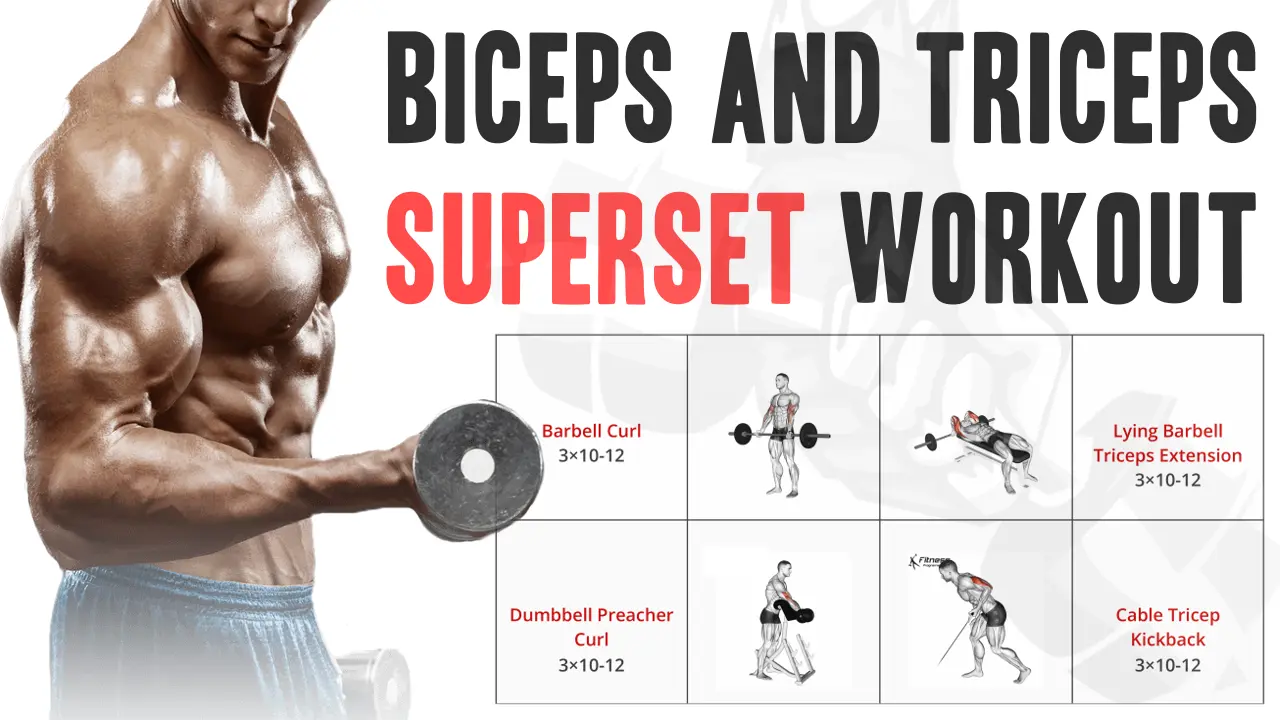
2. Superset Method (alternate Biceps And Triceps)
- Pair a biceps exercise with a triceps exercise.
- Example: Do a set of curls, rest 30 seconds, then a set of triceps pushdowns.
- Repeat for 3-4 rounds.
- Saves time and keeps intensity high.
Example Superset Routine
- Barbell Curl + Triceps Rope Pushdown (3 sets of 10-12 reps each)
- Hammer Curl + Overhead Triceps Extension (3 sets of 10-12 reps each)
- Concentration Curl + Triceps Dips (3 sets of 8-10 reps each)
This structure gives both muscles attention and helps with recovery between sets.
How Many Times Per Week Should You Train Biceps And Triceps Together?
Most people see good results training arms 1-2 times per week. If you train arms directly twice a week, allow at least 48 hours between sessions to recover. Overworking these small muscles can slow progress.
If you also work your arms indirectly during chest, shoulder, or back days, you may not need as many direct arm workouts. For example, push exercises (like bench press) already work your triceps, while pull exercises (like rows) hit your biceps.
Here’s a simple guide:
- Beginners: 1 arm session per week (6-9 sets for each muscle)
- Intermediate/Advanced: 1-2 sessions per week (8-14 sets per muscle, per week)
How To Structure An Arm Workout
A good triceps and biceps workout should cover different angles and use a mix of exercises. You don’t need many movements—quality is more important than quantity.
| Workout Structure | Example Exercise | Reps & Sets |
|---|---|---|
| Biceps Mass Builder | Barbell Curl | 3 sets x 8-12 reps |
| Biceps Isolation | Dumbbell Concentration Curl | 2-3 sets x 10-15 reps |
| Triceps Mass Builder | Close-Grip Bench Press | 3 sets x 8-12 reps |
| Triceps Isolation | Overhead Triceps Extension | 2-3 sets x 10-15 reps |
A typical workout might include:
- 2-3 exercises for biceps
- 2-3 exercises for triceps
- 2-4 sets per exercise
- 8-15 reps per set
Focus on controlled motion, good form, and full range of movement.
Common Mistakes When Training Biceps And Triceps Together
While combining arms is simple, beginners often make key mistakes that can slow progress or increase injury risk.
1. Overtraining
More is not always better. Small muscles like biceps and triceps recover quickly, but they can still be overused if you train them too often or with too much volume.
2. Neglecting Compound Movements
Only doing curls and pushdowns will limit your gains. Big exercises like rows, pull-ups, and bench presses help your arms grow by using heavy weights and engaging more muscle fibers.
3. Poor Exercise Order
If you start with your weakest muscle, the stronger one may not get enough work. Try alternating exercises, or begin with the muscle you want to improve most.
4. Bad Form
Swinging weights or using momentum takes stress off the muscles and can cause injuries. Use a weight you can control and focus on feeling the muscle work.
5. Skipping Warm-up
Cold muscles are more likely to be strained. Do some light cardio and arm circles before heavy lifting.
6. Ignoring Rest
Muscles grow when you rest, not just during training. Give your arms at least 48 hours before working them again.
Triceps And Biceps: Muscles In Daily Life
Strong arms are not just for looks. The triceps and biceps help with many daily activities:
- Biceps: Lifting bags, pulling doors open, climbing stairs using handrails
- Triceps: Pushing a shopping cart, closing heavy doors, getting up from a chair
If you train both muscles, you’ll notice these tasks become easier. For athletes, strong arms can improve performance in sports like basketball, swimming, and tennis.
Alternative Approaches: Split Vs. Combined Arm Training
Some people prefer to train biceps and triceps on separate days. This is called a split routine. For example:
- Monday: Chest + Triceps
- Wednesday: Back + Biceps
Others combine both in an arm day or add them to a full-body workout.
Which Is Best?
Both methods can work. The main difference is recovery time and how you fit arm training into your week. If you train arms with chest or back, they get worked indirectly and may not need as much direct work. If you have a dedicated arm day, you can focus more on detail and pump.
| Training Style | Pros | Cons |
|---|---|---|
| Combined Arm Day | Efficient, good pump, easy to track progress | Can be tiring, risk of overtraining if not careful |
| Split Routine | More recovery, less fatigue per muscle | May lengthen workout week, less pump |
Try each style for a few weeks and see what feels best for your body and schedule.
Tips For Maximum Results When Training Triceps And Biceps Together
1. Start With Your Weakest Muscle
If your triceps lag behind your biceps, train triceps first. Muscles worked first in a session often see the most growth.
2. Use Different Angles
Change your grip or arm position. For example, use hammer curls for biceps and overhead extensions for triceps. This hits different muscle fibers.
3. Focus On Quality, Not Quantity
Three good sets are better than five sloppy ones. Feel the muscle working.
4. Increase Weight Slowly
Don’t rush to lift heavy. Add weight when you can do all reps with perfect form.
5. Track Your Progress
Write down weights and reps. Small improvements add up over time.
6. Don’t Ignore Nutrition
Muscles need protein and calories to grow. Aim for a balanced diet with lean meats, eggs, dairy, beans, and plenty of water.
7. Get Enough Sleep
Growth happens outside the gym. Try for 7-9 hours of sleep each night.
Credit: fitnessprogramer.com
Sample Weekly Schedule For Triceps And Biceps
Here’s a sample routine if you want to train both muscles together:
- Monday: Full Body or Rest
- Tuesday: Chest + Shoulders + Triceps/Biceps
- Wednesday: Rest or Cardio
- Thursday: Legs + Core
- Friday: Back + Triceps/Biceps
- Saturday: Rest or Cardio
- Sunday: Rest
This plan gives at least two days between arm workouts. If you feel sore, add more rest.
Advanced Techniques: Supersets And Giant Sets
To save time and boost intensity, you can use supersets (pairing one biceps and one triceps exercise) or giant sets (doing 3-4 exercises in a row without rest).
Example Superset For Arms
- Barbell Curl (biceps) + Triceps Pushdown (triceps)
Do 10-12 reps of each, rest 1 minute, repeat 3 times.
Example Giant Set
- Dumbbell Curl (biceps)
- Hammer Curl (biceps)
- Skullcrusher (triceps)
- Bench Dip (triceps)
Do 8-10 reps of each, move from one to the next with no rest, then rest 2 minutes and repeat 2 more times.
These methods increase intensity but are best for intermediate or advanced lifters.

Credit: www.fondation-enovos.lu
Recovery: The Key To Bigger Arms
Muscles do not grow during training—they grow when you rest and recover. If you combine biceps and triceps in the same session, pay attention to recovery:
- Eat enough protein (about 0.7-1 gram per pound of body weight)
- Drink plenty of water
- Stretch your arms after workouts
- Get enough sleep
If you feel tired, sore, or weak, add more rest days or decrease volume.
Nutrition For Arm Growth
No workout can overcome poor nutrition. To build strong triceps and biceps, you need:
- Protein: Chicken, fish, eggs, dairy, beans
- Carbohydrates: Rice, potatoes, oats, fruits for energy
- Healthy Fats: Nuts, olive oil, avocados
- Vitamins/Minerals: Leafy greens, colorful veggies, fruits
Aim for a small calorie surplus if you want to gain muscle. If you want to lose fat but keep muscle, eat enough protein and do not cut calories too much.
Supplementation: Should You Use Protein Powders?
Supplements can help if your diet is lacking, but they are not magic. Whey protein is popular for muscle growth. Creatine can help with strength and recovery.
Always talk to a doctor before starting new supplements. Whole foods are best, but a shake after training can be convenient.
For more detailed nutrition guidance, you can visit EatRight.org, a trusted resource on sports nutrition.
Tracking Progress: Measuring Arm Gains
How do you know if your triceps and biceps are getting stronger? Track your progress:
- Measure your upper arm with a tape (relaxed and flexed)
- Write down weights and reps for each exercise
- Take progress photos every 4-6 weeks
- Notice changes in daily strength (lifting, carrying, pushing)
If the tape, photos, or numbers are not changing, review your routine, nutrition, and rest.
When To Change Your Routine
Muscles adapt to the same exercises over time. If you stop making progress, try these changes:
- Use new exercises or grips (e.g., switch from barbell to dumbbell curls)
- Change rep range (try sets of 15-20 or as low as 6-8)
- Add intensity techniques (drop sets, rest-pause)
- Adjust frequency (add or remove an arm day)
Change one variable at a time so you know what works for you.
Who Should Avoid Training Triceps And Biceps Together?
Most healthy people can safely train both muscles in one session. However, you may want to separate them if:
- You are a powerlifter focusing on maximum strength
- You have an injury in your elbow or shoulder
- You notice pain, weakness, or slow recovery
Always listen to your body and consult a trainer or doctor if you have concerns.
How To Avoid Plateaus In Arm Growth
Hitting a plateau is normal. Here’s how to break through:
1. Change Your Exercises
Try cables, dumbbells, or bodyweight moves.
2. Review Your Form
Slow down, squeeze the muscle, and avoid cheating.
3. Eat Enough
You may need more calories or protein.
4. Add Intensity
Use supersets, giant sets, or short rest periods.
5. Take A Deload Week
Every 6-8 weeks, reduce weight or volume to let your body recover.
Real-life Example: Combining Biceps And Triceps
Sarah, a busy office worker, trains after work. She does not have time for long gym sessions. She combines biceps and triceps on Tuesdays and Fridays. She alternates between supersets and traditional sets. In three months, she added half an inch to her arms and feels stronger opening doors and carrying groceries.
This shows that smart, combined arm training works—even for people with little free time.

Credit: www.youtube.com
Frequently Asked Questions
Can I Work Out Triceps And Biceps Together If I’m A Beginner?
Yes, beginners can safely train both muscles in the same session. Start with basic exercises, use light weights to learn good form, and limit total sets to avoid soreness.
How Long Should A Triceps And Biceps Workout Take?
Most effective arm workouts last 30 to 45 minutes. Focus on quality, not time. If you are in the gym much longer, you may be doing too much or resting too long between sets.
Should I Train Arms Before Or After Other Muscle Groups?
If arms are your priority, train them first. If you already train chest, back, or shoulders in the same session, do arms after. Most people do arms after large muscle groups to avoid fatigue during big lifts.
What If My Triceps Are Stronger Than My Biceps (or Vice Versa)?
Start your workout with the weaker muscle. This allows you to use more weight and focus when you have the most energy, which helps balance strength and size.
Is It Okay To Use Machines For Triceps And Biceps?
Yes, machines can be useful, especially for beginners or if you want to isolate the muscle safely. Mix machines with free weights and cables for best results.
Working out triceps and biceps together is a smart, efficient way to build stronger, more balanced arms. Whether you use supersets, traditional sets, or combine them with other muscle groups, the key is good form, smart recovery, and consistent effort. Listen to your body, adjust your plan as needed, and enjoy the results of your hard work. With the right approach, you’ll see progress in your arms and your overall strength, both in the gym and in daily life.
