

Beginner Glute Workout: Sculpt Stronger Glutes Fast
Beginner Glute Workout: Build Stronger Glutes From Day One
Many people want to shape, strengthen, and lift their glutes, but starting can feel confusing. The glute muscles are essential—not just for looks, but for everyday movement, athletic performance, and injury prevention. If you sit for long hours, have weak hips, or struggle with balance, training your glutes is a smart first step.
This guide will help you understand how to build your glutes safely and effectively, even if you are completely new to fitness.
No fancy equipment or gym membership is required. You'll learn the basics of glute anatomy, how to choose the right exercises, and the best workout routine for beginners. We'll also cover common mistakes, recovery tips, and ways to track your progress.
By the end, you'll have a complete plan to start your glute journey with confidence.
Why Glute Training Matters
Your glutes are the largest and strongest muscles in your body. They include three main parts:
- Gluteus maximus: Gives shape and power for movement like running and jumping.
- Gluteus medius: Helps with balance and stabilizes your hips.
- Gluteus minimus: Supports hip movement and keeps your pelvis steady.
Strong glutes improve posture, protect your lower back, and make walking, climbing stairs, and sports easier. Weak glutes can lead to knee pain, back pain, and poor movement.
Everyday Benefits
- Better posture: Glutes help keep your pelvis stable, reducing slouching.
- More strength: Strong glutes power you through daily activities like lifting and squatting.
- Less injury risk: They protect your knees, hips, and back from strain.
Athletic Performance
Athletes and active people rely on glutes for sprinting, jumping, and changing direction. Even non-athletes will notice improved speed and balance with stronger glutes.
Real Data
According to the American Council on Exercise, people who train their glutes regularly report up to 30% fewer lower back injuries and improved movement efficiency.
Understanding Glute Anatomy
Knowing how your glutes work makes your training more effective. Each glute muscle has a special job, and exercises target them differently.
| Glute Muscle | Main Function | Best Exercises |
|---|---|---|
| Gluteus Maximus | Hip extension, thigh rotation | Squats, hip thrusts |
| Gluteus Medius | Hip abduction, pelvis stabilization | Side-lying leg lifts, clamshells |
| Gluteus Minimus | Hip abduction, internal rotation | Single-leg bridges, banded walks |
Non-obvious Insight
Many beginners think squats alone train all glute muscles, but squats mainly target the gluteus maximus. To fully shape and strengthen your glutes, you must use exercises that focus on the medius and minimus as well.
Common Beginner Mistakes
Starting glute training the right way prevents frustration and injury. Here are mistakes many new exercisers make:
- Skipping warm-up: Muscles need to be ready before working hard. Not warming up increases injury risk.
- Wrong form: Bad technique reduces results and can hurt your knees or back.
- Ignoring all glute muscles: Focusing only on one exercise leaves parts of your glutes weak.
- Doing too much, too soon: Training too hard can cause soreness or injury. Your body needs time to adapt.
- Neglecting recovery: Muscles grow when you rest. Doing glute workouts every day is not helpful.
Practical Tip
Take progress photos and keep a simple log of your workouts. This helps you notice changes and stay motivated.
How Often Should Beginners Train Glutes?
Beginners should train glutes 2-3 times per week with at least one rest day between workouts. This gives muscles time to recover and grow.
| Training Frequency | Expected Progress | Recovery Needed |
|---|---|---|
| 1x/week | Slow | High |
| 2x/week | Moderate | Medium |
| 3x/week | Fast | Low |
Non-obvious Insight
You do not need to train every day. Overtraining can make you lose strength and motivation.

Credit: www.youtube.com
Essential Equipment For Beginners
You can train glutes with bodyweight, but adding simple equipment makes your workouts more effective.
- Resistance bands: Cheap and easy to use. Perfect for activating smaller glute muscles.
- Dumbbells: For extra resistance in squats and lunges.
- Yoga mat: Keeps you comfortable on the floor.
- Mini band: Adds resistance to moves like clamshells.
If you have none of these, you can still build strong glutes with just your bodyweight.
The Best Beginner Glute Exercises
The right exercises help you build a strong foundation. Here are the most effective moves for beginners, with step-by-step instructions and tips.
1. Bodyweight Squat
Targets: Gluteus maximus, thighs
- Stand with feet shoulder-width apart.
- Lower your hips as if sitting in a chair.
- Keep your chest up and knees behind toes.
- Press through heels to stand up.
Tip: Pause for 1 second at the bottom for better muscle activation.
2. Glute Bridge
Targets: Gluteus maximus, core
- Lie on your back, knees bent, feet flat.
- Push hips upward, squeeze glutes at the top.
- Lower slowly.
Tip: Hold the top position for 2 seconds for more effect.
3. Clamshell
Targets: Gluteus medius, minimus
- Lie on your side, knees bent.
- Keep feet together and open your top knee.
- Lower slowly.
Tip: Use a resistance band above your knees for added challenge.
4. Lateral Band Walk
Targets: Gluteus medius, minimus
- Place a resistance band around your thighs.
- Stand with knees slightly bent.
- Step sideways, keeping tension in the band.
Tip: Keep steps slow and controlled for maximum activation.
5. Step-up
Targets: Gluteus maximus, medius
- Stand before a sturdy platform.
- Place one foot on the platform, push up through your heel.
- Step down gently.
Tip: Focus on using your glute, not just your leg.
6. Single-leg Glute Bridge
Targets: Gluteus maximus, medius
- Lie on your back, one knee bent, the other leg straight.
- Push hips up, keeping the straight leg lifted.
- Lower slowly.
Tip: Start with regular glute bridges first if single-leg is too hard.
7. Donkey Kick
Targets: Gluteus maximus
- Kneel on all fours.
- Lift one leg up, keeping knee bent.
- Squeeze glute at the top, lower slowly.
Tip: Avoid arching your back for correct form.
8. Fire Hydrant
Targets: Gluteus medius
- Kneel on all fours.
- Lift one knee out to the side, keep knee bent.
- Lower slowly.
Tip: Keep hips steady, do not rotate your body.
9. Bulgarian Split Squat
Targets: Gluteus maximus, medius
- Stand with one foot in front, the other on a bench behind you.
- Lower your body, bending the front knee.
- Push up through your front heel.
Tip: Start with bodyweight, then add dumbbells when ready.
10. Hip Thrust
Targets: Gluteus maximus
- Sit on the floor, upper back against a bench.
- Roll shoulders onto the bench.
- Place feet flat, knees bent.
- Push hips upward, squeeze glutes.
Tip: Use a band or dumbbell for more resistance.
Complete Beginner Glute Workout Routine
Now, let's put these exercises into a simple routine. This workout can be done at home or in the gym.
Warm-Up (5 minutes):
- 30 jumping jacks
- 20 bodyweight squats
- 20 hip circles
Workout:
- Bodyweight Squat – 3 sets x 12 reps
- Glute Bridge – 3 sets x 15 reps
- Clamshell – 2 sets x 15 reps per side
- Lateral Band Walk – 2 sets x 10 steps each direction
- Step-Up – 3 sets x 10 reps per leg
- Donkey Kick – 2 sets x 12 reps per side
- Fire Hydrant – 2 sets x 12 reps per side
Rest: 45 seconds between sets.
Cool Down (5 minutes):
- Stretch your hamstrings, hips, and glutes.
- Hold each stretch for at least 30 seconds.
Practical Example
If you are short on time, do the first four exercises. If you want more challenge, add the rest.
Tracking Progress And Making Adjustments
Monitoring your progress keeps you motivated and helps you improve. Here are simple ways to track your glute gains:
- Take progress photos every 2 weeks.
- Write down reps and sets after each workout.
- Notice how clothes fit—stronger glutes change your shape.
| Tracking Method | How Often | What to Look For |
|---|---|---|
| Photos | Every 2 weeks | Visible muscle change |
| Workout Log | Each workout | More reps, higher weights |
| Clothing Fit | Monthly | Better shape, less tightness |
When To Increase Difficulty
- If you finish all reps easily, add more sets or resistance.
- If you feel stronger and less sore, try harder variations like single-leg moves.
Nutrition Tips For Glute Growth
Building muscle is not just about exercise. Nutrition plays a big part.
- Eat enough protein: Aim for 0.7-1 gram per pound of bodyweight per day. Protein helps muscles grow and repair.
- Include healthy carbs: Whole grains, fruits, and vegetables give energy for workouts.
- Drink water: Muscles need water to recover and stay healthy.
- Choose healthy fats: Nuts, seeds, avocados help hormone balance.
Example Meal Plan
Breakfast: Eggs, whole grain toast
Lunch: Chicken, brown rice, salad
Snack: Greek yogurt, berries
Dinner: Salmon, sweet potato, broccoli
Non-obvious Insight
Many beginners skip meals after workouts. Eating within two hours after exercise helps your glutes recover and grow faster.
Recovery And Rest
Muscle growth happens when you rest, not just when you train. Here’s how to recover better:
- Sleep at least 7 hours each night.
- Stretch after every workout—helps reduce soreness.
- Foam roll your glutes and legs to relax muscles.
- Take rest days between workouts.
Common Recovery Mistakes
- Skipping cool-down stretches.
- Not drinking enough water.
- Training every day without rest.
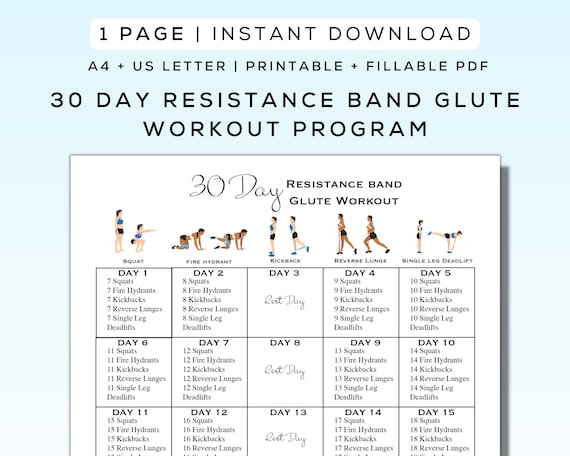
Credit: www.etsy.com
Staying Motivated As A Beginner
Starting a new workout routine is exciting, but motivation can fade. Here are ways to keep going:
- Set small goals: Try to do one more rep or set each week.
- Join a group: Online or in-person, sharing progress makes it fun.
- Reward yourself: Buy new workout clothes or enjoy a favorite meal when you reach a milestone.
Example
If you train twice a week for a month, reward yourself with something you enjoy. Small rewards build habits.
Glute Activation: Why It Matters
Many people have “sleepy” glutes because of sitting too much. Before doing any workout, activate your glutes with simple moves:
- Glute squeezes: Stand and squeeze your glutes for 10 seconds, repeat 5 times.
- Leg swings: Swing your leg forward and back 15 times per leg.
Activation helps your glutes work better during exercises.
Non-obvious Insight
If your glutes are not “turned on,” other muscles (like your back or thighs) will try to do the work. This slows your progress and can lead to pain.
Signs Your Glute Workout Is Working
How do you know if your glute training is effective? Look for these signs:
- Better posture: You stand taller and feel more balanced.
- Less lower back pain: Strong glutes support your back.
- Increased stamina: Climbing stairs or walking feels easier.
- Muscle soreness: Mild soreness in your glutes means they are working.
- Visible muscle changes: Over weeks, you notice more shape and firmness.
Sample Weekly Glute Workout Plan
Here’s a simple weekly schedule for beginners:
Day 1: Glute Workout
Day 2: Rest or light activity (walking, stretching)
Day 3: Glute Workout
Day 4: Rest
Day 5: Glute Workout
Day 6: Rest
Day 7: Rest or light activity
Adjust this plan based on your energy and recovery.
When To Use Weights Or Bands
Bodyweight exercises are great for beginners. But as you get stronger, adding resistance bands or dumbbells increases challenge and results.
- Use bands for moves like clamshells, lateral walks, and hip thrusts.
- Use dumbbells for squats, lunges, and step-ups.
Start with light weights or bands. If you can do 15 reps easily, increase resistance.
How To Avoid Plateaus
A plateau means you stop seeing progress. To avoid this:
- Change your routine every 4-6 weeks.
- Try new exercises or harder variations.
- Increase resistance or reps slowly.
Example
If you do bodyweight squats for four weeks, try adding a dumbbell or using a resistance band in week five.
Credit: caferestmoon.com
Glute Workout For Different Body Types
Everyone’s body is different. Some people have naturally stronger glutes, while others need more time. Here’s how to adjust:
| Body Type | Glute Training Tips |
|---|---|
| Lean | Focus on higher reps, eat more calories |
| Curvy | Use resistance bands, mix cardio and strength |
| Athletic | Add weight, try advanced moves sooner |
| Sedentary | Start with activation exercises, build up slowly |
Glute Training For Injury Prevention
Weak glutes can cause pain in your knees, hips, and lower back. Training your glutes helps prevent injuries:
- Supports your pelvis: Stops your hips from dropping during walking or running.
- Reduces knee pain: Glutes control the movement of your legs, protecting your knees.
- Protects your back: Strong glutes take pressure off your lower back.
Non-obvious Insight
Even if you don’t play sports, strong glutes help you avoid falls and strains as you age.
Combining Glute Training With Cardio
You can mix glute workouts with cardio for faster results and more calorie burn.
- Walking uphill: Activates glutes more than flat walking.
- Stair climbing: Builds glute strength and endurance.
- Cycling: Targets glutes, especially with higher resistance.
Do glute workouts first, then add cardio for best results.
How To Make Glute Workouts Fun
Enjoying your workouts makes you stick with them. Try these ideas:
- Listen to music while you train.
- Try new exercises often.
- Train with a friend or family member.
- Track your progress and share online.
Advanced Beginner Tips
Once you feel comfortable, try these tips:
- Combine moves: Do squats then glute bridges for more challenge.
- Use time instead of reps: Try 30 seconds per exercise.
- Add mini circuits: Do three moves back-to-back, rest, then repeat.
Resources For Further Learning
If you want to learn more about glute workouts, visit the National Academy of Sports Medicine website for expert advice:
nasm Glute Training Resource
Frequently Asked Questions
What If I Don’t Feel My Glutes Working?
If you don’t feel your glutes during exercises, try glute activation moves before your workout. Use slower reps and focus on squeezing your glutes at the top of each movement.
How Long Before I See Results?
Most beginners notice changes in strength and shape after 4-8 weeks of regular training. Progress depends on exercise quality, nutrition, and rest.
Can I Train Glutes Every Day?
No, it’s best to train glutes 2-3 times a week. Muscles need rest to grow and recover. Training every day can cause fatigue and slow progress.
Do I Need A Gym For Glute Workouts?
No, you can do glute workouts at home with bodyweight and simple equipment like bands or dumbbells. Gym machines help, but are not necessary for beginners.
Are Glute Workouts Safe For All Ages?
Yes, glute exercises are safe for most people, including older adults. Start slow, use good form, and ask a doctor if you have any injuries or health concerns.
Building strong, balanced glutes is a smart investment in your health, movement, and confidence. By following this beginner glute workout plan, you set yourself up for lasting progress. Remember, good results come with consistent effort, proper form, and patience. Start today, and enjoy the benefits of stronger glutes for life.
