

Band Glute Workout: Sculpt Stronger Glutes Anywhere
Band Glute Workout: The Complete Guide to Stronger Glutes with Resistance Bands
Building strong, toned glutes doesn’t always require heavy gym equipment. Resistance bands offer a simple, affordable, and effective way to target your glute muscles wherever you are—at home, outdoors, or even while traveling. This workout method isn’t just for beginners; many advanced athletes use bands to activate their glutes, add variety, and create new muscle challenges. If you want to shape your lower body, boost strength, and prevent injuries, a band glute workout can be a smart approach.
Let’s explore how resistance bands work for glute training, the best exercises, tips for technique, and how to make your workouts more effective. By the end, you’ll know exactly how to build glute power and see results—no matter your fitness level.
Why Train Glutes With Bands?
Your glutes are among the largest and most powerful muscles in your body. They help you stand, walk, run, jump, and keep your hips stable. Weak glutes can lead to pain in your lower back, knees, and hips. Training glutes with resistance bands is unique for several reasons:
- Constant tension: Bands keep your muscles working through the whole movement—not just at the start or end.
- Activation: Bands help you “wake up” the glute muscles, which often stay inactive during daily life.
- Joint-friendly: Bands offer resistance without stressing your joints or spine.
- Convenience: Bands are lightweight, portable, and easy to use anywhere.
A band glute workout is not only good for toning and shaping, but also for building functional strength that supports your daily movements.
How Resistance Bands Target Glutes
Different exercises with bands focus on different parts of your glutes. There are three main glute muscles:
- Gluteus maximus: The largest, responsible for hip extension (moving your leg behind you).
- Gluteus medius: Important for hip abduction (moving your leg sideways), stability, and balance.
- Gluteus minimus: Helps rotate the hip and supports movement.
Band exercises allow you to hit all three. For example, side steps target the gluteus medius, while glute bridges activate the gluteus maximus. Bands come in several strengths and styles, so you can adjust resistance to match your fitness.
Choosing The Right Resistance Band
Not all bands are equal. Picking the right one matters for safety and results. Here are the most common types:
- Loop bands: Short, circular bands perfect for lower body exercises.
- Long bands: Flat or tubular, used for full-body or advanced moves.
- Fabric bands: Thicker and less likely to roll up or snap than rubber bands.
Band resistance is usually color-coded:
| Color | Resistance Level | Recommended Use |
|---|---|---|
| Yellow | Light | Warm-ups, rehab |
| Green | Medium | General workouts |
| Blue | Heavy | Strength training |
| Black | Extra Heavy | Advanced exercises |
For glute workouts, loop bands (medium or heavy resistance) are most popular. If you’re new, start with a lighter band and move up as you get stronger.
Benefits Of Band Glute Workouts
Resistance bands bring unique advantages:
- Versatility: You can train all glute muscles with just one band.
- Progression: Easily increase resistance by switching bands.
- Accessibility: Great for beginners, busy people, or those with limited gym access.
- Injury prevention: Strong glutes support your spine, hips, and knees, lowering injury risk.
- Dynamic movements: Bands allow lateral, rotational, and multi-directional exercises that free weights can’t.
- Activation: Studies show bands are better for activating glutes compared to many traditional gym machines.
A non-obvious benefit: bands help correct muscle imbalances. Many people have one glute stronger than the other, often from sitting too much or poor posture. Band workouts can target each side, helping restore balance.
Essential Band Glute Exercises
Building a routine starts with knowing which exercises work best. Here are top moves, each explained for clarity and safety:
1. Glute Bridge With Band
- How to: Lie on your back, knees bent, feet flat, band around thighs. Lift hips until your body forms a straight line from shoulders to knees. Pause, squeeze glutes, lower back down.
- Tip: Keep your knees pushing outward against the band.
- Muscles worked: Gluteus maximus, medius.
2. Band Squats
- How to: Stand, feet shoulder-width, band above knees. Lower into a squat, keeping knees out. Return to standing.
- Tip: Don’t let knees collapse inward.
- Muscles worked: Glutes, quads.
3. Standing Band Abduction
- How to: Stand, band around ankles. Lift one leg straight out to the side. Lower, repeat other side.
- Tip: Hold onto a wall for balance.
- Muscles worked: Gluteus medius, minimus.
4. Monster Walks
- How to: Band above knees, squat slightly. Step forward and sideways in a “monster” walk, keeping tension on the band.
- Tip: Stay low, keep chest up.
- Muscles worked: Gluteus medius, maximus.
5. Fire Hydrants
- How to: On hands and knees, band above knees. Lift one knee outward like a dog at a fire hydrant. Lower, repeat other side.
- Tip: Don’t rotate your hips.
- Muscles worked: Gluteus medius, maximus.
6. Donkey Kicks
- How to: On hands and knees, band around thighs. Kick one leg back and up, squeezing glutes. Lower, switch sides.
- Tip: Keep core tight.
- Muscles worked: Gluteus maximus.
7. Band Hip Thrust
- How to: Sit on floor, upper back against a bench, feet flat, band above knees. Lift hips up, squeeze glutes, lower down.
- Tip: Pause at the top for extra activation.
- Muscles worked: Gluteus maximus.
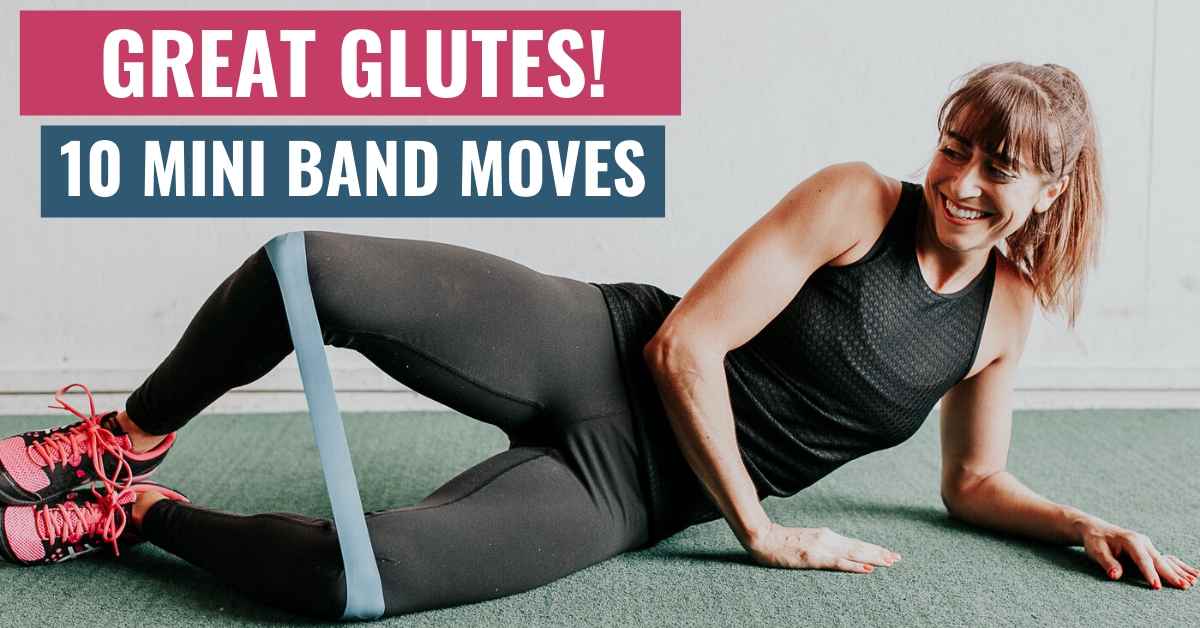
8. Side-lying Band Abduction
- How to: Lie on your side, band above knees. Lift top leg up and down.
- Tip: Don’t let hips roll backward.
- Muscles worked: Gluteus medius.
9. Band Step-outs
- How to: Band above knees, stand with feet together. Step one foot out, then back, alternating sides.
- Tip: Keep tension on band throughout.
- Muscles worked: Gluteus medius.
10. Band Kickbacks
- How to: Stand, band around ankles. Kick one leg straight back, squeeze glute. Switch sides.
- Tip: Keep torso upright.
- Muscles worked: Gluteus maximus.
Sample Band Glute Workout Routine
If you’re unsure how to put exercises together, here’s a sample routine for beginners and intermediate levels. Adjust sets and reps based on your strength.
| Exercise | Sets | Reps | Rest |
|---|---|---|---|
| Glute Bridge | 3 | 15 | 45s |
| Band Squats | 3 | 12 | 45s |
| Monster Walks | 2 | 20 steps | 60s |
| Fire Hydrants | 2 | 12/side | 30s |
| Standing Abduction | 2 | 15/side | 30s |
Perform this routine 2–3 times per week, allowing at least one day of rest between workouts.
Advanced Band Glute Workouts
Once you build strength, you can increase intensity:
- Use heavier bands.
- Add more sets or reps.
- Slow down the movement for more time under tension.
- Try single-leg versions for extra challenge.
- Combine band exercises with bodyweight or dumbbells.
Examples include single-leg hip thrusts, Bulgarian split squats with band, and explosive jump squats. Advanced athletes often use bands for warm-up and activation before heavy lifts.
Common Mistakes To Avoid
Even simple band exercises can go wrong. Watch for these errors:
- Letting knees collapse inward: This reduces glute activation.
- Using too light/heavy bands: If the band is too light, you won’t feel your glutes work. If too heavy, your form breaks down.
- Not keeping tension: Always keep the band stretched, even at the start and finish of each move.
- Poor posture: Rounding your back or tilting hips can cause injury and reduce effectiveness.
- Neglecting both sides: Train both legs equally to avoid imbalances.
A less obvious mistake: skipping warm-up. Even with bands, warming up increases blood flow, protects joints, and helps you perform better.
How To Progress With Band Glute Workouts
Progress is key for results. Here’s how to improve:
- Increase resistance: Move to a heavier band as you get stronger.
- Add reps or sets: Gradually increase volume each week.
- Improve form: Focus on slow, controlled movements.
- Try new exercises: Change your routine every 4–6 weeks.
- Combine bands: Use two bands for extra resistance.
You can also track your progress by measuring hip or thigh size, noting how many reps you can do, or seeing improvements in daily movements (like climbing stairs).
Band Glute Workout For Specific Goals
Band glute workouts can help with different goals:
- Toning and shaping: Use moderate resistance, higher reps.
- Strength building: Use heavy bands, fewer reps.
- Athletic performance: Focus on explosive moves, like band jump squats.
- Rehabilitation: Use light bands, gentle movements, and focus on form.
For runners, strong glutes reduce injury risk and improve speed. For older adults, glute exercises help prevent falls and support hip health. For people with desk jobs, band workouts can counteract sitting-related muscle weakness.

Credit: www.afvt.org
Glute Activation: Why It Matters
Many people have “sleepy” glutes. Sitting for hours weakens these muscles and makes them less active. Band exercises are great for glute activation—turning the muscles “on” before bigger lifts or sports.
Try a band glute circuit as a warm-up before squats, deadlifts, or running. This not only improves your workout, but also protects your knees and back.
Tips For Better Results
Here are practical ways to maximize your band glute workout:
- Mind-muscle connection: Focus on feeling your glutes working, not just moving your legs.
- Control the movement: Avoid swinging or rushing. Slow reps mean more activation.
- Keep tension: The band should stay tight throughout the exercise.
- Change angles: Try exercises in different positions—standing, lying, kneeling—for full glute activation.
- Rest properly: Muscles need time to recover and grow.
- Stay consistent: Results come from regular workouts, not occasional effort.
Advanced tip: Mix band exercises with free weights. For example, do a barbell hip thrust with a band around your knees. This combines both resistance types for deeper muscle activation.
Comparing Band Glute Workouts To Gym Machines
How does band training stack up against gym machines? Here’s a quick comparison:
| Factor | Resistance Bands | Gym Machines |
|---|---|---|
| Cost | Low | High |
| Portability | High | Low |
| Muscle Activation | High (dynamic) | Moderate |
| Variety | Wide (multi-angle) | Limited |
| Space Needed | Minimal | Large |
Studies show bands can activate glute muscles as much or more than machines, especially when you keep tension and use proper form.
Safety And Band Care
Bands can break or snap if misused. Here’s how to protect yourself:
- Check bands for cracks, tears, or worn spots before each workout.
- Never stretch a band more than twice its resting length.
- Store bands away from sunlight, heat, or moisture.
- Wash fabric bands as needed, but avoid harsh chemicals.
- Replace bands if they lose elasticity.
If a band snaps during exercise, stop immediately. Using bands correctly keeps your workout safe and enjoyable.
Can You Build Glutes With Bands Only?
Many ask if band workouts alone can build strong, round glutes. The answer depends on your goals. For beginners and intermediate exercisers, bands are enough to see noticeable changes in strength, tone, and shape. For advanced muscle growth, you might need to combine bands with weights.
However, bands offer unique activation and variety. They target muscles differently, reach deep fibers, and keep tension constant. You can build a solid foundation or maintain results with bands even as you progress.
How Often Should You Train Glutes With Bands?
Frequency matters for results. For most people:
- Beginners: 2 times per week
- Intermediate: 3 times per week
- Advanced: 3–4 times per week
Allow at least one day between sessions for recovery. Listen to your body—if you feel sore or tired, rest more. Overtraining can lead to injuries or slow progress.
Nutrition For Glute Growth
Exercise is only part of the equation. Nutrition helps muscles grow, recover, and stay healthy. Focus on:
- Protein: Helps repair and build muscle fibers. Aim for 0.7–1 gram per pound of body weight.
- Healthy fats: Support hormone balance and joint health.
- Complex carbs: Provide energy for workouts.
- Hydration: Muscles need water to function and recover.
Eat a meal with protein and carbs within 1–2 hours after your workout for best results. Supplements aren’t necessary but can help if you struggle to meet your protein needs.
Band Glute Workout For Busy Schedules
If you’re short on time, you can still fit in a glute workout:
- Choose 3–4 exercises, perform 2 sets each.
- Use circuit training (move from one exercise to the next with little rest).
- Focus on quality, not just quantity.
A quick band glute routine can be done in 15–20 minutes, making it perfect for busy lifestyles.
Adjusting Band Glute Workouts For Different Fitness Levels
Band workouts are easy to adapt. Here’s how to adjust:
- Beginner: Use light bands, fewer reps, slow pace.
- Intermediate: Medium bands, more reps, combine exercises.
- Advanced: Heavy bands, single-leg moves, add jumps or holds.
If you have injuries, start with gentle moves and check with a healthcare professional. Pregnant women can do band glute workouts, but avoid lying on your back after the first trimester and always consult a doctor.
Real-life Success Stories
Many people have transformed their glutes using bands. For example, a fitness enthusiast struggled with squats and back pain. Switching to band exercises helped activate her glutes, improve strength, and reduce pain. Another athlete used bands to recover from hip surgery, rebuilding muscle safely.
Bands are also popular among professional athletes, dancers, and runners. They use bands for warm-ups, injury rehab, and adding variety to their routines.

Credit: www.bibliotecaoscura.com
Scientific Evidence For Band Glute Training
Research supports the effectiveness of band training. A study published by the National Strength and Conditioning Association found that band exercises like glute bridges and hip abductions produced higher glute activation than many machine-based workouts.
Another insight: band workouts improve balance and coordination, not just strength. This makes them valuable for all ages and activity levels.
For more details, see National Institutes of Health.
Frequently Asked Questions
What Size Resistance Band Is Best For Glute Workouts?
Choose a loop band that fits snugly above your knees. Start with medium resistance. If you’re a beginner, lighter bands help you learn form. For advanced users, heavy bands offer more challenge. The right band should let you feel tension without losing proper form.
How Long Does It Take To See Results From Band Glute Workouts?
Most people notice toning and strength improvements within 4–6 weeks with consistent training. Visible changes depend on your starting point, workout intensity, and nutrition. For muscle growth, give yourself several months of regular exercise.
Can I Do Band Glute Workouts Every Day?
It’s best to train glutes with bands 2–4 times per week. Muscles need rest to grow and recover. Daily workouts can lead to overtraining or injuries. If you want to exercise daily, work other muscle groups or use lighter bands for gentle activation.
Are Band Glute Workouts Safe For Beginners?
Yes, band glute workouts are safe and effective for beginners. Start with simple exercises, light resistance, and focus on form. Avoid rushing or using heavy bands too soon. If you have injuries or health concerns, consult a professional before starting.
Can Resistance Bands Replace Weights For Glute Training?
Bands can build strength and tone your glutes, especially for beginners and intermediate levels. For advanced muscle growth, combining bands with weights can offer the best results. Bands are excellent for activation, variety, and functional strength.
Getting stronger, more toned glutes doesn’t require expensive gym memberships or heavy weights. Resistance bands give you the power to train your glutes anywhere, with exercises suitable for all fitness levels. Whether you’re looking to tone, build strength, or improve athletic performance, band glute workouts offer a smart, safe, and effective solution.
Stay consistent, focus on form, and progress your routine for best results. Your glutes—and your body—will thank you.
Credit: redefiningstrength.com
