

What is Business Casual Women: Ultimate Style Guide for 2024
What Is Business Casual Women
Finding the right balance between professional and comfortable at work is a challenge for many women. The term business casual often creates confusion, especially because it means different things at different companies. If you are new to the workforce, moving to a new job, or just want to update your wardrobe, knowing what business casual women means can help you make smart choices.
This article will explain what business casual is, how it differs from other dress codes, what items are usually included, and how to build a wardrobe that works for most offices. You will also learn about common mistakes, practical tips, and how to adapt your style for different industries.
At the end, you will find a FAQ section that answers the most common questions.
Understanding Business Casual For Women
Business casual is a dress code that blends professional attire with elements of comfort and style. It is less formal than traditional business wear but still looks neat and polished. Unlike casual wear, business casual is not meant for leisure or weekends. It is designed to show you are serious about your work, but you do not need to wear a full suit.
The main goal of business casual for women is to look professional, approachable, and comfortable. This dress code is common in offices, tech companies, schools, and some creative workplaces. However, what is considered business casual can differ by country, company, and industry.
Key Differences: Business Casual Vs. Other Dress Codes
It’s important to know how business casual compares to other common dress codes. The following table shows the main differences:
| Dress Code | Main Features | Typical Clothing |
|---|---|---|
| Formal Business | Very strict, traditional, conservative | Suits, blazers, dress pants, formal skirts, closed-toe shoes |
| Business Casual | Professional, relaxed, comfortable | Blouses, cardigans, tailored pants, knee-length skirts, flats |
| Smart Casual | Stylish, modern, semi-professional | Chic tops, dark jeans, trendy shoes, statement accessories |
| Casual | Informal, personal style | T-shirts, jeans, sneakers, casual dresses |
Business casual sits between formal business and smart casual. It is less strict than formal business, but not as relaxed as casual dress. Many companies choose business casual because it allows employees to feel comfortable while maintaining a professional image.
Essential Elements Of Business Casual Women
Knowing what to include in your business casual wardrobe makes dressing for work much easier. Here are the main items and features:
- Tops: Blouses, button-down shirts, knit tops, and sweaters. Patterns are fine if they are not too bold.
- Bottoms: Tailored pants, chinos, knee-length skirts, and sometimes dark, non-ripped jeans.
- Dresses: Simple sheath dresses, wrap dresses, and shift dresses that are not too tight or short.
- Outer Layers: Cardigans, blazers, and lightweight jackets.
- Shoes: Flats, loafers, low heels, and sometimes dressy sandals. Avoid sneakers and flip-flops.
- Accessories: Belts, simple jewelry, scarves, and structured handbags.
What Not To Wear
Avoid clothing that looks too casual, revealing, or messy. Common mistakes include:
- Wearing tank tops, crop tops, or spaghetti straps without a cover-up
- Sporting shorts, mini skirts, or leggings as pants
- Using bold, flashy prints or graphics
- Choosing shoes like sneakers, flip-flops, or platform sandals
- Wearing wrinkled or stained clothes
Building A Business Casual Wardrobe
Creating a wardrobe for business casual does not mean buying expensive clothes. The focus is on quality, fit, and versatility. A few well-chosen pieces can be combined in many ways. Here’s how to build your wardrobe step by step:
Step 1: Start With Basics
Choose neutral colors like black, gray, navy, and beige. These colors are easy to mix and match. Look for classic pieces that fit well.
- Tailored pants (2-3 pairs)
- Knee-length skirts (1-2)
- Simple blouses (3-5)
- Cardigans or blazers (2)
Step 2: Add Variety And Personality
Once you have the basics, add color and pattern with tops, scarves, and accessories. Choose items that show your personality but stay professional.
- Printed blouses
- Jewel-toned sweaters
- Statement necklaces
Step 3: Buy Quality Shoes
Comfortable shoes are important. Choose flats, loafers, or low heels that you can wear all day.
Step 4: Include Practical Outerwear
A lightweight jacket or classic trench coat works for most seasons. Make sure it fits over your clothes and looks neat.
Step 5: Accessorize Smartly
Structured bags, simple jewelry, and belts can make your outfit look finished.
Sample Business Casual Capsule Wardrobe
Here is an example of a small wardrobe that covers most needs:
| Item | Quantity | Reason |
|---|---|---|
| Tailored Pants | 2 | Professional, versatile |
| Skirts | 1 | Change of style, formal |
| Blouses | 4 | Easy to mix and match |
| Cardigan/Blazer | 2 | Layering for warmth and style |
| Dress | 1 | Quick outfit option |
| Shoes | 2 | Comfort for daily use |
| Accessories | 3 | Finishing touch |
Adapting Business Casual For Different Industries
Not all workplaces have the same standards for business casual. Some industries are more formal, while others are creative or relaxed. Here’s how to adjust your style:
Corporate Offices
Corporate offices usually expect classic business casual. Stick with tailored pants, blouses, and blazers. Avoid jeans unless your company specifically allows them. Closed-toe shoes are safest.
Tech Companies
Tech companies are often more relaxed. You can wear dark jeans, casual blouses, and comfortable shoes. However, avoid shorts, flip-flops, and graphic tees. Keep your look neat.
Creative Fields
In creative industries like marketing or design, you can add more color and style. Try patterned skirts, bold accessories, and trendy shoes. But always check company guidelines.
Education And Healthcare
For education and healthcare, comfort and practicality are important. Choose clothes you can move in, like knee-length skirts, soft pants, and easy-care fabrics. Avoid anything too tight or short.
Business Casual For Different Seasons
Your business casual wardrobe should work all year. Here’s how to adapt for each season:
Spring And Summer
Light fabrics like cotton, linen, and blends work well. Choose short-sleeve blouses, knee-length skirts, and dressy sandals (if allowed). Avoid sleeveless tops unless you wear a cardigan or jacket.
Fall And Winter
Layering is key. Wear sweaters, cardigans, and blazers. Choose thicker fabrics like wool and tweed. Pair tailored pants with boots or closed-toe shoes. Scarves can add warmth and style.
Weather And Practicality
Always check the weather and plan your outfit. Keep an umbrella, extra shoes, or a spare jacket at work if needed.
Common Business Casual Mistakes Women Make
Even experienced professionals make mistakes with business casual. Here are some errors to avoid:
- Wearing clothes that do not fit: Too tight or too loose clothes look unprofessional.
- Ignoring company guidelines: Every company has its own rules. Always check before you try something new.
- Choosing overly casual items: Jeans with rips, sneakers, or graphic tees are rarely business casual.
- Over-accessorizing: Too much jewelry or bright accessories can distract from your professional look.
- Neglecting grooming: Wrinkled clothes, messy hair, or worn-out shoes make a bad impression.

Credit: www.sumissura.com
Tips For Shopping Smart
Shopping for business casual does not need to be expensive. Here’s how to get the best value:
- Buy mix-and-match pieces: Choose tops and bottoms that work together.
- Invest in quality basics: Good pants, blouses, and shoes last longer.
- Shop during sales or at outlet stores.
- Try secondhand shops for affordable options.
- Check online reviews for fit and quality.
A non-obvious tip: Many women forget to check the dress code of their specific office before shopping. Always ask HR or observe what others wear, especially when starting a new job. Another insight: Don’t underestimate the value of a good tailor. Small adjustments make inexpensive clothes look much more professional.
Business Casual For Remote Work
With more people working remotely, business casual is changing. Some companies expect video call attire, while others are flexible. Here’s how to stay professional from home:
- Wear a neat top: Choose a blouse or sweater for video calls.
- Avoid pajamas or tank tops, even if you are not seen.
- Keep grooming simple but tidy (hair brushed, minimal makeup).
- Dress in comfortable pants or skirts if you prefer.
Remote work gives more freedom, but showing you care about your appearance helps build trust and respect with colleagues.
Business Casual Trends And Modern Styles
Business casual is not static. Styles change over time, influenced by fashion trends and workplace culture.
Popular Trends
- Wide-leg pants: More comfortable but still professional.
- Midi skirts: Longer than knee-length, stylish and modest.
- Soft blazers: Less structured, easy to layer.
- Bold colors and prints: Used in moderation for personality.
- Sustainable fabrics: Eco-friendly materials are popular.
A recent survey showed about 60% of US offices now allow business casual, with many offering flexibility for jeans and sneakers if they look neat.
Adapting Trends Without Losing Professionalism
Not every trend suits business casual. When trying something new, make sure it fits your office culture and maintains a polished look. For example, wide-leg pants are great if paired with a fitted blouse and simple shoes. Midi skirts look professional with a tucked-in top and a belt.
How To Express Your Personality In Business Casual
Many women worry business casual will make them look boring. In reality, you can show your style through smart choices:
- Choose colors and patterns you like, but keep them balanced.
- Add unique accessories like a favorite necklace, scarf, or bag.
- Wear comfortable shoes that fit your taste.
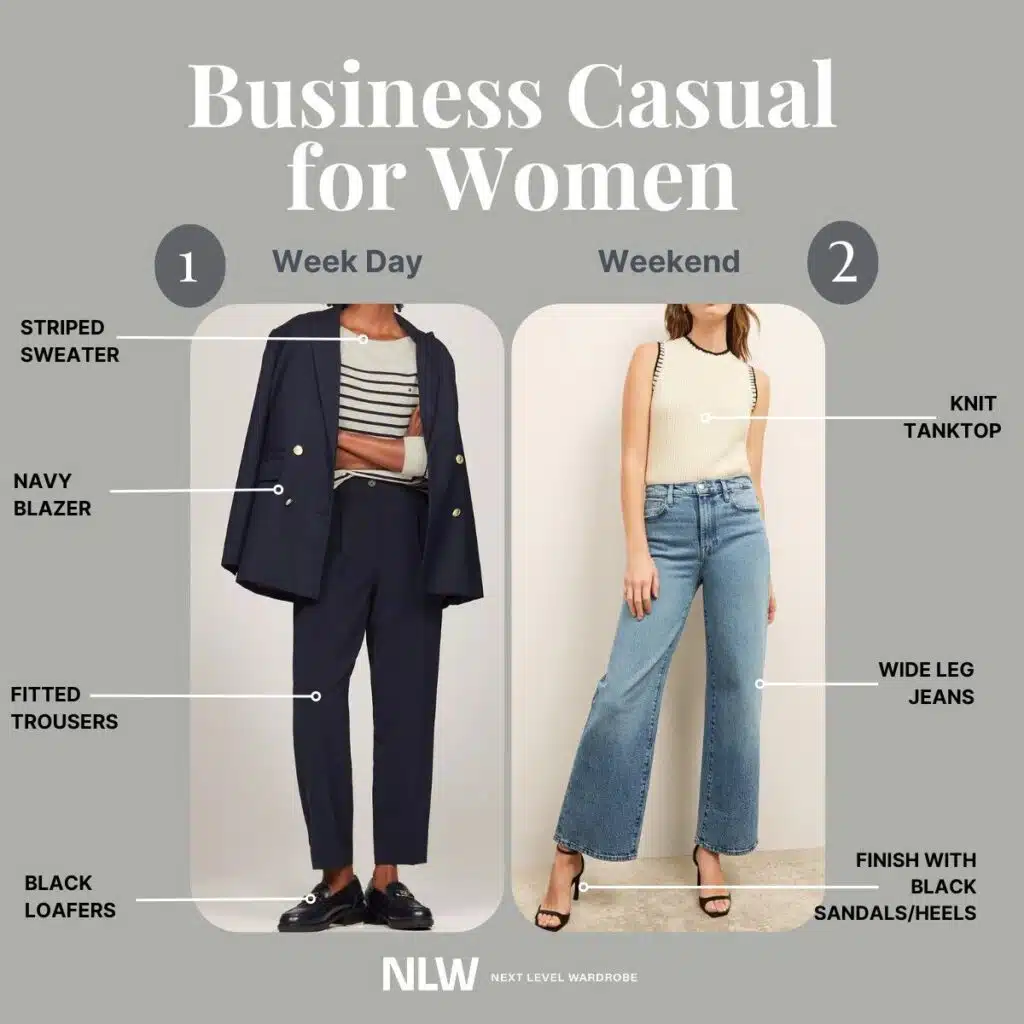
- Try layering with cardigans, jackets, or vests.
Remember: Personality is important, but professionalism comes first. If you are unsure, start with classic styles and add touches slowly.
Credit: nextlevelwardrobe.com
Business Casual For Plus Size And Petite Women
Finding business casual clothes that fit well is a challenge for plus size and petite women. Here are practical tips:
Plus Size
- Look for brands with inclusive sizing and quality fabrics.
- Choose structured pieces like blazers and tailored pants.
- Avoid oversized items; they can look sloppy.
- Use belts and fitted tops to define your shape.
Petite
- Search for brands that offer petite sizing.
- Avoid clothes with too much fabric or long hems.
- Choose high-waisted pants and skirts to lengthen your look.
- Try cropped jackets and fitted blouses.
A helpful insight: Many women forget that alterations can make a big difference. Even small changes, like shortening sleeves or adjusting waistbands, can turn a basic item into a perfect fit.
Business Casual For Different Age Groups
Business casual is not only for young professionals. Women of all ages can adapt the style:
- Younger women may prefer modern cuts, patterns, and trendy accessories.
- Middle-aged women often choose classic styles and quality fabrics.
- Older women may like comfortable, timeless pieces with subtle details.
The key is to pick clothes that suit your age, body, and style, while keeping the business casual look polished.
The Role Of Grooming And Hygiene
Clothing is important, but grooming matters just as much. Here’s what to focus on:
- Keep hair neat and tidy.
- Use minimal makeup for a fresh look.
- Choose simple, clean nails (avoid bright colors).
- Wear clean, well-maintained shoes.
- Avoid strong perfume or scents.
Good grooming helps you look professional and feel confident.
How Companies Communicate Business Casual
Not all companies explain business casual clearly. Some have written dress codes, others rely on culture. Here’s how to understand your company’s rules:
- Ask HR for a dress code policy.
- Observe what colleagues wear.
- Check the company website or employee handbook.
If you are unsure, dress more formally at first. You can always adjust later.
Business Casual For Special Occasions
Sometimes you need to dress business casual for special events like meetings, interviews, or company parties. Here’s how to adapt:
- For interviews: Choose classic pieces, neutral colors, and simple accessories.
- For meetings: Dress slightly more formal than usual.
- For parties: Add a touch of style with a nice dress or statement jewelry, but stay professional.
A non-obvious tip: For interviews, always check the company dress code before choosing your outfit. Many candidates make mistakes by dressing too casual or too formal.
Business Casual For International Workplaces
Business casual changes in different countries. For example, in Europe, women often wear more tailored pieces and muted colors. In Asia, modesty is important, so avoid low-cut tops or short skirts. Always research local norms before traveling or working abroad.
Credit: stylishlyme.com
Case Study: Real-life Business Casual Examples
Let’s look at three real-life examples to see how business casual works:
- Tech Company: Susan wears dark jeans, a printed blouse, a soft blazer, and loafers. She adds a bright scarf for style.
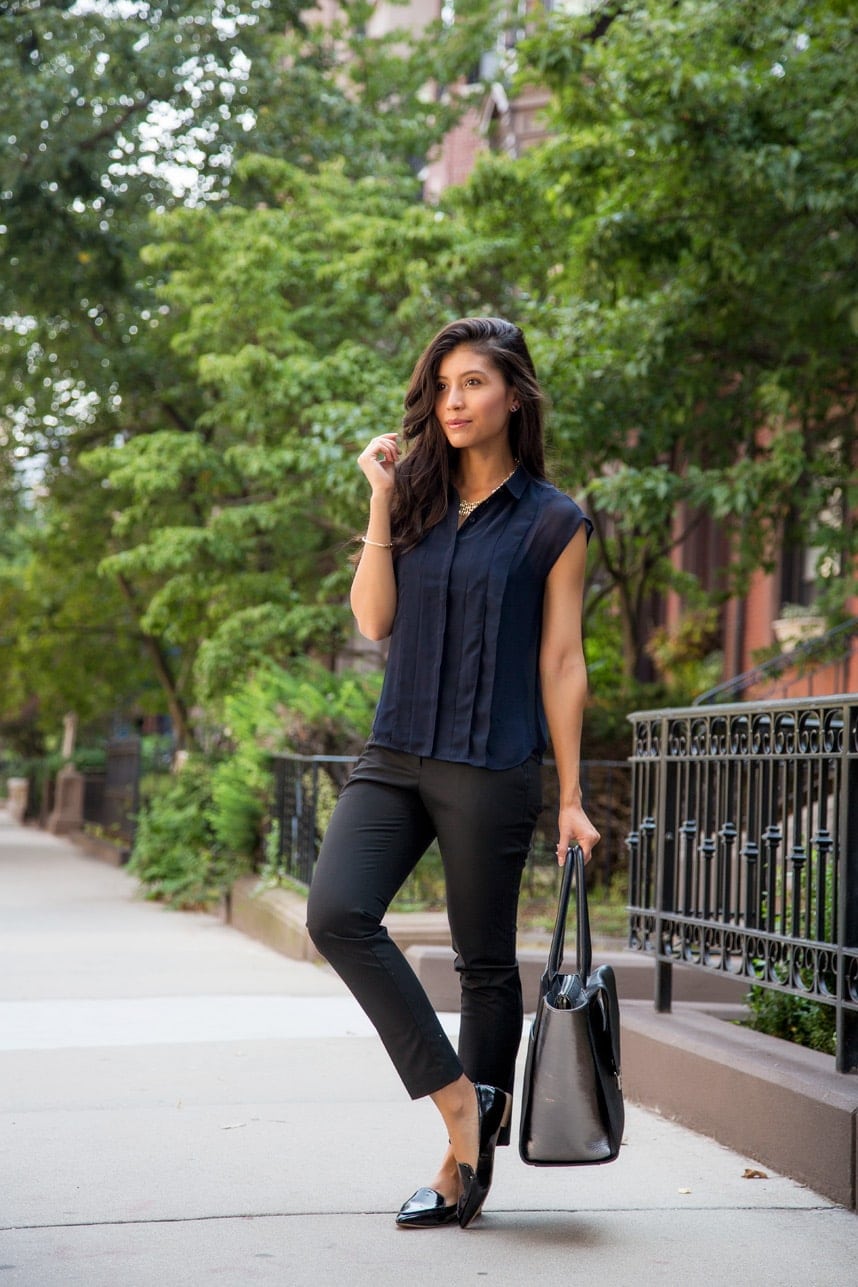
- Corporate Office: Maria chooses tailored pants, a white blouse, a navy cardigan, and low heels. Her accessories are simple and classic.
- Marketing Agency: Lisa wears a midi skirt, a fitted top, trendy ankle boots, and a statement necklace. Her outfit is stylish but professional.
These examples show how business casual can fit different workplaces and personalities.
Comparing Business Casual Outfits
Here’s a table showing how different items create distinct business casual looks:
| Outfit Type | Tops | Bottoms | Shoes | Accessories |
|---|---|---|---|---|
| Classic | Button-down blouse | Tailored pants | Low heels | Simple jewelry |
| Modern | Knit top | Wide-leg trousers | Flats | Bold necklace |
| Creative | Patterned blouse | Midi skirt | Dressy boots | Statement bag |
| Relaxed | Sweater | Dark jeans | Loafers | Printed scarf |
Why Business Casual Matters
Business casual is more than just clothes. It affects how others see you, your confidence, and your comfort at work. Wearing the right outfit helps you focus on your job, connect with colleagues, and build your professional image.
A key insight: Business casual gives flexibility, but it also needs attention. Choosing the right pieces and keeping your look neat shows respect for your job and workplace.
Frequently Asked Questions
What Is Considered Business Casual For Women?
Business casual for women usually includes blouses, tailored pants, knee-length skirts, cardigans, and low heels. The goal is to look professional but comfortable. Avoid clothes that are too casual, revealing, or messy.
Can Women Wear Jeans In Business Casual?
It depends on the company. Some offices allow dark, non-ripped jeans as part of business casual, while others do not. Always check your company’s dress code before wearing jeans.
Are Sleeveless Tops Allowed In Business Casual?
Sleeveless tops can be business casual if they are not too revealing and are paired with a blazer or cardigan. Spaghetti straps, crop tops, or tank tops are usually not appropriate.
What Shoes Are Best For Business Casual Women?
The best shoes are flats, loafers, low heels, and dressy boots. Avoid sneakers, flip-flops, and platform sandals. Comfort and style are important for long workdays.
How Can Women Express Their Personality In Business Casual?
Women can express their personality with colors, patterns, accessories, and shoe choices. Start with classic pieces and add touches that fit your style, but always keep the look professional.
For more details and examples, you can visit the official Wikipedia page.
Business casual for women is a flexible, modern dress code that helps you look professional and comfortable. By knowing the basics, adapting to your workplace, and expressing your style, you can build a wardrobe that fits your needs and personality.
Always check company guidelines, invest in quality pieces, and remember that grooming is just as important as clothing. With these tips, you can confidently dress for success every day.
