

Is It Okay to Wear Smart Casual for Interview? Expert Advice
Is It Okay To Wear Smart Casual For Interview
First impressions matter, especially in job interviews. What you wear can shape how your interviewer sees you, even before you say a word. Many people feel unsure about the right outfit—should it be formal, business casual, or is smart casual enough? The answer isn’t always simple. Dress codes have changed, and expectations vary between industries and companies. This article explores if smart casual is suitable for interviews, the risks and benefits, how to decide, and practical tips for making the right choice. Whether you’re applying for your first job or switching careers, understanding this can help you feel confident and prepared.
What Is Smart Casual?
Smart casual sits between formal business attire and casual wear. It combines neat, stylish clothing with relaxed elements. The goal is to look polished, but not stiff or overly dressed up.
Key Elements Of Smart Casual
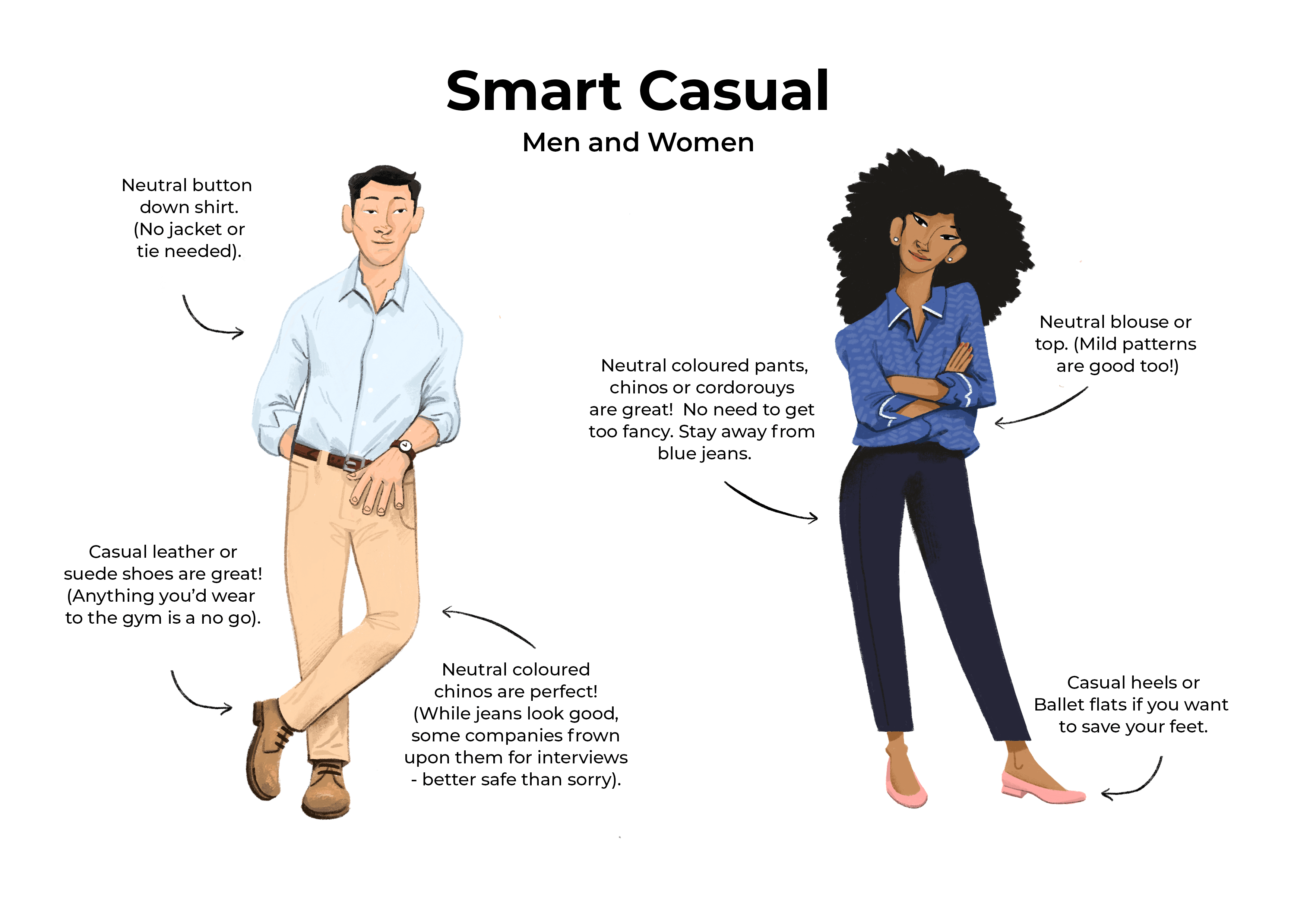
- Blazers or tailored jackets
- Dress shirts or blouses (not necessarily with a tie)
- Dark jeans or chinos (avoid ripped or faded pants)
- Dress shoes or clean loafers (no sneakers)
- Minimal accessories (watches, belts, simple jewelry)
Smart casual allows more freedom than strict business dress. For example, you might wear a blazer with dark jeans and a clean shirt, instead of a full suit.
How Smart Casual Differs From Other Dress Codes
Let’s compare smart casual with common interview dress codes:
| Dress Code | Typical Items | Formality Level |
|---|---|---|
| Formal (Business) | Suits, ties, dress shoes | Very high |
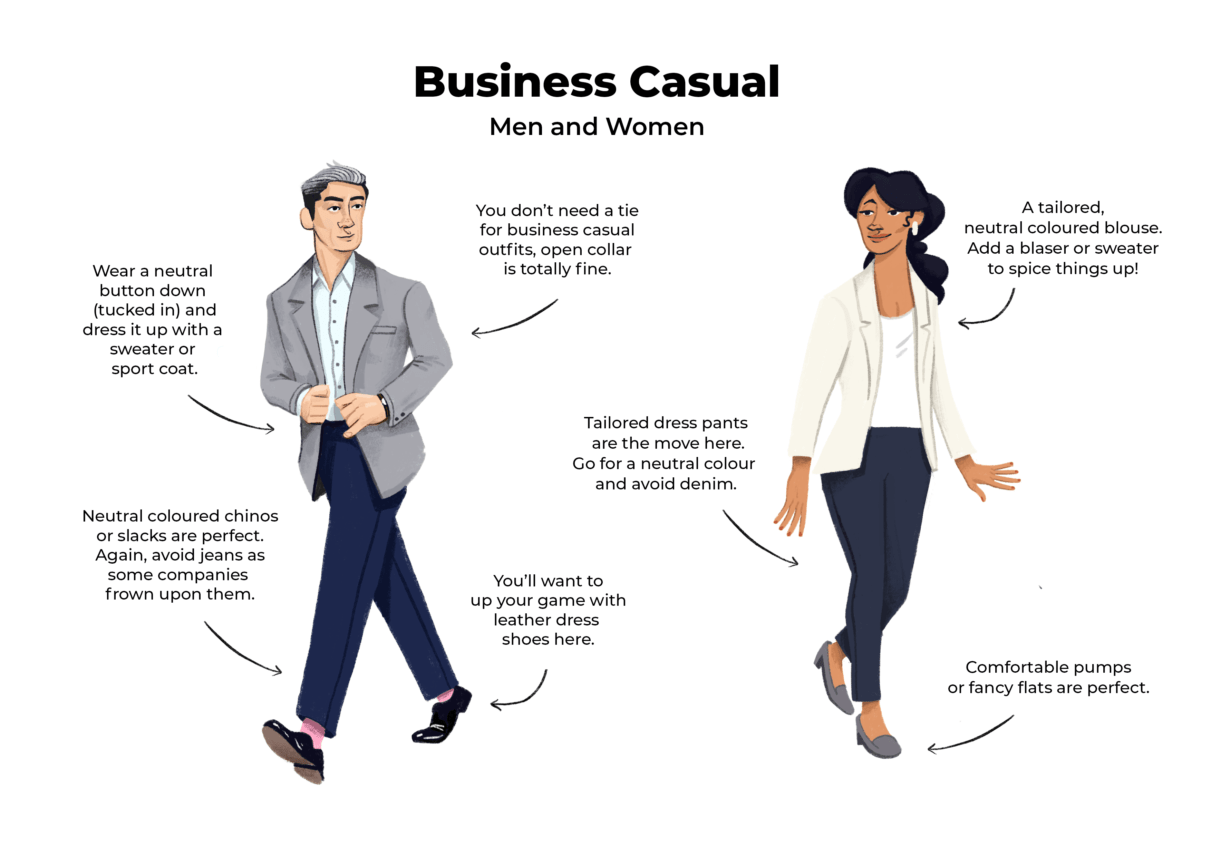
| Business Casual | Dress pants, button shirts, blouses | Medium-high |
| Smart Casual | Blazers, dark jeans, clean shirts | Medium |
| Casual | T-shirts, sneakers, jeans | Low |
Smart casual is more relaxed than business formal, but still neat and professional. It’s not as loose as everyday casual wear.
The Importance Of Dress In Interviews
Why does clothing matter in interviews? It’s not just about fashion—it’s about perception and professionalism.
First Impressions
Studies show that people form opinions about others within seven seconds. Your clothes signal how serious you are, how you respect the company, and if you fit their culture. A well-chosen outfit can boost your confidence and help you make a positive impact.
Employer Expectations
Some employers see your outfit as a test. If you dress too casually, they may worry that you’re not serious. If you overdress, you could seem out of touch with their workplace style. The right balance shows you understand their culture.
Data On Interview Attire
A survey by CareerBuilder found that 49% of hiring managers say dressing inappropriately is a common interview mistake. Another survey showed that 65% of managers believe interview attire affects their decision.
Interview attire doesn’t guarantee you’ll get the job, but it does influence how you’re remembered.
When Is Smart Casual Appropriate?
Smart casual can work for interviews, but context matters. There are times when it’s the perfect choice, and times when it’s risky.
Industries Where Smart Casual Is Accepted
- Tech companies (startups, software firms)
- Creative fields (design, advertising, media)
- Retail and hospitality (depending on role)
- Education (non-teaching positions)
These industries often value skills and personality over strict dress codes. They may see smart casual as a sign that you fit their flexible, modern culture.
Roles That Allow Smart Casual
- Junior positions or internships
- Freelance or contract work
- Customer support roles
- Sales or marketing (in casual companies)
If the job isn’t client-facing, or if the company is known for relaxed dress, smart casual is usually fine.
When To Avoid Smart Casual
Some situations demand formal attire:
- Finance and law (banks, accounting, law firms)
- Government jobs
- Executive roles
- Formal interviews (panel, assessment centers)
If you’re unsure, it’s safer to dress more formally. Being slightly overdressed is usually better than being underdressed.
How To Decide: Smart Casual Or Formal?
Choosing the right outfit isn’t always easy. Here are practical steps to help you decide.
Research The Company
- Check the company website: Look for photos of staff. Are they wearing suits, or relaxed clothes?
- Read job descriptions: Some ads mention dress codes or company culture.
- Visit social media pages: LinkedIn, Instagram, or Facebook often show real office environments.
- Ask your recruiter: If you have a contact, politely ask about expected attire.
Understand Company Culture
Some companies value tradition; others value innovation. For example, a startup may welcome smart casual, while a bank expects formal dress. If you’re interviewing in a new industry, talk to someone who works there.
Use Location Clues
If the interview is at a coworking space, coffee shop, or modern office, smart casual is likely safe. For older corporate buildings or formal meeting rooms, lean toward business formal.
Consider Your Role
Client-facing roles, management jobs, or positions with responsibility often require formal dress. For entry-level or creative jobs, smart casual is more acceptable.
Practical Decision Table
Here’s a quick reference for deciding your outfit:
| Company Type | Role Level | Recommended Attire |
|---|---|---|
| Corporate (Finance, Law) | Any | Formal |
| Startup/Tech | Junior/Entry | Smart Casual |
| Creative Agency | Mid/Senior | Smart Casual |
| Government | Any | Formal |
| Retail/Hospitality | Staff | Smart Casual |
If you’re still unsure, dress one step more formally than you expect. For example, add a blazer to your smart casual look.
Smart Casual Interview Outfit Ideas
Getting the right smart casual outfit can be tricky. Here are some examples for men and women.
For Men
- Blazer (navy or gray)
- Collared shirt (white, light blue, or patterned)
- Dark jeans or chinos
- Leather shoes or loafers
- Minimal accessories (watch, belt)
Avoid sneakers, T-shirts, or flashy jewelry.
For Women
- Tailored blazer or cardigan
- Blouse or smart top
- Dark jeans, trousers, or a knee-length skirt
- Low heels or flats
- Simple jewelry (stud earrings, watch)
Skip overly casual items like ripped jeans, flip-flops, or large handbags.
Outfit Combinations
- Blazer + collared shirt + dark jeans + dress shoes
- Cardigan + blouse + trousers + flats
- Smart sweater + tailored pants + loafers
Common Mistakes
- Too casual: T-shirts, shorts, or sandals are never smart casual.
- Too formal: Wearing a suit and tie to a relaxed company can feel stiff.
- Over-accessorizing: Keep jewelry and watches simple.
- Ignoring fit: Ill-fitting clothes look sloppy, even if they’re smart.
Smart Casual Vs Business Formal: Pros And Cons
Choosing smart casual has both advantages and disadvantages. Let’s look at the key points.
| Aspect | Smart Casual | Business Formal |
|---|---|---|
| Comfort | High | Medium |
| Modern image | Strong | Traditional |
| Fit for creative jobs | Yes | No |
| Fit for corporate jobs | Sometimes | Always |
| Risk of underdressing | High | Low |
| Risk of overdressing | Low | High |
Benefits Of Smart Casual
- Comfortable: You feel relaxed and confident.
- Modern: Shows you understand current trends.
- Flexible: Can adapt with a blazer or accessories.
Risks Of Smart Casual
- May be seen as unprofessional: In formal settings, it can look careless.
- Company may expect more: If you guess wrong, it can hurt your chances.
- Harder to judge: Some companies mix dress codes, making it confusing.
Credit: cultivatedculture.com
Real-life Examples: Smart Casual Success And Failure
Stories help you understand how smart casual works in interviews.
Success Story
Maria applied for a marketing job at a trendy media company. She wore a blazer, dark jeans, and a smart blouse. Her outfit matched the office style—creative but professional. The interviewer complimented her look and said she fit their culture.
Maria got the job.
Failure Story
James interviewed at a big insurance firm. He wore smart casual—dark jeans and a collared shirt. The panel seemed surprised. After the interview, he learned they expect suits for all candidates. He didn’t get the job and realized his outfit sent the wrong message.
Insight
Matching your outfit to the company style is key. Smart casual works when it fits the company, but can hurt you if it’s too relaxed for their standards.
Cultural Differences In Interview Dress Codes
Dress codes vary across countries and regions. What’s smart casual in one place may be too relaxed in another.
United States
Many startups and creative firms accept smart casual, but banks and law firms require formal dress.
Europe
Western Europe allows more relaxed styles in tech and creative roles. In Southern Europe, formal dress is more common.
Asia
In Japan, South Korea, and China, formal business attire is expected in most interviews. Smart casual is rare for important meetings.
Middle East
Business formal is standard, especially for government or corporate jobs.
Practical Tip
If interviewing internationally, research local customs. Ask locals or check company photos online.
Smart Casual For Remote Interviews
Remote interviews are common. You may wonder if smart casual is enough when meeting over video.
Video Call Outfit Tips
- Wear a smart shirt or blouse (even if you don’t wear a blazer)
- Avoid loud patterns or colors that distract
- Keep hair neat and face visible
- Don’t wear pajamas or casual T-shirts
Remote interviews still require professionalism. Smart casual is usually fine, but don’t go too relaxed.
Camera Framing
Most video calls show only your upper body. Choose a neat top and keep your background tidy.
Extra Insight
Some candidates forget about their lower half. Avoid this mistake—you never know when you’ll need to stand up or adjust your camera.
How Smart Casual Can Affect Interview Outcomes
Your outfit can influence the interview in several ways.
Confidence
Wearing smart casual often makes you feel comfortable and authentic. Confidence shows in your posture and answers.
Rapport With Interviewer
If your outfit matches their style, you build rapport. Interviewers may see you as someone who fits their team.
Professionalism
A neat smart casual look shows you understand workplace standards. It signals respect and readiness.
Risk Of Misjudgment
If you misread the dress code, it can affect how the interviewer sees you. Some may think you’re not serious or didn’t prepare.
Data
A study from the Harvard Business Review found that people wearing appropriate attire for their industry felt more at ease and performed better in interviews.
How To Upgrade Smart Casual
If you decide on smart casual, you can make it look more polished.
Tips To Enhance Your Look
- Add a blazer: Instantly increases formality.
- Wear dress shoes: Avoid sneakers or sandals.
- Choose quality fabrics: Cotton, wool, or blends.
- Keep colors neutral: Navy, gray, black, white.
- Use minimal accessories: Simple watch, belt.
Grooming Matters
Good grooming is as important as your clothes. Keep hair neat, nails clean, and avoid strong perfumes.
Packing For In-person Interviews
If you travel for an interview, pack a smart casual outfit and one formal item (like a tie or scarf). This gives you flexibility if you need to adjust.
Common Questions About Smart Casual
Many people worry about making mistakes with smart casual. Here are answers to real concerns.
What If The Dress Code Is Not Clear?
If you can’t find clear information, dress slightly more formally. A blazer or dress shoes add polish.
Should I Wear A Tie With Smart Casual?
Usually, ties are not required. If you want extra formality, choose a simple, slim tie.
Can I Wear Smart Casual For A Second Interview?
It depends. If you dressed formally for the first interview, repeat the same style. If the company is casual and you’re comfortable, smart casual is fine.
Can Smart Casual Work For Group Interviews?
Yes, but match the formality to the company. For mixed groups (panel interviews), lean toward business formal.
How Does Smart Casual Affect Salary Negotiations?
If you look professional, you’re more likely to be taken seriously. It shows you value the job and understand their standards.
Mistakes To Avoid With Smart Casual
Some errors can hurt your chances, even if you dress smart casual.
- Wearing wrinkled clothes: Always iron your outfit.
- Choosing bright colors: Stick to neutral shades for interviews.
- Wearing sneakers: They’re too casual.
- Over-accessorizing: Keep jewelry and makeup simple.
- Ignoring fit: Clothes should fit well, not be too tight or too loose.
- Skipping grooming: Hair, nails, and skin should be tidy.
Smart Casual For Different Age Groups
Young candidates may worry about not looking serious. Older candidates may fear looking old-fashioned. Smart casual can work for both if chosen carefully.
Young Candidates
- Pick tailored clothes that show maturity
- Avoid trendy or flashy items
Older Candidates
- Choose modern styles, but keep them simple
- Avoid outdated patterns or cuts
Smart casual is about balance—looking professional and approachable.

Credit: agenciaflama.com.br
Smart Casual For Different Genders
Both men and women can wear smart casual. The key is neatness, fit, and appropriate accessories.
Men
- Blazer, shirt, dark jeans, dress shoes
- Avoid shorts, T-shirts, or sneakers
Women
- Blouse, tailored pants, flats or low heels
- Skip overly casual dresses or sandals
Gender-neutral options include smart sweaters, tailored jackets, and clean pants.
Smart Casual And Personal Branding
Your outfit is part of your personal brand. Smart casual lets you show personality without losing professionalism.
Build Your Brand
- Pick colors and styles that feel authentic
- Add one unique accessory (watch, scarf)
- Keep overall look neat
Example
A graphic designer may wear a creative blouse and tailored pants, showing both skill and style.
Smart Casual In Different Seasons
Weather can affect your outfit. You want to stay comfortable and professional.
Summer
- Light fabrics (cotton, linen)
- Short sleeves, but no tank tops
- Avoid shorts
Winter
- Sweaters, cardigans, layers
- Dark jeans or trousers
- Closed shoes
Rainy Days
- Waterproof jackets
- Avoid open-toe shoes
Adapt your smart casual look to the season, but always stay neat.
Adjusting Smart Casual For Special Interviews
Some interviews are for special roles or events.
Panel Interviews
Dress one step more formally than usual. A blazer or tie can help.
Assessment Centers
Follow any dress code instructions. If unclear, smart casual with a blazer is safe.
Internal Promotions
Match your outfit to your current company style, but upgrade it slightly for the interview.
Should You Take Risks With Smart Casual?
Taking risks can pay off, but only if you understand the company culture.
Calculated Risks
- Adding a unique accessory
- Wearing a colorful blouse (but not too bright)
- Choosing trendy shoes (but keep them neat)
Avoid risky choices if you’re unsure. It’s better to be safe than sorry.
Smart Casual Vs Dress For Success
Some believe only formal dress leads to success. In modern workplaces, smart casual can be equally powerful.
Dress For Success Theory
Formal dress signals seriousness and power. Smart casual shows adaptability and awareness of trends.
Modern Approach
Many companies value authenticity. Smart casual lets you show your real self, which can build trust.
Credit: apsugis.org
Final Thoughts: Making The Right Choice
Is it okay to wear smart casual for an interview? The answer depends on the company, the role, and your research. Smart casual is accepted in many modern workplaces, but not everywhere. If you prepare well, choose neat, tailored clothes, and match your outfit to their style, you’ll make a strong impression.
Smart casual gives you comfort and confidence. It shows you understand today’s work culture. But always check what your future employer expects. When in doubt, dress a bit more formally. Your outfit is a tool—use it to support your goals, not to distract from your skills.
For more tips on interview attire and workplace culture, you can check WikiHow’s guide.
Frequently Asked Questions
Is Smart Casual Okay For Every Interview?
No. Smart casual fits many modern companies, especially startups and creative fields. But in traditional industries like finance or law, formal business attire is expected. Always research the company before choosing smart casual.
What Counts As Smart Casual For Interviews?
Smart casual means neat, tailored clothes. For men, this might be a blazer, collared shirt, and dark jeans. For women, a blouse, blazer, and trousers or skirt. Avoid sneakers, T-shirts, and flashy accessories.
Should I Wear Smart Casual For A Video Interview?
Yes, smart casual works for most remote interviews. Pick a neat shirt or blouse, avoid loud patterns, and make sure your background is tidy. Don’t wear pajamas or overly casual clothes, even if only your upper body is visible.
What If I Make A Mistake With My Outfit?
If you realize you’re underdressed, stay confident and focus on your skills. Apologize if appropriate, but don’t make excuses. For future interviews, research more carefully and consider dressing more formally.
How Can I Make Smart Casual Look More Professional?
Choose quality fabrics, add a blazer, wear dress shoes, and keep accessories simple. Good grooming is key—neat hair, clean nails, and tidy clothes make smart casual look polished.
Smart casual can be a great choice for interviews, but only if you match it to the company’s culture and expectations. With the right research and a careful outfit, you’ll feel confident and ready to impress.
