

Is It Business Casual to Wear Jeans? Style Rules Explained
Is It Business Casual To Wear Jeans
Most people want to feel comfortable at work, but also look professional. One big question many employees and managers ask is if jeans are acceptable for business casual. The answer isn’t simple, because it depends on the workplace, the type of jeans, and how you style them. This article explores every angle: what business casual means, how jeans fit into this style, practical tips for wearing jeans at work, common mistakes, and real examples from different industries. Whether you are starting a new job, changing your wardrobe, or setting a dress code for your team, you will find clear, helpful guidance here.
Understanding Business Casual
Business casual is a dress code that mixes professional and relaxed clothing. It is less formal than traditional business wear, like suits and ties, but more polished than casual outfits. This style is popular in many offices, especially in creative industries, tech companies, and modern workplaces.
Most people think business casual means slacks, button-down shirts, skirts, and blouses. But it’s not always clear where jeans fit in. Some companies allow them, others do not. Business casual is about looking neat, confident, and ready to work, without being overdressed.
Key Features Of Business Casual
- Clean and tidy appearance
- No ripped or distressed clothing
- Neutral or muted colors
- Comfortable but not sloppy
- Minimal accessories
The goal is to look professional but approachable. You should be able to meet clients, give presentations, or work with your team without worrying about your outfit.
Why Definitions Change
Business casual is not the same everywhere. In a law firm, the code is stricter. In a tech startup, people may wear hoodies and sneakers. The meaning changes by company, country, and even city. You must always check your own workplace’s dress code, but there are general rules you can follow.
Are Jeans Allowed In Business Casual?
The question “Can you wear jeans for business casual? ” is common, and the answer depends on several factors. Let’s break it down.
Company Policies Matter Most
Some companies have clear rules about jeans. Others leave it open. Here are three common types of policy:
- Strict No-Jeans Policy: Often found in law, finance, and government. Jeans are not allowed, even if they are dark and neat.
- Selective Jeans Policy: Many offices allow jeans on certain days (like “Casual Friday”) or for certain roles, but not for meetings or client visits.
- Flexible Policy: Startups, creative agencies, and tech firms often let employees wear jeans any day, as long as they are clean and tidy.
Always read your company handbook, ask your manager, or observe what others wear. If you’re unsure, it’s safer to avoid jeans until you know the rules.
Survey Data On Jeans In Offices
Recent workplace surveys show that about 56% of US companies allow jeans as part of business casual. However, only 21% allow them every day. Most companies say jeans must be “dark, neat, and free from holes.”
Location And Industry Differences
Jeans are more accepted in creative fields and technology, less so in law and banking. In big cities, dress codes are stricter. In smaller towns, they are often relaxed. Even within the same company, rules can change between departments.
Jeans For Remote Work
For remote workers, dress codes are looser. Many people wear jeans during video calls, as long as their top looks professional. Still, it’s smart to dress up for important meetings or interviews.
What Types Of Jeans Are Business Casual?
Not all jeans are equal. If you want to wear jeans in a business casual setting, you must choose the right kind. Here’s what matters:
Color
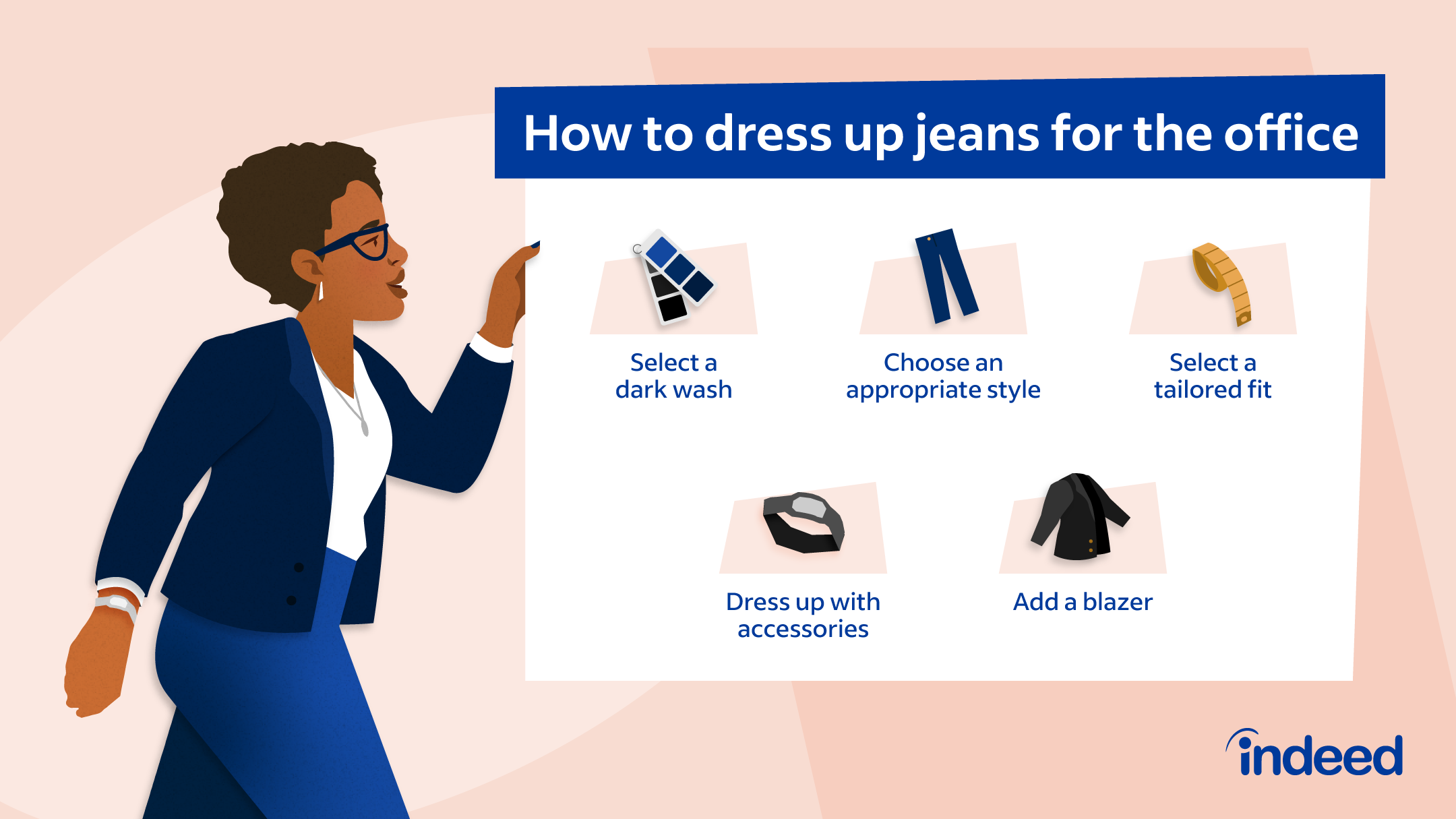
- Dark wash jeans: The safest choice. Navy, black, or charcoal look professional and are easy to match.
- Light wash jeans: Usually too casual. Avoid them unless your company is very relaxed.
- Colored jeans: Stick to muted colors like olive or gray. Bright colors are risky.
Fit
- Straight or slim fit: Looks neat and tidy. Avoid baggy or tight jeans.
- Boot cut: Acceptable if they are not too flared.
- Skinny jeans: Can be worn if they are not extremely tight and are paired with a longer top.
Details
- No rips, tears, or holes
- No heavy fading or distressing
- No flashy embroidery or logos
- No frayed hems
The simpler the jeans, the more professional they look.
Length
- Full-length jeans: Always best. Cropped jeans can look casual.
- No shorts or cut-offs
Jeans Comparison Table
Here is a quick guide to help you choose the right jeans for business casual:
| Type of Jeans | Business Casual? | Reason |
|---|---|---|
| Dark Wash, Straight Fit | Yes | Professional, easy to style |
| Light Wash, Skinny | No | Too casual, often too tight |
| Black, Slim Fit | Yes | Looks polished, versatile |
| Ripped or Distressed | No | Unprofessional, messy appearance |
| Colored (Muted) | Sometimes | Depends on company culture |
| Baggy or Loose Fit | No | Too relaxed, not neat |
How To Style Jeans For Business Casual
Wearing jeans is only part of the equation. You must style them correctly to look business casual. Here are practical steps:
Pair With The Right Top
- Button-down shirts: Always a safe choice. Tuck them in for a sharper look.
- Blouses: For women, a fitted blouse with jeans looks professional.
- Sweaters or cardigans: Choose a neat, solid-color sweater.
- Blazers: Adding a blazer turns jeans into business casual instantly.
Shoes Matter
- Loafers, oxfords, or dress shoes: Polished shoes lift your outfit.
- Boots: Ankle boots work well, especially in winter.
- Avoid sneakers, sandals, or flip-flops: Too casual for most offices.
Accessories
- Belts: A simple leather belt adds structure.
- Minimal jewelry: Keep it understated.
- Professional bag: A tote or briefcase looks better than a backpack.
Outfit Examples
- Dark jeans + white button-down + gray blazer + black loafers
- Black jeans + pastel blouse + navy cardigan + ankle boots
- Dark jeans + cream sweater + brown belt + dress shoes
Jeans Styling Tips Table
Here’s a summary of what works best:
| Styling Element | Business Casual Impact | Common Mistake |
|---|---|---|
| Blazer | Elevates jeans instantly | Wearing with T-shirt instead |
| Dress Shoes | Polished, professional | Choosing sneakers |
| Button-down Shirt | Classic, neat look | Untucked, wrinkled shirt |
| Simple Belt | Finishes the outfit | Flashy or casual belt |
| Minimal Accessories | Professional, not distracting | Too much jewelry |
Non-obvious Insight
Many people forget the importance of ironing or steaming their jeans and tops. Wrinkled jeans—even if they are dark and neat—look casual and unprofessional. Always make sure your clothes are pressed and fresh.
Another detail: Check the pockets. Overstuffed pockets or visible items can ruin the clean look. Keep pockets empty or use a bag.

Credit: hespokestyle.com
Common Mistakes When Wearing Jeans To Work
If you want to wear jeans for business casual, avoid these mistakes:
- Wearing distressed or ripped jeans: Even small holes or frayed hems make your outfit look unprofessional.
- Choosing light or faded colors: These look casual and are often linked to weekend wear.
- Wearing jeans with flashy stitching or logos: Loud details draw attention and break the business vibe.
- Pairing jeans with casual tops (like hoodies or T-shirts): This lowers the formality of your outfit.
- Ignoring fit: Baggy or too-tight jeans can make you look sloppy or uncomfortable.
- Skipping dress shoes: Sneakers and athletic shoes are rarely acceptable in business casual settings.
Why Mistakes Happen
Many people think any jeans are fine for business casual. But details matter. One non-obvious mistake is wearing jeans that look too new or too old. Shiny, stiff jeans or overly worn pairs both stand out. Choose jeans that are broken-in but still neat.
Another error: Not matching the office culture. Even if jeans are allowed, wearing them when everyone else wears slacks can make you feel out of place.
Real Examples From Different Industries
Let’s look at how jeans are seen in various workplaces.
Tech Industry
In tech companies, jeans are often part of business casual. Employees wear dark jeans with polos, button-downs, and blazers. For important meetings or interviews, they may switch to slacks, but jeans are usually fine.
Creative Agencies
Design firms, marketing agencies, and media companies have flexible dress codes. Jeans are common, but people style them with trendy tops and accessories. The key is to look creative but neat.
Finance And Law
Most banks, law firms, and consulting groups do not allow jeans. Dress codes are stricter, and slacks or skirts are expected. On casual days, jeans might be allowed, but only if they are very polished.
Healthcare
Healthcare offices (not hospitals) sometimes allow jeans for administrative roles, especially on Fridays. Nurses and doctors do not wear jeans, but office staff might.
Retail And Hospitality
Managers and back-office staff can wear jeans if the company allows. Floor staff usually wear uniforms.
Comparison Table: Jeans Acceptability By Industry
| Industry | Jeans Allowed? | Common Style |
|---|---|---|
| Tech | Yes | Dark jeans, blazers |
| Creative | Yes | Trendy, neat jeans |
| Finance | No | Slacks, skirts |
| Healthcare (admin) | Sometimes | Dark jeans, polos |
| Retail (office) | Sometimes | Dark jeans, sweaters |
Credit: ca.indeed.com
How To Ask About Jeans In Your Workplace
If you’re unsure whether jeans are allowed, here’s how to find out:
- Read the dress code policy: Most companies have a handbook or online guide.
- Observe what others wear: Look at managers and senior staff.
- Ask your HR department: They can clarify the rules.
- Check for “Casual Fridays”: Many offices allow jeans only on certain days.
- Test with safe choices: Start with dark, neat jeans and a professional top.
Non-obvious Guidance
Ask about jeans in a positive way. Instead of “Can I wear jeans? ” try “What types of jeans are considered appropriate here? ” This shows you care about the company’s image.
Also, remember that dress codes change. If your company is growing or updating its culture, jeans may become more or less acceptable over time.
Jeans And Gender Differences
Business casual rules can differ for men and women. Here’s what to consider:
For Men
- Dark, straight or slim jeans
- Button-down shirts or polos
- Loafers, oxfords, boots
- Blazers or sweaters
For Women
- Dark, straight, skinny, or boot cut jeans
- Blouses, sweaters, cardigans
- Ankle boots, flats, loafers
- Blazers, structured jackets
Gender Comparison Table
| Item | Men’s Business Casual | Women’s Business Casual |
|---|---|---|
| Jeans Style | Straight, slim | Straight, skinny, boot cut |
| Top | Button-down, polo | Blouse, sweater, cardigan |
| Shoes | Loafers, oxfords, boots | Ankle boots, flats, loafers |
| Outerwear | Blazer, sweater | Blazer, structured jacket |
Jeans For Managers And Leaders
If you are a manager or leader, your outfit sets the tone for your team. Wearing jeans can make you seem approachable, but also risks looking too casual. Here’s how to do it right:
- Choose the best quality jeans—dark, well-fitted, and in good condition.
- Always pair jeans with a blazer or professional top.
- Make sure your shoes are polished.
- Avoid jeans in important meetings unless your company’s culture is very relaxed.
Managers should also consider the message they send. If you wear jeans, your team may feel comfortable doing the same. Make sure this fits your company’s values.
The Influence Of Culture And Geography
What’s business casual in one country may not be in another. In the US and Canada, jeans are common in many offices. In Europe, codes are stricter, especially in France and Germany. In Asia, jeans are rarely part of business casual, unless in creative or tech companies.
If you travel or work in a global team, check local customs. For example, in Japan, neat slacks are preferred. In Brazil, jeans are common even in business settings.
Non-obvious Insight
Even within countries, cities differ. In New York, business casual is nearly formal. In Austin or San Francisco, jeans are much more accepted.
Keeping Jeans Clean And Presentable
Jeans can quickly look tired if not cared for. Here’s how to keep them fresh:
- Wash jeans with care. Use cold water and avoid over-washing.
- Hang jeans to dry instead of using a dryer.
- Iron or steam jeans for a crisp look.
- Repair small tears or loose threads promptly.
- Rotate your jeans—don’t wear the same pair every day.
Clean, well-maintained jeans last longer and always look better.
Why Some Companies Still Ban Jeans
Despite changes in workplace style, some companies do not allow jeans. Here’s why:
- Brand image: Some firms want to show clients a traditional, professional image.
- Client expectations: If clients expect formal wear, jeans may not fit.
- Safety and hygiene: In labs, factories, or hospitals, jeans may not be safe or sanitary.
- Consistency: Companies want all employees to look similar.
If you work in a place with a strict dress code, respect it. Jeans can be worn after work or on weekends.
The Rise Of "smart Casual"
Some offices use the term smart casual instead of business casual. Smart casual means looking stylish and relaxed, but still professional. Dark jeans are often allowed, but must be paired with a sharp top and polished shoes.
If your company mentions smart casual, you have more freedom with jeans, but must avoid anything sloppy.
Making Your Own Style Decisions
When deciding if jeans are right for business casual, consider:
- Your company’s rules
- The tone of your workplace
- The type of jeans you own
- How you style your outfit
If you are unsure, start with slacks or khakis. Once you see others wearing jeans, add them to your wardrobe.
Non-obvious Guidance
Building a “business casual jeans outfit” is easier with a capsule wardrobe. Buy 2–3 pairs of dark jeans, 3–4 professional tops, and 2 pairs of dress shoes. Rotate pieces to keep your look fresh.
Also, have a backup outfit ready for important meetings or unexpected events.

Credit: besoyou.com
Frequently Asked Questions
Can I Wear Jeans To A Job Interview If The Company Is Business Casual?
Usually, it’s better to avoid jeans for interviews, even if the company allows them at work. First impressions matter. Wear slacks or a skirt with a professional top. After you get the job, you can check if jeans are acceptable.
What Color Jeans Are Best For Business Casual?
Dark wash jeans (navy, black, charcoal) are safest. They look polished and go well with most tops and shoes. Avoid light wash or heavily faded jeans.
Are Skinny Jeans Business Casual?
Skinny jeans can be business casual if they are not too tight, are dark in color, and are paired with a longer, professional top. Avoid very tight or trendy styles.
Can Women Wear Jeans With Heels For Business Casual?
Yes, women can wear jeans with heels. This combination looks stylish and professional, especially with a blazer or blouse. Choose closed-toe heels for a more formal look.
How Can I Tell If My Jeans Are Too Casual For Work?
Check for these signs:
- Light wash or heavy fading
- Rips, tears, or distressing
- Overly tight or baggy fit
- Flashy logos or stitching
If your jeans have any of these, they are probably too casual for business casual.
Final Thoughts
Jeans can be part of business casual, but only if you follow the right guidelines. Always check your company’s dress code, choose dark and neat jeans, and pair them with professional tops and shoes. Avoid common mistakes like wearing distressed or baggy jeans.
Remember, the goal is to look polished and confident, not just comfortable. With the right choices, you can enjoy the flexibility of jeans without sacrificing your professional image.
If you want more detailed information about workplace dress codes, you can visit Wikipedia for a broader overview.
Your outfit reflects your attitude at work. Choose jeans wisely, and you’ll feel comfortable, stylish, and ready for any challenge.
