

Business Casual Can I Wear a Sweater? Style Tips Explained
Business Casual: Can I Wear A Sweater?
Business casual is a dress code that often creates confusion. Many people wonder, “What exactly is allowed? ” and “Can I wear a sweater to work? ” If you are trying to balance comfort and professionalism, this question is important.
Sweaters are cozy, practical, and stylish. But are they acceptable for business casual? The answer depends on a few key factors.
In this article, you’ll discover when and how a sweater fits into business casual, how to select the right type, and how to style it for different workplaces. We’ll also cover common mistakes, industry differences, and tips that can help you look your best while staying comfortable.
Whether you work in an office, a school, or a startup, you’ll find clear guidance here.
What Does Business Casual Really Mean?
Business casual is not the same everywhere. It sits between formal business attire (like suits) and casual wear (like jeans and T-shirts). The goal is to look professional but relaxed.
Typical business casual items include:
- Dress shirts or blouses
- Polo shirts
- Slacks or dress pants
- Skirts or dresses (knee-length or longer)
- Blazers or cardigans
- Closed-toe shoes
Jeans, athletic wear, and flip-flops are usually not included. However, some workplaces are more flexible.
Sweaters are often seen as a middle ground: more relaxed than a blazer, but more polished than a hoodie. Still, not every sweater is business casual. Your choice of style, color, and fit matters.
Can You Wear A Sweater In A Business Casual Setting?
The short answer is yes, you can wear a sweater in most business casual environments. But not every sweater is suitable. Here’s why:
- A sweater can look sharp and professional if you pick the right kind.
- It can add a layer of warmth and style during colder months.
- A well-fitted sweater can replace a blazer or jacket for a more modern look.
But, there are some sweaters that are too casual. For example, anything with big logos, bold graphics, or an oversized fit might not be appropriate. The material and color also make a difference.
If you’re unsure, observe what your colleagues wear or ask your HR department for guidelines.
Types Of Sweaters Suitable For Business Casual
Not all sweaters are created equal. Some are perfect for business casual, while others are best for weekends.
| Sweater Style | Business Casual? | Notes |
|---|---|---|
| V-neck | Yes | Looks great over a collared shirt |
| Crew neck | Yes | Simple and versatile |
| Cardigan | Yes | Easy to layer |
| Turtleneck | Sometimes | Depends on office culture |
| Chunky/oversized | No | Too casual for most offices |
| Hooded | No | Usually too informal |
V-neck Sweater
A V-neck sweater is one of the most popular choices for business casual. It works well over a dress shirt and tie, or just a collared shirt. The V-shape frames your face and looks polished.
Crew Neck Sweater
The crew neck is simple and clean. It can be worn over a dress shirt or on its own. This style is best in solid, neutral colors.
Cardigan
A cardigan is a button-up sweater. It’s easy to layer and works for both men and women. Choose one with a neat fit and avoid anything too bulky.
Turtleneck
A turtleneck can look very sophisticated, especially in creative or modern offices. However, it’s not always accepted in traditional workplaces. Stick to fine knits in dark or neutral colors for the most professional look.
Sweaters To Avoid
- Chunky knits or oversized sweaters can look sloppy.
- Hoodies are almost never business casual.
- Sweaters with bold graphics, slogans, or large logos are too informal.
Choosing The Right Sweater: Material, Color, And Fit
A business casual sweater is more than just the style. The details matter.
Material
Pick sweaters made from fine wool, cotton, cashmere, or blends. These fabrics look smooth and professional. Avoid anything too fuzzy, shiny, or casual like fleece.
Color
Stick to neutral or muted colors: black, navy, gray, camel, beige, or forest green. These shades mix easily with other office clothes. Bright, neon, or very bold colors can be distracting.
Fit
A good fit is essential. The sweater should not be tight, but also not baggy. The sleeves should end at your wrists, and the hem should fall just below your waist. Avoid sweaters that hang loosely or look stretched.
Patterns
Simple patterns like thin stripes, subtle checks, or small argyle can work, but keep them understated. Loud prints or large patterns are best left for weekends.
How To Style A Sweater For Business Casual
A sweater can be styled in many ways depending on your office and your personal taste. Here are practical combinations:
For Men
- Sweater over a collared shirt: Pair a V-neck or crew neck sweater with a button-down shirt. You can add a tie for a more formal look.
- Sweater with dress pants or chinos: This is a classic business casual look.
- Cardigan as a jacket: Wear a slim cardigan over a shirt, with or without a tie.
- Turtleneck with blazer: In some offices, a thin turtleneck under a blazer is sharp and modern.
For Women
- Sweater with blouse: A crew neck or V-neck sweater over a blouse looks professional.
- Sweater with pencil skirt or dress pants: Choose fitted styles for a polished look.
- Cardigan over a dress: A tailored cardigan can replace a blazer.
- Belted cardigan: Add a thin belt over your cardigan for a more defined shape.
Footwear And Accessories
Pair your sweater outfits with leather shoes, loafers, or simple flats. For accessories, keep it simple: a classic watch, stud earrings, or a neat bag.
Comparing Sweater Styles For Business Casual
Here’s a quick look at how different sweaters perform for business casual workplaces.
| Style | Best Use | Level of Formality | Works For |
|---|---|---|---|
| V-neck | Layering over shirts/ties | Medium-High | Most offices |
| Crew neck | Standalone or over shirts | Medium | Modern, casual offices |
| Cardigan | Layering, flexible | Medium | Unisex, all ages |
| Turtleneck | Under blazers or solo | Medium | Creative, tech, design |
Mistakes To Avoid When Wearing Sweaters For Business Casual
Even if you choose a good sweater, some mistakes can ruin your look:
- Wearing wrinkled or pilled sweaters: Always check for lint and pills before wearing. A sweater should look clean and neat.
- Choosing sweaters that are too tight or loose: Both extremes look unprofessional.
- Ignoring dress codes: Some offices are stricter than others. If in doubt, dress slightly more formal.
- Wearing bold graphics or slogans: Even small logos can be distracting in a professional setting.
- Pairing with casual items: Avoid wearing your sweater with ripped jeans or sneakers.
- Neglecting grooming: A nice sweater won’t help if your hair or shoes are messy.
Industry And Workplace Differences
What’s acceptable in one office may be too casual in another. Here’s how sweater rules can change by industry:
Traditional Corporate Offices
Banks, law firms, and consulting companies usually expect a higher level of formality. Here, sweaters are best as layers under a blazer or paired with dress pants. Stick to solid, dark colors and fine materials.
Tech And Startups
Many technology companies are more relaxed. A neat sweater over a shirt, even with dark jeans, can be fine. Cardigans and turtlenecks are often accepted.
Creative Fields
Design, marketing, and advertising workplaces may allow more colors and patterns. Still, avoid anything too flashy or oversized.
Education And Healthcare
Teachers and administrators often wear sweaters, as they offer comfort and flexibility. However, avoid anything too casual or distracting.
Retail And Hospitality
Front-of-house staff should stick to company uniforms. Managers in retail settings may wear business casual, but check your company’s dress code.
Seasonal Considerations: Sweaters All Year Round
Sweaters are not just for winter. You can wear lighter sweaters in spring and fall, and even in air-conditioned offices during summer.
- Lightweight cotton or linen sweaters are perfect for warmer months.
- Short-sleeved sweaters exist and can look very polished.
- In winter, layer a thin sweater under a blazer for extra warmth.
If you sweat easily or your office is hot, avoid heavy knits. Choose breathable materials and lighter colors.
Benefits Of Wearing A Sweater For Business Casual
Sweaters offer more than just warmth. Here are some key advantages:
- Comfort: Soft fabrics and flexible fits mean you can move easily.
- Versatility: A single sweater can create many looks—over a shirt, under a blazer, with pants or skirts.
- Layering: Perfect for offices where the temperature changes throughout the day.
- Modern look: Sweaters can update traditional business outfits and make you look current.
- Budget-friendly: Good sweaters can be found at many price points and last for years with care.
Credit: dresslikeaparisian.com
How To Care For Your Business Casual Sweaters
To keep your sweaters looking sharp, proper care is essential.
- Read the label: Some sweaters need hand washing or dry cleaning.
- Wash gently: Use cold water and a mild detergent. Avoid wringing out wool or cashmere.
- Dry flat: Hanging sweaters can stretch them out of shape. Lay them flat on a towel.
- Store correctly: Fold sweaters rather than hanging to prevent stretching.
- Remove pills: Use a sweater comb or fabric shaver to remove fuzz.
- Rotate your sweaters: Wearing the same sweater too often can cause it to wear out quickly.
Real-world Examples: Sweaters In Business Casual Settings
Let’s look at how people style sweaters in different workplaces:
- Finance Analyst: Wears a navy V-neck sweater over a white shirt and tie, with gray trousers and black leather shoes.
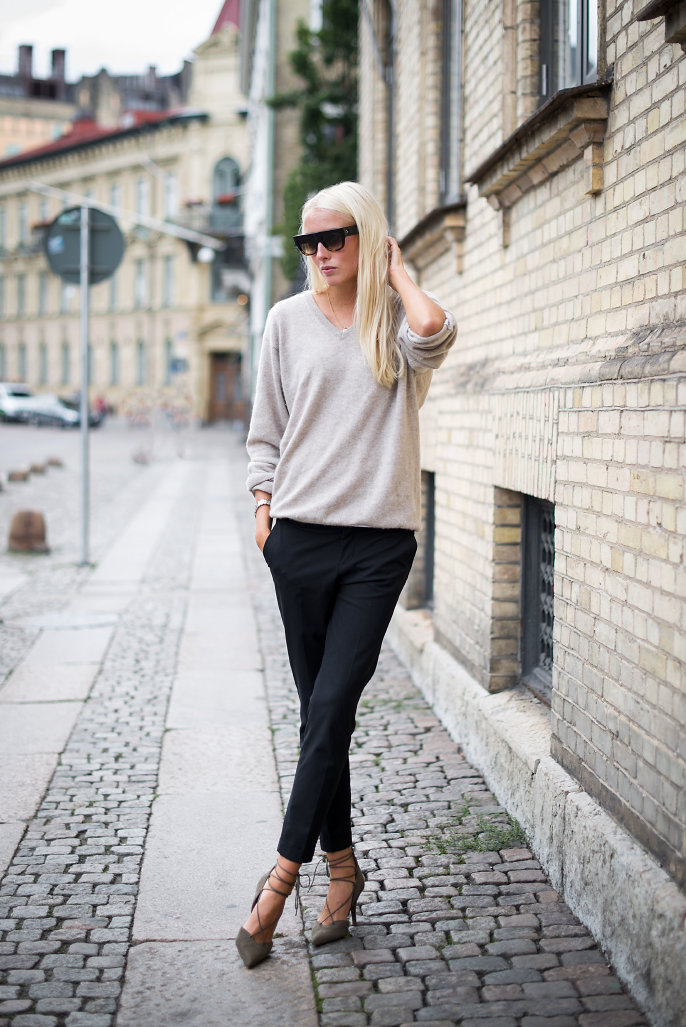
- Marketing Coordinator: Chooses a beige crew neck sweater over a pale blue blouse, with black ankle pants and loafers.
- IT Specialist: Picks a dark green cardigan over a simple T-shirt, with neat dark jeans and brown boots.
- School Teacher: Goes for a patterned cardigan over a collared dress, with simple flats.
These examples show how a sweater can work for many roles. The key is to match your sweater to your office’s expectations.
Sweater Vs. Blazer: Which To Choose?
Sometimes, you may wonder whether to wear a sweater or a blazer. Here’s a side-by-side comparison to help you decide.
| Aspect | Sweater | Blazer |
|---|---|---|
| Comfort | High | Medium |
| Formality | Medium | High |
| Warmth | High | Low-Medium |
| Versatility | High | Medium |
| Layering | Easy | Sometimes bulky |
Blazers create a more formal look, but sweaters offer more comfort and flexibility. For meetings or presentations, a blazer might be best. For regular office days, a sweater is a smart choice.
Non-obvious Tips For Sweater Success
Some details are often missed by beginners but make a big difference:
- Check for transparency: Light-colored or thin sweaters may show what’s underneath. Always check in good light before wearing.
- Mind the neckline: If you wear a shirt under your sweater, make sure the collar sits smoothly and doesn’t bunch up.
- Avoid visible undershirts: If you wear an undershirt, choose one that doesn’t show above the neckline of your sweater.
- Steam, don’t iron: Sweaters can be damaged by hot irons. Use a steamer or hang them in a steamy bathroom to remove wrinkles.
- Watch out for static: In dry weather, sweaters can cause static cling. Use a dryer sheet or anti-static spray.

Credit: www.gingtto.com
Sweaters And Company Dress Codes
Every company can set its own dress code. Some have clear rules, while others are more flexible. If your company has a written policy, read it carefully. If not, observe what managers and coworkers wear.
If you are new or unsure, it’s safer to choose neutral colors, simple styles, and a neat fit. As you learn more about your workplace, you can adjust and add more personality to your outfits.
A useful external resource for understanding business casual is the Business News Daily business casual guide. It offers more examples and advice for different industries.
Frequently Asked Questions
What Kind Of Sweaters Are Appropriate For Business Casual?
Choose fine-knit sweaters in neutral colors, such as navy, black, or gray. Styles like V-neck, crew neck, and cardigans are usually safe. Avoid bulky, hooded, or brightly patterned sweaters, as they look less professional.
Can You Wear A Sweater Instead Of A Blazer?
Yes, in many offices, you can wear a sweater instead of a blazer. A neat V-neck or cardigan can look very professional, especially when worn over a collared shirt. For important meetings, a blazer might still be expected.
Are Turtlenecks Considered Business Casual?
Turtlenecks can be business casual in creative or modern workplaces. Choose fine-knit styles in dark or neutral colors. In traditional or corporate environments, check your company’s dress code before wearing a turtleneck.
Can Women Wear Sweaters Over Dresses For Business Casual?
Absolutely. A well-fitted cardigan or pullover over a dress can look polished and professional. Choose solid colors or subtle patterns, and make sure the sweater does not overpower the dress.

Credit: news.orvis.com
What Should I Avoid When Wearing A Sweater For Business Casual?
Avoid chunky knits, hoodies, bold graphics, and bright colors. Stay away from sweaters that are wrinkled, pilled, or too casual. Always pair your sweater with dress pants, skirts, or other business-appropriate items.
Business casual dress codes can be tricky, but with the right sweater, you can look sharp, feel comfortable, and fit in at almost any workplace. Remember to choose styles and colors that match your office culture, keep your sweaters in good condition, and always aim for a neat, professional appearance.
With these tips, your sweater can become one of the most versatile pieces in your business casual wardrobe.
