

How to Wear Gym Straps: Master Proper Technique for Maximum Grip
How to Wear Gym Straps: The Complete Guide for Better Lifting
If you lift weights, you’ve likely seen people wrap long fabric straps around their wrists and the barbell. These are known as gym straps or lifting straps. They are small, simple tools, but they can make a big difference in your training. When used correctly, gym straps help you hold onto heavier weights for longer, especially during pulling exercises like deadlifts, rows, and pull-ups. But many people are unsure about how to wear gym straps properly or when to use them. If you’re new to lifting or just want to get the most out of your straps, this guide will walk you through everything you need to know.
Let’s break down what gym straps are, why people use them, the types you might find, and—most importantly—how to wear them step by step. Along the way, you’ll learn tips to avoid mistakes and find out how straps can change your workouts for the better.
By the end, you’ll be able to use gym straps confidently and safely, so you can focus on getting stronger.
Why Use Gym Straps?
Gym straps are more than just accessories. They serve a real purpose in strength training, especially for people who want to lift more weight or do extra reps. Here are the main reasons lifters use them:
- Grip support: Your grip often gives out before your larger muscles do. When your forearms or hands get tired, you might drop the bar even though your back or legs could handle more.
- Injury prevention: If you have a previous hand, wrist, or finger injury, straps can help you keep training without strain.
- Better focus: Straps let you focus on the target muscles, like your back or hamstrings, instead of worrying about losing your grip.
- Training variety: Straps help you add more volume to your workouts, especially during high-rep sets or heavy singles.
A study published by the Journal of Strength and Conditioning Research found that lifters using straps could complete more repetitions and use heavier weights on deadlifts compared to lifting without straps. This means, for some people, straps can directly improve performance.
Types Of Gym Straps
Not all gym straps are the same. The right strap for you depends on your goals, comfort, and the types of lifts you do. Here are the most common types:
| Type | Main Features | Best For |
|---|---|---|
| Lasso straps | Loop forms a circle, adjustable for wrist size, long tail for wrapping | Versatile, beginners, general lifting |
| Figure 8 straps | Shaped like a figure 8, both ends loop around wrist and bar | Heavy deadlifts, strongman training |
| Olympic straps | Short, single loop, quick release | Olympic lifting, fast movements |
Let’s look at these types in more detail.
Lasso Straps
These are the most popular style for gym-goers. They have a loop at one end—thread your hand through to tighten around your wrist, then use the tail to wrap around the bar. They work for most lifts and are easy to adjust.
If you’re new to straps, start with lasso straps.
Figure 8 Straps
These provide the most secure grip. Slip your wrist through both loops, and the bar sits in the middle of the figure 8 shape. This style is popular with powerlifters and strongman competitors, especially for heavy deadlifts. However, they are not ideal for quick-release needs.
Olympic Straps
These are shorter and designed for Olympic weightlifting. They allow you to quickly let go of the bar if needed (for example, during a failed snatch). They’re not as supportive as lasso or figure 8 straps but are safer for fast, technical lifts.
When Should You Use Gym Straps?
Using gym straps can help, but they are not for every set or every lifter. Here’s when to consider using them:
- Heavy pulling exercises: Deadlifts, barbell rows, shrugs, and rack pulls are common times to use straps.
- High-rep sets: If your grip gives out before your muscles, straps help you finish the set.
- Accessory work: On back or hamstring-focused days, straps let you target those muscles without grip limiting you.
- After grip fatigue: If you do grip training or warm-up sets without straps, you can use straps for your heaviest sets.
But don’t rely on straps all the time. If you use them for every set, your grip strength may suffer. Many top coaches recommend using straps only when absolutely necessary—train your grip on lighter sets, then use straps for your heaviest or last sets.
How To Wear Gym Straps: Step-by-step Guide
Wearing gym straps isn’t hard, but the first time can feel confusing. The steps below cover the most common lasso straps, which work for most people and most lifts.
1. Prepare The Strap
Unroll your strap. Identify the loop at one end and the long tail. The logo or rough side usually faces out, but it’s not critical.
2. Thread Your Hand
Slide the tail through the loop to create a circle. Put your hand through the circle so the strap sits just below your wrist joint. Make sure the tail hangs down toward your fingers (not up your forearm).
3. Tighten The Strap
Pull the tail to snug the strap around your wrist. It should be tight enough to stay in place but not cut off circulation. You should have enough mobility to flex and extend your wrist.
4. Grab The Bar
With the strap now attached to your wrist, place your hand over the barbell or dumbbell handle as you normally would.
5. Wrap The Strap Around The Bar
Use your free hand to wrap the tail of the strap under and around the bar. Most people wrap the tail around the bar two or three times. Make sure the strap is flat and not twisted for better grip and less discomfort.
6. Secure Your Grip
Once wrapped, close your hand over the strap and the bar. Twist your hand slightly to tighten the strap further. You should feel the strap supporting your grip, but you still control the bar.
7. Repeat On The Other Hand
Do the same steps for your other hand. Make sure both straps are tight and comfortable before lifting.
8. Adjust As Needed
Before starting your set, test your grip. If the strap feels loose or uncomfortable, re-wrap it. Never start lifting if something feels off.
Quick Reference: Wearing Gym Straps
Here’s a quick look at the process compared to lifting without straps:
| Step | Without Straps | With Straps |
|---|---|---|
| Grip setup | Direct hand on bar | Strap looped and wrapped |
| Grip strength needed | Very high | Lower, strap assists |
| Release speed | Immediate | Slower, must unwrap |
| Comfort | Depends on calluses | Padded, less friction |

Credit: www.workoutforless.co.uk
Tips For Getting The Most From Your Gym Straps
Even if you follow the basic steps, there are ways to make gym straps work better for you. Here are some tips from experienced lifters that beginners often miss:
Use The Right Strap For The Exercise
- Lasso straps are best for most gym lifts.
- Figure 8 straps are ideal for heavy deadlifts where you want maximum grip support.
- Olympic straps are for fast lifts that require a quick release.
Keep The Strap Flat
A twisted strap can dig into your wrist or palm. Always flatten the strap before wrapping it around the bar. This will keep you comfortable and prevent skin irritation.
Don’t Over-tighten
If the strap is too tight, it can cut off blood flow or make your hands numb. You want it snug, but not painful.
Practice With Light Weights
Before using straps with heavy weights, practice the wrapping process with an empty bar. This will help you get faster and more confident.
Combine Straps With Chalk
If your gym allows it, use lifting chalk to keep your hands dry. Chalk plus straps equals maximum grip, especially on sweaty days.
Clean Your Straps Regularly
Straps absorb sweat and can get smelly or slippery. Wash them in cold water and let them air dry. This keeps them clean and extends their lifespan.
Rotate Your Strap Position
Every few weeks, switch which strap goes on which wrist. This keeps wear even and avoids weak spots.
Don’t Rely On Straps For All Sets
Train your grip strength on some sets by lifting without straps. This helps you avoid weak forearms and hands in the long run.
Mistakes To Avoid With Gym Straps
Many beginners make small errors that reduce the benefits of gym straps—or even lead to injuries. Here are the most common mistakes and how to avoid them:
- Wearing the strap upside down: If the tail points up your arm instead of down to your fingers, you won’t get a secure wrap.
- Not tightening enough: If your strap is loose, it won’t help your grip. Always pull the tail to snug the strap before wrapping.
- Twisting the strap: Twisted straps are uncomfortable and can slip during a lift.
- Wrapping too many times: You only need two or three wraps. Too many can make it hard to grip the bar.
- Using straps for pushing exercises: Straps are for pulls, not presses. Don’t use them on bench press, overhead press, or squats.
- Ignoring pain or numbness: If your hand tingles or goes numb, loosen the strap immediately.
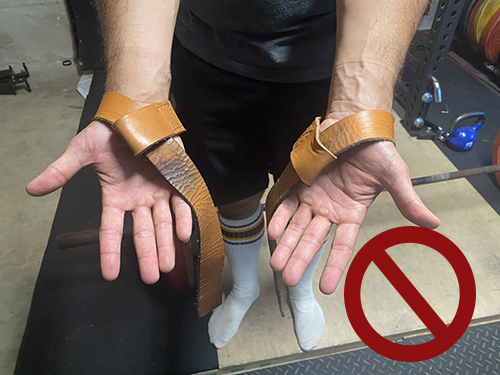
Credit: www.artofmanliness.com
Advanced Strap Techniques
As you get comfortable with basic gym strap use, you can try some advanced techniques for specific exercises or situations.
Mixed Grip With Straps
Some lifters use a mixed grip (one palm up, one palm down) on heavy deadlifts. You can still use straps with this grip—just wrap both hands as usual. This gives you extra security and may prevent bicep strain.
One-handed Lifts
If you have a hand injury or want to train one side at a time, straps can help you hold heavier dumbbells with one hand. Wrap the strap as normal and use your free hand to help wrap the tail tightly.
Quick Release For Olympic Lifts
If you use Olympic straps, practice letting go of the bar quickly. This is important for safety during missed lifts.
Using Straps With Fat Bars Or Axle Bars
Fat bars or axle bars are thicker than standard bars and much harder to grip. Straps are almost essential for these implements, especially in strongman training.
Choosing The Right Gym Straps
There are dozens of brands and styles on the market. When choosing gym straps, pay attention to these factors:
Material
Most gym straps are made from cotton, nylon, or leather.
- Cotton: Soft, comfortable, and absorbs sweat. Best for most people.
- Nylon: Stronger and more durable, but can be slippery when new.
- Leather: Durable and comfortable, but usually more expensive.
Length And Width
- Longer straps (20–24 inches) allow more wraps around the bar and are best for big hands or thick bars.
- Standard width is 1.5 inches, which fits most people.
Padding
Some straps have extra padding around the wrist for comfort. This can help prevent rubbing, especially on heavy lifts.
Stitching Quality
Look for strong, double-stitched seams. Cheap straps can rip under heavy weights.
Price
High-quality straps are not expensive (usually $10–$25 per pair), but very cheap ones may not last.
Here’s a simple comparison to help you choose:
| Feature | Cotton Straps | Nylon Straps | Leather Straps |
|---|---|---|---|
| Comfort | Soft, absorbent | Firm, less flexible | Very comfortable |
| Durability | Good | Excellent | Excellent |
| Cost | Low | Medium | High |
| Grip | Very good | Good, but can slip | Good |
Training Programs And Strap Use
Your training program affects how often you should use gym straps. Here are some common approaches:
- Powerlifters use straps mainly for deadlifts and heavy rows. They save their grip for competition lifts.
- Bodybuilders often use straps on back days to maximize muscle growth.
- Olympic lifters use straps for pulls and snatch/clean variations, but rarely for competition lifts.
- Casual lifters might use straps whenever grip limits their progress.
If you want to build grip strength, avoid using straps for warm-up and moderate sets. If your main goal is muscle growth or lifting the most weight possible, use straps for your heaviest sets.
Safety And Best Practices
Gym straps are safe when used correctly, but keep these points in mind:
- Never wrap straps so tightly that you can’t release the bar in an emergency.
- If you feel pain, numbness, or tingling, stop and adjust the strap.
- Don’t use straps on lifts where you might need to drop the weight quickly (for example, heavy cleans or snatches, unless you are experienced).
- Always check your straps for wear and tear. Replace them if they are frayed or the stitching is coming apart.
Common Myths About Gym Straps
There are several myths and misconceptions about using gym straps:
- Myth 1: “Straps are cheating.” Not true—straps help you train harder and target muscles better, especially in accessory work.
- Myth 2: “Straps will destroy your grip strength.” If you still train grip regularly, straps won’t harm your natural strength.
- Myth 3: “Only beginners need straps.” Many advanced lifters use straps for specific purposes.
The key is to use straps as a tool—not a crutch. Smart lifters use straps when they help and train grip strength when they can.
Real-world Examples: When Straps Make A Difference
Here are a few situations where gym straps can be a game-changer:
- Deadlifting above your max: If your grip fails at 350 lbs but your legs and back can handle 400 lbs, straps let you train at a higher weight.
- High-rep rows: You want to do 15 reps but your forearms fail at 10. Straps let you finish the set.
- Training with an injury: A sprained finger or sore wrist might limit your grip. Straps let you keep training while you heal.
In each case, straps let you focus on the target muscle and get the most from your workout.
How To Progress Without Becoming Dependent On Straps
It’s easy to rely too much on straps, but you want to stay balanced. Here are two non-obvious tips:
- Use straps for only your last set: Save them for when you really need them, not every set.
- Alternate weeks: Some lifters go one week with straps for heavy lifts, one week without, to keep grip strength high.
Also, try adding grip-specific exercises, like farmer’s walks or static holds, to your weekly routine. This ensures your hands and forearms stay strong while you use straps for your toughest lifts.
Caring For Your Gym Straps
Your straps work hard—take care of them, and they’ll last for years.
- Washing: Hand-wash in cold water with mild soap. Let them air dry.
- Storage: Hang them up after workouts. Don’t leave them in your gym bag damp.
- Inspection: Check for fraying or loose stitching every few weeks. Replace if needed.
Proper care keeps your straps clean, odor-free, and reliable.
Where To Buy Quality Gym Straps
You can find gym straps at sporting goods stores, online retailers, or specialty lifting shops. Look for brands with good reviews from real lifters. Avoid very cheap, generic brands with weak stitching or poor materials. For more information on different types of lifting straps and their uses, check out this detailed guide from Wikipedia.
Frequently Asked Questions
How Tight Should Gym Straps Be Around My Wrist?
The strap should be snug, not painfully tight. You want it secure enough that it won’t slip during a lift, but loose enough that you can still move your wrist and release the bar if needed.
Can I Use Gym Straps For Every Exercise?
No, straps are designed for pulling exercises like deadlifts, rows, and pull-ups. Don’t use them for pushing movements (bench press, overhead press) or squats. Overuse can also weaken your natural grip strength.
Will Using Gym Straps Weaken My Grip?
Only if you use them for every set, every workout. Balance strap use with regular grip training—perform some sets without straps, and add grip-specific exercises to your routine.
How Do I Clean My Gym Straps?
Hand-wash them in cold water with mild soap, and let them air dry. Avoid putting them in the dryer, as heat can weaken the material and stitching.
What’s The Difference Between Lifting Straps And Lifting Hooks?
Lifting straps are fabric bands you wrap around your wrist and the bar, while lifting hooks are metal hooks attached to a wrist strap. Hooks are easier to use but less secure and versatile than straps, especially for heavy lifting.
Using gym straps can be a small change with a big impact on your weight training. By learning to wear them properly, you’ll have a stronger grip, safer workouts, and more focus on the muscles you want to grow. With practice and care, gym straps become a valuable tool in your gym bag—one that helps you lift more and progress faster.

Credit: www.amazon.sa
