

How to Fix Flared Leggings: Easy Solutions for a Perfect Fit
Many people love flared leggings for their comfortable fit and trendy style. They create a flattering silhouette, work well for both casual and workout looks, and suit all body types. However, not every pair of flared leggings fits perfectly off the shelf.
Sometimes the flare is too wide, the fabric puckers at the hem, or the legs look baggy instead of stylish. Maybe you just want a sleeker line, or your favorite pair got stretched out after washing. If your flared leggings are not looking the way you want, don’t worry—you can fix them.
This guide will show you how to adjust flared leggings, whether you need quick fixes, permanent solutions, or just want to make them look better. You’ll find step-by-step instructions, clear examples, and tips that even beginners can follow. By the end, you’ll know exactly how to get the perfect fit and style from your flared leggings.
Why Flared Leggings Lose Their Shape
Flared leggings can lose their original shape for several reasons. Understanding these causes helps you choose the right fix and prevent future problems.
Fabric stretch is one common reason. Most flared leggings are made from blends of spandex, polyester, or cotton. These materials stretch over time, especially if you wear them often or wash them in hot water.
Washing mistakes also play a part. Aggressive machine cycles or high heat can distort the flare, making the legs wider or causing the hem to curl.
Sometimes, the original design is to blame. Some brands use extra-wide flares or thin fabrics that don’t hold their structure well. Poor stitching at the hem or seams can also lead to a sloppy look after a few wears.
Finally, body changes can affect fit. Weight changes or muscle gain may make the upper leg tighter, causing the bottom flare to look exaggerated or uneven.
Knowing the reason helps you decide whether you need a simple adjustment or a full alteration.
Simple Fixes You Can Try At Home
If your flared leggings only have minor issues, you can often fix them at home with basic tools and no sewing skills. Here are some easy ways to improve fit and appearance.
Shrinking Flared Leggings
If your leggings are too loose or stretched out, shrinking them might help. Most flared leggings contain synthetic fibers, so results depend on the fabric mix.
- Check the label for washing instructions. If the label says “do not tumble dry,” skip this method.
- Wash the leggings in hot water using your machine’s highest safe setting.
- Dry them on high heat in the dryer.
- Check the fit. If they’re still too loose, repeat once. Don’t overdo it—multiple cycles can damage the fabric.
This method works best for cotton blends. Pure synthetic leggings may not shrink much.
Temporary Hem Taping
If the flare is too long and covers your shoes, try hem tape. This is a double-sided, heat-activated tape that temporarily shortens the hem.
- Turn leggings inside out.
- Fold the hem up to your desired length.
- Place hem tape between the fold and press with an iron (low heat).
- Let cool before wearing.
Hem tape is great for a quick fix but will come off after a few washes. For a permanent change, you’ll need to sew.
Using Elastic Bands
Sometimes, the flare is too wide at the bottom. You can use small elastic bands to gather the excess fabric inside the leg.
- Turn leggings inside out.
- Place a thin elastic band around the inside seam near the hem.
- Adjust until the flare looks right from the outside.
This method is invisible when wearing sneakers or boots and can be removed anytime.
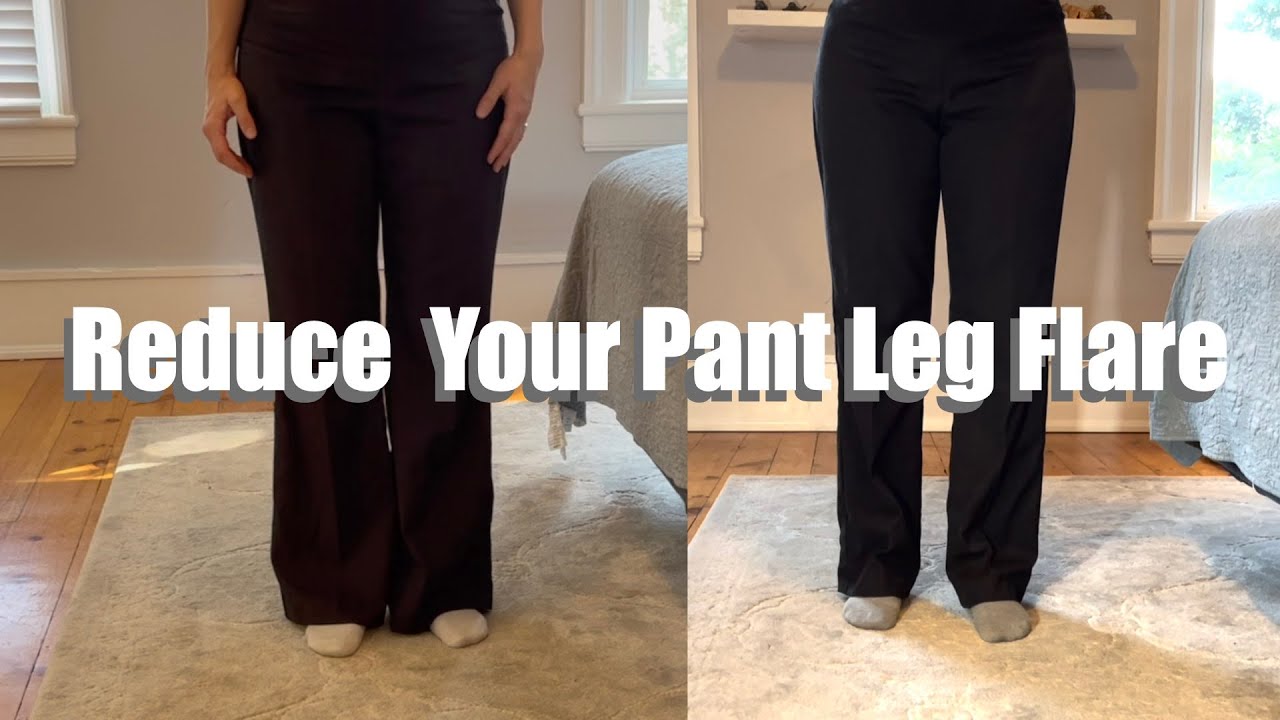
Credit: www.youtube.com
How To Sew And Alter Flared Leggings
For a permanent solution, sewing is the best way to fix flared leggings. Even if you’re a beginner, you can make simple alterations with a few tools.
Tools And Materials Needed
- Sewing machine (or needle and thread for hand sewing)
- Fabric scissors
- Seam ripper
- Pins or fabric clips
- Measuring tape
- Chalk or washable marker
Narrowing The Flare
If the flare is too wide, you can take in the side seams.
- Turn leggings inside out and put them on.
- Pin along the side seam to mark where you want the new line to be. Start from the knee and taper to the hem.
- Take off the leggings and lay them flat.
- Use chalk to draw a smooth line along the pins.
- Sew along this line using a stretch stitch (zigzag or lightning bolt).
- Trim off the excess fabric, leaving a small seam allowance.
- Try the leggings on. If satisfied, finish the raw edge with a zigzag or serger to prevent fraying.
This adjustment creates a slimmer flare without changing the upper leg fit.
Shortening The Flare
If your leggings are too long, shortening the hem is simple.
- Put on the leggings and mark the desired length with chalk.
- Take them off and lay flat.
- Measure evenly from the crotch seam to your mark on both legs to ensure symmetry.
- Cut off the excess fabric, leaving a half-inch for the new hem.
- Fold the edge under and pin.
- Sew with a stretch stitch or use a twin needle for a professional finish.
Shortening the hem also makes the flare look more tailored.
Fixing Twisted Or Uneven Flares
Sometimes the flare twists or looks uneven after washing. This happens if the fabric was cut off-grain or the seam was not straight.
- Lay leggings flat and check if the seams run straight.
- If not, rip out the hem and side seam in the lower leg.
- Realign the fabric and pin so the flare sits flat.
- Sew the seam back together, then hem.
This fix works best if you have sewing experience, but careful pinning helps prevent mistakes.
Adding A New Hem
If the original hem is damaged, create a new one.
- Trim off any frayed or puckered fabric.
- Fold up a new hem about half an inch.
- Pin in place and sew with a stretch stitch or twin needle.
A fresh hem gives flared leggings a clean, store-bought look.
Choosing The Right Flare For Your Body Type
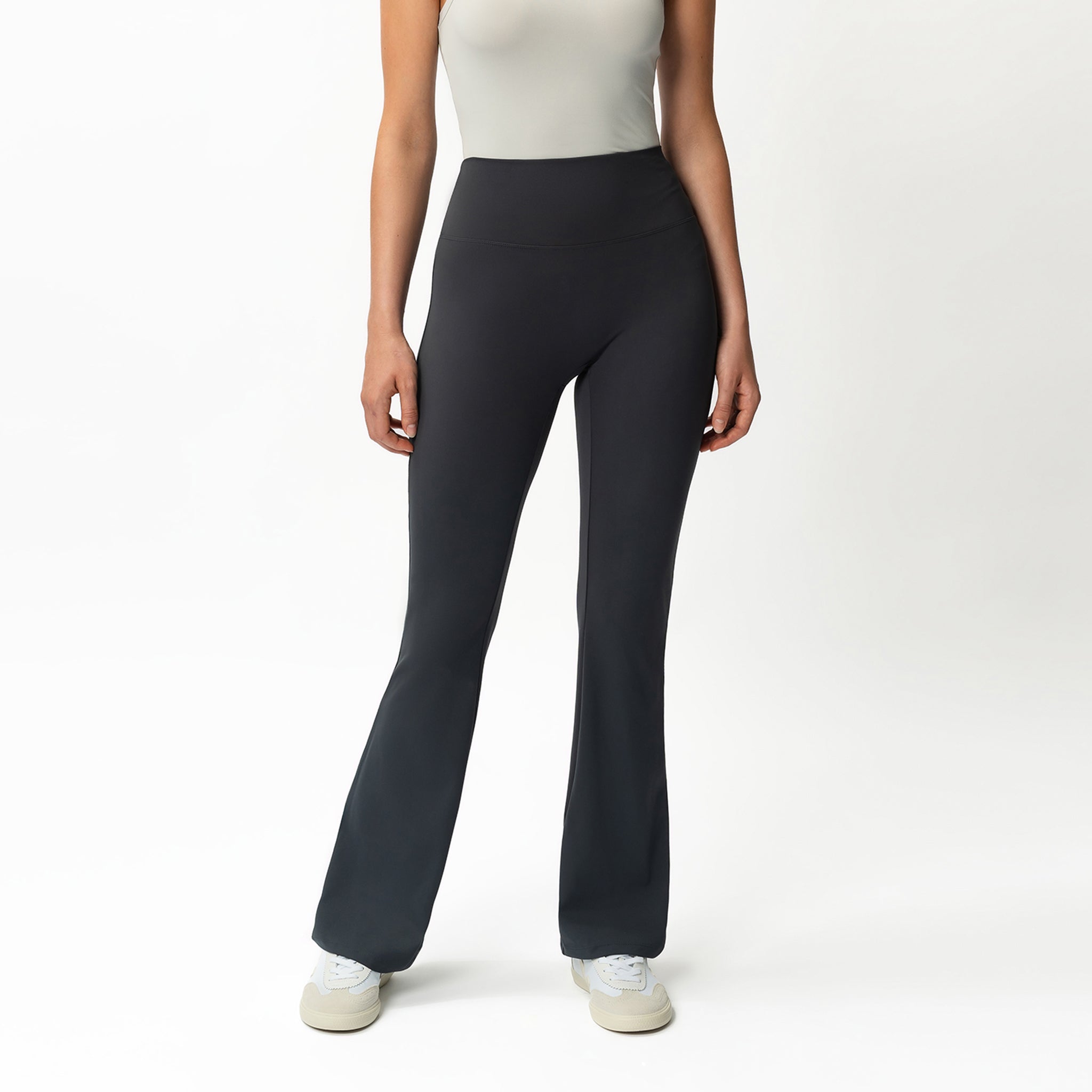
Sometimes the issue isn’t with the leggings, but with the style. Not all flares suit every body type. Picking the right width and length makes a big difference.
| Body Type | Best Flare Style | Why It Works |
|---|---|---|
| Pear-shaped | Moderate flare, mid-rise | Balances hips and lengthens legs |
| Petite | Narrow flare, high-rise | Creates longer leg line |
| Tall/Athletic | Wide flare, low or mid-rise | Adds curves and movement |
| Apple-shaped | Mid-width flare, high-rise | Smooths waist, flatters shape |
If your leggings never seem to fit right, try different flare widths or rises before altering. Sometimes a different style solves the problem with no sewing needed.
Credit: www.ninepine.com
Preventing Flared Leggings From Losing Shape
Prevention is easier than repair. With the right habits, you can keep your flared leggings looking good for longer.
Wash With Care
- Use cold water and a gentle cycle to protect the fibers.
- Turn leggings inside out before washing.
- Avoid fabric softener—it can break down stretch fabrics.
- Air dry if possible; heat from dryers weakens elastic.
Store Properly
Don’t hang flared leggings, as this can stretch the fabric over time. Instead, fold them flat and store in a drawer.
Rotate Your Wardrobe
Wearing the same pair daily causes faster wear. Rotate between several pairs to extend the life of each.
Mend Small Issues Early
If you notice a loose seam or small hole, fix it before it gets worse. A quick stitch saves time and effort later.
Styling Tips For Flared Leggings
Sometimes, you can “fix” flared leggings with smart styling rather than sewing or shrinking. Here’s how to get the best look from any pair.
- Pair with platform shoes or sneakers to balance the flare.
- Choose a fitted top to contrast the wide leg.
- Try layering with a long cardigan or jacket for a modern look.
- For work, wear with a structured blazer and loafers.
- Accessories like a belt or statement bag draw attention away from the legs if you feel self-conscious.
If your leggings still feel too wide, scrunch them slightly at the ankle or wear with boots for a different silhouette.
When To See A Professional Tailor
If you have expensive leggings or don’t want to risk DIY, a tailor can help. Professional alteration ensures a neat finish, especially with tricky fabrics or complex problems.
Typical Tailoring Services
- Narrowing the flare
- Shortening or re-hemming
- Fixing twisted seams
- Adding or adjusting zippers for style
Tailoring costs vary. Simple hemming is usually affordable, while narrowing the leg may cost more. Always ask for a quote before agreeing to alterations.
A pro tailor can also advise on styles that suit your body best.
Common Mistakes To Avoid
Fixing flared leggings is easier if you avoid these typical errors.
- Cutting without measuring. Always try on and mark before you cut.
- Using the wrong stitch. Regular straight stitches can break. Use a stretch stitch or zigzag.
- Ignoring fabric type. Some synthetics melt or shrink unpredictably with heat.
- Washing right after hemming. Let new stitches settle for a day before washing.
- Trying to fix very old or worn-out leggings. Sometimes, it’s better to buy new ones.
Comparing Flare Styles And Adjustments
Understanding different flare types helps you choose the best fix. Here’s a comparison:
| Flare Type | Difficulty to Alter | Best Fix |
|---|---|---|
| Wide bell-bottom | Medium | Narrow the flare, shorten if needed |
| Subtle bootcut | Easy | Hem, minor narrowing |
| Extreme flare | Hard | Professional tailoring |
| Standard flare | Easy | DIY hemming and narrowing |
If you’re not sure what style you own, look at the width at the hem and compare to your regular jeans or leggings.
Real-world Examples
Let’s look at a few examples to see how these fixes work in practice.
Case 1: Stretched-out flare after washing.
Sarah’s favorite leggings became baggy at the bottom. She washed them in hot water and dried on high heat. The flare shrank by about one inch. She then used hem tape to adjust the length for a clean look.
Case 2: Twisted seam and uneven flare.
Mike bought flared leggings online, but the hem twisted around his ankle. He opened the seam with a seam ripper, realigned the fabric, and sewed it straight. Now the flare sits flat and looks polished.
Case 3: Too-wide flare for petite frame.
Ana is 5’2” and found that wide flares overwhelmed her frame. She pinned the side seam from the knee down and sewed a new line. The result was a much slimmer, more flattering flare.
These examples show that most problems can be fixed with home tools and a little patience.
Credit: www.nine-pine.com
Tools Comparison: Diy Vs. Professional Tailoring
You might wonder whether to do it yourself or seek help. Here’s a quick comparison to help you decide:
| Aspect | DIY | Professional Tailor |
|---|---|---|
| Cost | Low (just tools and supplies) | Medium to high (varies by service) |
| Time | Immediate (as soon as you start) | 1-7 days typically |
| Finish Quality | Good with care, varies by skill | Professional, neat, durable |
| Risk of Mistake | Higher for beginners | Very low |
| Best for | Simple hems, minor narrowing | Complex issues, expensive leggings |
If you’re unsure, start with a cheap pair for practice before working on your favorites.
Non-obvious Tips For Perfect Flare Leggings
Many guides skip these advanced but easy tricks:
- Use a twin needle for hemming. This creates a stretchy, store-like hem that moves with you and doesn’t pop.
- Try a walking foot on your sewing machine. This helps feed stretchy fabric evenly, preventing waves or puckers at the hem.
- Pre-stretch the seam slightly before sewing. Gently pull the fabric as you sew to avoid tight, non-stretchy stitches.
Beginner sewers often skip these steps, but they make a big difference in the finished look.
Sourcing The Right Materials
If you need matching thread, stretch needles, or hem tape, look for supplies at your local fabric store or order online. Choose polyester or nylon thread for best results—it stretches with the fabric.
For hem tape, make sure it’s safe for synthetics. Some tapes melt at high heat and may damage your leggings.
Environmental Impact Of Repairs
Fixing your flared leggings instead of throwing them away is a sustainable choice. Textile waste is a major problem worldwide, and small repairs help reduce landfill. According to the Textile Recycling Wikipedia page, millions of tons of clothing end up in landfills each year, but repairing and reusing garments has a positive effect on the environment.
By repairing instead of replacing, you save money and help the planet.
Frequently Asked Questions
How Do I Know If I Should Shrink Or Sew My Flared Leggings?
If your leggings are only slightly loose, shrinking may help. If the flare is too wide or twisted, sewing is better. Always check the fabric type before shrinking, as some synthetics may not respond well to heat.
Can I Hand Sew Flared Leggings Or Do I Need A Machine?
You can hand sew small fixes like hems or seams. Use a stretch stitch (like a backstitch) and strong, stretchy thread. For larger alterations, a sewing machine gives better results, especially for thick or very stretchy fabrics.
What If My Flared Leggings Are Made From Delicate Or Expensive Fabric?
If you’re worried about damaging the fabric, take the leggings to a tailor. Professionals have the right tools and experience to alter delicate or high-end materials without ruining them.
How Do I Avoid Uneven Hems When Shortening Leggings?
Try on the leggings and mark the new length while standing. Use a measuring tape to ensure both legs are the same length. Pin and check before sewing. Cutting both legs at the same time (stacked) helps keep the hem even.
Will Fixing My Leggings Make Them Look Homemade?
Not if you use the right techniques. Use a twin needle or stretch stitch, match thread color, and press the hem flat for a professional finish. If you’re unsure, start on an old pair for practice.
Flared leggings are a versatile, stylish piece of clothing, but sometimes they need a little help to fit perfectly. Whether you’re using simple home fixes, sewing, or professional tailoring, there’s a solution for every problem. With the steps and tips in this guide, you can confidently adjust, repair, and style your leggings for the best look and comfort.
Remember, the perfect fit is possible—sometimes all it takes is a little DIY effort and creativity.
