

Clothes to Dance in: Best Outfits for Comfort and Style
Dancing is a celebration of movement, rhythm, and emotion. But what you wear while dancing can affect not just your comfort, but also your performance and confidence. Whether you’re joining a hip hop class, practicing ballet, competing in ballroom, or just enjoying a night out at the club, the right clothes can make all the difference.
Many beginners focus only on style, but there’s much more to consider. This guide explores the best clothes to dance in for various dance styles, body types, and practical needs. Along the way, you’ll discover helpful tips, common mistakes, and non-obvious insights to help you move freely and safely.
Why Dancewear Matters More Than You Think
Dance is about freedom, but the wrong outfit can hold you back. Clothes that are too tight, too loose, or made from the wrong material can cause discomfort or even injury. Proper dancewear helps you:
- Move without restriction
- Stay cool and dry
- Prevent injuries
- Express your style
- Follow dress codes
- Feel confident among peers
Wearing the right clothes isn’t just about looking good. It’s about helping your body perform at its best.
Key Features Of Good Dancewear
Before choosing clothes for any dance style, keep these essential features in mind:
- Stretchability: Fabrics should allow your full range of motion.
- Breathability: Good airflow keeps sweat under control.
- Fit: Not too tight, not too loose. Clothes should move with you.
- Durability: Frequent washing and stretching can wear out low-quality materials.
- Safety: Avoid anything that could catch, trip, or distract you.
- Style Appropriateness: Some studios and competitions have specific dress codes.
A non-obvious insight: Seams and tags can irritate the skin during repetitive movement. Look for flat-seam construction or tagless options.
Dance Clothes By Style
Different dance styles demand different outfits. Here’s a detailed look at what works best for the most popular forms of dance.
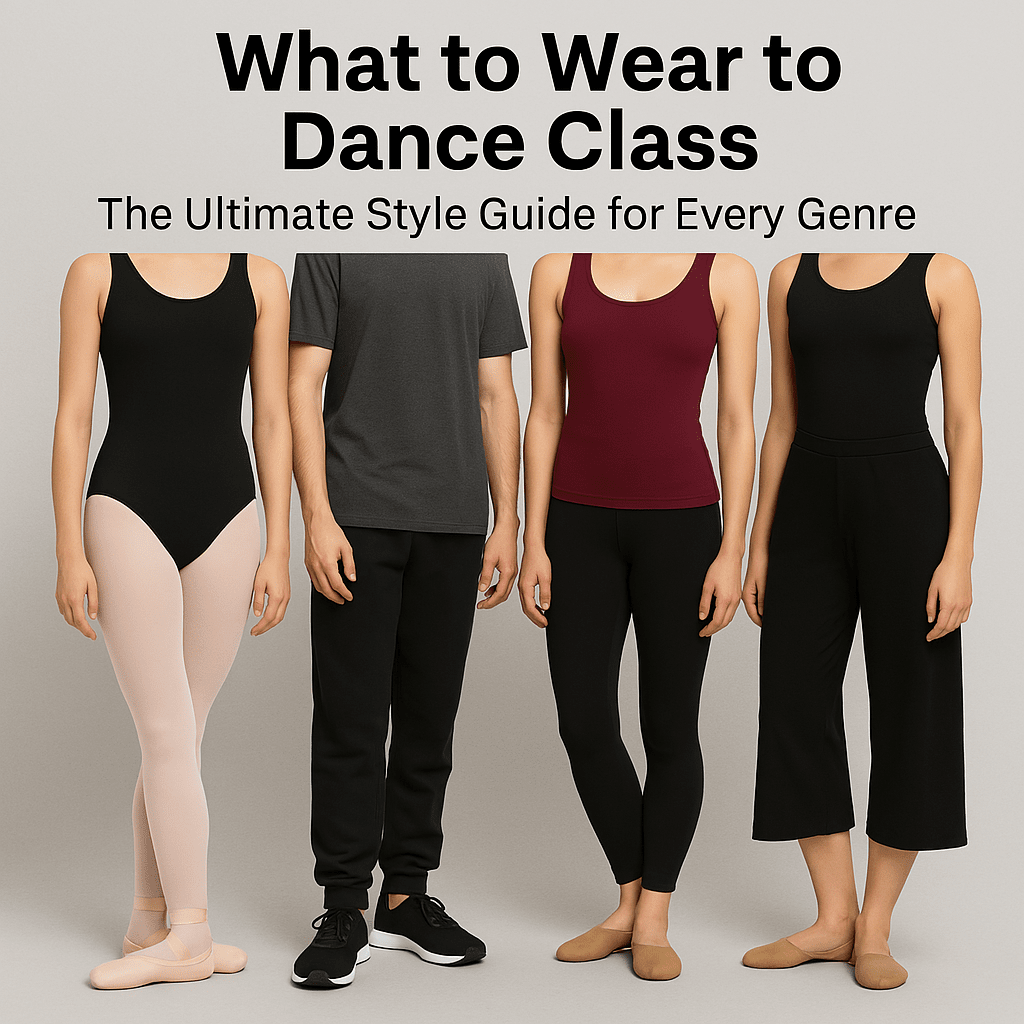
Ballet
Ballet is known for its precise movements and elegant lines. Clothes should help teachers see your form clearly.
Essentials:
- Leotard: Fitted, one-piece garment. Allows free leg and arm movement.
- Tights: Usually pink or nude for women, black or white for men. Offer muscle support.
- Ballet slippers: Lightweight shoes with thin soles for grip and balance.
- Wrap skirt or shorts: Sometimes worn over the leotard for modesty or style.
- Warm-up gear: Legwarmers, shrugs, or wrap sweaters for before and after class.
Tip: If you have sensitive skin, choose seamless tights and leotards to avoid chafing.
Contemporary And Modern Dance
Contemporary dance blends ballet, jazz, and other styles. It favors fluid movement and often involves floor work.
Best choices:
- Fitted tank tops or t-shirts: Allow for arm movement and clear lines.
- Leggings or yoga pants: Stretchy, snug, and comfortable.
- Bare feet or socks: Many contemporary dancers perform without shoes for better contact with the floor.
- Unitards: One-piece suits that provide full-body coverage without restriction.
Insight: Avoid pants that are too long—they can cause slips during quick floor movements.
Hip Hop
Hip hop is energetic, athletic, and rooted in street culture. Clothes should be relaxed but not baggy enough to trip you.
Ideal gear:
- Loose t-shirts or tanks: Allow airflow and freedom.
- Joggers or sweatpants: Lightweight, with elastic cuffs to avoid stepping on hems.
- Sneakers: Supportive, non-marking soles for spins and jumps.
- Hats or caps: Optional for style, but secure them well.
Common mistake: Extremely oversized pants may look cool but can catch on shoes or floor, causing falls.
Jazz
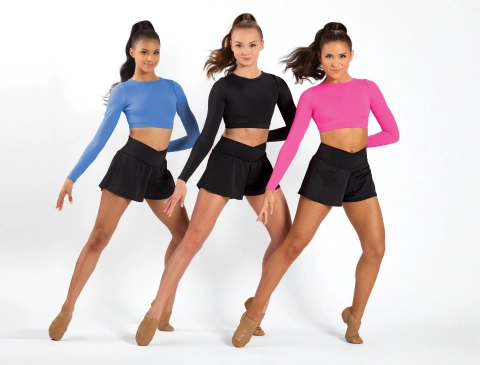
Jazz dance is upbeat and expressive. Outfits should be both functional and fun.
Recommended:
- Fitted tops: Tanks, camisoles, or t-shirts.
- Jazz pants or leggings: Stretchy, flared or straight.
- Jazz shoes: Flexible soles for quick turns.
- Shorts: Sometimes worn in hotter studios.
Practical tip: Jazz shoes should fit like a glove. Too loose, and you’ll lose balance; too tight, you’ll get blisters.
Ballroom And Latin
Ballroom covers dances like waltz, tango, and foxtrot. Latin includes salsa, cha-cha, and rumba. Both need clothes that accentuate movement.
Ballroom:
- For women: Flowing dresses with fitted bodices. Skirts should allow spins.
- For men: Dress shirts, fitted pants, and dance shoes with suede soles.
Latin:
- For women: Shorter skirts or dresses, sometimes with fringe for dramatic movement.
- For men: Fitted shirts, often with open necklines, and slim pants.
Insight: Practice clothes are usually more modest than performance costumes, but always check your studio’s rules.
Tap
Tap focuses on rhythm and sound. Shoes are the star here.
Key items:
- Tap shoes: Hard soles with metal plates on toe and heel.
- Fitted top and pants: Avoid anything too loose that could mask leg movement or trip you.
- Optional: Jazz pants or leggings for comfort.
Little-known tip: Bring a small towel to wipe shoe soles between routines. Dust can reduce grip and dull sound.
Lyrical
Lyrical dance combines ballet and jazz, with a focus on emotion and storytelling.
Best options:
- Leotard or fitted top
- Lyrical shorts or leggings
- Bare feet or half-sole shoes
- Flowy skirt: Adds drama to movements.
Note: Avoid jewelry—rings or bracelets can catch on fabrics or other dancers.
Street Dance
Street dance covers many urban styles, including popping, locking, and breaking.
Popular choices:
- Baggy pants or cargo pants: Give room for acrobatic moves.
- Loose t-shirts or tanks
- Sneakers: Flat soles for stability.
- Beanies or headbands: Help with head spins, keep sweat out of eyes.
Extra tip: Reinforced knees on pants can save your skin during floor tricks.
Dance Fitness (zumba, Aerobics, Etc.)
Dance fitness classes are high-energy and sweat-inducing.
Essentials:
- Moisture-wicking tops: Keep you dry.
- Supportive sports bra
- Leggings or bike shorts
- Athletic sneakers: Good grip and shock absorption.
Non-obvious insight: Avoid cotton socks—they trap sweat. Choose synthetic blends to prevent blisters.
Social And Club Dancing
Whether you’re out salsa dancing or at a club, you want to look good and stay comfortable.
Suggestions:
- Breathable dress or skirt for women
- Smart shirt and trousers for men
- Dance heels or flats: Low, stable heels are safest for beginners.
- Avoid: Flip-flops, sandals, or anything without back support.
Safety tip: Bring a spare shirt if you expect to sweat a lot—changing keeps you comfortable and confident.
Materials: What Fabrics Work Best?
The fabric you choose affects how you feel and perform. Here’s a comparison of common materials:
| Material | Pros | Cons | Best For |
|---|---|---|---|
| Cotton | Soft, breathable, affordable | Absorbs sweat, can become heavy | Light classes, warm-ups |
| Spandex (Lycra) | Super stretchy, fits snugly | Holds odors, less breathable | Leotards, leggings |
| Polyester | Dries fast, durable | Can trap heat, less natural feel | Dance fitness, costumes |
| Mesh | Lightweight, airy | Can tear easily | Panels in tops/skirts |
| Velvet | Rich look, soft | Heavy, warm | Performance wear |
Tip: For frequent practice, choose blends of spandex and polyester for the right mix of stretch and moisture control.
Credit: dancewearcorner.com
Dance Shoes: Picking The Right Pair
Footwear is often the most important part of your dance outfit. The right shoes can help you turn, jump, and land safely. Here’s a breakdown by style:
| Dance Style | Typical Shoe | Key Features |
|---|---|---|
| Ballet | Ballet slippers or pointe shoes | Flexible, lightweight, snug fit |
| Jazz | Jazz shoes | Split sole, flexible, low heel |
| Ballroom/Latin | Heeled shoes (women), suede soles | Support, slip for turns, stable heel |
| Hip Hop/Street | Sneakers | Cushioning, grip, ankle support |
| Tap | Tap shoes | Metal plates for sound |
| Lyrical/Contemporary | Barefoot, half-sole, or foot thongs | Feel the floor, protect skin |
Non-obvious insight: Always break in new shoes at home before wearing them to class. This helps prevent blisters and surprises during your first session.
Choosing Dancewear For Your Body Type
Dance is for everyone, and the right clothes should make you feel confident no matter your shape. Here are some tips:
- Tall dancers: Fitted tops with longer torsos help avoid riding up. High-waist leggings can balance proportions.
- Petite dancers: Cropped tops and fitted pants elongate the body visually.
- Curvy dancers: Look for supportive, thick-strapped tops and high-compression leggings.
- Broad shoulders: Raglan sleeve tops soften the line of the shoulders.
- Long legs: Bootcut or flared pants can balance proportions.
Practical tip: Many brands offer custom inseam lengths or plus sizes. Don’t settle for poor fit—ill-fitting clothes can distract or even embarrass you on the dance floor.
What To Avoid: Common Mistakes In Dancewear
Even experienced dancers sometimes make clothing mistakes that hold them back. Watch out for these:
- Overly loose clothing: Can catch on equipment or other dancers.
- Heavy jewelry: Rings, necklaces, or earrings can snag or cause injury.
- Slippery socks: Unless designed for dance, regular socks can cause dangerous slips.
- Street shoes: Outdoor dirt damages dance floors and reduces shoe grip.
- Unwashed dancewear: Sweat and bacteria build up fast; always wash clothes after each session.
Expert insight: Avoid strong perfumes or scented lotions. Close contact during partner dances can make these overwhelming for others.
Accessories For Dancers: What’s Useful?
While dance clothes are the main focus, a few accessories can make your experience better:
- Hair ties or headbands: Keep hair out of your face.
- Dance bags: Separate compartments for shoes, clothes, water, and snacks.
- Knee pads: Essential for breakdancers and contemporary dancers who do floor work.
- Water bottle: Hydration is vital, especially in hot studios.
- Towel: For wiping sweat or cleaning shoes.
Advanced tip: Keep a small sewing kit in your dance bag. Quick fixes for straps, seams, or hems can save the day.
Kids’ Dancewear: Special Considerations
Children’s dancewear needs to be safe, simple, and age-appropriate.
- No strings or loose parts that could cause tripping.
- Bright colors can help teachers spot students easily.
- Easy-to-fasten shoes for quick changes.
- Soft, non-restrictive fabrics for growing bodies.
Practical tip: Label every item with your child’s name. Kids often leave things behind in busy studios.
How To Care For Dance Clothes
Dancewear can be an investment. With the right care, you’ll make it last much longer:
- Wash after each use: Sweat can damage elastic fibers.
- Air dry: High heat can shrink or weaken fabrics.
- Use gentle detergent: Avoid bleach, which breaks down spandex.
- Store flat: Hanging can stretch certain materials.
- Check shoes: Clean soles and check for loose parts before every class.
Surprising tip: Freeze your shoes overnight to kill bacteria and remove odor without washing.
Credit: www.dancewearsolutions.com
Cost Vs. Quality: Is Expensive Always Better?
Some dancers spend a fortune on outfits, but high price doesn’t always mean high performance. Here’s a quick comparison:
| Price Range | What You Get | Best For |
|---|---|---|
| Budget | Basic materials, fewer style choices | Beginners, kids, backup outfits |
| Mid-range | Better fit, more durable, brand names | Regular practice, performances |
| Premium | Top materials, custom fit, unique designs | Competitions, professionals |
Tip: For growing children, avoid investing in premium dancewear—they’ll outgrow it quickly.
Dancewear And Cultural Expression
Some dance forms are deeply connected to culture and tradition. Flamenco, belly dance, and Indian classical dance all have unique costumes. When joining a class or performance, respect and learn about the traditions behind the clothing. For example, flamenco dresses have ruffles and polka dots; Indian classical dancewear includes ornate fabrics and jewelry.
Non-obvious insight: Some costumes are designed for visual effect rather than comfort. Always practice in comfortable clothes, and save the full costume for rehearsals and shows.
Shopping Tips: How To Choose And Where To Buy
Choosing dancewear can be overwhelming with so many brands and options. Here’s how to make a smart choice:
- Try before you buy: Fit is everything. Visit a local dance store if possible.
- Read reviews: Other dancers can point out flaws or benefits you might not notice.
- Check return policies: Sizes and fits can be unpredictable.
- Buy basics first: Start with what you need for class, then add extras as you grow.
- Look for sales: Dancewear can be expensive—watch for studio sales or online deals.
For a list of reputable brands and more in-depth advice, the Dancewear Central website is a trusted source.
Pro tip: Don’t be swayed by flashy looks alone. Prioritize comfort and movement over style, especially as a beginner.
Frequently Asked Questions
What Should A Beginner Wear To Their First Dance Class?
For most classes, wear comfortable, stretchy clothes like leggings and a fitted t-shirt. Avoid jeans or anything that limits movement. For shoes, follow the studio’s advice—barefoot, socks, or clean sneakers are common for the first class.
How Do I Know If My Dance Clothes Fit Correctly?
Dancewear should feel snug but not tight. You should be able to move, squat, and stretch without fabric digging in or shifting around. If clothes ride up, fall down, or distract you, try a different size or style.
Are There Special Clothes For Plus-size Dancers?
Yes, many brands now offer plus-size and custom-fit dancewear. Look for supportive fabrics, high-waist leggings, and tops with wide straps. Confidence is key—wear what makes you feel good.
Can I Use Regular Gym Clothes For Dance?
For some styles, yes. Yoga pants and sports tops work for many beginner classes. But as you progress, you may need specific shoes or outfits for safety and technique, especially in ballet, tap, or ballroom.
How Should I Clean And Store My Dance Shoes?
Wipe shoes after every use, air them out, and never store them in a sealed plastic bag. For leather or suede soles, use a soft brush to remove dirt. Store shoes away from direct sunlight and heat.
Dancing is meant to be joyful, expressive, and fun. The right clothes help you focus on movement, not discomfort. Think of dancewear as a tool that supports your creativity and growth. By choosing wisely, caring for your outfits, and paying attention to the little details, you’ll feel more at home in any studio or on any stage.
Whether you’re a beginner or a lifelong dancer, the perfect outfit starts with understanding your body, your style, and your dance goals. Now, step onto the floor and let your clothes help you move with confidence.

Credit: www.wikihow.com
