

Business Casual vs Business Professional Women: Key Style Differences
Business Casual Vs Business Professional For Women: A Complete Guide
When it comes to dressing for work, women often face a confusing mix of rules, expectations, and changing trends. Two of the most common dress codes are business casual and business professional. These styles may sound similar, but they have clear differences that can affect how you are seen at work. Knowing what to wear can help you feel confident and make a strong impression. Let’s explore both dress codes, look at real examples, and understand when and how to wear each one.
Understanding Business Casual And Business Professional
Both business casual and business professional are work-appropriate, but they have different levels of formality. Knowing the core features of each style can help you dress right for your workplace and career.
What Is Business Casual?
Business casual is a relaxed dress code. It is less formal than traditional business wear but still neat and professional. The goal is to look polished without being too formal or stiff. Many modern offices prefer business casual because it is comfortable and flexible.
Key elements of business casual for women:
- Blouses, sweaters, or smart tops
- Dress pants, tailored trousers, or knee-length skirts
- Cardigans or simple blazers (optional)
- Closed-toe flats, loafers, or low heels
- Simple jewelry and accessories
What to avoid:
- Jeans (unless allowed)
- Sneakers or sandals
- T-shirts or tank tops
- Very short skirts or dresses
- Flashy or oversized accessories
Business casual gives you more freedom to choose colors, patterns, and fabrics. For example, you can wear a light blue blouse with soft stripes, or a knit sweater with a subtle print. But always remember, comfort should not come at the cost of looking unkempt.
Wrinkled clothes, faded fabrics, or worn-out shoes can ruin the effect, even if the style fits business casual.
Many people confuse business casual with smart casual. Smart casual may allow more trendy pieces or even jeans in some environments, but business casual should always be more polished. For instance, a smart casual outfit might include a fashionable denim jacket, while business casual would stick to blazers or cardigans.
What Is Business Professional?
Business professional is a traditional, formal dress code seen in law firms, corporate offices, and banking. The look is sharp, coordinated, and conservative. The main aim is to show seriousness and reliability.
Key elements of business professional for women:
- Tailored suits (matching blazer and pants/skirt)
- Crisp button-down shirts or blouses
- Neutral, solid colors (black, navy, gray)
- Closed-toe pumps or formal heels
- Minimal, classic accessories
What to avoid:
- Bright colors or bold prints
- Casual footwear (flats, loafers, sandals)
- Statement jewelry
- Unmatched separates or informal fabrics
Business professional often means sticking to a “uniform” look. The pieces should match closely, and the fit should be precise. Wearing a suit that is too loose or too tight can make you look less polished. Fabrics are important too—wool blends or high-quality polyester are standard, while cotton or knits are usually too casual.
One detail beginners miss is the importance of maintaining your business professional wardrobe. Suits need regular dry cleaning, blouses should be pressed, and shoes must be polished. These small steps help you stand out and show your attention to detail.
Side-by-side Comparison
To make the differences clear, here’s a direct comparison:
| Aspect | Business Casual | Business Professional |
|---|---|---|
| Formality | Medium | High |
| Main Pieces | Blouse + pants/skirt | Suit (blazer + matching pants/skirt) |
| Colors | Some color, soft prints | Neutral, solid colors only |
| Shoes | Flats, loafers, low heels | Formal heels/pumps |
| Accessories | Simple, personal style | Classic, minimal |
Another difference that is often missed: business casual allows for more layering options. You can mix and match cardigans, light jackets, and even scarves. Business professional usually means fewer layers—the suit is the main piece, and extra items should not distract from the formal look.
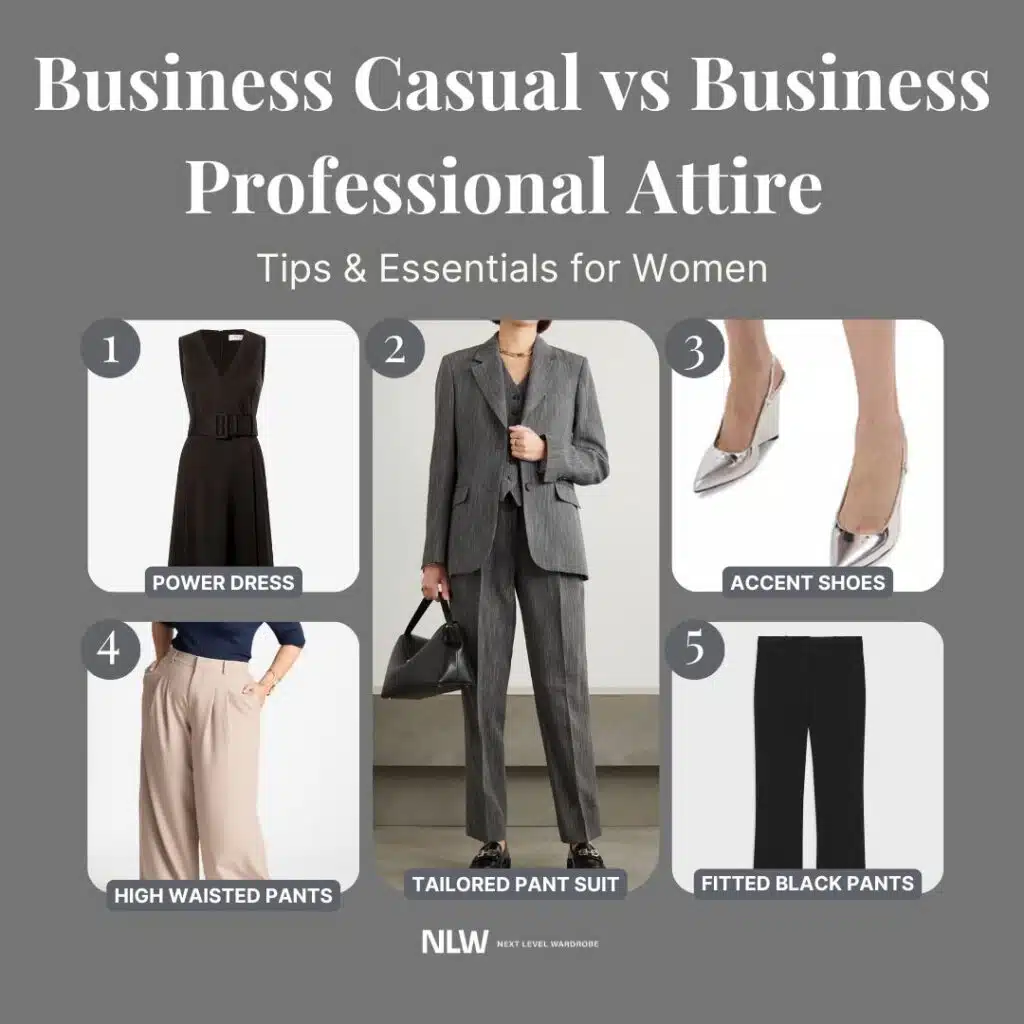
Credit: nextlevelwardrobe.com
When To Wear Each Dress Code
Choosing between business casual and business professional depends on your job, industry, and sometimes the day’s schedule.
When Business Casual Is Appropriate
- Offices with a relaxed culture (marketing, tech, education)
- Casual meetings or brainstorming sessions
- Friday dress-down days
- Company events (not involving clients)
Business casual lets you show personality while staying professional. For example, a smart blouse with tailored pants and flats is perfect for a regular day at a mid-sized company.
It’s important to check your company’s written dress code—sometimes “business casual” means different things in different places. Some tech companies allow colored jeans or trendy sneakers, while others expect classic trousers and closed-toe shoes. Pay attention to what your colleagues wear and ask HR if you are unsure.
Another smart trick: keep one extra formal piece at your desk, like a blazer or a pair of neutral heels. If you need to upgrade your outfit for a sudden meeting, you’ll be ready.
When Business Professional Is Required
- Corporate, law, or finance jobs
- Client meetings or presentations
- Interviews for traditional fields
- Company events with executives
Business professional is about making a strong, reliable impression. A dark suit with a white blouse and black pumps fits right for a bank or law office.
Tip: If you’re unsure about your office dress code, start with business professional. You can always adjust once you know the culture.
One detail often missed: business professional is not just about wearing a suit. It’s about the whole look—your hair, makeup, and accessories should match the formality. For example, avoid bright nail polish or messy hairstyles. Stick to neutral makeup and neat hair.
Building A Business Casual Wardrobe
Putting together a business casual wardrobe is about smart basics, comfort, and style. Here’s how to create one:
Essential Pieces
1. Blouses And Tops
Choose solid colors, soft prints, or subtle patterns. Avoid anything too bright or revealing. Silk or cotton blends work well and are easy to care for.
2. Cardigans And Sweaters
Great for layering. Stick to classic shapes and colors. Avoid oversized or chunky knits, which can look too relaxed.
3. Tailored Pants
Opt for ankle-length, straight, or wide-leg styles in neutral shades. Avoid tight leggings or overly baggy trousers.
4. Knee-length Skirts
Pencil or A-line skirts in solid colors work best. Always check length—too short can look unprofessional.
5. Dresses
Simple sheath or wrap dresses are easy and versatile. For extra comfort, choose fabrics with a bit of stretch.
6. Blazers
Not required, but a fitted blazer can dress up any outfit. Choose one in navy, black, or gray, which matches most pieces.
7. Shoes
Flats, loafers, or low heels in leather or suede keep the look polished. Avoid athletic shoes or sandals.
Non-obvious tip: Don’t forget about outerwear. A classic trench coat or smart wool jacket can complete your business casual look and is useful for unpredictable weather.
Example Outfits
- Navy blouse + beige trousers + black flats
- Soft grey sweater + black pencil skirt + nude pumps
- Patterned top + cardigan + navy ankle pants
Try mixing different textures for interest—for example, a cotton blouse with wool trousers, or a knit dress with a light blazer. This keeps your outfits from looking too plain.
Accessories And Extras
Keep jewelry simple—stud earrings, a small pendant, or a classic watch. A structured bag in a neutral color is always a safe choice.
A silk scarf or a leather belt can add a touch of style. But avoid anything too flashy or distracting. Remember, your accessories should support your overall look, not become the main focus.
Common Mistakes In Business Casual
- Overdressing or underdressing based on personal style
- Wearing jeans or leggings unless allowed
- Picking bold prints or neon colors
- Forgetting to iron clothes or polish shoes
One mistake beginners make is choosing shoes that are comfortable but too casual (like slip-on sneakers). Always check that your footwear matches the outfit’s formality. Also, avoid “party tops”—even if they cover your arms, materials like sequins or satin are usually not appropriate for the office.
Building A Business Professional Wardrobe
A business professional wardrobe is more strict and classic. Every piece should look coordinated and high-quality.
Essential Pieces
1. Suit Sets
Own at least one well-fitting pantsuit and one skirt suit in black, navy, or gray. Make sure the blazer fits well at the shoulders and waist.
2. Button-down Shirts
White, light blue, or cream are best. Avoid see-through fabrics. Choose shirts with a crisp collar and minimal detailing.
3. Tailored Pants Or Skirts
Always match the blazer for a complete suit look. The hem should hit at the ankle or just below the knee for skirts.
4. Sheath Dresses
Simple, with a blazer over, can also work. Stick to solid colors and avoid embellishments.
5. Formal Pumps
Closed-toe, 2-3 inch heel, in leather or suede. Avoid platform or open-toe styles.
6. Tights Or Hosiery
Sheer or nude, especially if wearing skirts. Always check for runs or holes before wearing.
7. Classic Accessories
Pearl studs, a silver or gold chain, and a leather handbag. Keep everything understated.
Hidden insight: Alterations can make a big difference. A small investment in tailoring can turn an average suit into a perfect fit. Many women skip this step, but it’s essential for a sharp business professional look.
Example Outfits
- Black skirt suit + white shirt + black pumps
- Navy pantsuit + cream blouse + nude hosiery
- Gray sheath dress + black blazer + simple watch
Choose high-quality fabrics that hold their shape. Wool blends resist wrinkles and look professional all day.
Accessories And Extras
Keep everything subtle. Scarves can add a touch of color, but avoid anything flashy.
If you want to wear a watch, pick a classic style with a leather or metal band. Avoid large or sporty watches.
Common Mistakes In Business Professional
- Wearing unmatched separates (e.g., black blazer and blue pants)
- Choosing casual shoes or open-toe sandals
- Overdoing perfume or makeup
- Skipping hosiery in very formal offices
Another mistake: ignoring the condition of your clothes. Small stains, missing buttons, or fraying hems can ruin your professional appearance. Always check your outfit in good light before leaving home.
Real-world Examples And Case Studies
Seeing how these dress codes work in real life can clear up confusion.
Business Casual In Action
Sara works as a project manager in a tech company. Her office allows business casual. She usually wears a soft blue blouse, navy pants, and taupe flats. On Fridays, she switches to a knit sweater and a midi skirt. She keeps her jewelry simple with small hoops and a leather tote bag.
She feels comfortable but still ready for any meeting.
Sara’s approach shows how you can use color and layering in business casual. She changes her outfit based on the day’s tasks. For team meetings, she adds a blazer. For solo work, she keeps things relaxed but tidy. This flexibility is a big advantage of business casual.
Business Professional In Action
Maria is a junior associate in a law firm. Her dress code is business professional every day. She wears a charcoal skirt suit, light blue button-down shirt, black pumps, and sheer tights. Her hair is neat, and she keeps her accessories to a pearl necklace and a black structured bag.
She feels confident in client meetings and knows her look fits the office.
Maria’s routine includes careful planning. She checks her clothes for wrinkles, polishes her shoes, and keeps backup hosiery in her desk drawer. She understands that a polished look helps her build trust with clients and colleagues.
Hybrid Environments
Some workplaces mix both dress codes. For example, a finance company may allow business casual on Fridays but require business professional for client presentations. Knowing how to shift between the two is a useful skill.
If your office is hybrid, prepare a few “switchable” pieces, such as a classic blazer or neutral pumps. This lets you upgrade your outfit quickly. In global companies, you may need to adjust for different locations or video meetings with clients from other countries.
The Impact Of Dress Code On Career
What you wear at work can affect how others see you—and even your career growth.
First Impressions Matter
Research shows that first impressions are made in seconds. A neat, appropriate outfit signals reliability and respect for the workplace. Dressing well can help build trust, especially in formal industries.
In interviews, the dress code can influence your chances. Wearing business professional to a formal company shows you understand their culture. At a creative agency, business casual may be more effective, as it shows you fit their relaxed environment.
Confidence And Performance
Many women find that dressing in business professional outfits boosts their confidence. When you look the part, it’s easier to act the part, too. On the other hand, business casual can help you feel comfortable and creative, especially in less formal environments.
One non-obvious insight: if you feel nervous before a big meeting, dressing more formally can help you feel ready. The act of putting on a suit or structured dress creates a “mental switch,” helping you focus and perform better.
Promotions And Visibility
Managers often notice those who dress well. While skills and results matter most, your appearance can give you a small edge in competitive offices. Wearing the right dress code shows you understand and respect company culture.
In many companies, the people who dress up for important events or meetings are seen as more ambitious. This doesn’t mean you must always be formal, but showing you know when to dress up is important.
Data On Dress Codes
A survey by OfficeTeam found that 80% of managers believe clothing choices can affect an employee’s promotion chances. Also, 50% of employees say they feel more productive when they dress up for work.
Another interesting finding: people who dress professionally are often trusted with more responsibility. If you want to move up in your company, pay attention to dress code guidelines.
Key Differences: Fabric, Fit, And Details
Both dress codes care about fit and neatness, but the details matter.
Fabric
- Business casual: Cotton, wool blends, knits, or soft polyester. These fabrics are comfortable and easy to wash.
- Business professional: Wool, high-quality polyester, or suit blends. These are more durable and hold structure.
When choosing fabrics, avoid anything shiny or overly textured for business professional. For business casual, avoid fabrics that wrinkle easily or look sloppy.
Fit
- Business casual: Slightly relaxed, but not baggy or tight. You should be able to move easily, but the clothes should look neat.
- Business professional: Tailored, structured, always fits well. Suits should follow your shape without pulling or sagging.
If you’re unsure about sizing, get help from a tailor or use store fitting services. Well-fitted clothes can make even budget pieces look expensive.
Details
- Business casual: Less structure, possible prints or soft colors. Buttons, collars, and sleeves can be more relaxed.
- Business professional: Sharp creases, no wrinkles, no extra details. Every part of the outfit should look intentional.
One extra tip: pay attention to pockets, zippers, and seams. For business professional, these should be nearly invisible. For business casual, small details are okay, but avoid anything distracting.

Credit: www.boltstaffing.com
Cultural Differences And Global Trends
Dress codes can change based on culture and location.
- In the US and Northern Europe, business casual is common in many offices.
- In Japan and some Middle Eastern countries, business professional is the norm.
- International companies may have “hybrid” rules, where casual wear is allowed but formal attire is expected for meetings.
If you travel for work, check local norms. It’s better to be slightly overdressed than too casual.
In some cultures, colors and patterns are seen differently. For example, bright red is common in parts of Asia but avoided in formal Western offices. Before visiting another country, research what is expected or ask a local colleague.
Another practical insight: in hot climates, lightweight fabrics are preferred, but formality is still important. Choose suits in breathable wool or cotton blends, and avoid sleeveless tops unless covered by a jacket.
Tips For Transitioning Between Dress Codes
Sometimes you need to switch from business casual to business professional quickly, such as for a surprise meeting. Here’s how to do it smoothly.
1. Keep A Blazer In Your Office.
Adding a blazer can instantly raise the formality of most outfits.
2. Neutral Shoes Matter.
Swap casual flats for classic pumps if needed.
3. Simple Jewelry Works Everywhere.
Avoid bold pieces so you can move between styles easily.
4. Choose Solid Colors.
Outfits in navy, black, or gray are easier to “upgrade” when needed.
5. Have A Backup.
Keep a spare pair of tights and a button-down shirt at work.
It’s also smart to keep a small makeup kit at your desk. You can adjust your look for a more formal meeting in just a few minutes. And don’t forget grooming—quickly brushing your hair or touching up lipstick can make a big difference.
Frequently Asked Questions
What Is The Main Difference Between Business Casual And Business Professional For Women?
The main difference is formality. Business casual is more relaxed and allows for some personal style, while business professional is formal, classic, and strict. Business professional usually requires a matching suit and minimal accessories. Business casual lets you mix and match tops, pants, and skirts, as long as you look neat and put-together.
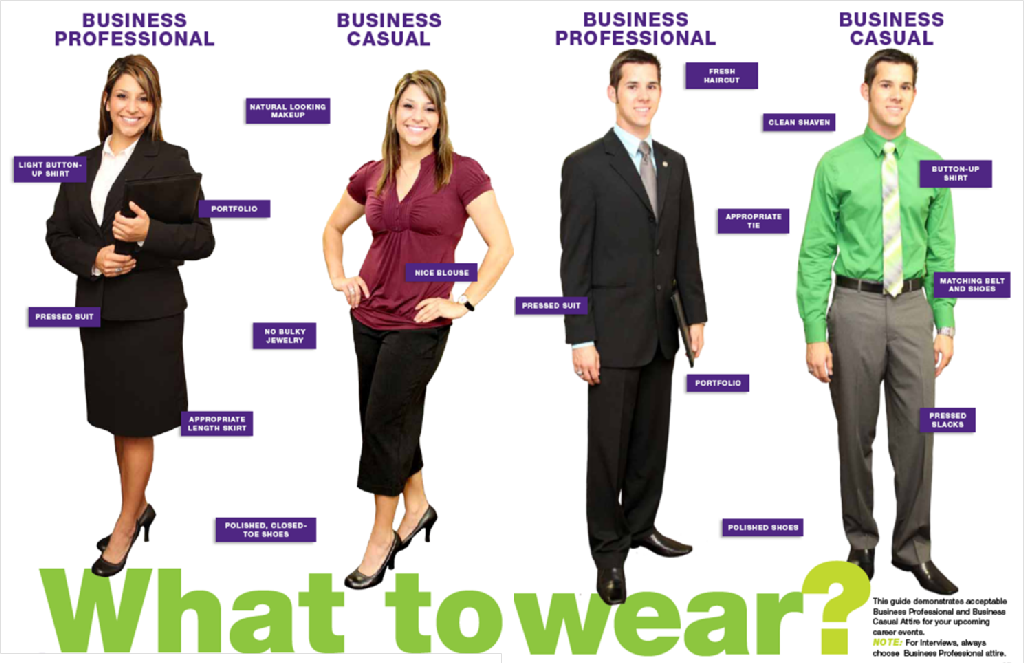
Credit: www.morganhunter.com
Can I Wear Jeans In A Business Casual Office?
It depends on your company’s policy. Some offices allow dark, non-distressed jeans as part of business casual, but many do not. Always check with HR or observe what others wear. When in doubt, choose tailored pants or a skirt instead. If jeans are allowed, pair them with a dressy top and closed-toe shoes.
One extra tip: Even if jeans are allowed, avoid ripped, faded, or very tight styles. Always choose a classic fit and wear them with a belt and polished shoes.
Are Dresses Appropriate For Both Dress Codes?
Yes, but with differences. For business casual, dresses can be in soft colors, simple prints, or knits—just make sure they are knee-length or longer. For business professional, stick to sheath dresses in neutral colors, and always add a blazer. Avoid sleeveless or body-hugging styles unless you wear a jacket over them.
If you wear a dress for business professional, check that the neckline is modest and the hem is not too short. Add tights or hosiery and minimal jewelry.
How Can I Build A Wardrobe That Works For Both Dress Codes?
Start with classic basics in neutral colors: a black blazer, navy trousers, white blouses, and a simple sheath dress. These can be dressed up with formal shoes and minimal jewelry for business professional, or dressed down with cardigans and flats for business casual. Invest in high-quality pieces that fit well, and add color or accessories for business casual days.
A hidden tip: If your budget is limited, buy mix-and-match pieces. For example, a navy blazer can be worn with matching pants for business professional, or with beige trousers and a patterned blouse for business casual.
Where Can I Find Style Inspiration Or More Detailed Dress Code Advice?
Many professional style guides and company resources offer advice. You can also look at trusted sources such as Business Insider for real-world examples and tips. Watching what respected women wear in your workplace is also helpful.
Another idea: search for “workwear bloggers” or follow business style accounts on social media. They often share practical outfit photos and ideas for both dress codes.
Final Thoughts
Choosing the right dress code for your workday is about balancing professionalism, comfort, and your unique style. Understanding the difference between business casual and business professional helps you make smart choices and avoid awkward mistakes. Remember, it’s better to start a bit more formal and adjust as you learn your workplace culture. Invest in key pieces, keep your wardrobe neat, and you’ll always be ready to look—and feel—your best at work.
Dressing well is not just about following rules—it’s about showing respect for yourself and your colleagues. Whether you prefer business casual or business professional, take pride in your appearance. Over time, your attention to detail will help you build confidence, trust, and success in your career.
