

Why Does Affirmation Mean More Than Just Positive Thinking?
Why Does Affirmation Mean
Most of us have heard the word affirmation. People talk about using affirmations to change their life, improve confidence, or reach goals. But what does affirmation actually mean? Why do so many experts, coaches, and psychologists recommend affirmations? And, maybe more importantly, do they really work or is it just a popular trend?
Let’s take a deep dive into the meaning behind affirmations, how they work, and why people across the world use them. Whether you are new to the idea or looking to understand affirmations on a deeper level, this article will guide you through everything you need to know.
You’ll discover how affirmations affect your thoughts, practical ways to use them, the science behind their impact, and common mistakes to avoid. By the end, you’ll be able to decide if affirmations are right for you and how to use them effectively.
What Does Affirmation Mean?
The word affirmation comes from the Latin root “affirmare,” which means “to make steady, strengthen.” In modern use, an affirmation is a positive statement that you say or write to yourself with the purpose of encouraging a certain belief or behavior.
Affirmations are not just about repeating nice words. They are about shaping the way you think. When you use affirmations, you choose to focus on a positive idea rather than a negative one. For example, instead of thinking “I’m not good enough,” you say “I am capable and strong.
”
An affirmation can be as simple as “I am calm,” or as specific as “I can complete my work with focus. ” The key is that the statement is positive, present tense, and meaningful to you.
The Psychology Behind Affirmations
Understanding how affirmations work in your mind helps you use them more effectively. Affirmations are based on the concept of self-affirmation theory in psychology.
This theory suggests that people want to see themselves as honest, good, and able to control their life. When life challenges or negative thoughts threaten this self-image, affirmations help restore balance. By repeating positive statements, you remind yourself of your values and strengths.
Research shows that affirmations can reduce stress, improve problem-solving, and even help people make healthier choices. For instance, studies found that students who practiced self-affirmation before tests performed better and felt less anxious.
The real power of affirmations comes from their ability to change your inner dialogue. When you repeat an affirmation, you slowly train your mind to believe it. Over time, this can change how you act and respond to challenges.
Types Of Affirmations
Affirmations come in many forms, and knowing the differences can help you pick the right one for your needs.
1. Self-affirmations
These are the most common. You use self-affirmations to boost your confidence, self-worth, or mood. Examples include “I am worthy of love,” or “I am resilient.”
2. Goal-based Affirmations
Used to focus on a specific goal, such as “I am getting stronger each day,” or “I am building my business step by step. ” These keep you motivated and remind you of your progress.
3. Health And Wellness Affirmations
For people working on health goals, these affirmations support habits like exercise, healthy eating, or managing stress. For example, “I enjoy nourishing my body,” or “I choose calmness in stressful times. ”
4. Relationship Affirmations
These help you improve your connection with others. Statements like “I am a supportive friend,” or “I give and receive love freely” are used to nurture healthy relationships.
5. Financial Affirmations
To build a money mindset, people use affirmations like “I attract opportunities,” or “I am open to abundance. ”
Each type serves a unique purpose, but all aim to guide your mind toward positivity and growth.
How Do Affirmations Work?
Affirmations might sound simple, but there is real science behind why they influence our thoughts and actions.
The Power Of Repetition
Your brain is wired to believe what it hears often. When you repeat an idea, the brain builds pathways that make the idea feel true. This is called neuroplasticity—your brain’s ability to adapt and change with experience.
By repeating a positive statement, you slowly turn it into a belief. For example, someone who repeats “I am calm under pressure” may start to react more calmly in stressful situations.
Shifting Focus
Affirmations help you focus on your strengths instead of your weaknesses. Instead of worrying about what you cannot do, you remind yourself what you can do. This shift helps you feel more hopeful and less anxious.
Emotional Impact
Positive affirmations can boost your mood and lower stress. When you say something kind to yourself, you activate the reward centers in your brain. This creates good feelings, which motivate you to keep going.
Example: The Exam Stress Case
Imagine you have an important test. If you keep thinking “I’ll fail,” your stress increases, making it harder to focus. If you use the affirmation “I am prepared and ready,” your mind calms, and you perform better.
The Science: Do Affirmations Really Work?
Many people wonder if affirmations are just wishful thinking. The truth is, there is research that supports their benefits—but with some important details.
Evidence From Studies
- One study found that people who practiced self-affirmation before a stressful task showed less stress and made better decisions.
- Another research project showed that affirmations can protect against the effects of negative feedback. When people received criticism, those who used affirmations felt less threatened and more open to learning.
Limits And Conditions
Not all affirmations work for everyone. If an affirmation feels too unrealistic (“I am a billionaire!”), your brain may reject it. The best affirmations are believable and connected to your real values.
Also, affirmations are not magic. They work best when combined with action. Saying “I am healthy” helps most when you also eat well and exercise.
Why Some People Don’t Benefit
Some beginners repeat affirmations without believing them. This can actually cause more stress, because the mind fights the new idea. That’s why it’s important to choose statements that feel true or possible.
How To Create Powerful Affirmations
Writing your own affirmation is simple, but a few key tips will make it much more effective.
- Keep it positive. Avoid negative words like “not” or “never.” Instead of “I am not anxious,” say “I am calm and relaxed.”
- Use the present tense. Affirm as if it is already true: “I am confident” instead of “I will be confident.”
- Make it personal. Use “I” or “my” to connect the affirmation to yourself.
- Keep it short and clear. Simple statements are easier for your mind to absorb.
- Believe in your words. Start with ideas that feel possible. As your confidence grows, you can stretch your affirmations further.
Example Affirmations
- “I am learning and growing every day.”
- “My efforts create results.”
- “I am grateful for what I have.”
Common Affirmation Mistakes And How To Avoid Them
People often make small mistakes that reduce the power of affirmations. Here’s what to watch for:
1. Using Unrealistic Statements
If your affirmation is too far from your current reality, your mind may reject it. For example, saying “I love public speaking” when you are terrified of it can create tension. Instead, try “I am learning to speak with more confidence.
”
2. Lack Of Consistency
Affirmations need to be repeated regularly. Saying it once a month will not create change. Make affirmations a daily habit.
3. Negative Language
Avoid affirmations that focus on what you don’t want (“I am not afraid”). Your brain often ignores the “not” and focuses on the main idea, which in this case is “afraid. ” Reframe it as “I am brave. ”
4. Forgetting Action
Affirmations are not a replacement for hard work. Use them as motivation to take steps toward your goals.
5. Relying Only On Words
Combine affirmations with real evidence. Notice your progress and celebrate small wins. This builds a stronger belief in your affirmations.
Practical Ways To Use Affirmations
There are many ways to add affirmations to your daily life. Here are some approaches:
Morning Routine
Start your day by saying your affirmations out loud. This sets a positive tone for the day.
Writing Practice
Write your affirmation in a journal every day. This helps you focus and remember your intention.
Sticky Notes
Place affirmations where you’ll see them—on your mirror, computer, or fridge.
Meditation
Repeat your affirmation during meditation. This combines the power of calm breathing with positive words.
Digital Reminders
Set reminders on your phone with your affirmation. Technology can help you stay on track.
Below, see a comparison of common affirmation methods and their benefits:
| Method | Best For | How Often |
|---|---|---|
| Saying Out Loud | Confidence, Motivation | Daily |
| Writing in Journal | Reflection, Focus | Daily |
| Sticky Notes | Reminders, Habits | As Needed |
| Meditation | Calmness, Stress Relief | Daily or Weekly |
| Digital Reminders | Busy Schedules | Several Times a Day |

Credit: www.aamc.org
Real-life Examples Of Affirmation Success
Stories can make the meaning of affirmation clearer. Here are some real examples of how affirmations have changed lives.
Overcoming Fear Of Public Speaking
Maria was always nervous about talking in meetings. She started saying, “I can share my ideas clearly. ” At first, it felt strange. After a few weeks, she noticed she was less nervous and spoke up more. Her manager praised her new confidence.
Building Healthy Habits
John wanted to lose weight and get fit. He wrote, “I am someone who cares for my body,” on a sticky note on his fridge. This small act reminded him to choose healthier foods. After six months, he had lost weight and felt stronger.
Improving Self-esteem
A group of students used the affirmation, “I am capable of learning new things. ” Teachers reported the students became more engaged and less afraid to make mistakes. Their grades improved as their confidence grew.
These stories show that affirmations, when used with action, can create real change.
The Difference Between Affirmation And Other Positive Practices
It’s easy to confuse affirmations with other positive thinking tools. Let’s compare some popular practices:
| Practice | Main Focus | How It Works |
|---|---|---|
| Affirmation | Belief Change | Repeat positive statements to shape thinking |
| Visualization | Imagining Success | Picture a goal as already achieved |
| Gratitude | Appreciation | Focus on what you are thankful for |
| Mantra | Calm and Focus | Repeat a sound or word during meditation |
While all these practices are positive, affirmations are unique because they directly target your beliefs about yourself and the world.
Who Should Use Affirmations?
Affirmations are helpful for almost anyone, but they are especially useful if:
- You want to build self-confidence.
- You need motivation to reach a goal.
- You are working to change a negative habit.
- You struggle with stress or anxiety.
- You want to support your mental health.
Some people might find affirmations less helpful if they have very strong negative beliefs or mental health challenges. In these cases, affirmations should be used along with professional help or therapy.
How To Make Affirmations A Lasting Habit
Getting results from affirmations takes time and practice. Here’s how to build a strong habit:
- Choose 1-3 affirmations that matter most to you.
- Repeat them every day, at a set time—like after waking up or before bed.
- Say them with emotion. Feel the words as you say them.
- Write them down in a notebook or on your phone.
- Notice your progress. Celebrate small changes.
Remember, missing a day is not a failure. Just continue the next day. Consistency is more important than perfection.
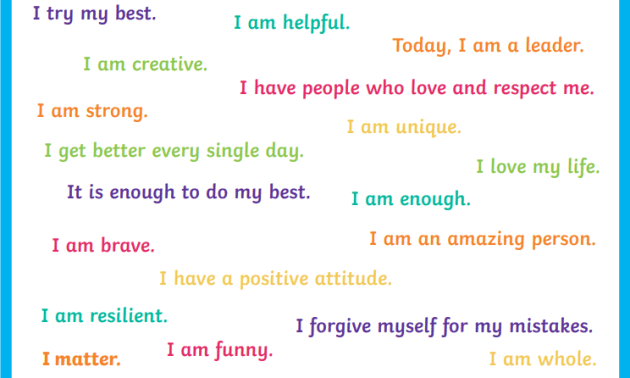
Credit: www.twinkl.es
Cultural And Spiritual Views On Affirmation
Affirmations are not new. Many cultures and spiritual traditions have used positive statements for centuries. For example, some religions use prayers or chants with similar effects as affirmations. These practices help people build faith, hope, and resilience.
In some cultures, affirmations are used to teach children about respect, courage, or kindness. In others, they are part of healing or meditation rituals. This global history shows that affirmations are a timeless tool for personal growth.
Affirmation In The Workplace
Affirmations are not only for personal growth—they can help in your career too. Leaders and successful people often use affirmations to stay focused and confident.
For example, a team might use the affirmation, “We work together to solve challenges. ” This can improve teamwork and reduce conflict. An employee might say, “I learn from feedback,” to stay open to growth.
Research shows that positive thinking in the workplace leads to higher productivity and better health. Affirmations can be a simple way to boost morale.

Credit: 7esl.com
Myths And Misconceptions About Affirmations
With so much information online, it’s easy to believe things about affirmations that are not true. Let’s clear up some myths:
Myth 1: Affirmations Are Just Wishful Thinking.
Fact: Affirmations work best when combined with action. They motivate you to take steps toward your goals.
Myth 2: You Must Believe Your Affirmation 100% Right Away.
Fact: It’s normal to feel doubt at first. Start with believable statements and build from there.
Myth 3: Affirmations Can Solve All Problems.
Fact: Affirmations are a helpful tool, but not a cure-all. Use them with other healthy habits.
Myth 4: Only Positive People Use Affirmations.
Fact: Anyone can use affirmations, even if you feel negative or doubtful. In fact, those are the times you might need them most.
Myth 5: Affirmations Work Instantly.
Fact: Like any habit, affirmations take time. Be patient and consistent.
Affirmation And Mental Health
Many therapists recommend affirmations as part of mental health care. Positive self-talk can reduce anxiety, depression, and stress. However, affirmations are not a replacement for medical treatment. If you struggle with severe negative thoughts or mental health issues, talk to a professional.
Affirmations can support therapy by building hope and self-worth. They remind you of your strengths and help you face challenges.
How To Measure Affirmation Success
It’s important to know if your affirmations are working. Here are ways to check your progress:
- Track your mood. Do you feel more positive or motivated?
- Notice your thoughts. Are negative thoughts less frequent?
- Check your actions. Are you making better choices?
- Ask for feedback. Do friends or coworkers notice changes?
For a quick overview, here’s a table comparing signs of progress before and after using affirmations:
| Before Affirmations | After Consistent Use |
|---|---|
| Frequent self-doubt | More confidence |
| High stress | Better stress management |
| Negative thinking | Positive outlook |
| Lack of motivation | Increased action |
Remember, small changes add up. Be patient with yourself.
Two Non-obvious Insights About Affirmations
Most guides do not mention these two important points:
- Affirmations are more powerful when you tie them to action. For example, if you say “I am organized,” follow it by organizing your desk. Action gives your words real meaning and helps your brain accept the new belief.
- Affirmations can reveal hidden negative beliefs. If you feel strong resistance to a positive statement, it might show an area where you need healing or support. Use this as a clue to work deeper or seek help if needed.
Recommended Resources For Learning More
If you want to learn more, read books on positive psychology or listen to expert talks about the power of the mind. The Wikipedia page on self-affirmation offers a helpful overview of the science and history behind affirmations.
Frequently Asked Questions
What Is The Difference Between An Affirmation And A Mantra?
Affirmations are positive statements about yourself or your goals, usually spoken or written in your daily language. A mantra is often a word or sound repeated during meditation, sometimes without direct meaning, and is used mainly to focus the mind.
How Long Does It Take For Affirmations To Work?
Results depend on your belief, consistency, and the actions you take. Some people notice changes in days, while for others it takes weeks or longer. The key is regular practice and patience.
Can Affirmations Help With Anxiety Or Stress?
Yes, affirmations can help reduce anxiety and stress by shifting your focus to positive thoughts. However, they are most effective when used with other healthy habits like exercise, relaxation, and, if needed, therapy.
Is It Better To Say Affirmations Out Loud Or Write Them?
Both methods work. Saying affirmations out loud can boost confidence and emotion, while writing helps you focus and remember them. Choose the way that feels right for you, or combine both.
What If I Don’t Believe My Affirmation?
It’s normal to feel doubt at first. Start with statements that feel possible, like “I am learning to be confident,” and increase the strength of your affirmations as your belief grows. Consistency helps build trust in your words over time.
Building a positive mindset is a journey, not a quick fix. Affirmations are a tool to help you change the way you think, act, and feel. With practice and patience, you can use affirmations to support your goals, boost your confidence, and bring more positivity into your life.
