

How Do You Write Affirmations: Simple Steps for Positive Change
How Do You Write Affirmations
Everyone faces moments of doubt, stress, or negative thinking. Maybe you want to change a habit, grow your confidence, or reach a big goal. Affirmations are short, positive statements that can help you shift your mindset. But just saying “I am happy” or “I am successful” may not always work. To get real results, you need to write affirmations the right way.
Many people have heard about affirmations, but few know how to create them for real change. The process is simple but powerful. When you write and use affirmations correctly, you can change how you think, feel, and act. This guide will help you understand what makes an affirmation effective, common mistakes to avoid, and how to start your own practice.
You will also discover examples, advanced tips, and answers to the most asked questions.
Let’s dive into the world of affirmations and learn how to write them so they work for you.
What Are Affirmations?
Affirmations are short, clear statements you say or write to yourself. Their goal is to help you change your thoughts, beliefs, and feelings. By repeating affirmations, you try to build new habits in your mind. Over time, these new thoughts can lead to positive changes in your life.
Affirmations are not magic words. They work best when you use them with action. For example, saying “I am healthy” helps, but you also need to eat well and exercise. Affirmations support your goals by shaping your mindset.
How Affirmations Affect Your Mind
When you repeat a phrase, your brain starts to believe it. This is called self-suggestion. It is similar to how advertising works. If you hear the same message many times, you start to remember and trust it.
Studies show that positive self-talk can:
- Lower stress
- Improve performance
- Increase motivation
An example from sports: Many athletes use affirmations before a game. They say things like, “I am strong and focused,” to help them perform better.
Why Write Your Own Affirmations?
Many websites and books offer ready-made affirmations. You might see phrases like, “I am confident,” or “I am successful.” But writing your own is more powerful. Here’s why:
- Personal meaning: Words that matter to you have a bigger impact.
- Fits your situation: You can focus on your real needs and goals.
- Greater belief: You are more likely to believe and repeat something you wrote yourself.
Imagine you want to stop feeling nervous before meetings. A general affirmation like “I am calm” helps. But one you write yourself, such as “I speak clearly and share my ideas with ease in meetings,” is stronger.
Principles Of Effective Affirmations
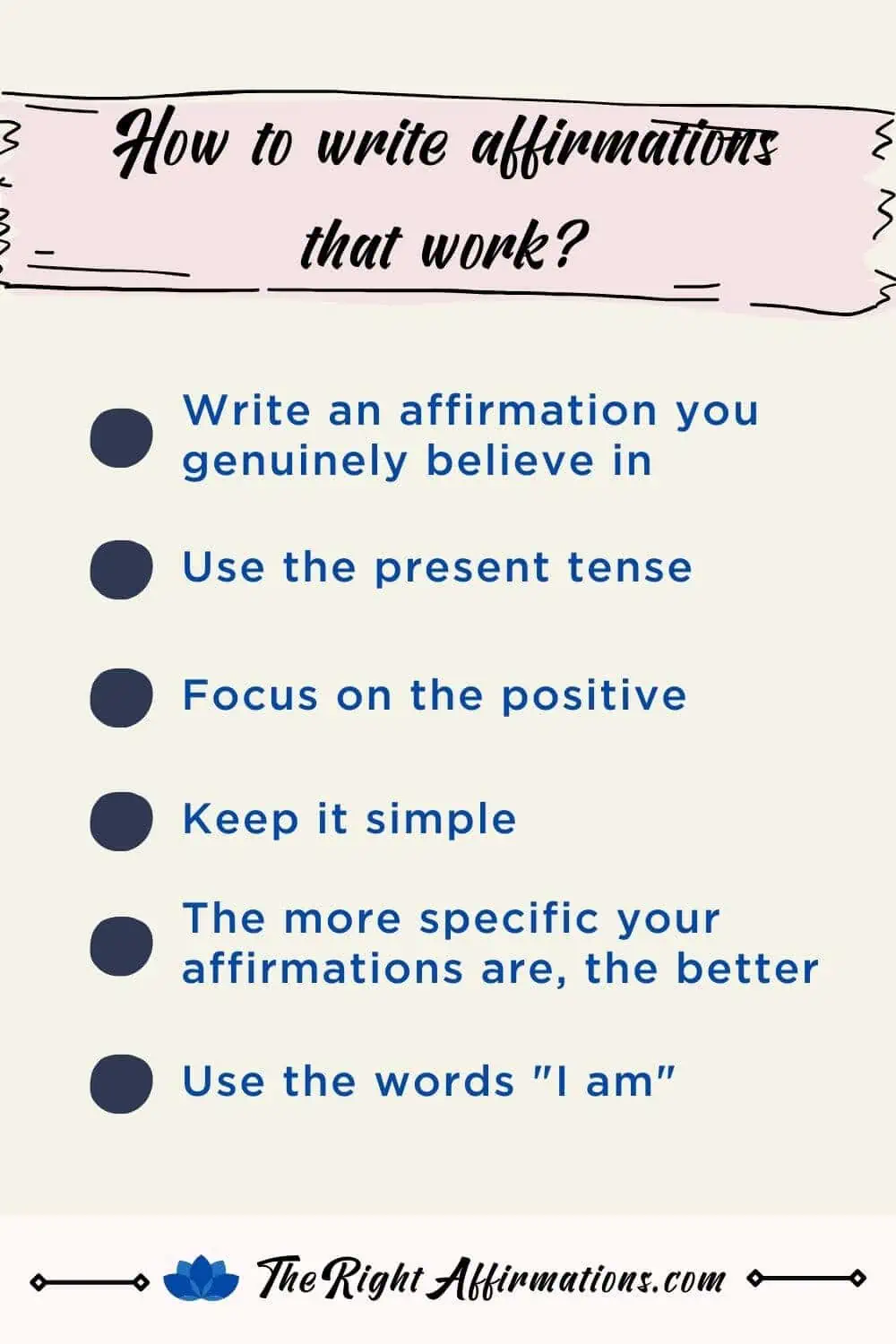
To get the best results, follow these key rules when you write affirmations:
1. Use The Present Tense
Write as if your goal is true right now. The brain responds better to statements like, “I am confident,” instead of “I will be confident. ” This helps your mind start acting as if the change is real.
2. Keep It Positive
Focus on what you want, not what you want to avoid. For example:
- Good: “I enjoy healthy food.”
- Not as good: “I don’t eat junk food.”
Your mind works best with positive directions.
3. Make It Short And Simple
Short affirmations are easy to remember and repeat. Avoid long or complicated sentences. Think: “I am strong,” instead of “I am becoming a person who always shows strength in every situation.”
4. Be Specific
Clear, detailed affirmations have more power. Instead of “I am successful,” try “I finish my projects on time and feel proud of my work. ”
5. Use Emotional Words
Add feeling words to make the affirmation stronger. For example: “I am excited to learn new skills.”
6. Make It Believable
Your mind will reject statements that feel completely untrue. If “I am rich” feels impossible, try “I am open to new ways to increase my income. ” Over time, you can adjust the words as your belief grows.
7. Write For Yourself
Affirmations are personal. Use “I” or “my” in your statements. “I am improving every day,” is better than “People think I am smart. ”
Steps To Write Your Own Affirmations
Creating your own affirmations is a simple process. Here’s how to do it step by step.
Step 1: Identify What You Want To Change
First, think about an area in your life you want to improve. Is it confidence, health, money, relationships, or something else? Be honest about what you want.
Write down your goal. For example:
- “I want to feel less stressed.”
- “I want to get a better job.”
Step 2: Notice Negative Beliefs
Before you write a positive statement, notice the negative thoughts you have now. For example:
- “I am not good enough.”
- “I always fail at interviews.”
Knowing your negative beliefs helps you create the right affirmation.
Step 3: Flip The Negative Into Positive
Take your negative thought and turn it into a positive statement. For example:
- Negative: “I am not good enough.”
- Positive: “I am worthy and capable.”
This helps your mind focus on what you want, not what you fear.
Step 4: Make It Present, Personal, And Positive
Use the rules from earlier:
- Present tense (“I am…”)
- Personal (“I”, “my”)
- Positive wording
For example:
- “I am confident in interviews.”
- “I handle stress with calm and clarity.”
Step 5: Add Feeling
Make the affirmation stronger with feeling words:
- “I am excited to start each day.”
- “I feel calm and in control.”
Step 6: Keep It Short
Aim for one sentence. If it feels too long, simplify it.
Step 7: Test And Adjust
Say your affirmation out loud. Does it feel possible? If not, adjust the words until you find a statement you can believe and repeat.
Examples Of Powerful Affirmations
Here are some examples for different areas of life. Use them as inspiration, but change the words to fit your own goals.
Confidence
- “I trust myself to make good decisions.”
- “I speak up with confidence.”
- “I am proud of who I am.”
Health
- “I enjoy taking care of my body.”
- “I choose healthy foods that give me energy.”
- “I am strong and full of life.”
Success And Work
- “I am focused and productive.”
- “I attract new opportunities.”
- “I handle challenges with a positive attitude.”
Relationships
- “I am open to love and kindness.”
- “I deserve respect and care.”
- “I listen with patience and understanding.”
Money And Abundance
- “I am open to new ways to earn money.”
- “I manage my finances wisely.”
- “I attract wealth and success.”
Common Mistakes And How To Avoid Them
Many people try affirmations but give up because they don’t see results. Here are mistakes to watch for:
1. Using Negative Words
Avoid words like “not,” “never,” or “stop. ” For example, “I don’t want to be late” still focuses your mind on being late. Instead, say “I am always on time. ”
2. Making Unrealistic Statements
If you say, “I am a millionaire,” but you don’t believe it, your mind will resist. Start with smaller, believable steps, like “I am improving my financial skills. ”
3. Being Too Vague
Vague affirmations like “I am happy” are not as strong. Add details: “I find joy in small moments every day.”
4. Forgetting To Repeat
Affirmations work through repetition. Saying them once is not enough. Make them a daily habit.
5. Lacking Emotion
Flat statements don’t inspire change. Add feeling: “I am excited for new challenges.”
6. Copying Others’ Affirmations
Affirmations must fit your life. Change the words until they feel right for you.
How Often Should You Repeat Affirmations?
Repetition is key to making affirmations work. Here’s how to use them:
- Morning routine: Say them after you wake up.
- Before sleep: Repeat them as you fall asleep.
- During the day: Write them in your notebook or set reminders on your phone.
- When you feel doubt: Use your affirmations to shift your mood.
Try repeating each affirmation at least 5-10 times, two or three times a day. The more you repeat, the faster your mind starts to accept the new belief.
Where To Write And Keep Your Affirmations
The place you write and keep your affirmations can make a big difference. Here are common ways people use:
- Notebook or journal: Write your affirmations every morning.
- Sticky notes: Place them on your mirror, computer, or fridge.
- Digital reminders: Use your phone to send you affirmation alerts.
- Voice recording: Record yourself and listen during the day.
Choose the method that feels easiest and most natural for you. The key is to see or hear your affirmations often.
Advanced Tips For Writing Affirmations
If you want to go beyond the basics, try these advanced strategies:
Use Visualization With Affirmations
After repeating your affirmation, close your eyes and imagine it is already true. See yourself acting with confidence, feeling healthy, or reaching your goal. This makes the statement even more powerful.
Connect Affirmations To Daily Actions
Pair your affirmation with a real habit. For example, say, “I am strong and healthy,” before each workout. This links the words to your actions.
Write In Different Forms
Try writing your affirmation as a question: “Why am I so confident in meetings?” Your brain starts looking for answers, which can help you believe the change.
Use “even Though” Statements
If you have doubts, try: “Even though I feel nervous, I choose to speak with confidence.” This accepts your feelings but points you toward your goal.
Change Affirmations As You Grow
As you start to believe your affirmations, update them. Make them stronger or focus on new areas.
Data: Do Affirmations Really Work?
Scientific studies show mixed results, but many people find affirmations helpful. Here’s a summary:
| Study Type | Result |
|---|---|
| Self-affirmation and stress (college students) | Lowered stress during exams |
| Affirmations and problem-solving | Improved performance under pressure |
| Repeated positive statements (general public) | Worked best for people with high self-esteem |
One non-obvious insight: Affirmations are most effective when your self-esteem is not too low or too high. If you find affirmations make you feel worse, start with softer, more believable statements.
Another insight: The context matters. If you use affirmations during stressful times, they can help you stay calm. But if you repeat them without meaning, they may not work.
Credit: unfinishedsuccess.com
Comparison: Ready-made Vs. Personalized Affirmations
Many people wonder if they should use affirmations from books or write their own. Here’s a simple comparison.
| Ready-Made Affirmations | Personalized Affirmations |
|---|---|
| Easy to find and use | Requires effort to write |
| May not fit your exact needs | Matches your goals and feelings |
| Feels generic | Feels personal and powerful |
| Good for beginners | Better for long-term change |
If you are new, start with ready-made examples, then learn to write your own for deeper impact.
Real-life Example: Creating An Affirmation
Let’s walk through an example step by step.
Suppose you feel nervous speaking in public. You want to feel more confident.
- Identify the goal: “I want to speak with confidence.”
- Notice the negative thought: “I always get nervous and forget my words.”
- Flip to positive: “I speak clearly and confidently.”
- Make it personal and present: “I am confident and relaxed when I speak.”
- Add feeling: “I enjoy sharing my ideas with others.”
- Test it: Say, “I am confident and relaxed when I speak.” If it feels believable, use it. If not, try, “I am learning to feel calm when I speak.”
Now, write it on a card, repeat it daily, and imagine yourself speaking with confidence.

Credit: www.lomyrick.com
Measuring Your Progress With Affirmations
Affirmations are not magic. To know if they work, track your progress. Here’s how:
- Notice your thoughts: Are your negative thoughts getting weaker?
- Watch your actions: Are you doing things with more confidence?
- Keep a journal: Write about your feelings before and after using affirmations.
- Ask for feedback: See if others notice a change in you.
Change can be slow. Give yourself time. If you don’t see results, adjust your affirmations or try new ones.
When Affirmations Don’t Work
Sometimes, affirmations may not bring the change you want. Here’s why:
- You don’t believe the statement at all.
- You repeat them without emotion or focus.
- You never take real action toward your goal.
- You only use them in crisis, not every day.
If affirmations make you feel worse, try statements that focus on progress, like “I am learning and growing each day. ”
Credit: www.reddit.com
Combining Affirmations With Other Techniques
Affirmations work best with other self-improvement tools. Here are a few ideas:
- Visualization: See your goal in your mind as you repeat your affirmation.
- Gratitude practice: Say what you are thankful for each day.
- Goal setting: Write clear goals and use affirmations to support them.
- Mindfulness: Notice your thoughts and gently replace negative ones with positive affirmations.
These combinations make your affirmations even more effective.
Mistakes Beginners Miss
Here are two insights most people miss:
- Consistency beats length: It’s better to repeat a short affirmation every day than to say a long list once a week.
- Adjust as you grow: What you believe today may change. Update your affirmations as your confidence and skills improve.
Most people forget to update their affirmations or try to do too much at once.
Sample Affirmation Practice Schedule
Here’s a sample daily routine to get you started:
| Time | Action |
|---|---|
| Morning | Repeat your top three affirmations after waking up |
| Lunch break | Review your affirmations on your phone or notebook |
| Evening | Write or say your affirmations before sleep |
| When stressed | Pause and use your affirmation to refocus |
This routine keeps your affirmations fresh in your mind all day.
Affirmations For Different Goals
Here are some examples based on specific goals. Use them as a starting point.
For Overcoming Fear
- “I face my fears with courage.”
- “I am safe and supported.”
For Building Self-esteem
- “I value myself and my ideas.”
- “I am worthy of love and respect.”
For Achieving Goals
- “I am focused and take action every day.”
- “I turn my dreams into reality.”
For Reducing Stress
- “I breathe deeply and let go of tension.”
- “I choose peace in every moment.”
Feel free to create your own using the steps and tips above.
Resources For Further Learning
If you want to learn more about affirmations, you can find research and tips from experts. One helpful source is the Wikipedia page on Affirmations.
Frequently Asked Questions
How Long Does It Take For Affirmations To Work?
It depends on the person and the goal. Some people feel a change in a few days, while others need weeks or months. The key is daily repetition and using affirmations that feel true to you.
Can I Write Affirmations For Someone Else?
You can write positive statements for others, but affirmations work best when the person says and believes them. Encourage friends or family to write their own for the strongest effect.
Should I Say My Affirmations Out Loud Or In My Mind?
Both ways can work. Saying affirmations out loud helps you focus and adds emotion. Repeating them silently is helpful in public or quiet places. Try both and see what feels best.
How Many Affirmations Should I Use At Once?
Start with two or three. Too many can be overwhelming and hard to remember. As you get used to the practice, you can add more or change them as your needs grow.
What If I Feel Silly Saying Affirmations?
It’s normal to feel awkward at first. With practice, it becomes easier. Remember, the goal is to change how you think and feel. If you stick with it, the results are worth it.
By following these steps and tips, you can write affirmations that truly support your growth and help you reach your goals. Stay consistent, adjust as you grow, and believe in your power to change.
