

Which Affirmation is Most Powerful? Discover the Top Life-Changer
Which Affirmation Is Most Powerful
The idea of repeating positive statements to change your life has attracted millions of people worldwide. But when you ask, “Which affirmation is most powerful? ” you enter a world full of opinions, stories, and sometimes confusion. Some people say one phrase changed everything for them, while others believe only custom affirmations work.
The truth is, not all affirmations are created equal. The most powerful affirmation depends on psychology, your beliefs, and how you use it. Let’s explore what really makes an affirmation powerful, the science behind it, and practical ways to find (and use) the most effective one for your life.
What Makes An Affirmation Powerful?
At its core, an affirmation is a positive statement you repeat to yourself. But why do some phrases create real change and others feel empty? A powerful affirmation has a few unique qualities:
- Believability: You must believe, at least a little, that it could be true.
- Emotional impact: It makes you feel something—hope, excitement, comfort.
- Clarity: The message is simple, clear, and direct.
- Personal relevance: It connects with your real goals or struggles.
For example, “I am a millionaire” might sound powerful, but if you’re struggling financially, your mind may reject it. In contrast, “I am learning to create more value in my work” feels possible and meaningful.
The Science Behind Affirmations
Studies show that affirmations can change how you think and feel—if used the right way. Psychologists call this the self-affirmation theory. This theory explains that reminding yourself of your values and strengths can reduce stress, build confidence, and even improve performance.
A famous experiment asked people to write about their core values before facing a challenge. Those who affirmed their values did better and felt less anxious. Brain scans have even shown changes in areas linked to self-processing and reward when people repeat affirmations.
But here’s a fact many beginners miss: affirmations work best when they don’t create an inner argument. If you say something too unrealistic, your mind fights back. That’s why finding the right affirmation matters more than just repeating famous phrases.
Universal Affirmations Vs. Personal Affirmations
Some affirmations are popular everywhere, like “I am enough” or “I am worthy of love.” These are called universal affirmations because they fit almost anyone. But personal affirmations are unique statements you create for your own life, based on your needs.
Universal affirmations are easy to find and remember. Personal affirmations take more thought, but they often work faster because they feel real to you. The most powerful affirmation for you could be a universal one, a personal one, or a mix.
Let’s compare both types:
| Type | Example | Strength | Weakness |
|---|---|---|---|
| Universal | I am enough | Simple, easy to remember | May feel generic |
| Personal | I am confident in meetings at work | Directly fits your situation | Needs more time to create |
The Top 10 Most Powerful Affirmations (with Analysis)
Many people want a clear list of the “most powerful” affirmations. While the best one is personal, these ten are proven favorites for creating change. Let’s look at each, with a clear explanation of why it works and how to use it.
- I am enough.
- This affirmation is short, direct, and counters feelings of not being good enough. It’s helpful for self-worth, relationships, and work stress. Say it when you feel doubt or pressure to be perfect.
- I am worthy of love and respect.
- Many struggles come from feeling unworthy. This phrase reminds you that your value doesn’t depend on what you achieve. Use it during moments of rejection or loneliness.
- I trust myself to make the right decision.
- Self-trust is key to confidence. This affirmation helps you stop second-guessing. Repeat it when you face a big choice.
- I am growing and learning every day.
- This focuses on progress, not perfection. It helps you accept mistakes as part of learning. Use it when you feel behind or stuck.
- I am in control of my thoughts and actions.
- Feeling out of control leads to anxiety. This statement brings your focus back to what you can manage. Repeat it when life feels overwhelming.
- I choose to focus on what I can control.
- Similar to the above, but highlights choice. It’s helpful for reducing stress in chaotic situations. Use it when facing uncertainty.
- I am grateful for the good in my life.
- Gratitude changes your brain and mood. This affirmation shifts your attention from problems to positives. Say it in the morning or before sleep.
- I am deserving of success and happiness.
- Many people hold back because they don’t feel they deserve good things. This phrase challenges those beliefs. Use it before taking new opportunities.
- I accept myself exactly as I am.
- Self-acceptance is the foundation of all growth. This affirmation helps you let go of constant self-improvement pressure. Say it when you notice self-criticism.
- I am strong enough to handle whatever comes my way.
- Resilience grows with reminders of past strength. This affirmation prepares your mind for challenges. Repeat it during stressful times.
Each of these affirmations is powerful because it targets a common human struggle. Still, the most powerful one for you is the one that feels true and moves you emotionally.
How To Create Your Own Most Powerful Affirmation
If you want the absolute best affirmation, create your own. Here’s a simple method:
- Identify your main challenge or goal.
- What do you struggle with most—confidence, anxiety, relationships, career?
- Find the negative belief behind it.
- For example: “I always fail,” “I’m not good enough,” “Nobody listens to me.”
- Flip it into a believable positive statement.
- Not “I am perfect,” but “I am getting better every day,” or “I have valuable ideas.”
- Test your reaction.
- Say the affirmation out loud. Does it give you hope? If you feel strong resistance, make it softer.
- Repeat and refine.
- Over time, as you grow, your affirmation may change.
Here’s a step-by-step example:
- Challenge: Speaking up in meetings.
- Negative belief: “My voice doesn’t matter.”
- Positive: “I have valuable ideas to share at work.”
- Reaction: If this feels too strong, try, “I am learning to share my ideas with confidence.”
The Role Of Repetition And Emotion
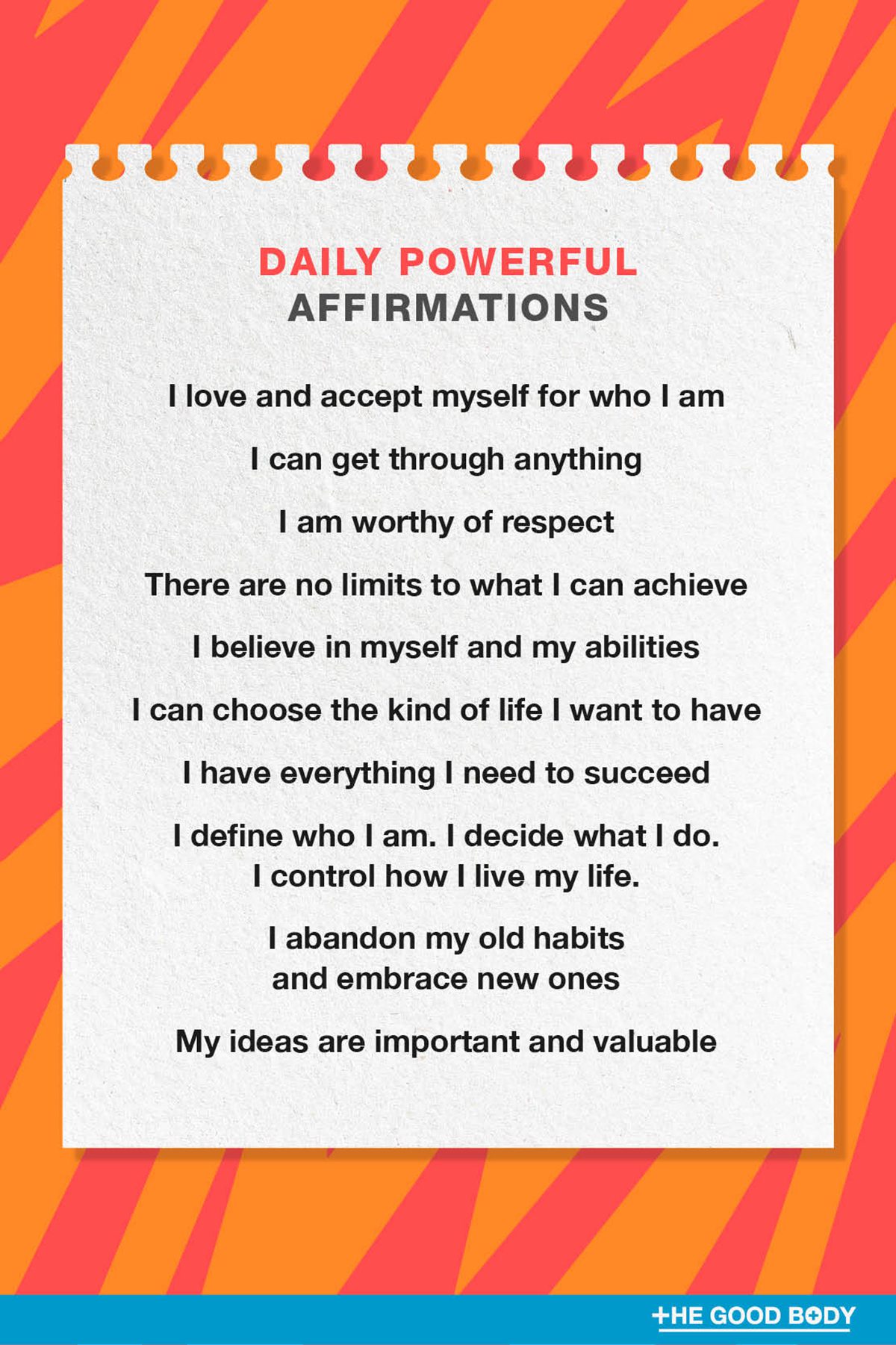
Affirmations are not magic spells. They work through repetition and emotion. When you say an affirmation once, your mind barely notices. But when you repeat it often, especially with feeling, it creates new mental pathways.
A non-obvious insight: Saying an affirmation while feeling strong emotion (like gratitude or excitement) supercharges its effect. The brain links the words with the feeling, making the change faster.
Also, writing affirmations by hand, or saying them in front of a mirror, increases their impact. Don’t just repeat words—feel them.
Credit: www.thegoodbody.com
Common Mistakes People Make With Affirmations
Many people get frustrated because affirmations “don’t work.” Here’s why:
- Choosing affirmations that feel fake.
- If you say, “I am rich” when you’re worried about money, your mind rejects it.
- Not using emotion.
- Flat, bored repetition has little effect.
- Expecting instant results.
- Affirmations change your thoughts over time, not overnight.
- Forgetting to take action.
- Affirmations support real action, they don’t replace it.
- Using too many affirmations at once.
- Focus on one or two for the best results.
Real Stories: How Powerful Affirmations Changed Lives
Let’s look at a few examples. These stories show that the most powerful affirmation is often simple and personal.
Maria’s Story: From Self-Doubt to Confidence
Maria struggled with self-doubt at work. She tried saying, “I am confident,” but it felt untrue. She changed it to, “I am learning to trust my skills every day. ” After a month of repeating it and writing it in her journal, she noticed she spoke up more in meetings.
The belief grew slowly, but it stuck.
David’s Story: Facing Illness With Strength
David was fighting a long illness. He started with, “I am healthy,” but it made him feel worse. His therapist suggested, “I am strong enough to handle whatever comes my way. ” This felt true. He repeated it before treatments and found it gave him hope and courage.
Priya’s Story: Finding Self-Worth
Priya always felt she needed to earn love. She tried the affirmation, “I am worthy of love and respect. ” At first, she cried when she said it. Over time, it became a comfort. She noticed she stopped apologizing for everything and started setting boundaries.
These stories show that the “most powerful” affirmation is the one that meets you where you are.
Measuring The Power Of Affirmations
How do you know if an affirmation is working for you? Look for these signs:
- You feel a little better after repeating it.
- Your actions start to change (you take more risks, say no, try new things).
- Negative self-talk gets quieter.
- You look forward to saying your affirmation.
Science backs this up. In one study, people who practiced affirmations had lower stress, better habits, and more resilience. But measuring success is personal. The best test is your own experience.
The Role Of Language And Culture
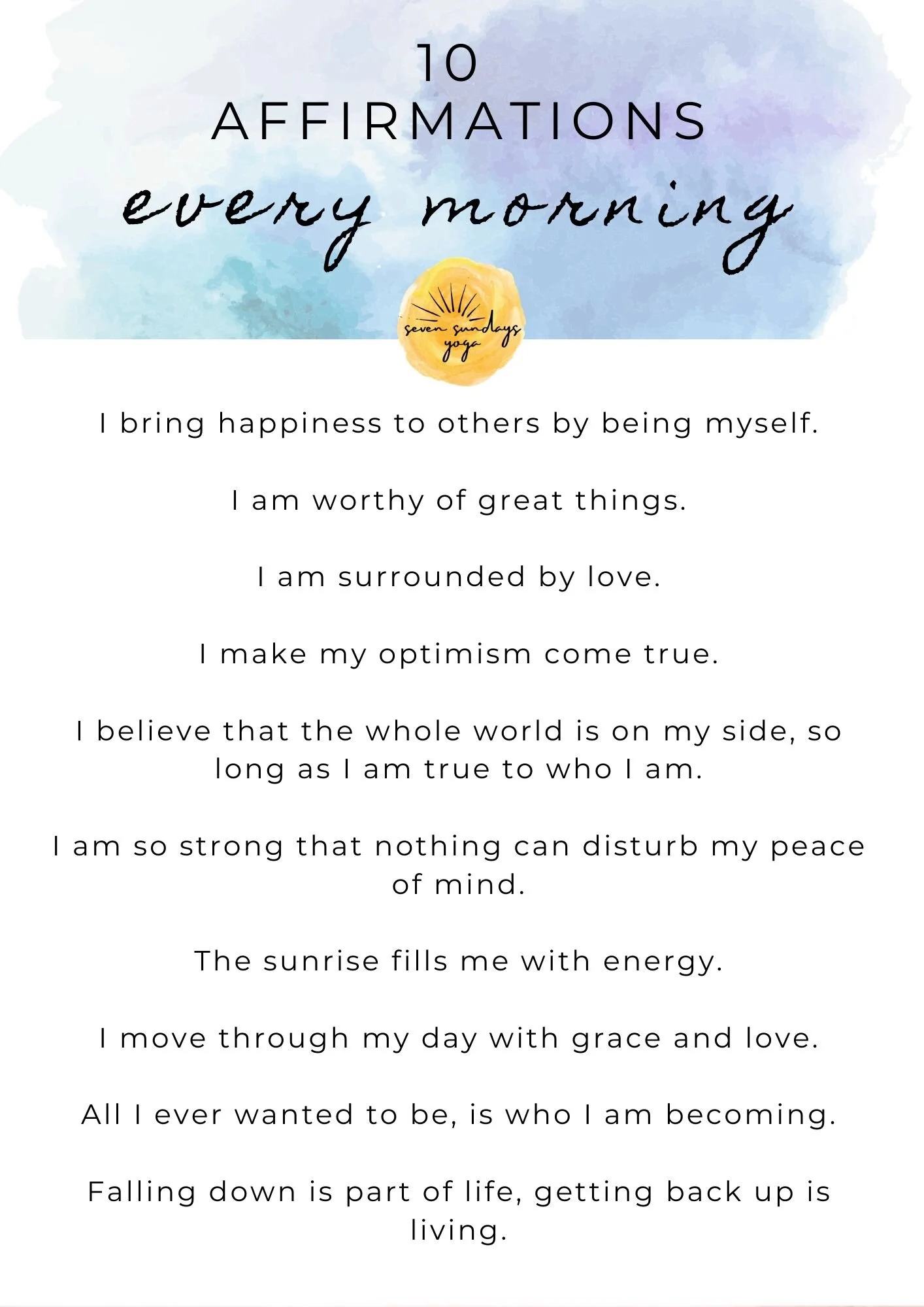
One insight many people miss: affirmations are more powerful in your native language. Your brain responds more deeply to familiar words. If English is not your first language, try translating your affirmation.
Culture also shapes what feels powerful. In some cultures, being humble is valued; bold affirmations may feel uncomfortable. Adjust the wording so it fits your background and beliefs.
For example:
- English: “I am confident and strong.”
- Spanish: “Tengo confianza y fortaleza.”
- Japanese: “私は自信と強さを持っています。”
Use the language that feels most “real” to you.
Credit: www.sevensundaysyoga.com
When Affirmations Don’t Work—and What To Do
Sometimes, even a well-chosen affirmation doesn’t help. This can happen if:
- Your negative beliefs are very deep.
- You repeat the affirmation without emotion.
- You feel strong resistance or sadness.
In these cases, try these steps:
- Soften the affirmation.
- Instead of “I am successful,” try “I am learning to succeed.”
- Add “I am willing to believe…”
- “I am willing to believe I can change.”
- Pair with action.
- Do a small thing each day that matches your affirmation.
- Get support.
- Talk to a friend, coach, or therapist.
Remember, affirmations are tools, not solutions. Sometimes deeper work is needed.
Advanced Tips For Making Affirmations Work Faster
Want to boost the power of your affirmation? Try these advanced methods:
- Visualization: Close your eyes and imagine the affirmation is already true. See yourself living it. This makes the belief stronger.
- Anchor to a routine: Say your affirmation at the same time every day—when you brush your teeth, drink coffee, or before bed.
- Combine with breathing: Take a deep breath, say your affirmation slowly, then exhale. This links calm with the positive belief.
- Sing or chant: Adding music or rhythm helps some people remember and feel affirmations more deeply.
- Write it everywhere: Put it on sticky notes, your phone, or as your computer password. The more you see it, the more it sinks in.
- Track your progress: Keep a journal of how you feel over weeks. Notice small changes.
Here’s a quick comparison of affirmation methods:
| Method | How It Works | Best For |
|---|---|---|
| Repetition | Repeating the statement many times daily | Building new beliefs slowly |
| Visualization | Imagining the statement is true | Emotional change, motivation |
| Writing | Writing the affirmation by hand | Memory, commitment |
| Speaking aloud | Saying the affirmation with emotion | Confidence, energy |
The Role Of Negative Affirmations (and How To Avoid Them)
Not all self-talk is positive. Many people repeat negative affirmations without knowing it:
- “I always mess up.”
- “I’ll never be good enough.”
- “I can’t do this.”
These phrases are powerful in the wrong direction. They create limiting beliefs and shape your future actions. Becoming aware of your negative affirmations is the first step to changing them.
Tip: When you catch yourself thinking a negative statement, pause and gently replace it with your chosen affirmation. With practice, this becomes easier.
Affirmations For Specific Situations
Sometimes, you need a targeted affirmation for a special challenge. Here are examples for common life areas:
For Anxiety
- “I am safe in this moment.”
- “I can handle what comes.”
For Career Growth
- “I have skills and talents that matter.”
- “I am open to new opportunities.”
For Relationships
- “I attract healthy, loving relationships.”
- “I am worthy of respect and kindness.”
For Health
- “My body is healing and getting stronger.”
- “I am gentle with myself.”
For Study And Focus
- “I am focused and capable of learning new things.”
- “I enjoy growing my knowledge.”
Notice how each affirmation matches a specific need. This makes them more effective than general statements.

Credit: www.amazon.com
When To Change Your Affirmation
An affirmation is not for life. You can—and should—change it as you grow. Signs it’s time to update:
- It feels boring or routine.
- Your challenge has changed.
- The affirmation no longer creates emotion.
Switch to a new statement that fits your current goal or struggle. This keeps your practice fresh and powerful.
Making Affirmations A Lifelong Habit
The most powerful affirmation only works if you use it. Here’s how to make affirmations a daily habit:
- Start small: Choose one simple affirmation.
- Set a reminder: Use your phone or a sticky note.
- Repeat at the same times: Morning, night, or whenever you need it.
- Track how you feel: Notice small wins.
- Adjust as needed: Change your affirmation when your life changes.
Most people give up too soon. But those who stick with affirmations see real change—not just in their thoughts, but in their actions and results.
Affirmations And Other Mindset Tools
Affirmations are one tool among many. For best results, combine them with:
- Gratitude journaling
- Mindfulness meditation
- Goal setting
- Visualization exercises
Each tool supports the others. For example, gratitude makes your affirmations feel more true. Mindfulness helps you notice negative self-talk. Visualization adds emotion.
To learn more about how mindset tools work together, check out this expert guide.
Frequently Asked Questions
What Is The Most Powerful Affirmation Ever?
There is no single “most powerful” affirmation for everyone. However, phrases like “I am enough” or “I am worthy of love and respect” are popular because they address core human needs. The most powerful affirmation is the one that feels true and emotional for you.
How Many Times Should I Repeat My Affirmation Each Day?
For best results, repeat your affirmation at least twice a day, such as in the morning and before bed. Saying it 10-20 times with emotion is usually enough. Focus on quality and feeling, not just quantity.
Can Affirmations Change My Life Completely?
Affirmations can change your mindset, emotions, and actions over time. This can lead to big life changes. However, affirmations work best when combined with real action and other mindset tools. They are not a magic solution, but a powerful support.
Why Don’t Affirmations Work For Me?
If affirmations aren’t working, check if you:
- Chose a phrase that feels fake or too strong
- Repeat it without emotion
- Expect instant results
- Use too many at once
Try adjusting your affirmation to be more believable and focus on one at a time.
Should I Say Affirmations In My Native Language?
Yes, saying affirmations in your native language often makes them more effective. Your brain responds more deeply to familiar words and meanings. Choose the language that feels most natural to you.
Choosing the most powerful affirmation is a personal journey. The best affirmation is not always the most popular or trendy—it’s the one that moves you, feels true, and helps you act differently. Use the advice above to discover and shape the affirmation that fits your life right now.
With patience, emotion, and daily practice, you’ll see how a few simple words can shift your mindset and your future.
