

What's a Good Morning Affirmation? Start Your Day with Positivity
What’s A Good Morning Affirmation
Waking up each day is a fresh start—a chance to shape your mood, focus, and actions. How you begin your morning often decides how the rest of your day unfolds. Many people feel rushed or stressed when they wake up. Some feel anxious or tired. But what if you could flip that feeling just by speaking a few powerful words? That’s the idea behind morning affirmations.
A morning affirmation is a positive statement you say to yourself right after waking up. It’s more than wishful thinking. These words can shift your mindset, motivate you, and set a positive tone for your entire day. Research shows that positive self-talk can improve confidence, reduce stress, and even boost productivity.
But not all affirmations work equally well. What makes a morning affirmation “good”? And how can you use them in a way that genuinely changes your day, not just your mood for a few minutes?
This article dives deep into what makes a good morning affirmation, how to create one, and why it matters. You’ll see real examples, practical strategies, and even scientific insights. By the end, you’ll know how to craft your own affirmations and use them as a tool for better mornings—and better days.
The Power Of Positive Self-talk
Morning affirmations are a form of positive self-talk. When you speak kindly to yourself, your brain responds. Studies from psychology and neuroscience have found that positive statements can:
- Lower levels of stress hormones
- Increase motivation and focus
- Build resilience against negative thoughts
For example, one study found that using positive affirmations before stressful events lowered anxiety and improved performance. Athletes, business leaders, and even students use affirmations to prepare for challenges. But affirmations are not magic. They work best when you believe the words and repeat them regularly.
How Affirmations Affect The Brain
When you say an affirmation, your brain activates areas linked to self-processing and reward. This means you feel better about yourself and are more likely to act confidently. Over time, these effects can become stronger. It’s similar to exercising a muscle: the more you practice, the more powerful the results.
Real-life Example
Consider someone who wakes up feeling anxious about work. If they say, “I am capable and ready for today’s challenges,” their mind starts to focus on their strengths instead of worries. This shift can lead to better decisions and less stress throughout the day.
What Makes A Good Morning Affirmation?
Not all affirmations are created equal. Some are too vague or unrealistic, while others are powerful and practical. Here’s what sets a good morning affirmation apart:
1. Simple And Clear
A good affirmation uses simple language. It’s easy to remember and say. Avoid long or complicated sentences.
Example: “i Am Strong And Calm.”
2. Positive And Present
Affirmations should focus on the present moment and use positive words. Avoid negative phrases or future-focused statements.
Example: “i Am Grateful For Today.”
3. Personal And Relevant
The best affirmations match your life and goals. Generic phrases don’t work as well as statements that feel personal.
Example: “i Am Confident In My Abilities As A Student.”
4. Believable
Affirmations that feel too unrealistic can create doubt. Choose words you can believe, even if you’re not fully there yet.
Example: Instead of “I am the best in the world,” try “I am improving every day.”
5. Action-oriented
Some affirmations include a call to action. This motivates you to move forward.
Example: “today, I Choose To Be Productive.”
6. Emotionally Engaging
A good affirmation sparks emotion. If you feel nothing, it won’t work. Use words that inspire you.
Example: “i Welcome Joy And Peace Into My Life.”
Common Mistakes With Morning Affirmations
- Using generic phrases like “I am happy” without feeling connected
- Making statements that feel fake or forced
- Forgetting to use affirmations regularly
- Speaking in the future (“I will be confident”) instead of the present
Why Morning Affirmations Work
Morning is a unique time. Your mind is fresh from sleep, and your thoughts are not yet shaped by daily events. This makes it the perfect moment to set your intention and mood.
Science Behind The Habit
Brain studies show that the first 20 minutes after waking are called the alpha state. In this state, your mind is more open to new ideas and positive change. Saying affirmations during this window can make them stick better.
Emotional Boost
A good morning affirmation lifts your mood, reduces anxiety, and prepares you for challenges. It can even improve relationships, since you’re more likely to act with kindness and patience.
Productivity And Focus
People who use morning affirmations often report higher productivity. This is because their mind is set on positive action and confidence, not doubt or worry.
How To Create Your Own Morning Affirmation
Creating a morning affirmation is simple, but it requires thought. Here’s a step-by-step guide:
Step 1: Identify Your Need
Think about what you want to change or improve. Are you seeking confidence, peace, motivation, or gratitude?
Step 2: Use Present And Positive Language
Write your affirmation as if it’s true right now. Avoid negative or future-focused words.
Step 3: Make It Personal
Include words that match your life, job, or goals.
Step 4: Keep It Short
Aim for a phrase you can remember easily. One or two sentences is enough.
Step 5: Test And Adjust
Say your affirmation aloud. Does it feel right? If not, change the words until you feel a genuine response.
Example Affirmations
- “I am ready for today’s opportunities.”
- “I trust myself to make good choices.”
- “I choose happiness and peace.”
- “I am grateful for my health.”
The Best Morning Affirmations For Different Goals
Everyone has unique needs. Here are examples of good morning affirmations based on different goals.
For Confidence
- “I am confident in my abilities.”
- “I believe in myself and my decisions.”
- “I am worthy of success.”
For Motivation
- “Today, I am focused and driven.”
- “I welcome new challenges.”
- “I am determined to reach my goals.”
For Calm And Peace
- “I am calm and centered.”
- “I let go of stress and embrace peace.”
- “My mind is clear and focused.”
For Gratitude
- “I am grateful for this new day.”
- “I appreciate the people around me.”
- “I notice the good in my life.”
For Health
- “I care for my body with kindness.”
- “I am strong and healthy.”
- “I nourish myself with positive choices.”
For Relationships
- “I show kindness to others.”
- “I listen with patience and understanding.”
- “I create positive connections today.”
Comparing Morning Affirmations And Other Self-talk
How do morning affirmations compare to other forms of self-talk or motivation? Here’s a quick look:
| Type | Timing | Purpose | Impact |
|---|---|---|---|
| Morning Affirmation | After waking | Set mood, focus | Boost confidence, reduce stress |
| Motivational Speech | Any time | Inspire action | Short-term energy |
| Negative Self-Talk | Any time | Express doubt | Lower mood, reduce confidence |
Morning affirmations stand out because they set the tone for the day before outside events can influence your mood.

Credit: thechiclife.com
How To Use Morning Affirmations Effectively
It’s not enough to say an affirmation once. To get real benefits, you need to use them consistently and correctly.
1. Choose A Quiet Place
Find a space where you can focus without distractions. This helps your mind absorb the words.
2. Speak Aloud
Saying your affirmation out loud makes it more powerful. Hearing your own voice strengthens belief.
3. Repeat Several Times
Repeat your affirmation three to five times. This helps it stick in your mind.
4. Combine With Deep Breathing
Take a slow, deep breath before each repetition. This calms your body and makes the affirmation more effective.
5. Visualize The Words
Picture yourself acting out your affirmation. If you say, “I am confident,” imagine yourself speaking or working with confidence.
6. Write It Down
Writing your affirmation in a journal or on a sticky note reinforces the message. Some people place notes on their mirror or desk.
7. Use Technology
Set a reminder on your phone or use an app. This keeps you consistent.
Practical Example
A student preparing for exams might say, “I am prepared and calm,” while taking three deep breaths and picturing themselves succeeding. Over time, this routine can reduce anxiety and improve performance.
Common Challenges And How To Overcome Them
Some people struggle with morning affirmations. Here’s why—and how to fix it.
Challenge 1: Not Believing The Words
If an affirmation feels fake, it won’t help. Start with statements you can believe, even if they’re small.
Example: “i Am Learning To Be Confident.”
Challenge 2: Forgetting To Practice
Busy mornings make it hard to remember affirmations. Set reminders or link your affirmation to another habit, like brushing your teeth.
Challenge 3: Lack Of Emotional Response
If your affirmation feels empty, try adding emotion. Use words that spark hope, joy, or motivation.
Challenge 4: Overcomplicating
Some people use long, complex affirmations. Keep it simple for better results.
Non-obvious Insights About Morning Affirmations
Many beginners miss these points:
- Timing matters. Saying affirmations within the first 20 minutes after waking makes them more effective because your mind is more open.
- Consistency beats variety. Using the same affirmation daily builds stronger habits than changing it every day.
- Emotion is key. The more you feel the words, the more your brain responds. Try smiling while you say your affirmation.
Real Examples From Everyday Life
Here are stories and insights from people who use morning affirmations:
Example 1: The Busy Parent
A mother of two starts her day with, “I am patient and present with my children. ” She says it while preparing breakfast. Over time, she notices less frustration and more joy.
Example 2: The New Employee
A young professional feels anxious about a new job. His affirmation is, “I am ready to learn and grow. ” He repeats it while commuting. This helps him approach challenges with confidence.
Example 3: The Student
A college student says, “I am focused and prepared. ” She writes it in her planner each morning. Her grades and confidence improve.
The Role Of Affirmations In Mental Health
Affirmations are not a cure for serious mental health issues, but they can support overall well-being. Therapists sometimes use affirmations with clients to encourage positive thinking.
Data And Statistics
According to the American Psychological Association, people who use positive self-talk report:
- Lower stress levels
- Higher self-esteem
- Better coping skills
A survey found that 62% of people who used daily affirmations felt happier and more motivated.
When To Seek Help
If negative thoughts persist or interfere with life, affirmations alone may not be enough. It’s important to seek support from a mental health professional.
Comparing Affirmations To Other Morning Habits
Many People Use Different Morning Routines. How Do Affirmations Compare?
| Habit | Time Needed | Main Benefit | Best Use |
|---|---|---|---|
| Affirmations | 1-2 minutes | Mood, confidence | Any morning |
| Exercise | 15-30 minutes | Energy, health | Physical boost |
| Meditation | 5-15 minutes | Calm, focus | Stress reduction |
| Journaling | 3-10 minutes | Clarity, reflection | Goal setting |
Affirmations work well alone or with other habits. Combining them with exercise or meditation can boost results.
Mistakes To Avoid With Morning Affirmations
Some common mistakes can make affirmations less effective:
- Using negative or doubtful language
- Skipping days or only using affirmations occasionally
- Forgetting to feel emotion while saying them
- Making affirmations too general or impersonal
How To Fix These Mistakes
- Always use positive, present words
- Make affirmations part of your daily routine
- Focus on emotion, not just words
- Personalize your statements
How To Measure The Impact Of Morning Affirmations
You may wonder if affirmations are working. Here’s how to measure their impact:
Track Your Mood
Keep a simple journal. Rate your mood each morning after saying your affirmation.
Notice Changes In Behavior
Are you more confident, calm, or productive? Write down any changes you notice.
Ask For Feedback
Friends or family may notice changes before you do. Ask if you seem happier or more positive.
Compare Over Time
After two weeks, review your journal. Look for patterns or improvements.

Credit: www.amazon.com
Cultural And Spiritual Roots Of Affirmations
Affirmations are not new. Many cultures and spiritual traditions use positive statements to shape mindset.
Buddhist Practice
Buddhists use mantras—short, positive phrases repeated daily. These help focus the mind and promote calm.
Ancient Wisdom
Ancient Greeks believed in the power of spoken word. They used positive statements to encourage action and hope.
Modern Psychology
Today, therapists and coaches use affirmations as tools for change. They combine ancient wisdom with modern science.
How To Choose The Right Affirmation For You
Choosing the right affirmation is personal. Here’s a guide:
Step 1: Reflect On Your Feelings
Are you anxious, tired, or excited? Choose words that match your mood.
Step 2: Consider Your Goals
Do you want confidence, peace, or motivation? Pick an affirmation that supports your goal.
Step 3: Experiment
Try different affirmations. Notice which ones feel best.
Step 4: Commit
Use your chosen affirmation daily for at least two weeks.
Using Affirmations With Children
Affirmations can help children build confidence and resilience. Here’s how:
- Use simple words: “I am smart,” “I am kind.”
- Repeat together each morning
- Make it fun by singing or using hand motions
Children who use affirmations may feel more secure and positive.
The Science Of Habit Formation
Affirmations become powerful when they’re a habit. According to research, it takes about 21 days to form a new habit. Consistency is key.
Tips For Building The Habit
- Link affirmations to another routine (like brushing teeth)
- Set reminders on your phone
- Reward yourself for sticking to the habit
Advanced Strategies For Morning Affirmations
If you want more from your morning affirmations, try these advanced tips:
1. Pair With Visualization
Imagine yourself acting out your affirmation.
2. Use Music
Play soft background music while saying your affirmation.
3. Create A Vision Board
Add your affirmation to a board with photos and inspiring words.
4. Record Your Voice
Listen to your affirmation recording each morning.
How Affirmations Support Long-term Goals
Morning affirmations are not just about today. They can help you reach long-term goals.
Example
If your goal is to run a marathon, use, “I am strong and consistent. ” Each day, this builds motivation and discipline.
Tracking Progress
- Set a goal
- Choose a matching affirmation
- Track results weekly
Comparing Popular Affirmation Apps
Many apps help you practice morning affirmations. Here’s a quick comparison:
| App Name | Main Feature | Ease of Use | Cost |
|---|---|---|---|
| I Am | Daily reminders | Easy | Free/paid |
| ThinkUp | Record your voice | Moderate | Free/paid |
| Gratitude Journal | Combine affirmations with journaling | Easy | Free/paid |
Apps make it easier to remember and practice affirmations.
Frequently Asked Questions
What Is A Morning Affirmation?
A morning affirmation is a positive statement you say to yourself after waking up. It sets your mood and focus for the day. Examples include “I am calm and confident” or “I am grateful for today.”
How Do I Create A Good Morning Affirmation?
Start by identifying your need (confidence, peace, motivation). Use positive, present language. Make it personal and believable. Keep it short and repeat it aloud each morning.
Can Morning Affirmations Really Change My Day?
Yes. Research shows that positive self-talk improves mood, confidence, and productivity. Affirmations work best when used regularly and with emotion.
How Many Times Should I Repeat My Affirmation?
Repeat your affirmation three to five times each morning. More repetition can help, but consistency matters most.
Are Morning Affirmations Useful For Children?
Absolutely. Children can use simple affirmations like “I am kind” or “I am brave.” Repeating them daily builds confidence and resilience.
Starting your day with a good morning affirmation is a small action that can lead to big changes. Whether you seek confidence, calm, or motivation, the right words can shape your day—and your future. Experiment, find what works for you, and make affirmations a habit. For more scientific insights, visit the Wikipedia page on affirmations. With the right approach, your mornings can become a source of strength, hope, and positivity.
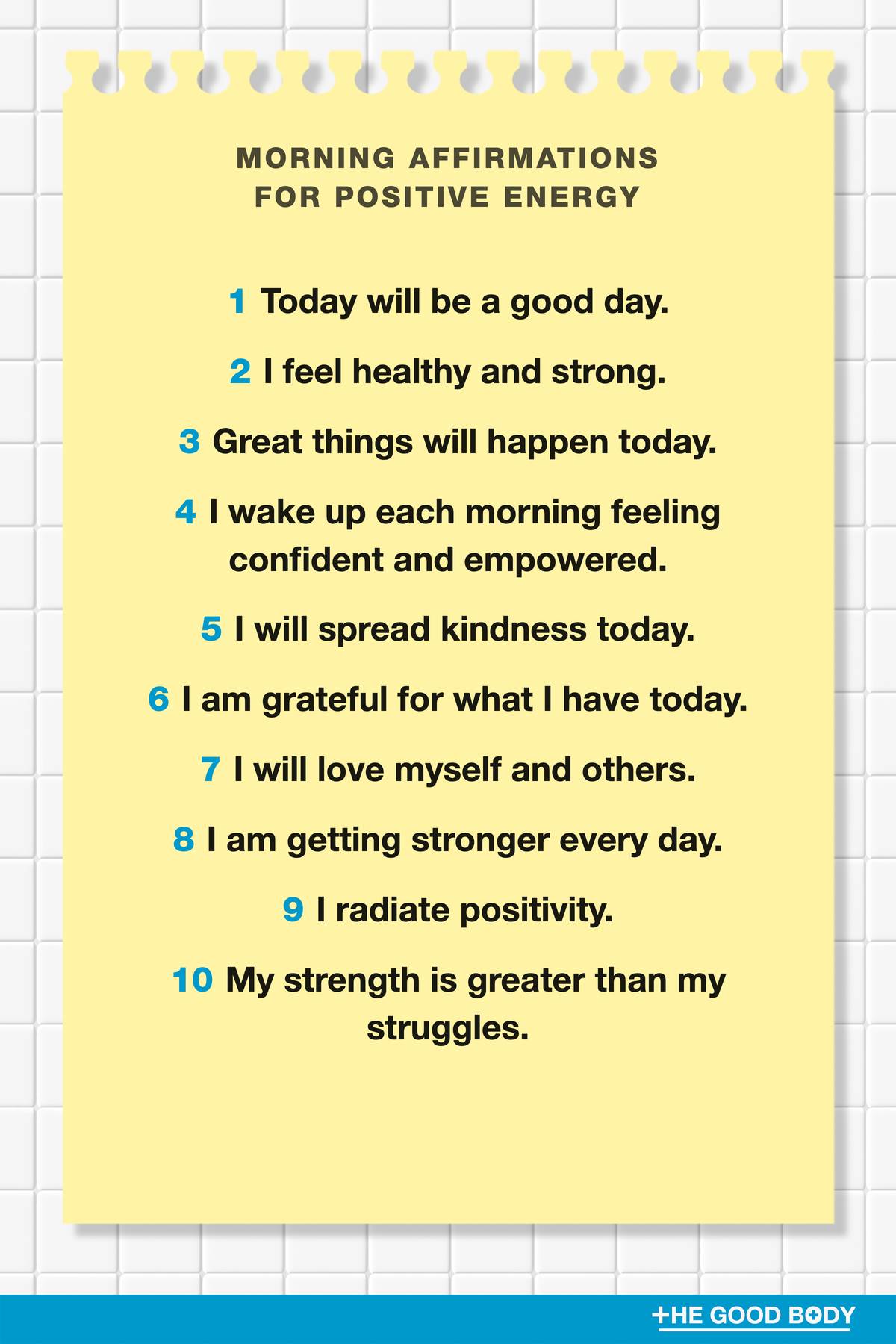
Credit: www.thegoodbody.com
