

What is Positive Affirmations for Kids: A Parent’s Guide
What Is Positive Affirmations For Kids
Every child faces challenges, both big and small. Sometimes, these can feel overwhelming—whether it’s a tough day at school, a disagreement with a friend, or feeling nervous about trying something new. In moments like these, words can make a huge difference. Positive affirmations are simple, encouraging phrases that help children believe in themselves, build confidence, and handle stress. They are more than just nice sayings; when used well, affirmations can shape how kids see themselves and the world.
But what are positive affirmations exactly? How do they work, and why are they so important for kids? This article explores the meaning and benefits of positive affirmations for children. You’ll learn practical ways to introduce affirmations, see real-life examples, and discover how they can support emotional growth.
Along the way, we’ll cover common mistakes, share scientific insights, and offer tools to help any parent, teacher, or caregiver use affirmations effectively.
Understanding Positive Affirmations For Kids
Positive affirmations are short, uplifting statements that children repeat to themselves. The goal is to encourage positive thinking and boost self-esteem. For example, a child might say, “I am brave,” or “I can learn new things.” These phrases help kids focus on their strengths, believe in their abilities, and build resilience.
Affirmations work best when they are:
- Short and simple: Easy for kids to remember and repeat.
- Positive and specific: Focused on strengths or qualities.
- Personalized: Related to the child’s own experiences and feelings.
Children use affirmations in different ways. Some say them out loud each morning. Others write them down or repeat them silently during stressful moments. The key is regular practice, so the positive ideas become part of their thinking.
Why Positive Affirmations Matter For Kids
Children’s minds are like sponges. They absorb messages from parents, teachers, friends, and media. Sometimes, these messages are not helpful. Negative words or criticism can damage self-esteem and create lasting doubt. Positive affirmations offer a way to fight this, helping kids build a strong, healthy self-image.
Research shows that positive self-talk makes a real difference. It can reduce anxiety, improve focus, and even lead to better grades. When children believe they can succeed, they are more likely to try new things and keep going, even when it’s hard.
Emotional Benefits
- Confidence: Affirmations remind kids of their strengths. This boosts their belief in themselves and helps them face challenges.
- Resilience: Positive self-talk teaches children to bounce back after setbacks. They learn that mistakes are part of growth.
- Happiness: Simple affirmations can improve mood and reduce stress. Kids who use affirmations often feel happier and more secure.
Social Benefits
- Better relationships: Children with high self-esteem are less likely to be bullied. They also find it easier to make friends.
- Empathy and kindness: Affirmations about caring and respect encourage positive behavior toward others.
Academic Benefits
- Motivation: Affirmations like “I can solve problems” or “I am a good learner” motivate kids to work hard.
- Focus: Positive self-talk reduces test anxiety and helps children concentrate in class.
Credit: brightpathkids.com
How Positive Affirmations Work
Positive affirmations help shape a child’s “inner voice. ” This is the quiet self-talk that guides choices and reactions. If a child’s inner voice is negative (“I can’t do this”), they may give up easily. If it’s positive (“I’ll try my best”), they are more likely to succeed.
Here’s how affirmations influence thinking:
- Repetition: When a child repeats a positive statement, it becomes more believable.
- Neuroplasticity: The brain changes with practice. Positive thoughts build new pathways, making optimism easier.
- Self-fulfilling prophecy: Kids who believe they are capable act in ways that prove it true.
Real-life Example
Imagine a child who struggles with math. If they hear “You’re not good at math,” they may avoid trying. But with affirmations like “I can learn math,” their attitude changes. They practice more, improve, and feel proud. This cycle reinforces positive thinking.
Common Types Of Positive Affirmations For Kids
Positive affirmations can address many areas, from confidence to kindness. Here are some popular categories:
- Self-worth: “I am important.”
- Courage: “I am brave.”
- Friendship: “I am a good friend.”
- Learning: “I can learn new things.”
- Calmness: “I can handle tough feelings.”
- Gratitude: “I am thankful for today.”
Kids might use different affirmations depending on their needs. For example, a shy child might focus on courage, while a child facing bullying might use self-worth statements.
Customizing Affirmations
It’s important to choose phrases that feel meaningful. Generic statements often don’t connect. For best results, involve the child in creating their own affirmations. Ask:
- What makes you proud?
- What challenges do you want to overcome?
- How do you want to feel today?
The Science Behind Positive Affirmations
Many studies show that positive self-talk changes how people think and act. The brain forms new connections when children repeat encouraging phrases. Over time, these connections become stronger, making optimism a habit.
A study published in the Journal of Child Psychology found that children who practiced self-affirmation were less anxious before tests. Another research project showed that regular use of positive phrases improved children’s problem-solving skills.
How Affirmations Affect The Brain
The brain’s ability to change is called neuroplasticity. When kids repeat positive statements, they train their brains to focus on strengths. This reduces stress and boosts motivation. It’s similar to how practice helps with sports or music—the more you repeat, the stronger the skill becomes.
How To Introduce Positive Affirmations To Kids
Starting with positive affirmations is easy, but it works best with a thoughtful approach. Here are some practical steps:
- Choose simple phrases: Pick statements that fit the child’s age and understanding.
- Practice daily: Encourage regular use, like in the morning or before bed.
- Make it fun: Use games, songs, or art to keep kids engaged.
- Model positive self-talk: Adults should use affirmations too. Kids learn by example.
Step-by-step Guide
- Explain what affirmations are: Use simple language and examples.
- Ask the child to pick their favorite phrases: Let them choose what feels right.
- Create a routine: Set a time for affirmations, such as after breakfast.
- Encourage creativity: Children can draw, sing, or act out their affirmations.
- Discuss feelings: Talk about how saying affirmations makes them feel.
Practical Example
A parent might start with, “Let’s say something nice about ourselves. I’ll say, ‘I am proud of myself. ’ What would you like to say? ” This opens the door to positive self-talk.
Positive Affirmations In Schools
Many schools use positive affirmations as part of daily routines. Teachers might begin the day with a group affirmation, or display positive phrases around the classroom. These practices help students feel welcome and valued.
Benefits In The Classroom
- Improved behavior: Children who feel good about themselves are less likely to act out.
- Better learning: Confident kids engage more and try harder.
- Sense of community: Shared affirmations build trust and respect.
School Activities
Teachers can:
- Lead morning affirmation circles
- Use affirmation posters
- Encourage students to write their own affirmations
Positive Affirmations At Home
Parents and caregivers play a key role in teaching affirmations. At home, affirmations can be part of daily routines—before school, at bedtime, or during stressful moments.
Ideas For Home Practice
- Affirmation jars: Write positive phrases on slips of paper. Each morning, pick one to say together.
- Mirror practice: Stand in front of a mirror and repeat affirmations.
- Family affirmations: Share positive statements as a group. This strengthens bonds.
Encouraging Consistency
Consistency is important. Children may forget or lose interest, so gentle reminders help. Keep affirmations visible, like on the fridge or bedroom wall.
Examples Of Positive Affirmations For Kids
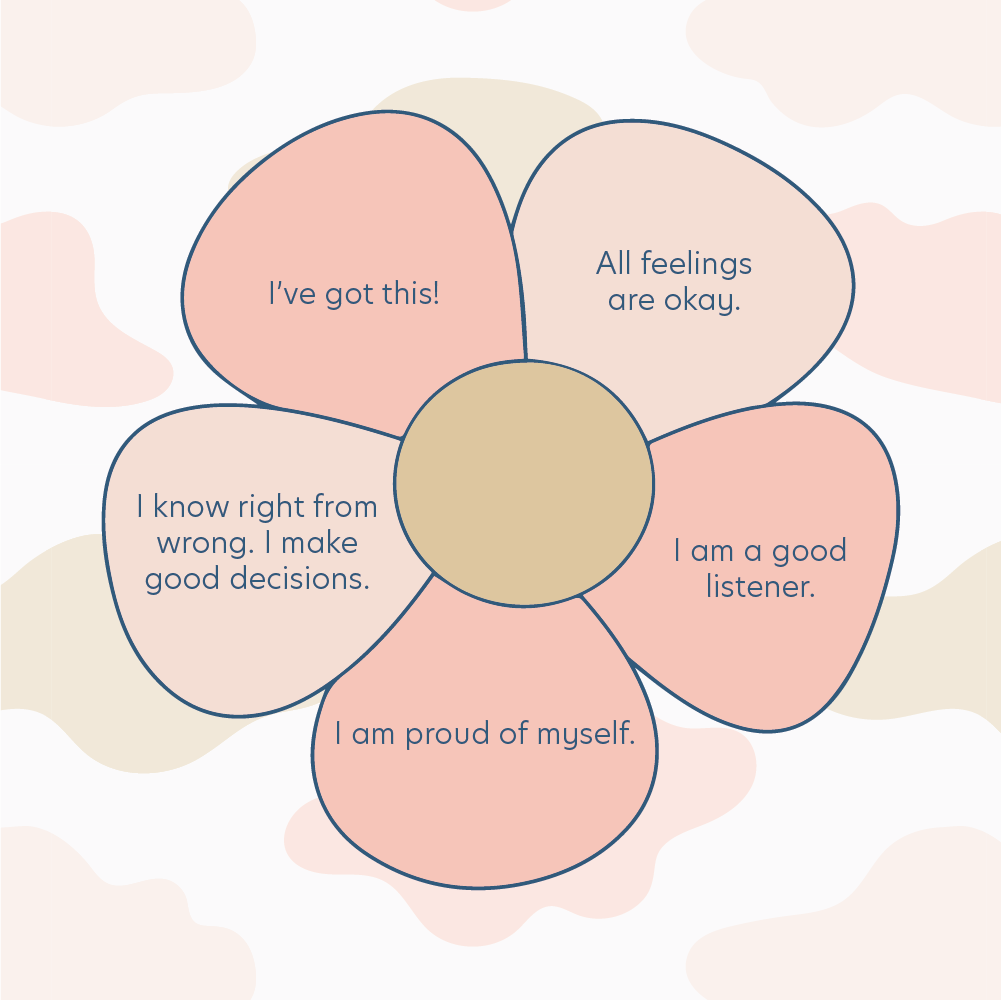
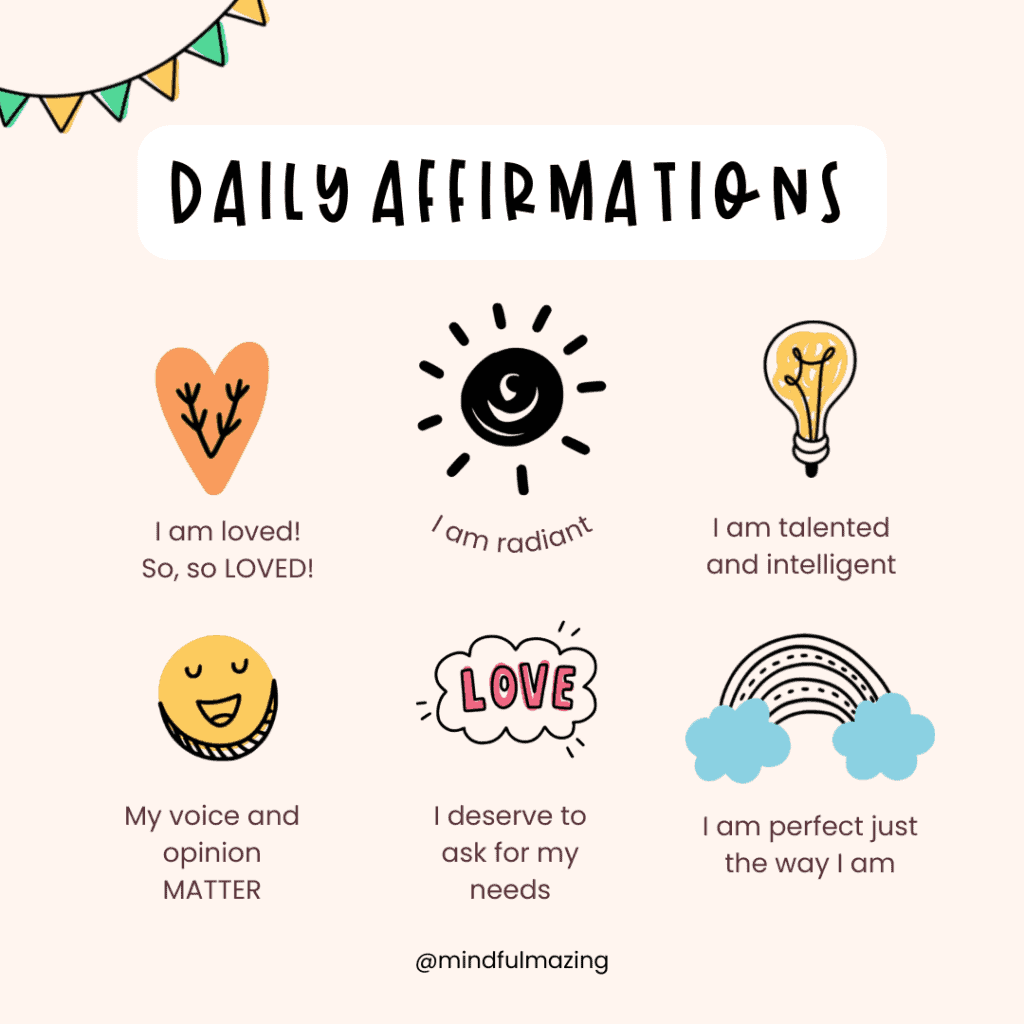
Here are some affirmations children might use:
- “I am strong.”
- “I can solve problems.”
- “I am loved.”
- “I am creative.”
- “I am kind to others.”
- “I am proud of myself.”
- “I can handle anything.”
- “I am learning every day.”
- “I believe in myself.”
- “I am thankful for my friends.”
These phrases can be changed to fit the child’s personality or needs. For example, a child who feels anxious might use, “I am safe,” or “I can stay calm. ”
Comparing Positive And Negative Self-talk
Children’s self-talk has a big impact on their actions and feelings. Here’s a simple comparison:
| Positive Self-Talk | Negative Self-Talk |
|---|---|
| I can learn from mistakes. | I always mess up. |
| I am capable. | I’m not good enough. |
| I can ask for help. | No one will help me. |
| I am proud of myself. | I don’t do anything right. |
| I am loved. | No one likes me. |
Notice how positive self-talk encourages action and hope, while negative self-talk leads to doubt and fear. This difference shapes a child’s confidence and happiness.

Credit: www.thepathway2success.com
Common Mistakes When Using Affirmations With Kids
Even with good intentions, adults sometimes make mistakes when introducing affirmations. Avoid these pitfalls:
- Too complicated: Long or confusing phrases are hard for kids to use.
- Lack of personalization: Generic statements don’t always connect.
- Forcing practice: Affirmations should feel natural, not like a chore.
- Ignoring feelings: If a child struggles, discuss it rather than simply repeating affirmations.
How To Fix These Mistakes
- Keep affirmations short and clear.
- Let children choose or create their own phrases.
- Make practice enjoyable.
- Talk openly about emotions.
Age-appropriate Affirmations
Different ages need different approaches. Here’s a comparison:
| Age Group | Examples of Affirmations | Best Practice |
|---|---|---|
| Preschool | I am kind. I am strong. | Use songs or rhymes. |
| Early Elementary | I can learn new things. I am a good friend. | Make it visual (posters, drawings). |
| Pre-Teen | I can handle challenges. I am unique. | Encourage journaling or creative writing. |
This helps tailor affirmations to each child’s stage.
Credit: www.mindfulmazing.com
Tools And Resources For Positive Affirmations
There are many ways to support affirmations. Here are some useful tools:
- Books: Many children’s books include positive messages. Stories can make affirmations feel natural.
- Apps: Some apps offer daily affirmations and reminders for kids.
- Cards: Affirmation cards give children something to hold and read.
- Posters and art: Visual reminders help reinforce positive phrases.
For more ideas and research-backed tips, check out Positive Psychology.
Affirmations For Special Needs And Diverse Backgrounds
Affirmations are helpful for all children, including those with special needs or from different cultures. It’s important to adapt phrases to fit each child’s experience.
Tips For Special Needs
- Use clear, direct language.
- Focus on abilities and progress.
- Celebrate small successes.
Tips For Diverse Backgrounds
- Reflect values and traditions in affirmations.
- Encourage children to use their own language if possible.
- Address unique challenges with empathy.
Data On Affirmations And Child Development
Research has found that regular use of affirmations leads to measurable improvements in children’s well-being. In a survey of 500 parents, 78% reported higher confidence in children who used affirmations daily. School programs that included positive self-talk saw a 25% drop in student anxiety.
Here’s a summary:
| Affirmation Practice | Reported Benefit | Percentage |
|---|---|---|
| Daily affirmations | Higher confidence | 78% |
| Group affirmations | Better mood | 65% |
| Written affirmations | Improved focus | 52% |
| Affirmations during stress | Lower anxiety | 25% decrease |
These numbers show that affirmations are not just words—they have real effects.
Advanced Insights: What Beginners Miss
Many adults think affirmations are only for confidence. But affirmations also help with emotional regulation, problem-solving, and social skills. When children use affirmations during tough moments, they learn to calm themselves and act wisely.
Another overlooked benefit is the power of group affirmations. Saying positive phrases together—at home or school—builds a sense of belonging. Kids feel supported, which boosts motivation and reduces loneliness.
Building A Positive Affirmation Routine
Creating a routine makes affirmations more effective. Here’s a sample plan:
- Morning: Choose an affirmation to start the day.
- During challenges: Repeat affirmations when facing a problem.
- Evening: Reflect on the day and use affirmations for gratitude.
Tips for success:
- Keep it short (5 minutes or less).
- Use visual aids (cards, posters).
- Encourage sharing and discussion.
Encouraging Kids To Stick With Affirmations
Children sometimes lose interest in affirmations. To keep them motivated:
- Make it interactive (draw, sing, act).
- Celebrate progress (small rewards or praise).
- Change phrases to match new goals.
If a child doesn’t want to participate, respect their feelings. Try again later or offer different activities. The goal is to make affirmations feel natural and enjoyable.
Frequently Asked Questions
What Are Positive Affirmations For Kids?
Positive affirmations for kids are short, encouraging statements that children repeat to themselves. These phrases help them believe in their abilities, boost confidence, and build resilience. Examples include “I am brave” or “I can learn new things.”
How Often Should Children Use Affirmations?
Regular practice is best. Most experts recommend using affirmations daily, such as in the morning or before bed. Consistency helps the positive ideas become part of the child’s thinking.
Can Affirmations Help With Anxiety Or Stress?
Yes. Positive affirmations are proven to reduce anxiety and stress in children. By focusing on strengths and calming thoughts, kids learn to handle tough emotions and feel more secure.
Should Affirmations Be Personalized?
Absolutely. Personalized affirmations connect more deeply. Let children choose or create phrases that fit their feelings and goals. This makes practice more meaningful.
Are There Any Resources To Learn More About Affirmations For Kids?
There are many books, websites, and apps that offer guidance. For research-based information, visit Positive Psychology.
Positive affirmations are simple, but their impact is powerful. By making them part of daily life, parents, teachers, and caregivers can help children grow into confident, kind, and resilient adults. Affirmations give every child a voice—and remind them they are capable of achieving great things.
